Greece Restructures Cruise Tourism Strategy with Port Infrastructure Expansion and Green Technology Integration

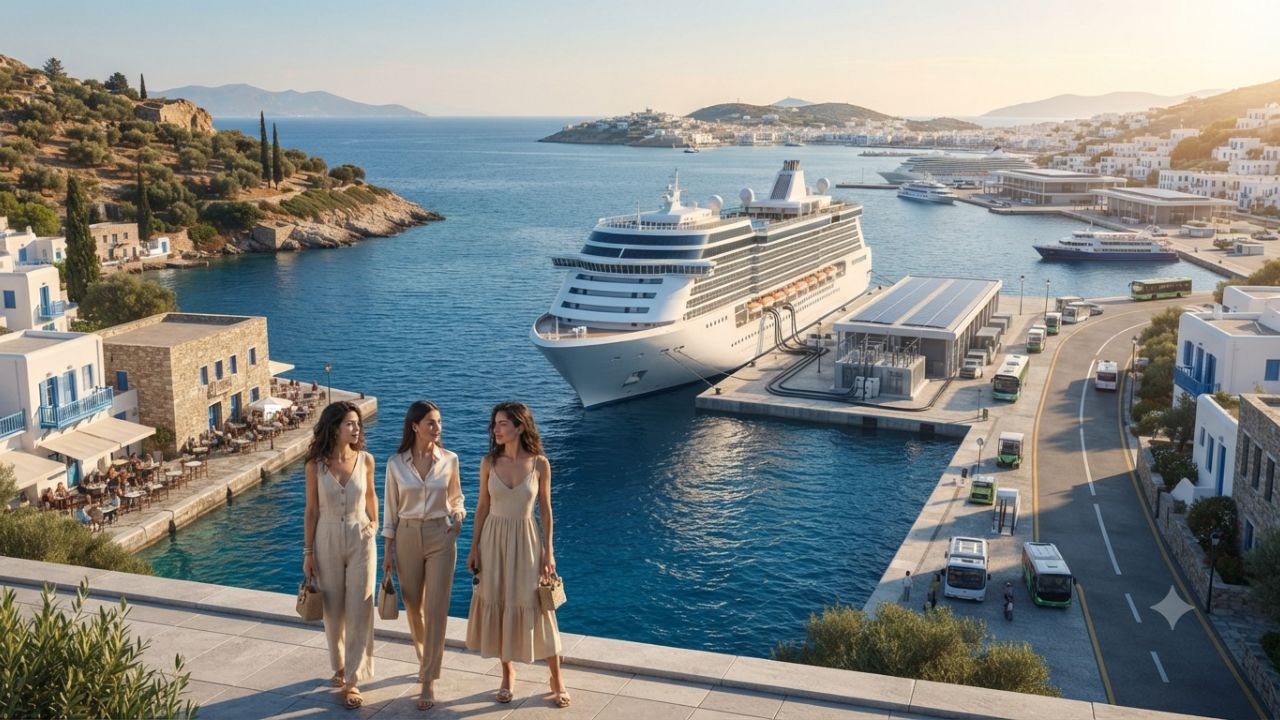
Image generated by AI
Greece has launched a national restructuring of its cruise tourism sector, shifting priority toward port electrification, green maritime technology, and regional network diversification as Greek ports host approximately 6,000 cruise ship calls and over 8 million passenger visits annually.
Data from maritime authorities highlights that expanding secondary hubs like Thessaloniki and Kavala will manage high-volume passenger traffic while protecting island ecosystems.
National Cruise Ecosystem and Port Network Expansion
Greece remains a primary Mediterranean cruise destination, but rising operational costs, tightening EU environmental regulations, and local resource pressures are driving a shift in policy focus. Official guidelines issued by the Hellenic Ministry of Maritime Affairs and Insular Policy emphasize that sustainable growth requires upgrading energy grids, expanding shore-side power capabilities, and decentralizing vessel calls away from heavily congested island hubs.
To prevent overcrowding at traditional marquee destinations such as Piraeus, Santorini, and Mykonos, the Greek government is investing in infrastructure upgrades at northern and mainland ports. Destinations including Thessaloniki and Kavala are being developed into secondary cruise hubs capable of supporting homeporting operations, passenger transfers, and multi-day regional itineraries.
Industry frameworks published by Cruise Lines International Association (CLIA) highlight that because cruise itineraries are scheduled up to two years in advance, long-term regulatory predictability, stable port tariffs, and pre-announced fee structures are necessary to maintain global operator confidence.
Onboard Green Technology and Port Shore Power Grid Integration
Environmental transformation across the Greek maritime sector requires synchronizing vessel technology with port energy networks. Shore power (cold ironing) technology allows docked cruise ships to turn off onboard auxiliary diesel engines and connect directly to local electrical grids, eliminating local air emissions while berthed.
According to global fleet data monitored by the European Sea Ports Organisation (ESPO), vessel adoption of shore power technology has accelerated rapidly:
- 2018 Baseline Fleet Capability: 55 cruise ships operated by CLIA member lines possessed shore power connectivity.
- Current Operational Fleet Capability: 193 cruise ships are equipped with shore power systems, representing approximately 65 percent of the global cruise fleet and over 70 percent of declared passenger capacity.
- Port Infrastructure Deficit: Despite rapid shipboard adoption, only a small fraction of European cruise ports currently provide operational shore-side electrical connections.
Greece is accelerating energy grid development at key commercial ports to meet upcoming European Union decarbonization mandates, ensuring that arriving multi-fuel and LNG-powered vessels can utilize clean energy infrastructure.
Environmental & Port Infrastructure Specification Matrix
| Metric / Infrastructure Area | Operational Benchmark | Technical Implementation | Regional Port Impact |
|---|---|---|---|
| Annual Greek Cruise Volume | ~6,000 ship calls; >8 million passenger visits | Strategic berth management & destination spacing | Piraeus, Santorini, Mykonos, Thessaloniki & Kavala |
| Shore Power (Cold Ironing) | 193 ships equipped (65% fleet; >70% capacity) | High-voltage grid connections at berth terminals | Zero-emission port stays for docked cruise vessels |
| Alternative Marine Fuels | Transition from HFO to LNG, bio-blend & multi-fuel | Multi-fuel engine installations on newbuild vessels | Reduced CO2 & particulate emissions across Aegean routes |
| Desalination & Water Systems | Onboard reverse-osmosis freshwater generation | Onboard AWTS & zero-discharge wastewater tech | Protects local island water reserves & marine ecosystems |
Traveler Logistics & Greek Island Cruise Guide
Navigating cruise arrivals and port transfers across Greece requires clear itinerary planning:
- Piraeus Port Terminal Transfers (Athens): Cruise ships dock at Piraeus Terminals A, B, or C (E11/E12). Passengers transferring to central Athens can take the X96 express bus, local taxis, or walk 15 to 20 minutes to the Piraeus Metro Station (Line 1 Green & Line 3 Blue) for direct 20-minute transit to Syntagma and Monastiraki.
- Santorini & Mykonos Tender Boat Logistics: At Santorini (Fira anchorage), passengers disembark via local tender boats to the Skala pier, where access to Fira town requires taking the cable car, walking the donkey path, or utilizing pre-booked shore excursion transfers. Budget at least 45 minutes for cable car wait times during peak multi-ship port days.
- Northern Greece Connections at Thessaloniki & Kavala: Passengers disembarking at Thessaloniki Port can access UNESCO World Heritage Byzantine monuments and the Ladadika district directly on foot. Kavala serves as the gateway for shore excursions to ancient Philippi and ferry links to Thassos.
- Schengen & ETIAS Entry Formalities: Non-EU cruise passengers (including US, UK, and Canadian travelers) embarking or disembarking at Greek ports must ensure passport validity of at least 3 months beyond the planned departure date and complete mandatory ETIAS digital entry approvals once implemented.
Balanced Growth and Maritime Infrastructure Investment
The future of Greece's cruise sector hinges on balancing commercial capacity with environmental stewardship. Upgrading port facilities, expanding shore power grids, and promoting mainland destinations like Thessaloniki ensure that Greece maintains its leadership in Mediterranean maritime tourism while protecting island ecosystems.
Frequently Asked Questions: Greece Cruise Tourism 2026
How many cruise passengers visit Greece annually? Greece handles approximately 6,000 cruise ship calls and more than 8 million passenger visits each year across its island and mainland ports.
What percentage of the global cruise fleet can connect to shore power? Currently, 193 cruise ships (around 65 percent of the fleet and over 70 percent of declared passenger capacity) are equipped with shore power capability, up from 55 ships in 2018.
Which new Greek ports are being expanded for cruise travel? Ports including Thessaloniki and Kavala are being developed into secondary cruise hubs to distribute passenger traffic away from overcrowded spots like Santorini and Mykonos.
How do cruise passengers reach central Athens from Piraeus Port? Passengers can take the Piraeus Metro (Line 1 or Line 3) from Piraeus Station to Syntagma, take express buses, or use pre-arranged port transfers (a 20-to-30-minute journey).
Related Travel Guides
This article is for informational purposes. Flight routes, passenger regulations, visa rules, and transit advisories are subject to change by airlines and aviation authorities. Readers are advised to verify schedules and travel documentation with relevant carriers and border agencies before departure.
Related Stories
Island Princess Embarks on 50-Night Mediterranean Odyssey: 24 Ports Across Europe, Africa, and the Atlantic
Princess Cruises Expands Sanctuary Collection to Five Royal-Class Ships with Private Pools, Exclusive Dining, and Luxury 2027 Voyages