
Grand Canyon Travel Alert: Flash Flood Rescues 62 Hikers
A sudden flash flood at the Grand Canyon forces the rescue of 62 hikers and closes the North Kaibab Trail. Read our safety alert and visitor guide.

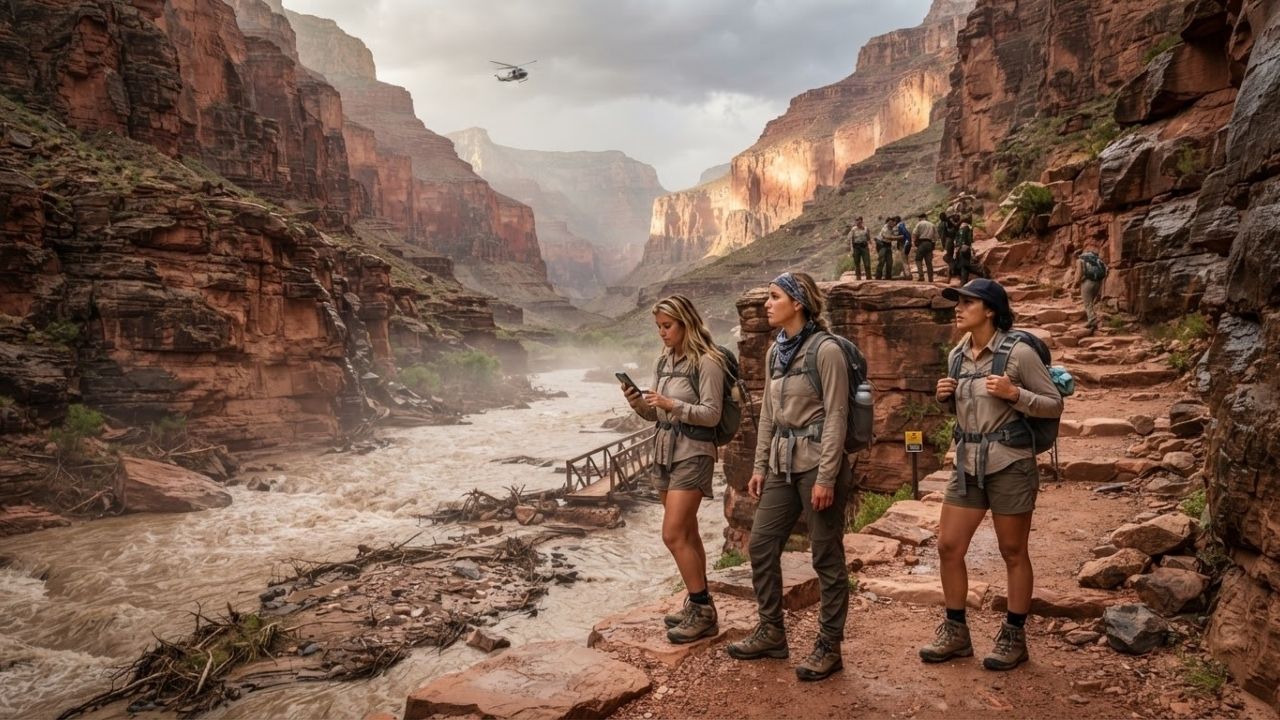
Image generated by AI
A sudden flash flood has swept through Bright Angel Canyon in Grand Canyon National Park, forcing the emergency airlift of 62 stranded hikers and closing key inner canyon trails. Authorities continue search operations for more than 20 unaccounted-for individuals as repair crews inspect damaged bridges and infrastructure.
The Bright Angel Canyon Flooding Event
On 29 August 2026, heavy localized rainfall over the North Rim watershed triggered a sudden surge of water down Bright Angel Creek. The resulting flash flood swept through the inner canyon corridor, damaging bridges, altering the creek bed, and carrying debris into the main channel of the Colorado River.
The narrow geography of the canyon walls concentrated the runoff, transforming the dry creek bed into a torrent within minutes. For adventure travelers, this disaster demonstrates the environmental hazards of inner canyon routes, where weather changes can occur without immediate warning.
Evacuation and Emergency Operations
Following the flood, the National Park Service (NPS), in coordination with the Arizona Department of Public Safety, launched an evacuation campaign to rescue visitors trapped near the river crossing:
- Airlift Rescues: Emergency helicopters evacuated 62 people from Phantom Ranch and the lower sections of the North Kaibab Trail.
- South Rim Support: Rescued travelers were transported to the South Rim, where the American Red Cross established temporary shelter and support services.
- Search Operations: Because communication is limited inside the inner gorge, park authorities requested public assistance to identify and locate more than 20 individuals who may have been hiking or camping in the Bright Angel Creek corridor during the flood.
| Affected Facility / Area | Current Status | Nature of Impact / Damage | Reopening Timeline |
|---|---|---|---|
| Phantom Ranch facilities & cabins | Closed to all visitors | Infrastructure damage and utility checks | Under evaluation; no date set |
| Bright Angel Campground | Closed to all visitors | Debris and campsite erosion | Under evaluation; no date set |
| North Kaibab Trail | Closed from North Rim to Phantom | Trail washout and bridge damage | Long-term repairs required |
| Black Bridge & Silver Bridge | Closed for inspections | Structural safety checks | Pending engineering clearance |
Understanding Inner Canyon Weather Risks
Flash floods represent a significant risk in desert canyon environments. Due to sparse vegetation and steep rocky slopes, rainfall that occurs miles away can rapidly drain into narrow slots, generating debris flows.
Furthermore, areas recently affected by wildfires face a higher risk. Burned soil absorbs less moisture, which accelerates water runoff and increases the volume of mud and rock carried down the canyon.
Local Insider Secrets for Savvy Holiday Travelers
If your inner canyon reservations are affected by the current trail closures, implement these strategies:
- Alternative Rim Hikes: Keep your travel dates but shift your hiking to the Rim Trail or the West Rim Drive paths. These trails remain open and offer views of the canyon without descending into high-risk flood zones.
- Identify Flash Flood Signs: If hiking near creeks, watch for changes in water color (a shift to muddy brown indicates upstream runoff) or a low, rumbling sound. Immediately seek higher ground, climbing at least 100 feet up the canyon walls rather than seeking shelter under rock overhangs.
- Satellite Communication: Cellular coverage is non-existent in the inner canyon. Carry a dedicated satellite communicator (such as a Garmin inReach) and register your itinerary with the Backcountry Information Center.
- Backcountry Water Management: Flooding regularly damages the Trans-Canyon Water Pipeline, shutting off drinking water stations. Carry water purification tablets or a portable filter (like a Sawyer Squeeze) to treat creek water if pipeline water is unavailable.
- Tusayan Support: If your campground booking is canceled, look for accommodation in Tusayan, the town situated just outside the South Rim entrance, to maintain your itinerary.
Sustainable Practices and Community Support
Rescue operations place significant strain on park staff, volunteer Search and Rescue (SAR) teams, and emergency resources. Travelers can support the park community by booking tours with independent local outfitters in Tusayan, staying at community-owned motels, and donating to the Grand Canyon Conservancy to fund trail restoration.
Additionally, hikers should adhere to Leave No Trace principles. Staying on designated rim paths prevents soil erosion, which helps protect fragile desert plants during the post-flood recovery phase.
Related Travel Guides
Nepal Travel Alert: Himalayan Flood Raises Tourism Safety Concerns
Mozambique Travel Alert: Terror Risks Challenge Luxury Tourism
Grand Canyon Flash Floods: Safety Tips & Trail Updates, According to Reddit
Disclaimer
This article is for informational and educational purposes only. It does not constitute legal, financial, or professional advice. While we strive to provide accurate and up-to-date information, travel policies, regulations, and conditions change rapidly. Always verify information with official sources before making travel decisions. Nomad Lawyer makes no representations about the accuracy, reliability, completeness, or suitability of the information provided. Readers should consult qualified professionals for advice specific to their circumstances. The views expressed in this article are those of the author and do not necessarily reflect the views of Nomad Lawyer.
Raushan Kumar
Founder & Lead Developer
Full-stack developer with 11+ years of experience and a passionate traveller. Raushan built Nomad Lawyer from the ground up with a vision to create the best travel and law experience on the web.
Learn more about our team →