
China Railway Breaks Records With 1.97 Billion Trips as High-Speed Rail and Foreign Visitors Transform Regional Travel
China's railway system records historic surge with 1.97 billion passenger trips in five months, driven by high-speed rail expansion and 35.5% growth in foreign visitors seeking seamless multi-city connectivity.

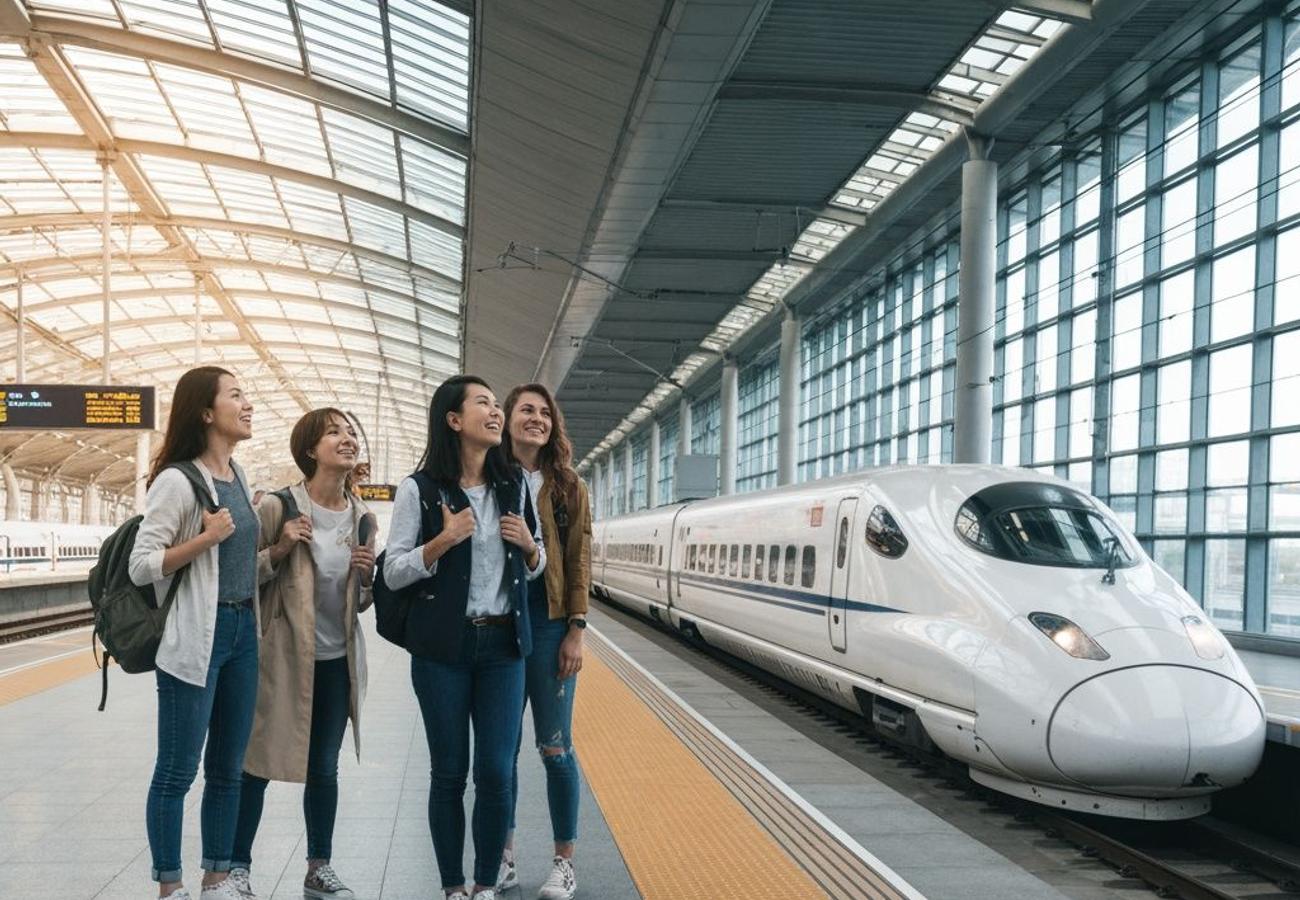
Image generated by AI
The Numbers Tell an Extraordinary Story
China's railway system just shattered records. Nearly 1.97 billion passenger trips in the first five months of 2026 confirm what transport analysts have quietly suspected: rail isn't just surviving in China—it's thriving at unprecedented scale.
The figures arrived quietly on June 14, but they reveal something profound about how modern travel demand is reshaping Asia's largest economy. A 5.7 percent annual increase might sound modest until you realize it represents tens of millions of additional journeys across one of the world's most complex transport networks.
What's driving this surge? Three interconnected forces: rapid high-speed rail expansion, simplified visa and travel access for international visitors, and a fundamental shift in how millions of people move across the country for tourism, business, and family connections.
Reddit: "The high-speed rail between Shanghai and Beijing changed everything. Cut my travel time in half, and now I actually prefer trains over flights." — r/travel
Foreign Visitors Are Rediscovering China's Rail Network
Here's where the story gets genuinely compelling. 10.02 million foreign passenger trips during the January-May period represents a staggering 35.5 percent year-on-year jump.
This isn't just recovery—it's transformation. International travellers are no longer treating China's rail system as a curious novelty. They're treating it as the primary means of moving between multiple cities within a single trip.
The data reflects simplified transit arrangements and improved connectivity between international entry points like Shanghai Pudong, Beijing Capital, and Guangzhou airports and major rail hubs. Tourists stepping off international flights can now board high-speed trains within minutes, heading directly to secondary cities and emerging tourism destinations.
For solo travellers, families, and tour groups, this represents a game-changer. You can visit five Chinese cities in ten days without renting a car or booking domestic flights.
Cross-Border Rail: The Unexpected Winner
The China-Laos Railway recorded 167,000 passenger journeys during the first five months, posting a commanding 35 percent year-on-year increase.
Think about what this means logistically. The route has fundamentally altered how tourists and business travellers move between Southeast Asia and mainland China. Previously fragmented itineraries now flow seamlessly across borders.
But the real heavyweight is the Guangzhou-Shenzhen-Hong Kong high-speed rail corridor, which handled 14.53 million cross-border trips—up 14.5 percent from the prior year. This single route has become one of Asia's busiest international rail links, rivalling major European corridors in both frequency and passenger volume.
According to the International Union of Railways, this type of dense cross-border connectivity is reshaping how integrated regional economies function. When you can move 40,000 people daily between three major financial hubs via rail, entire business models shift.
Tourism Rail Services Are Reimagining Destination Access
Here's what operators quietly implemented: approximately 1,400 dedicated tourist trains operated across China during the five-month period.
These aren't standard commuter services. They're curated itineraries connecting major cities with scenic landscapes, cultural heritage sites, and seasonal attractions. Some routes include onboard cultural programming, regional dining experiences, and guided stops at secondary destinations that typically struggle with visitor access.
The economic impact ripples outward. By improving rail access to remote regions, operators are distributing tourism revenue beyond the usual suspects (Beijing, Shanghai, Xi'an). Local hospitality sectors and small businesses in previously less-connected areas suddenly gain viable market access.
Reddit: "Took the scenic route from Chengdu to Leshan. Saw things most tourists miss because they're flying or driving. The train experience IS the destination now." — r/ChinaTravel
Service Upgrades Are Quietly Reshaping Passenger Experience
High-speed rail remains the dominant growth driver, but what's happening in station design and onboard amenities deserves attention.
Operators have expanded travel benefits for elderly passengers, improved quiet carriage services across selected routes, and gradually introduced pet-friendly travel options. These aren't flashy upgrades—they reflect changing demographics and lifestyle preferences that Western rail operators typically address years earlier.
A 65-year-old visiting grandchildren in a secondary city can now navigate stations more easily. A business traveller on a three-hour journey can work uninterrupted. A young professional relocating cities can bring her cat. Small changes. Massive user experience improvements.
Modern Railways Magazine reports that these service enhancements typically increase passenger loyalty and repeat bookings by 15-20 percent, particularly among international and leisure travellers.
Why This Matters Beyond Statistics
China's railway network has evolved beyond infrastructure. It's become a central economic engine for regional tourism and mobility.
Strong passenger growth is enabling deeper integration between transport systems and tourism planning. When you can move 40 million people monthly between cities via reliable, comfortable rail, consumption patterns in accommodation, dining, and local services explode exponentially.
International traveller growth adds another dimension—it strengthens the visibility of secondary Chinese cities globally and supports the broader inbound tourism recovery narrative that's been crucial for regional economies post-pandemic.
The competitive advantage is stark: rail is faster than driving for most major routes, cheaper than flying for passengers in secondary cities, and more reliable than both across seasonal fluctuations and peak travel periods.
The Structural Shift Underway
What's happening here transcends passenger statistics.
China's railway system is transitioning from being a transport utility into being a primary driver of both national connectivity and tourism-driven economic growth. When you operate 1,400 tourist trains, handle 14.53 million cross-border passengers annually, and see foreign visitor rail usage jump 35.5 percent year-on-year, you're not managing demand—you're reshaping how an entire region moves and experiences travel.
The 1.97 billion figure matters less than what it represents: a transport system becoming increasingly central to how 1.4 billion people, plus millions of international visitors, move through one of the world's most dynamic economies.
As service quality improves and network integration deepens, expect these numbers to accelerate further. The question isn't whether rail will remain central to Chinese mobility. It's how quickly other Asian economies can replicate this model.
Rail connectivity isn't just about getting from A to B anymore—it's about making the entire region accessible.
Related Travel Guides
Disclaimer
This article is for informational and educational purposes only. It does not constitute legal, financial, or professional advice. While we strive to provide accurate and up-to-date information, travel policies, regulations, and conditions change rapidly. Always verify information with official sources before making travel decisions. Nomad Lawyer makes no representations about the accuracy, reliability, completeness, or suitability of the information provided. Readers should consult qualified professionals for advice specific to their circumstances. The views expressed in this article are those of the author and do not necessarily reflect the views of Nomad Lawyer.
Kunal K Choudhary
Co-Founder & Contributor
A passionate traveller and tech enthusiast. Kunal contributes to the vision and growth of Nomad Lawyer, bringing fresh perspectives and driving the community forward.
Learn more about our team →