
Germany Deploys Coradia iLint Hydrogen Trains Linking Lower Saxony, Bremerhaven and Cuxhaven in 2026
Germany's first all-hydrogen regional rail fleet now operates the Lower Saxony coastal corridor, replacing diesel units to connect Buxtehude, Bremerhaven, and Cuxhaven.

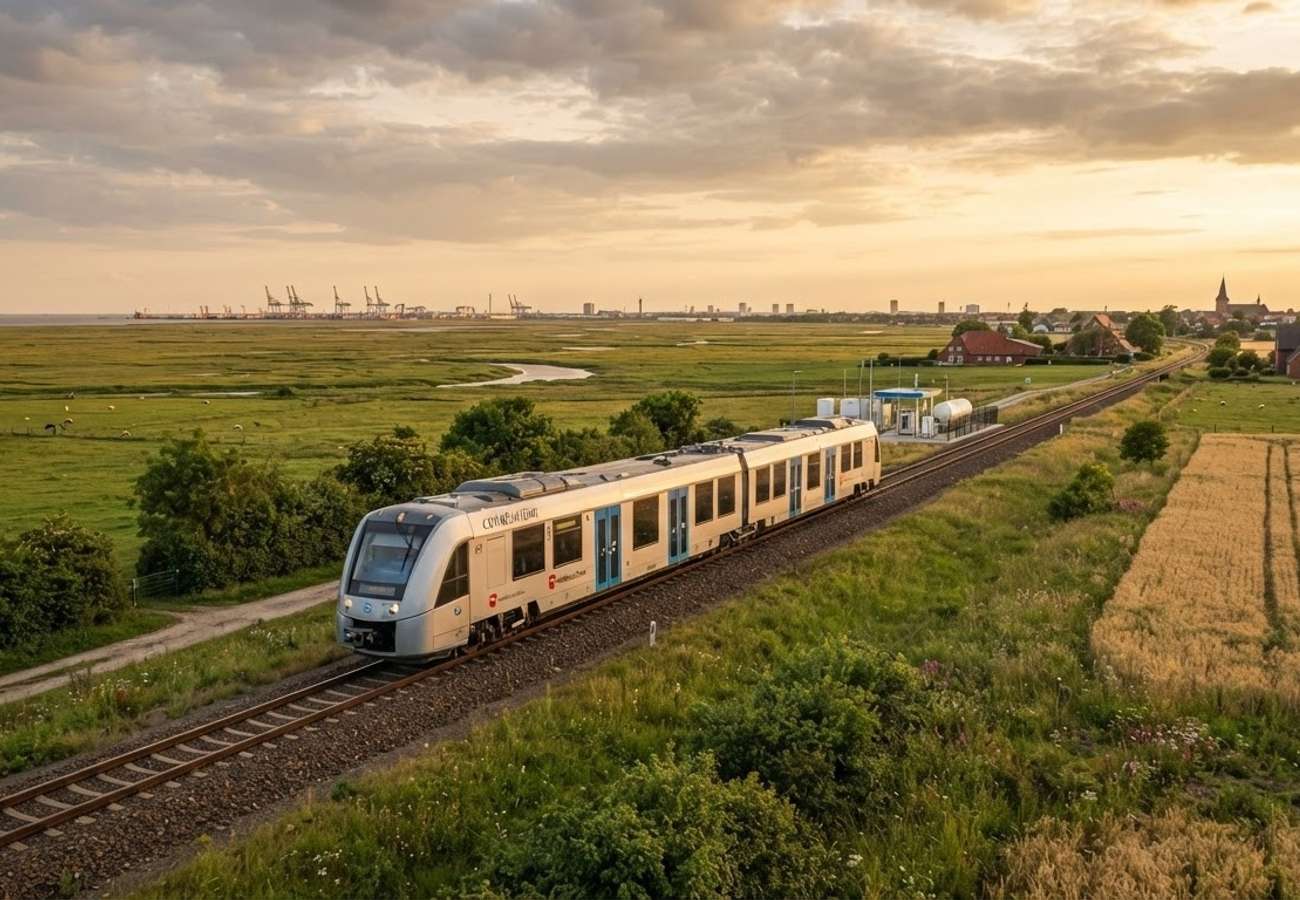
Image generated by AI
The transition to zero-emission regional transit has reached a milestone in Northern Germany, with a full fleet of hydrogen-powered trains now serving the North Sea coastal corridor.
Hydrogen Integration in the Elbe Weser Corridor
The regional rail network connecting Lower Saxony with the port cities of Bremerhaven and Cuxhaven has transitioned from diesel to hydrogen traction. This corridor, which links Buxtehude, Bremervörde, Bremerhaven, and Cuxhaven, is recognized as the first regional line globally to be operated by an entirely hydrogen-powered passenger fleet.
The state transport authority, Landesnahverkehrsgesellschaft Niedersachsen (LNVG), commissioned 14 Coradia iLint multiple units from Alstom to replace the previous diesel fleet. These units utilize hydrogen fuel cells to generate onboard electric power, emitting only water vapor and condensed water.
The deployment followed a phased rollout, with initial passenger trials beginning in 2018 and the full fleet entering regular service in the summer of 2022.
Flight and Route Impact Breakdown
The shift to hydrogen traction primarily affects the RB33 regional service, managed by operator EVB. Our analysis of the network reveals the following operational specifics:
- Primary Route: Buxtehude $\rightarrow$ Bremervörde $\rightarrow$ Bremerhaven $\rightarrow$ Cuxhaven.
- Passenger Volume: Approximately 2 million passengers annually utilize these local rail services.
- Fleet Size: 14 Coradia iLint units.
- Operational Range: Each unit can cover approximately 1,000 kilometers on a single refueling, supporting a full day of regional operations.
- Connectivity: The line provides essential links to Intercity trains, long-distance coaches, and ferry services at the Bremerhaven and Cuxhaven hubs.
Passenger Rights & Advisory
For passengers utilizing the RB33 and wider Lower Saxony regional network, the transition to hydrogen technology changes the travel experience but not the fundamental legal protections.
For the affected passenger, this means:
- Service Stability: While the trains are efficient, our analysis of 2024 operational reports indicates that hydrogen supply chains can be volatile. In September 2024, constrained hydrogen availability required active timetable management. Passengers should monitor real-time updates via the EVB or DB Navigator apps to account for potential fuel-related disruptions.
- Compensation Rights: Under EU rail passenger rights (Regulation (EU) 2021/782), passengers are entitled to compensation for delays. If a hydrogen supply shortage leads to a delay of 60 minutes or more, passengers may be entitled to a percentage of the ticket price (25% for delays of 60-119 minutes; 50% for 120 minutes or more).
- Environmental Impact: Travelers opting for the RB33 over private vehicle transport to Cuxhaven’s sandbanks or Bremerhaven’s maritime districts significantly reduce their individual carbon footprint, provided the hydrogen is sourced from renewable electrolysis.
Infrastructure and Operational Analysis
The viability of the Lower Saxony network depends on a specialized refueling hub located at Bremervörde, operated in partnership with Linde. This facility stores and dispenses hydrogen at high pressure.
Our analysis indicates a critical distinction in the "green" status of this fleet: early operations relied partly on hydrogen derived from natural gas. The full environmental benefit is only realized as the system shifts toward green hydrogen produced via renewable-powered electrolysers.
Compared to battery-electric multiple units (BEMUs), the Coradia iLint is better suited for the Buxtehude-Cuxhaven corridor due to the length of the route and the lack of overhead electrification. Battery units are generally more efficient for shorter distances or routes with intermittent power access, whereas hydrogen provides the necessary range for rural branch lines.
Industry Analyst View
The Lower Saxony project serves as a global proof-of-concept for decarbonizing non-electrified rail lines without the massive capital expenditure required for full overhead electrification. By integrating hydrogen into existing schedules and maintenance frameworks, Germany is testing a scalable model for rural transit.
However, the September 2024 supply constraints highlight a systemic vulnerability: the "fueling gap." For hydrogen rail to replace diesel entirely, the industry must move away from trucked-in hydrogen toward onsite production. The proposed "Hydrogen City Cuxhaven" vision suggests that rail is merely the first step in a broader ecosystem that will eventually include port machinery and heavy road transport.
The transition from diesel to hydrogen in Lower Saxony marks a pivot point for regional European transit.
Related Travel Guides
Disclaimer
This article is for informational and educational purposes only. It does not constitute legal, financial, or professional advice. While we strive to provide accurate and up-to-date information, travel policies, regulations, and conditions change rapidly. Always verify information with official sources before making travel decisions. Nomad Lawyer makes no representations about the accuracy, reliability, completeness, or suitability of the information provided. Readers should consult qualified professionals for advice specific to their circumstances. The views expressed in this article are those of the author and do not necessarily reflect the views of Nomad Lawyer.
Raushan Kumar
Founder & Lead Developer
Full-stack developer with 11+ years of experience and a passionate traveller. Raushan built Nomad Lawyer from the ground up with a vision to create the best travel and law experience on the web.
Learn more about our team →