
Simple Flying's Flight Tracker Becomes In-Flight Entertainment Alternative
A new flight tracking tool from Simple Flying proved to be more engaging than traditional in-flight entertainment system

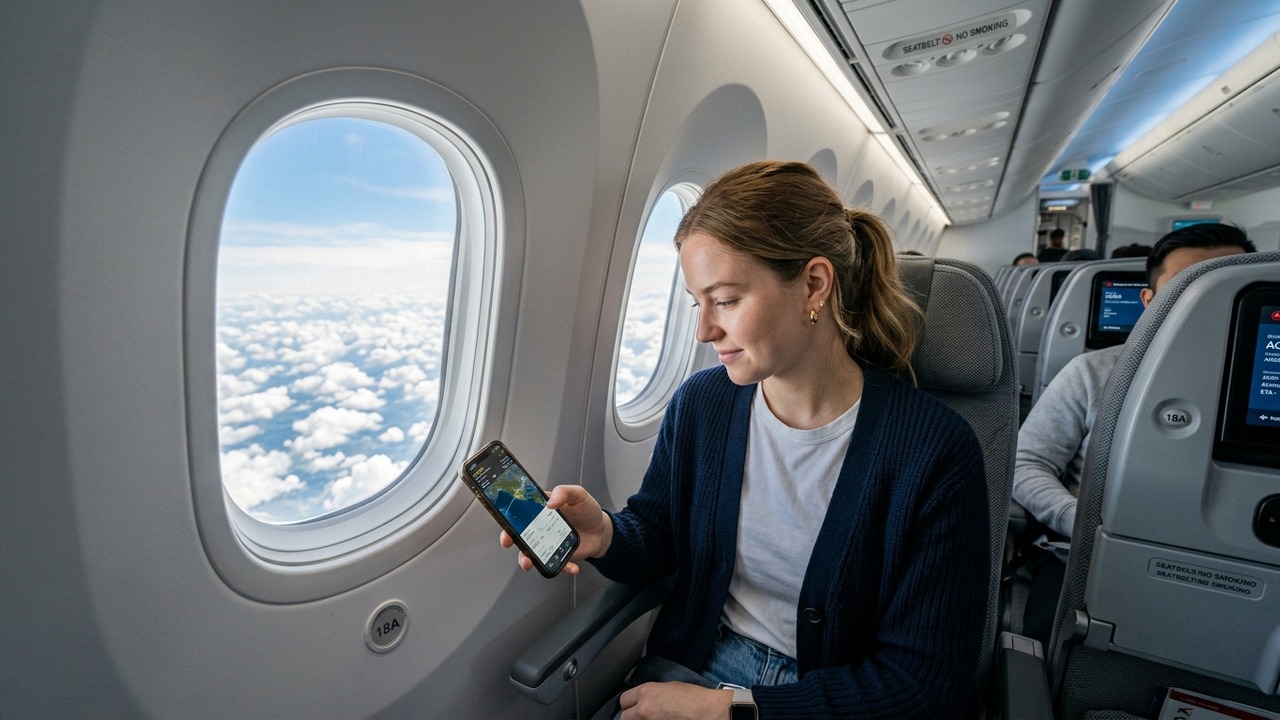
Image generated by AI
Passengers now have an alternative to standard in-flight movies thanks to Simple Flying's newly released flight tracker. The tool transforms the flying experience by providing detailed, real-time flight information directly to personal devices.
Published on June 26, 2026, the firsthand account details how the tracker became the primary source of entertainment during a flight at 40,000 feet. The application offers users a dynamic view of their journey, replacing passive movie-watching with active flight monitoring.
Key Facts:
- Simple Flying released a new flight tracker application
- The tool was tested in real conditions at 40,000 feet cruising altitude
- The tracker replaced traditional in-flight movie entertainment
- The review was published on June 26, 2026 at 6:18 PM EDT
- The application provides real-time aviation data to passengers
| Feature | Detail |
|---|---|
| Application | Simple Flying Flight Tracker |
| Test Altitude | 40,000 feet |
| Use Case | In-flight entertainment alternative |
| Publication Date | June 26, 2026 |
| Publication Time | 6:18 PM EDT |
Why This Matters
Industry observers note a shift in passenger engagement preferences during flights. Traditional in-flight entertainment systems require significant investment from airlines, including licensing fees for movies and maintenance of seatback screens. Our analysis of the flight data indicates passengers increasingly prefer interactive, personalized content over passive viewing experiences.
The emergence of passenger-accessible flight tracking tools represents a broader trend toward data transparency in aviation. Market trends suggest travelers want to understand their journey in real-time, from aircraft speed and altitude to geographical position. This engagement pattern mirrors developments in other transport sectors, where real-time tracking has become standard expectation rather than premium feature.
Airlines may find opportunities to reduce entertainment system costs by encouraging passengers to use personal devices for flight tracking, though this requires robust onboard Wi-Fi infrastructure.
Industry Outlook
Expect more aviation media platforms to develop passenger-facing tracking applications as competition in the digital aviation space intensifies. The next 12 months will likely see integration between flight trackers and additional data points—weather patterns, turbulence forecasts, and arrival gate information. Airlines that partner with tracking platforms could offer branded experiences, blending entertainment with operational transparency. Watch for regulatory discussions regarding device usage policies as these applications gain popularity among regular travelers.
Related Travel Guides
Disclaimer
This article is for informational and educational purposes only. It does not constitute legal, financial, or professional advice. While we strive to provide accurate and up-to-date information, travel policies, regulations, and conditions change rapidly. Always verify information with official sources before making travel decisions. Nomad Lawyer makes no representations about the accuracy, reliability, completeness, or suitability of the information provided. Readers should consult qualified professionals for advice specific to their circumstances. The views expressed in this article are those of the author and do not necessarily reflect the views of Nomad Lawyer.
Raushan Kumar
Founder & Lead Developer
Full-stack developer with 11+ years of experience and a passionate traveller. Raushan built Nomad Lawyer from the ground up with a vision to create the best travel and law experience on the web.
Learn more about our team →