
Georgia Leads Global Regenerative Agritourism Trend with 8,000-Year-Old Qvevri Winemaking
Georgia is pioneering global regenerative agritourism, utilizing 8,000-year-old subterranean clay Qvevri vessels for zero-carbon wine fermentation.

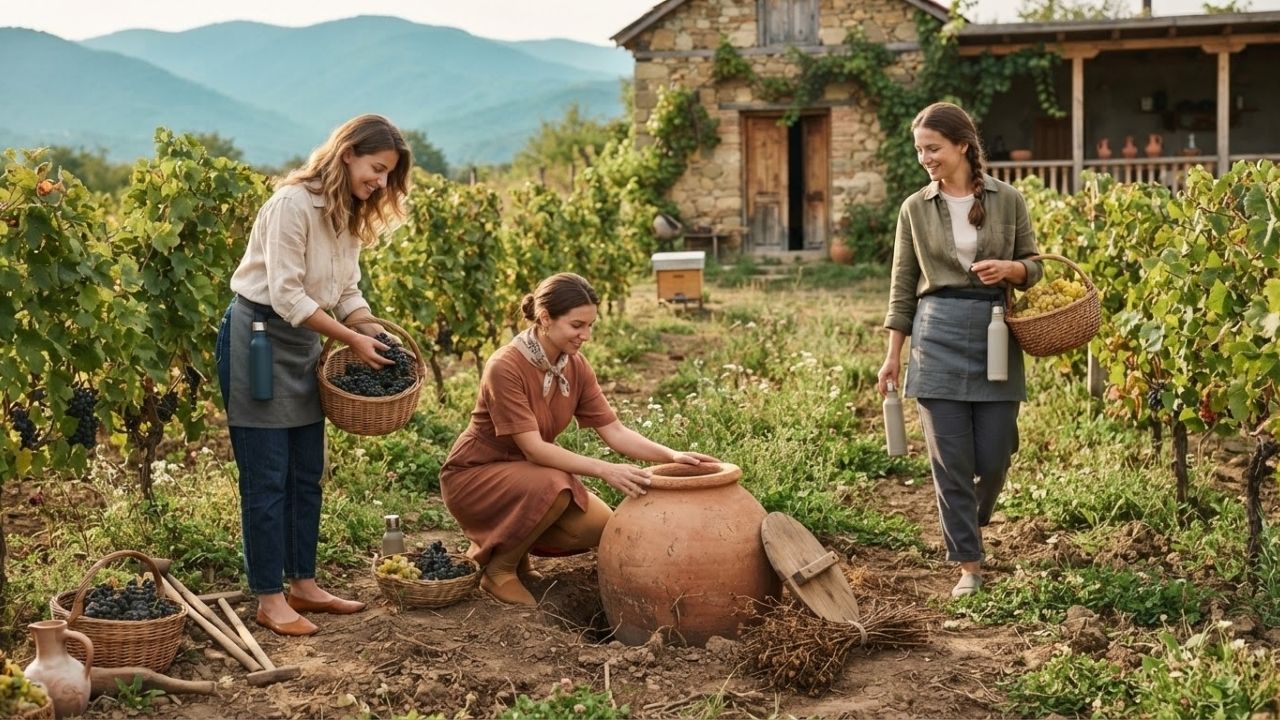
Image generated by AI
Georgia is pioneering a global shift in regenerative agritourism, utilizing 8,000-year-old subterranean clay Qvevri vessels to produce zero-carbon wines. By combining ancestral fermentation techniques with hands-on soil restoration, Georgia, Japan, Mexico, and Slovenia are redefining sustainable travel.
Georgia's Qvevri Cellars: 8,000 Years of Zero-Carbon Viticulture
[TBILISI, Georgia] — A major evolution in wine and food tourism is taking shape as modern travelers move beyond traditional tasting rooms toward hands-on agricultural experiences. Leading this movement is the nation of Georgia, where an unbroken 8,000-year-old winemaking tradition relies on subterranean terracotta vessels known as Qvevri.
Buried completely beneath the earth, Qvevri vessels utilize the soil’s natural geothermal mass for fermentation and aging. This ancient low-intervention method eliminates the need for energy-intensive steel tanks and electrical climate control systems, significantly reducing carbon emissions associated with industrial winemaking.
Heritage Georgian vineyards practice dry-farming methods and plant polycultural cover crops between vine rows, safeguarding more than 500 indigenous grape varieties from commercial homogenization. Visiting travelers participate in hand-treading harvests, clay vessel sealing, and natural cellar maintenance.
Official guidelines published by the Georgian National Tourism Administration and the Ministry of Environmental Protection and Agriculture of Georgia emphasize that Qvevri wine tourism provides a viable blueprint for zero-carbon viticulture and rural economic preservation.
Global Ecosystem Models: Japan, Mexico, and Slovenia
The movement toward regenerative agritourism is accelerating across diverse global ecosystems, where traditional fermentation is directly connected to habitat conservation:
- Japan (Circular Micro-Brewing): Artisanal sake and miso producers utilize Aspergillus oryzae (koji mold) and pure mountain snowmelt, operating on strict circular economy principles. Rice polishing waste is upcycled into livestock feed, while nutrient-dense lees are returned to organic vegetable fields. Winter-flooded rice paddies double as protected wetland habitats for native amphibians and birds.
- Mexico (Wild Agave & Milpa Restoration): Regenerative mezcal and tequila producers allow wild agaves to reach full sexual maturity, letting plants flower to sustain endangered nectar-feeding bats. Iterative itineraries feature the traditional milpa matrix—intercropping heirloom corn, beans, and squash—alongside natural tepache fermentation and clay pit-roasting.
- Slovenia (Apiculture & Permaculture): Slovenia enforces green-certified farm-stay standards focused on Carniolan honeybee protection. Certified zero-chemical organic farms cultivate wildflower corridors, offering travelers apitherapy sessions, herbal meads, and wild-fermented tonic workshops.
The table below summarizes the core fermentation traditions, ecological practices, and conservation focuses across leading regenerative agritourism destinations:
| Country / Hub | Core Fermentation Tradition | Regenerative & Ecological Practice | Biodiversity & Conservation Focus |
|---|---|---|---|
| Georgia | Ancient Qvevri amber winemaking | Earth-buried terracotta vessels, dry-farming, polycultural cover crops | Preservation of 500+ indigenous grape varieties & ancestral viticulture |
| Japan | Artisanal sake & miso micro-brewing | Closed-loop upcycling of rice waste & winter-flooded paddy management | Watershed conservation & protection of seasonal wetland habitats |
| Mexico | Wild agave spirits & milpa fermentation | Seed-grown agaves, full sexual maturity cycles, heirloom corn polyculture | Sustaining endangered nectar-feeding bats & native maize diversity |
| Slovenia | Herb-infused meads & wild-fermented tonics | Zero-chemical permaculture & certified organic farm-stay operations | Carniolan honeybee protection & wildflower meadow connectivity |
Expert Analysis: Shifting from Passive Tasting to Soil Restoration
Agricultural specialists note that modern travelers increasingly evaluate food and beverage choices based on environmental transparency and soil health.
Conventional wine tourism often places heavy demands on local water supplies and energy grids through industrial refrigeration and chemical pest management. In contrast, regenerative agritourism turns every meal and glass into an active contribution toward soil restoration and microbial diversity.
By participating directly in harvest hand-treading, compost management, and heirloom crop planting, visitors gain a deeper understanding of circular food systems. This hands-on involvement proves that sustainable tourism can actively restore rural landscapes while preserving ancient cultural knowledge.
Why This Matters for Passengers and Eco-Conscious Travellers
For food and wine travelers, the rise of regenerative agritourism offers a chance to experience authentic culinary traditions that directly benefit the environment. Visiting a Georgian Qvevri cellar allows travelers to enjoy world-class amber wines produced without carbon-heavy industrial cooling. By choosing destinations that prioritize subterranean clay aging, bat-friendly agave farming, or bee-conscious Slovenian farm stays, travelers can enjoy unique flavors while supporting natural ecosystem preservation.
Frequently Asked Questions
What is Qvevri winemaking and why is it eco-friendly?
Qvevri winemaking is an 8,000-year-old Georgian tradition using large terracotta jars buried underground. Because the earth provides natural temperature control, the process eliminates the need for electricity-driven industrial cooling systems.
How does regenerative agritourism differ from traditional wine tourism?
Unlike traditional wine tourism focused on passive tasting, regenerative agritourism involves travelers in hands-on ecological practices, including cover cropping, organic waste upcycling, heirloom seed planting, and natural habitat protection.
Which official agencies oversee sustainable agritourism in Georgia?
Sustainable wine tourism and agricultural policies in Georgia are overseen by the Georgian National Tourism Administration and the Ministry of Environmental Protection and Agriculture of Georgia.
Related Travel Guides
Georgia Qvevri Wine Regions and Kakheti Cellar Guide
Sustainable Culinary Tourism and Farm-to-Table Experiences
10 Best Organic Wine Destinations in Europe, According to Reddit
Disclaimer
This article is for informational and educational purposes only. It does not constitute legal, financial, or professional advice. While we strive to provide accurate and up-to-date information, travel policies, regulations, and conditions change rapidly. Always verify information with official sources before making travel decisions. Nomad Lawyer makes no representations about the accuracy, reliability, completeness, or suitability of the information provided. Readers should consult qualified professionals for advice specific to their circumstances. The views expressed in this article are those of the author and do not necessarily reflect the views of Nomad Lawyer.
Raushan Kumar
Founder & Lead Developer
Full-stack developer with 11+ years of experience and a passionate traveller. Raushan built Nomad Lawyer from the ground up with a vision to create the best travel and law experience on the web.
Learn more about our team →