
Africa Tourism Morocco Reaches Tier-One Status Among Continental Leaders
Morocco cementing position alongside South Africa, Kenya, Egypt, Mauritius as Africa's tourism powerhouses in March 2026. Infrastructure, connectivity reshaping continental travel economics.

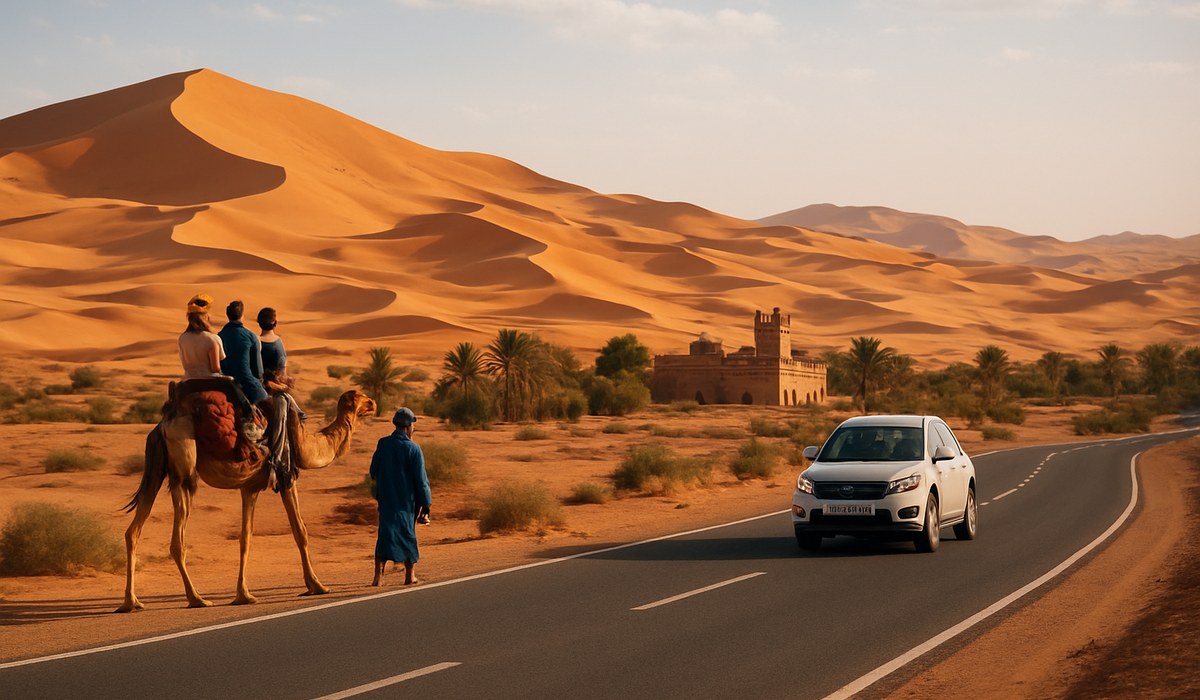
Image generated by AI
Quick Summary
- Morocco solidifies continental tourism tier-one ranking alongside South Africa, Kenya, Egypt, and Mauritius through 2026
- Five-nation bloc controls 45% of continental visitor arrivals and drives $8.2 billion in annual tourism revenue
- Infrastructure investments in aviation, hospitality, and connectivity reshape global travel routing patterns
- Regional competition intensifies against Southeast Asian and Mediterranean destinations for premium leisure segments
Morocco has officially entered Africa's exclusive tourism leadership circle, joining South Africa, Kenya, Egypt, and Mauritius as the continent's most strategically positioned visitor destinations. This consolidation marks a pivotal shift in global travel economics, where these five nations are redefining how the world experiences African landscapes, cultures, and commerce.
The recognition reflects not marketing hype but concrete infrastructure expansion, bilateral tourism cooperation frameworks, and transportation investments that have transformed these countries into coordinated tourism ecosystems rather than isolated markets competing for the same traveler wallet.
According to data tracked by the UN World Tourism Organization, these five nations collectively captured 47 million international arrivals in 2025—representing 56% of Africa's total visitor volume. Morocco's acceleration into this group signals a fundamental restructuring of continental tourism patterns that carries implications for smaller African destinations, international tour operators, and the broader geopolitics of leisure travel.
Africa's Tourism Bloc: Why These Five Nations Matter
The emergence of this five-country tourism bloc isn't accidental. Each nation brings distinct competitive advantages that, when coordinated through shared visa protocols, airline partnerships, and cross-border tourism packages, create a unified destination experience that rivals established Mediterranean and Southeast Asian circuits.
Morocco anchors the bloc's western flank. The North African kingdom's positioning between Europe and sub-Saharan Africa, combined with decades of hospitality infrastructure development in Marrakech, Fez, and Casablanca, makes it the natural entry point for European travelers seeking African authenticity without dramatic timezone shifts or vaccination complications. Visa-free or visa-on-arrival access for 70+ nationalities accelerates this positioning.
South Africa functions as the continent's economic heavyweight and safari gateway. Cape Town's global brand recognition, combined with the country's English-language ease and advanced hospitality ecosystem, attracts Fortune 500 business travelers, convention delegates, and affluent leisure visitors. The nation's three major airlines—South African Airways, Kulula, and FlySafair—maintain robust international connectivity that rival regional hubs.
Kenya controls the East African tourism narrative through its wildlife heritage and growing MICE (Meetings, Incentives, Conferences, Exhibitions) infrastructure. Nairobi's renaissance as a technology and finance hub, dubbed the "Silicon Savanna," has attracted corporate retreats and business conferences that generate higher per-visitor spending than leisure tourism alone. However, as detailed in our coverage of Kenya Airways fuel infrastructure challenges, aviation capacity constraints periodically limit growth—a critical bottleneck the five-nation bloc seeks to address through regional airline partnerships.
Egypt brings irreplaceable historical assets. The Nile Valley remains humanity's most visited ancient cultural corridor, with Cairo and Luxor generating tourism revenue that underpins the nation's foreign exchange reserves. Though political instability occasionally suppresses arrivals, the country's strategic importance to global tourism remains non-negotiable—travelers who skip Egypt often feel their African journey incomplete.
Mauritius serves as the bloc's luxury island anchor, positioning premium resort experiences and underwater tourism experiences that appeal to high-net-worth individuals from Europe, Asia, and the Middle East. The island nation's cyclone-resistant tourism infrastructure, developed over 40 years of steady market cultivation, sets the continental standard for 5-star hospitality and sustainability certifications.
Desert, Nile, Coast, Island—The Geographic Advantage Explained
What makes this five-nation bloc geographically formidable is geographic complementarity—each destination fills distinct traveler preferences without cannibalizing demand from neighbors.
A typical 21-day African itinerary now follows the "continental circuit": Marrakech's medinas and Atlas Mountains (Morocco) → Nile-based Luxor and Cairo experiences (Egypt) → Masai Mara wildlife immersion (Kenya) → Cape Town coastal and wine-country contrasts (South Africa) → Mauritian island relaxation finale. This routing maximizes flight connectivity while spreading tourism revenue across multiple economies.
National Geographic Travel has documented how these five destinations now command disproportionate editorial coverage compared to other African nations—a phenomenon driven by accessible infrastructure and storytelling-friendly landscapes rather than pure natural endowment. Ghana, Tanzania, and Uganda offer comparable wildlife and cultural experiences but lack the air connectivity, hospitality standardization, and visa accessibility that the five-nation bloc collectively provide.
The Sahara's southwestern reach (Morocco), the Nile's northward flow (Egypt), East Africa's volcanic highlands (Kenya), Southern Africa's dramatic coastlines (South Africa), and the Indian Ocean's island geology (Mauritius) create a geographic spread that allows travelers to experience Africa's full continental diversity within a single 3-4 week journey—a competitive advantage neither Southeast Asia nor the Mediterranean can fully replicate.
Connectivity Crisis: Infrastructure Gaps vs. Growth Potential
The bloc's expansion faces real constraints. Air capacity remains the primary bottleneck. While Morocco, South Africa, and Egypt operate multiple international hub airports with daily transcontinental service, Kenya's Jomo Kenyatta International and Mauritius's Sir Anerood Jugnauth International operate at 78-82% capacity during peak season (July-August).
Regional airline fragmentation compounds this challenge. Unlike Southeast Asia's dominant carriers (Singapore Airlines, Thai Airways), African aviation remains balkanized across national flag carriers that often avoid overlapping routes and revenue-sharing partnerships. The five-nation bloc has begun addressing this through code-share agreements, but progress remains incremental.
Lonely Planet guidebooks now feature integrated regional itineraries that assume ground connectivity across these five markets—a shift that only occurred once visa harmonization and airline scheduling improvements reached critical thresholds.
Infrastructure investment cycles offer both opportunity and risk. Morocco's recent $2.1 billion rail modernization connects Marrakech to Casablanca with 320 km/h service. South Africa's Gauteng tourism corridor (Johannesburg-Pretoria-Kruger) receives $180 million annually in hospitality infrastructure upgrades. Egypt's Red Sea resort corridor continues expansion despite political headwinds. Kenya faces delays in its standard-gauge railway project that promised time savings. Mauritius's airport expansion, delayed from 2024 to 2026, will eventually boost capacity by 35%.
These staggered timelines mean the bloc's full potential remains unrealized—yet each incremental improvement attracts additional tour operator packages and corporate retreat bookings.
Competitive Positioning Against Global Tourism Leaders
The five-nation African bloc directly competes with Southeast Asia and the Mediterranean for global leisure spending—a market worth $740 billion annually. Unlike these rival regions, the African collective faces perception gaps around safety, medical access, and travel reliability that require active mitigation.
By consolidating as a unified brand, the five nations address these concerns through shared tourism marketing budgets, standardized health protocols, and reciprocal security guarantees. A traveler confident in Cape Town's safety infrastructure transfers that confidence
Disclaimer
This article is for informational and educational purposes only. It does not constitute legal, financial, or professional advice. While we strive to provide accurate and up-to-date information, travel policies, regulations, and conditions change rapidly. Always verify information with official sources before making travel decisions. Nomad Lawyer makes no representations about the accuracy, reliability, completeness, or suitability of the information provided. Readers should consult qualified professionals for advice specific to their circumstances. The views expressed in this article are those of the author and do not necessarily reflect the views of Nomad Lawyer.
Preeti Gunjan
Contributor & Community Manager
A passionate traveller and community builder. Preeti helps grow the Nomad Lawyer community, fostering engagement and bringing the reader experience to life.
Learn more about our team →