
Gemini Trains Plans Direct London to Cologne Route to Expand European Cross-Border Rail Connectivity by 2030
Gemini Trains announces plans for a direct London–Cologne rail service by 2030, leveraging hubs like Stratford International to challenge short-haul flights and enhance UK-Germany tourism.

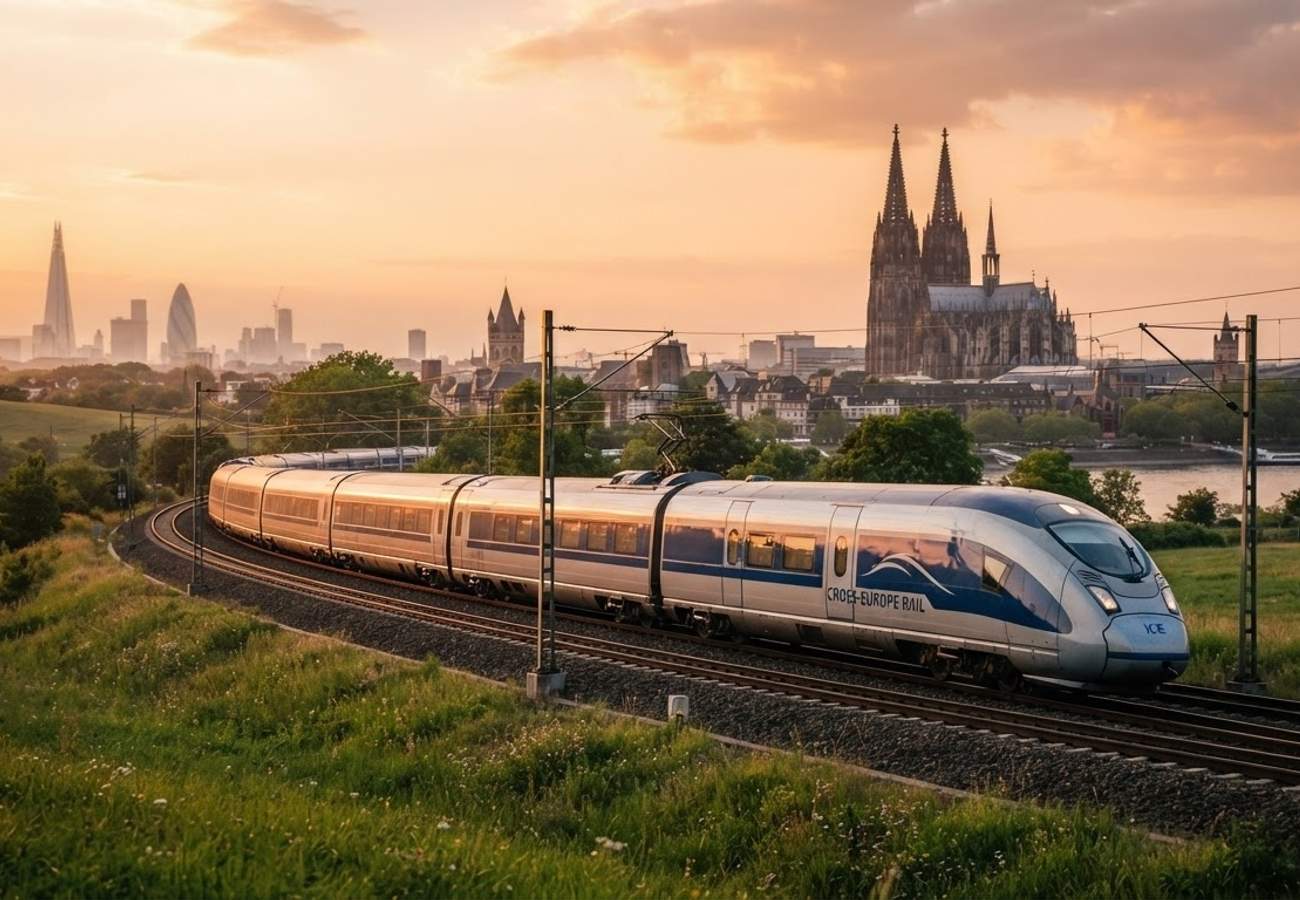
Image generated by AI
The proposed direct rail link between London and Cologne by Gemini Trains signals a major shift in Western European mobility, aiming to divert passengers from short-haul flights to sustainable, high-speed rail by 2030.
Expansion of Cross-Border Rail Networks in Europe
European rail travel is undergoing a structural transformation as nations prioritize sustainable mobility and the integration of international networks. The proposed Gemini Trains service connecting London and Cologne is a response to a documented surge in rail demand. According to Eurostat, EU rail passenger transport hit a record high in 2024, with 8.7 billion rail journeys accounting for 444.5 billion passenger-kilometres.
Germany and France currently lead the European Union in rail performance, serving as the primary engines for international mobility. The move toward direct, long-distance routes between the UK and Germany reflects a broader trend where travelers are increasingly rejecting carbon-intensive flights in favor of multi-country rail itineraries.
Regional Rail Performance and Market Data (2024)
The following data highlights the current scale of the markets Gemini Trains intends to penetrate, based on official Eurostat figures.
| Country | Rail Passengers (2024) | Passenger-Kilometres (2024) | Primary Strategic Role |
|---|---|---|---|
| Germany | ~2.9 Billion | 109.1 Billion | Largest EU rail passenger market |
| France | ~1.32 Billion | 107.3 Billion | High-speed gateway and hub |
| Belgium | ~250 Million | N/A | Strategic interchange hub |
| European Union | 8.7 Billion (Total) | 444.5 Billion (Total) | Record-level passenger growth |
Strategic Route Specifications: London to Cologne
Gemini Trains has targeted 2030 for the launch of its direct London–Cologne service. This route is designed to decentralize international departures from central London, utilizing strategic hubs to capture a wider passenger base.
Proposed UK Departure Hubs:
- Stratford International (Main Hub)
- Ebbsfleet International
- Ashford International
By utilizing these points, the service reduces the reliance on St Pancras International and provides more accessible boarding options for travelers in East Kent and East London.
Traveler Logistics Guide: Navigating Cross-Border Rail
From a ground-level perspective, transitioning from air travel to long-distance rail requires a shift in booking and transit logic. Navigating a route that spans the UK, France, Belgium, and Germany involves specific logistical considerations.
Booking and Connections For multi-destination trips, travelers should utilize integrated ticketing platforms. When planning connections in Brussels—the primary interchange between London, Paris, and Cologne—allow a minimum of 60 to 90 minutes for transfers. While Belgian stations are efficient, the volume of international transit can lead to bottlenecks during peak holiday windows.
Digital Transit and Customs Travelers moving from the UK to the Schengen Area (France, Belgium, Germany) must account for passport control. Since the UK is not part of the Schengen zone, customs checks occur at the point of entry to the mainland. Utilizing digital transit IDs and ensuring all travel documents are updated is essential to avoid delays at the Channel Tunnel checkpoints.
Optimal Layover Strategy If the direct Gemini service is not available for a specific date, the most efficient alternative is the "Brussels Pivot." By taking a high-speed link from London to Brussels and transferring to a German ICE (Intercity-Express) train, travelers can reach Cologne with minimal friction.
Infrastructure Impact Assessment
The introduction of a direct London–Cologne route creates a ripple effect across Western European tourism. By linking the UK directly to Germany's western region—specifically Cologne, Düsseldorf, and Frankfurt—the service lowers the barrier for cultural and business exchange.
France and Belgium stand to benefit as secondary hubs. France's existing high-speed infrastructure already facilitates massive passenger volumes, and any additional Gemini services (such as proposed London–Paris routes) will further saturate the market, likely driving down prices through increased competition. Belgium, meanwhile, solidifies its position as the indispensable "bridge" of Western Europe, ensuring that Brussels remains the central nervous system for rail mobility between the UK and the EU.
The shift toward rail is no longer just an environmental preference but a logistical evolution in European tourism.
Related Travel Guides
Disclaimer
This article is for informational and educational purposes only. It does not constitute legal, financial, or professional advice. While we strive to provide accurate and up-to-date information, travel policies, regulations, and conditions change rapidly. Always verify information with official sources before making travel decisions. Nomad Lawyer makes no representations about the accuracy, reliability, completeness, or suitability of the information provided. Readers should consult qualified professionals for advice specific to their circumstances. The views expressed in this article are those of the author and do not necessarily reflect the views of Nomad Lawyer.
Raushan Kumar
Founder & Lead Developer
Full-stack developer with 11+ years of experience and a passionate traveller. Raushan built Nomad Lawyer from the ground up with a vision to create the best travel and law experience on the web.
Learn more about our team →