
Gautrain fault strands commuters on Sandton-Rosebank corridor in April 2026
A technical fault on Johannesburg's Gautrain suspended services between Sandton and Rosebank in April 2026, leaving commuters stranded on Africa's busiest rapid rail link and triggering emergency bus replacements.

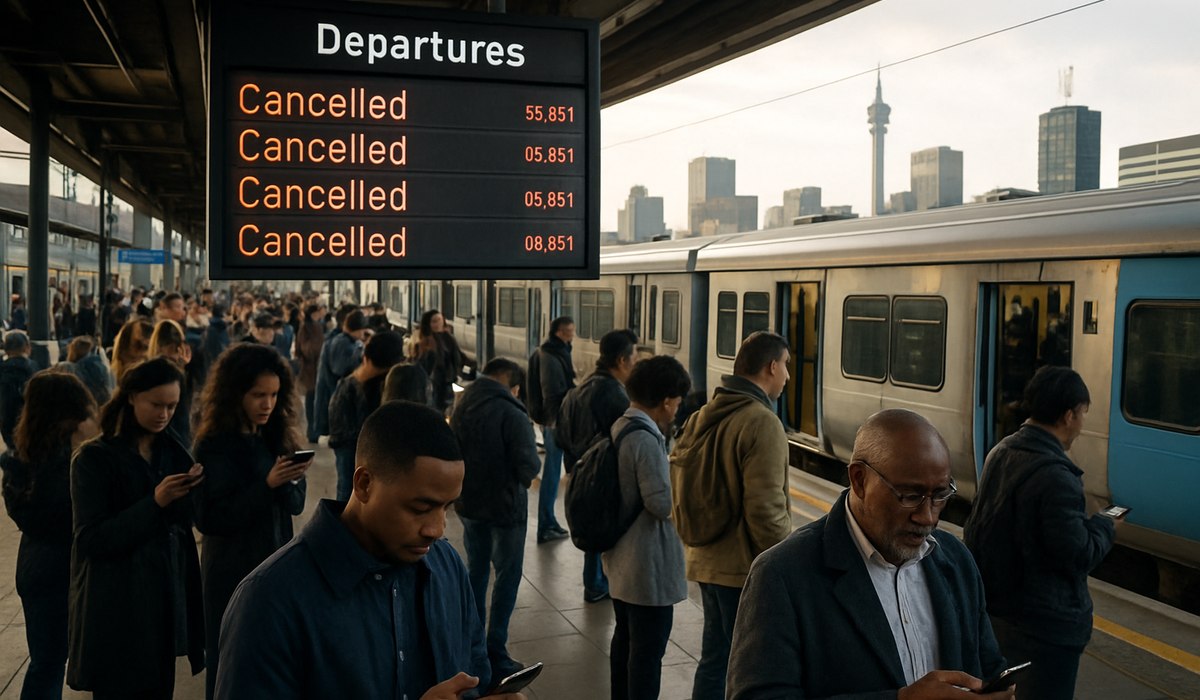
Image generated by AI
Technical Fault Halts Africa's Premium Commuter Rail Link
A technical fault on the Gautrain between Sandton and Rosebank stations suspended services on Thursday, April 23, 2026, stranding dozens of passengers on one of Johannesburg's most critical transportation arteries. The incident forced the operator to implement emergency replacement bus services while engineering teams investigated the infrastructure failure affecting this 5.4-kilometer inner-city corridor. The Gautrain fault strands scenario unfolded without warning when trains serving the busy financial district were halted mid-route, triggering widespread commuter disruption during peak business hours and leaving time-sensitive travelers scrambling for alternatives.
Services Halted on Critical Inner-City Gautrain Link
The Sandton-Rosebank section represents one of Africa's highest-capacity rapid transit segments, carrying tens of thousands of office workers, students, and airport-bound passengers daily. When the gautrain fault strands disruption occurred, trains traveling from Park Station stopped abruptly at Rosebank with minimal advance warning to passengers. Commuters were instructed to disembark and wait outside the station precinct as the operator issued service alerts citing a technical fault along the track infrastructure.
The suspension affected the precise mid-point connection between Johannesburg's traditional central business district and the booming commercial hub of Sandton. This segment operates as the main transit spine linking the CBD, Rosebank's corporate offices, and Sandton's financial institutions—making service continuity essential for the city's economic rhythm. The operator's notification advised all patrons that no trains would operate between the two stations pending investigation and repairs, with no initial timeline provided for restoration.
Widespread Disruption Affects Office Workers and Air Travelers
The timing of the gautrain fault strands incident amplified its impact across multiple passenger categories. Office workers heading to Sandton-based meetings faced sudden rescheduling pressures. Students traveling between university campuses lost reliable connectivity. Most critically, air travelers making time-sensitive connections to OR Tambo International Airport—typically a 15-minute journey from Sandton station—found themselves stranded with no clear alternative routing.
Social media forums filled with commuter accounts describing confusion and frustration. Many passengers attempted to replan journeys within minutes of the suspension announcement. The ripple effects extended beyond the immediate corridor: delays on the Sandton-Rosebank section cascade through the broader Gautrain network, affecting connections to Pretoria services, Midrand links, and airport buses departing from Sandton station. Some travelers reported missing critical appointments; others absorbed unexpected costs by switching to e-hailing rideshare services, which typically cost three to five times more than standard Gautrain fares during peak periods.
Replacement Buses Activated as Emergency Response
Within hours of the fault announcement, the Gautrain operator deployed replacement bus services between Sandton and Rosebank stations to maintain connectivity across the disrupted segment. A shuttle train continued operating between Park Station and Rosebank, effectively converting Rosebank into a temporary transfer point for passengers requiring onward Sandton connections.
The emergency response structure meant passengers from the inner city could still reach Rosebank by rail but faced mandatory transfer to road-based transport to continue northbound. While this arrangement preserved basic connectivity, the shift from rail to bus inevitably extended journey times—particularly problematic given the notorious congestion on Johannesburg's arterial routes between Rosebank and Sandton during business hours. Peak-period traffic delays frequently added 20-40 minutes to the usual 12-minute rail transit time.
Station staff deployed guidance personnel to direct passengers toward correct boarding points and communicate updated service patterns. However, crowding at Rosebank intensified as stranded travelers awaited bus arrivals, and information gaps left many uncertain about revised schedules and connection timings.
Commuters Forced to Seek Alternative Transport Options
The gautrain fault strands scenario forced commuters into expensive and time-consuming alternatives during a critical business day. E-hailing services like Uber and Bolt experienced surge-pricing across the Rosebank-Sandton corridor. Metered taxi ranks experienced demand spikes. Some commuters opted for personal vehicle use, further congesting already-saturated routes through the business district.
For business travelers and air passengers, the disruption created genuine transportation crises. Those with tight airport connections faced the choice between paying premium e-hailing fares or accepting potential flight delays. The incident highlighted the Gautrain's essential role in Johannesburg's transport ecosystem—when this single premium link fails, no adequate high-capacity backup exists. The network operates as a time-efficient alternative to driving through chronically congested corridors, and brief suspensions create disproportionate pressure on road infrastructure and alternative providers unprepared for sudden demand surges.
Key Data: Gautrain Fault Strands April 2026 Disruption
| Metric | Details |
|---|---|
| Affected Corridor | Sandton to Rosebank stations |
| Disruption Date | Thursday, April 23, 2026 |
| Fault Type | Technical fault (infrastructure-related) |
| Normal Journey Time | 12 minutes by rail |
| Replacement Service | Emergency buses between affected stations |
| Peak-Period Impact | 20-40 minute delays on replacement bus service |
| Passenger Categories Affected | Office workers, students, air travelers, business commuters |
| Network Cascade Effects | Delays affecting connections to Pretoria, Midrand, OR Tambo services |
| Typical Daily Ridership | Tens of thousands on Sandton-Rosebank segment |
| Service Restoration | Under investigation (no timeline initially provided) |
What This Means for Travelers
If you're planning Johannesburg transport during spring 2026, the gautrain fault strands incident illustrates critical vulnerabilities in the region's rapid transit infrastructure:
-
Build Extra Buffer Time: Add 45-60 minutes to Gautrain journeys during peak hours if traveling between the CBD and Sandton, accounting for potential service disruptions and replacement bus congestion.
-
Confirm Real-Time Status: Check the Gautrain official website for current service alerts before departing, particularly for time-sensitive airport connections.
-
Download Alternative Apps: Maintain active accounts with multiple e-hailing services (Uber, Bolt) as backup, though expect 2-3x standard pricing during corridor disruptions.
-
Plan Airport Trips Early: For OR Tambo connections, depart your hotel or office 90+ minutes before flight time rather than the typical 60 minutes, given suspension-related contingencies.
-
Consider Accommodation Proximity: Business travelers should book hotels within walking distance of Sandton or along the inner-city corridor to reduce dependency on the disrupted segment.
-
Book Refundable Fares: When purchasing Trainline rail tickets for South African connections, prioritize flexible cancellation terms given infrastructure vulnerability patterns.
Frequently Asked Questions
What caused the Gautrain fault strands incident on April 23, 2026? A technical fault affecting track infrastructure between Sandton and Rosebank suspended services without advance warning. The operator cited the fault as track-related but did not initially disclose specific technical details regarding damage type or origin.
How long did the Sandton-Rosebank service suspension last? The operator did not provide a specific restoration timeline in initial service announcements. Historical precedent suggests similar suspensions typically require 4-12 hours for
Disclaimer
This article is for informational and educational purposes only. It does not constitute legal, financial, or professional advice. While we strive to provide accurate and up-to-date information, travel policies, regulations, and conditions change rapidly. Always verify information with official sources before making travel decisions. Nomad Lawyer makes no representations about the accuracy, reliability, completeness, or suitability of the information provided. Readers should consult qualified professionals for advice specific to their circumstances. The views expressed in this article are those of the author and do not necessarily reflect the views of Nomad Lawyer.
Preeti Gunjan
Contributor & Community Manager
A passionate traveller and community builder. Preeti helps grow the Nomad Lawyer community, fostering engagement and bringing the reader experience to life.
Learn more about our team →