
Galataport Istanbul Waterfront Guide 2026: Cruise Terminal, Luxury Shopping, and Dining
Explore Galataport Istanbul, the 400,000 square meter mixed-use waterfront district in Karaköy featuring the world's first large-scale underground cruise terminal and luxury retail.
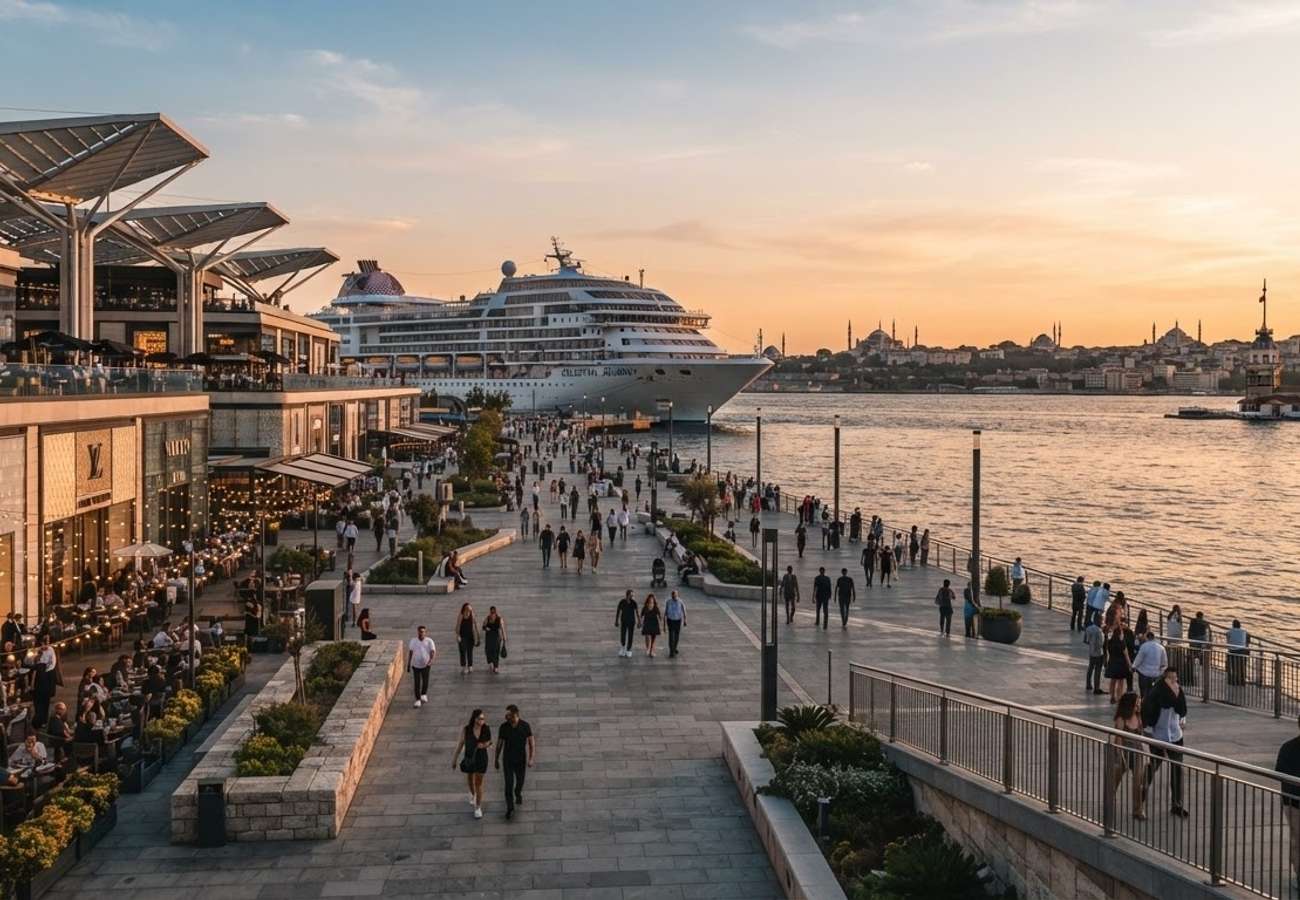
Image generated by AI
Formerly a restricted industrial zone, Galataport Istanbul has been reimagined as a premier cruise terminal and lifestyle hub spanning the Karaköy and Tophane waterfronts. This 400,000 square meter development integrates a subterranean port with a pedestrian-centric promenade, luxury retail, and high-end gastronomy.
For many international arrivals, this district serves as the primary entry point to the city. However, its open-air architecture makes it a standalone destination for non-cruisers seeking a modern Bosphorus experience.
Logistics and the Underground Cruise Terminal
Galataport now serves as the central gateway for major cruise lines, including MSC, Costa, Royal Caribbean, and Celebrity. The facility is distinguished by the world’s first large-scale underground cruise terminal, which moves customs and baggage handling below street level. This design allows pedestrians to walk along the Bosphorus uninterrupted—a first for the city in nearly two centuries.
Transit and Access:
- From Sultanahmet: Taxi transit typically takes 15 to 35 minutes. Current reported fares range between 7 and 15 US dollars via meter.
- Public Transport: The T1 tram provides a stable alternative; passengers should alight at Tophane and walk downhill to the waterfront.
- Pedestrian Connectivity: The site is strategically positioned for walking. The Galata Tower is approximately a 15-minute walk uphill, while Sultanahmet monuments are reachable in 15 to 20 minutes via tram.
Cruiser Protocols: Entry to the subterranean terminal is restricted to ticketed passengers and staff. Guests meeting arriving passengers must remain in public street-level areas.
Retail and Commercial Landscape
The retail environment at Galataport functions as a premium outdoor mall rather than a traditional bazaar. With over 200 shops and food outlets, the mix leans heavily toward international luxury and established Turkish labels.
Shopping Profiles:
- Turkish High-Street: Features ready-to-wear clothing, leather goods, and contemporary homeware. Mid-range Turkish apparel typically ranges from 50 to 120 US dollars.
- Boutique Finds: Smaller stores offer high-end souvenirs, including gold-plated Ottoman-inspired jewelry and Anatolian-scented soy candles.
- Market Positioning: This is a destination for luxury and design rather than bargain hunting. Travelers seeking traditional textiles or lower prices should instead visit the side streets of Karaköy, Cihangir, or the Grand Bazaar.
Gastronomy and Waterfront Dining
Dining is a central pillar of the Galataport experience, blending traditional Turkish flavors with global brands. The district is notable for its Bosphorus-facing terraces.
Dining Categories:
- Upscale Seafood: Specializing in grilled sea bass, sea bream, and traditional meze. A main course at a waterfront venue typically costs between 12 and 25 US dollars.
- International Concepts: Includes global arrivals such as Magnolia Bakery, known for its banana pudding and cupcakes.
- Casual Turkish: Various outlets provide staples like simit (sesame bread rings), borek, and traditional breakfast plates.
Pro Tip: To secure a front-row Bosphorus view during sunset hours—particularly in summer—early dinner or late lunch reservations are recommended, as terrace seating fills rapidly.
Waterfront Infrastructure and Experience
The promenade is the development's most significant contribution to Istanbul's urban layout. It provides a rare, car-free stretch on the European side with clear views of Üsküdar and Kadıköy. The area is designed for leisure, featuring integrated seating, low walls, and open-air courtyards that run parallel to Meclis-i Mebusan Caddesi.
Galataport Quick Reference Data
| Feature | Detail |
|---|---|
| Total Area | 400,000 square meters |
| Location | Karaköy & Tophane (European Side) |
| Retail Volume | 200+ shops and F&B outlets |
| Taxi Cost (Sultanahmet) | Approx. 7 – 15 USD |
| Average Main Course | 12 – 25 USD (Waterfront dining) |
| Key Transit Point | T1 Tram (Tophane Stop) |
Why This Matters: Industry Analysis
From a logistical perspective, Galataport represents a paradigm shift in how Istanbul manages cruise tourism. By moving the "industrial" side of port operations—security, customs, and luggage—underground, the city has reclaimed its waterfront for the public. This increases the "dwell time" of cruise passengers, who are now more likely to spend money in the immediate vicinity rather than immediately dispersing into the city center.
For the traveler, the real impact is the removal of the "port wall." The ability to walk from the Karaköy ferry docks to Tophane without encountering security fences transforms the area from a transit point into a lifestyle destination. However, the shift toward luxury retail means the "authentic" Istanbul experience is moving further inland, as the waterfront becomes increasingly homogenized with global luxury brands.
Forward Outlook
Expect further integration of cultural venues and expanded luxury hotel footprints within the Galataport perimeter. As the T1 tram line continues to be the primary artery for tourists, the pressure on Tophane Square will increase, likely leading to more pedestrian-only zones around the waterfront. We anticipate the district will evolve into a primary hub for "bleisure" (business and leisure) travel, given the proximity of new corporate offices to high-end dining and the Bosphorus.
A modern gateway that trades traditional bazaar chaos for curated waterfront luxury.
Related Travel Guides
Disclaimer
This article is for informational and educational purposes only. It does not constitute legal, financial, or professional advice. While we strive to provide accurate and up-to-date information, travel policies, regulations, and conditions change rapidly. Always verify information with official sources before making travel decisions. Nomad Lawyer makes no representations about the accuracy, reliability, completeness, or suitability of the information provided. Readers should consult qualified professionals for advice specific to their circumstances. The views expressed in this article are those of the author and do not necessarily reflect the views of Nomad Lawyer.