
Galata Tower Istanbul: From 1348 Genoese Fortress to 2026 Modern Museum Guide
Explore the evolution of Istanbul's Galata Tower, from its origins as a 1348 Genoese watchtower to its current role as a premier museum and transit landmark.

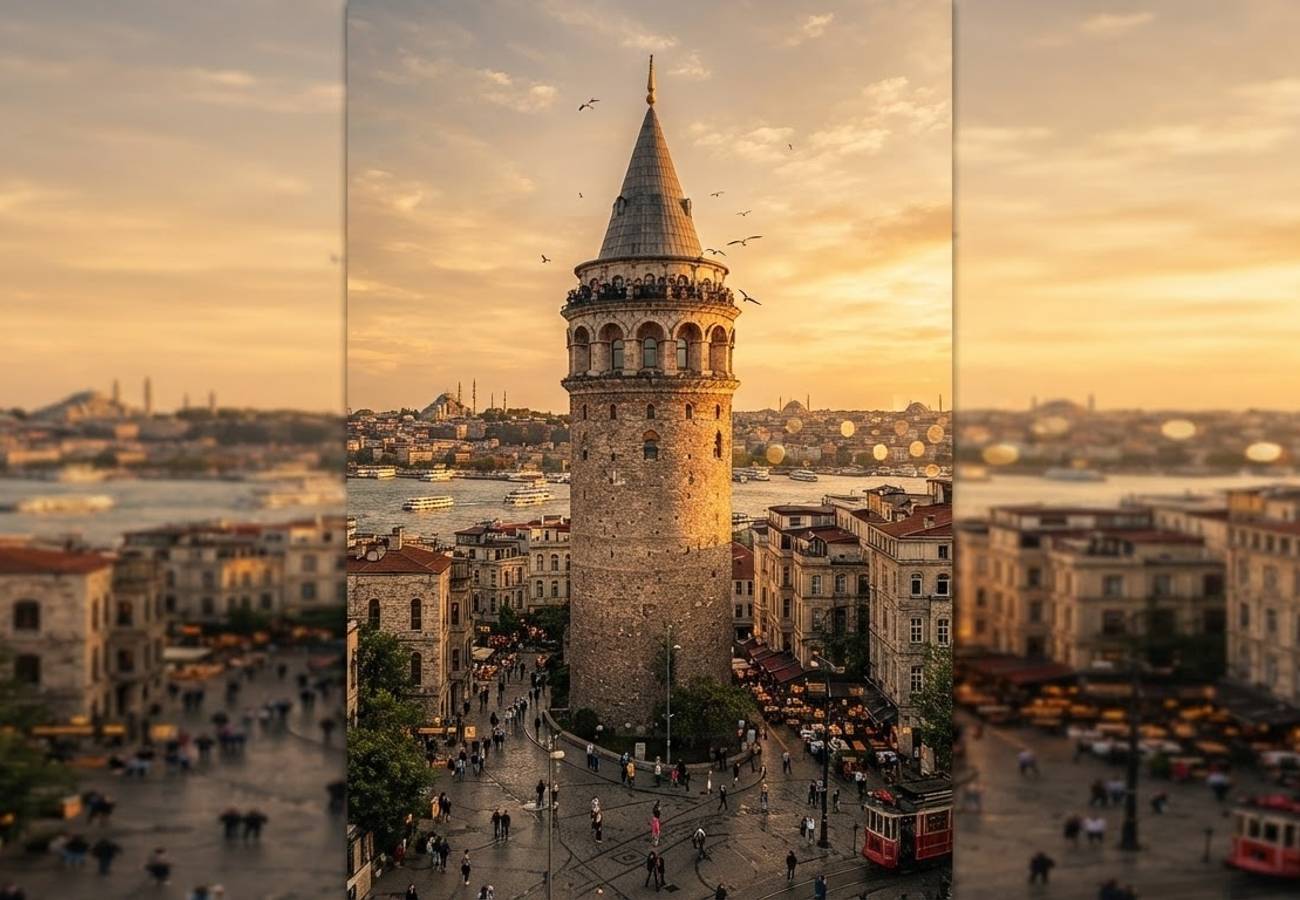
Image generated by AI
The Galata Tower remains one of Istanbul's most strategic transit and cultural landmarks, evolving from a 1348 Genoese military outpost into a modern museum. Today, it serves as the primary anchor for the Beyoğlu district's tourism economy.
The Evolution of a Maritime Sentinel
The Galata Tower is not merely a viewpoint but a vertical record of Istanbul's shifts in power. Long before the current structure, the area served as a foreign quarter for Genoese merchants who secured trading privileges north of the Golden Horn. These merchants established a fortified enclave known as Pera or Galata, controlling the flow of silk, grain, and spices entering the imperial capital.
The stone structure currently standing was completed in 1348 and was originally named the Christea Turris (Tower of Christ). Positioned at the highest point of the Genoese walls, it functioned as a medieval radar station, allowing guards to monitor the mouth of the Bosphorus for hostile fleets and track the maritime traffic that fueled the Genoese economy.
Transition to Ottoman Infrastructure
Following the conquest of Constantinople in 1453 by Mehmed II, the tower's military utility was absorbed into the Ottoman regime. While the Genoese political autonomy faded and the surrounding walls were eventually demolished, the tower remained essential for monitoring one of the world's busiest waterways.
By the 16th century, the tower's primary function shifted from military defense to urban safety. Due to the prevalence of timber-framed housing in Istanbul, the city was highly susceptible to catastrophic fires. The tower became the central hub for the Ottoman fire brigades. Watchmen scanned the horizon for smoke, using flags, lamps, and cannon shots to alert ground crews to the location of blazes.
Structural Resilience and Legend
The tower's history is marked by repeated destruction and reconstruction. Major fires in 1794 and 1831 severely damaged the upper sections, leading to architectural revisions including the addition of a coffee house on the upper floor and changes to the roof profile. These layers of masonry and timber reflect the building's struggle against the very fires it was designed to detect.
Beyond its utility, the tower is central to Istanbul's folklore. The most prominent legend is that of Hezarfen Ahmed Çelebi, a 17th-century figure who reportedly leaped from the tower with wooden wings, gliding across the Bosphorus to Doğancılar Square in Üsküdar. While historically debated, this narrative remains a core part of the museum's current exhibits.
Transit and Visitor Specifications
For those navigating the Beyoğlu district, the tower is the central point of a dense network of pedestrian lanes and public transit links.
| Feature | Specification | Detail |
|---|---|---|
| Original Construction | 1348 | Christea Turris (Tower of Christ) |
| Primary Ottoman Use | 16th-19th Century | Fire Observation & Maritime Lookout |
| Nearest Metro Stations | Şişhane / Karaköy | M2 Line (Şişhane) / T1 Tram (Karaköy) |
| District | Beyoğlu | Pera / Galata Quarter |
| Key Historical Events | 1794 & 1831 | Major fires leading to reconstruction |
Traveler Logistics Guide: Navigating Galata in 2026
From a ground-level perspective, the best way to navigate the Galata area is to avoid taxis, which frequently struggle with the narrow, pedestrian-heavy lanes of Beyoğlu.
Optimal Transit Route: The most efficient approach is via the M2 Metro to Şişhane station. From there, it is a short walk downhill toward the tower. Alternatively, taking the T1 Tram to Karaköy allows you to walk uphill through the historic Genoese warehouses, providing a better sense of the area's medieval urban fabric.
Booking and Entry: To avoid the significant queues that form in the small square at the tower's base, prioritize "Skip-the-Line" passes or official museum cards. Given the tower's limited internal capacity, visiting during the first hour of opening or late afternoon is recommended to avoid peak congestion.
Digital Transit Tips: Ensure your Istanbulkart is topped up via the mobile app before arriving in the district. If you are traveling from the Asian side, use the ferries to Karaköy; this mimics the historical maritime approach the tower was built to monitor.
Infrastructure and Regional Impact
The continued preservation of the Galata Tower drives significant foot traffic into the Beyoğlu district, supporting a micro-economy of cafes, galleries, and boutiques. The tower acts as a gateway, funneling tourists from the transit hubs of Karaköy and Şişhane into the deeper residential and commercial arteries of the city. Its role has transitioned from protecting the city from fire to anchoring the city's cultural tourism infrastructure.
A sentinel of stone that witnessed the fall of empires and the rise of a metropolis.
Related Travel Guides
Disclaimer
This article is for informational and educational purposes only. It does not constitute legal, financial, or professional advice. While we strive to provide accurate and up-to-date information, travel policies, regulations, and conditions change rapidly. Always verify information with official sources before making travel decisions. Nomad Lawyer makes no representations about the accuracy, reliability, completeness, or suitability of the information provided. Readers should consult qualified professionals for advice specific to their circumstances. The views expressed in this article are those of the author and do not necessarily reflect the views of Nomad Lawyer.
Kunal K Choudhary
Co-Founder & Contributor
A passionate traveller and tech enthusiast. Kunal contributes to the vision and growth of Nomad Lawyer, bringing fresh perspectives and driving the community forward.
Learn more about our team →