
Frontier Airlines Exits New York JFK Airport as US Carriers Reshape Route Networks and Budget Travel
Frontier Airlines terminates operations at New York JFK, shifting its tri-state footprint to LaGuardia and Newark Liberty as US airlines adapt to changing passenger demand.

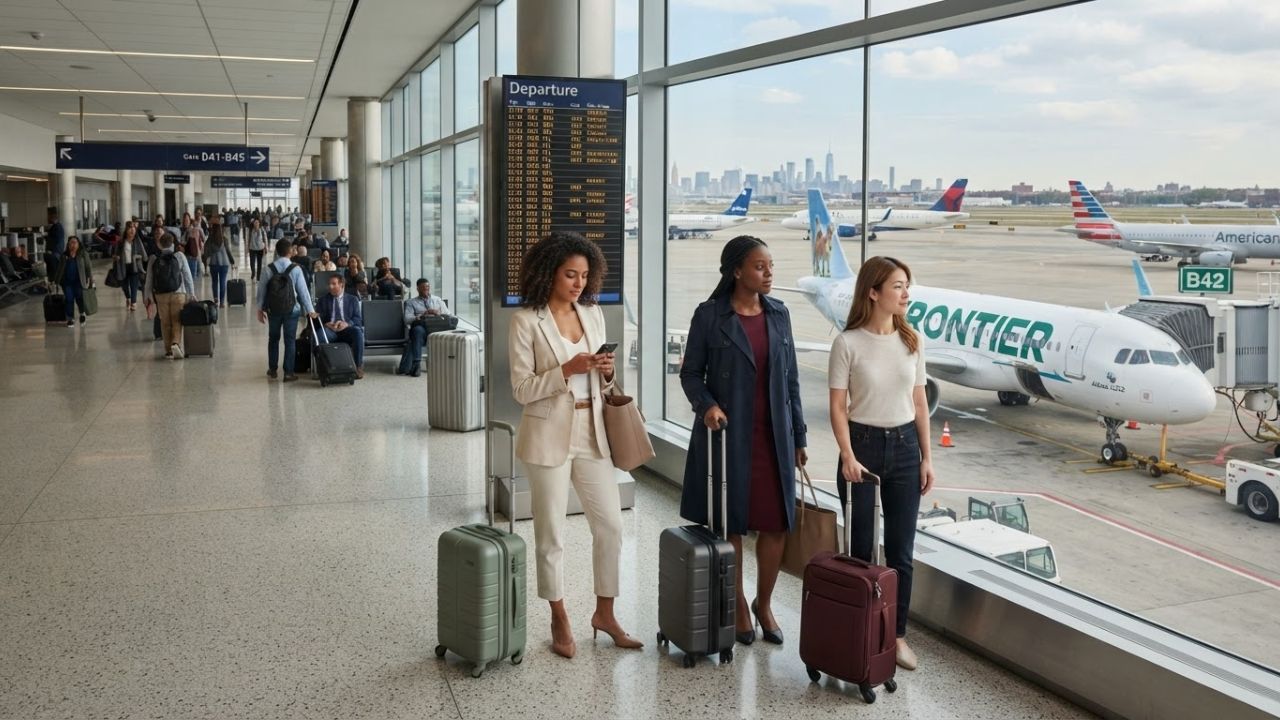
Image generated by AI
Frontier Airlines has officially ended all flight operations at New York’s John F. Kennedy International Airport, consolidating its tri-state presence at LaGuardia and Newark Liberty as carriers aggressively restructure networks around operational efficiency.
The withdrawal highlights a fundamental transformation unfolding across the United States commercial aviation market. As airlines grapple with shifting consumer travel habits, escalating airport operating costs, and runway capacity constraints, carriers are systematically pruning underperforming secondary operations to redeploy aircraft where demand and profit margins are strongest. By stepping away from JFK—one of the world's premier international gateways—Frontier is signaling a strategic retreat from high-cost mega-hubs in favor of more streamlined, cost-effective regional airports.
The Local Trend Revealed: Why Budget Carriers Are Leaving JFK
Frontier Airlines originally expanded into John F. Kennedy International Airport (JFK) to capture a share of New York City’s massive origin-and-destination passenger market. However, operating an ultra-low-cost carrier (ULCC) model within JFK’s complex infrastructure presents severe economic friction:
- High Landing Fees and Terminal Real Estate: Managed by the Port Authority of New York and New Jersey (PANYNJ), JFK commands some of the steepest landing fees and terminal gate lease rates in North America. For a carrier competing on sub-$50 base fares, these fixed overheads significantly erode unit revenues.
- Severe Airspace Congestion: JFK prioritizes widebody international long-haul banks and legacy airline operations (principally Delta Air Lines and American Airlines). Ground delays, prolonged taxi times, and Federal Aviation Administration (FAA) slot restrictions undermine the rapid 30-to-45-minute aircraft turnarounds required to make budget carrier economics viable.
- Strategic Tri-State Realignment: Rather than exiting the New York metropolitan area altogether, Frontier is concentrating its regional flying at LaGuardia Airport (LGA) in Queens and Newark Liberty International Airport (EWR) in New Jersey, where point-to-point domestic schedules align more naturally with short-haul leisure demand.
New York Tri-State Airport Matrix: Frontier’s Operational Realignment
| Airport Gateway | Operational Status | Strategic Function for Budget Flyers | Transit & Connectivity Realities |
|---|---|---|---|
| John F. Kennedy Int'l (JFK) | Operations Terminated | International hub; high landing fees and slot limits | AirTrain connection to subway/LIRR; long taxi times |
| LaGuardia Airport (LGA) | Active & Retained | Primary domestic short-haul and vacation getaway hub | Free Q70-SBS Select Bus to subway; modern terminals |
| Newark Liberty Int'l (EWR) | Active & Retained | Transcontinental and Florida corridor gateway | Direct NJ Transit / Amtrak rail link to Penn Station |
Reshaping the US Low-Cost Sector: Efficiency Over Pure Expansion
Frontier’s exit from JFK is part of a broader nationwide trend among low-cost airlines to overhaul route networks in 2026. After years of rapid post-pandemic fleet expansion, budget carriers face altered market realities:
- Focus on Profitable Peak Windows: Airlines are cutting off-peak mid-week frequencies that fail to generate sustainable seat load factors, shifting aircraft toward Thursday-through-Monday leisure travel surges.
- Simplified Outstation Operations: By eliminating ground staff, gate leases, and contract maintenance teams at complex hubs like JFK, carriers reduce fixed operational expenses.
- Product Unbundling Evolution: As legacy carriers expand their own basic economy fares, low-cost carriers are refining fare bundles—including transparent baggage allowances, premium seating choices, and waived change fees—to attract price-sensitive business commuters alongside vacationers.
Cultural & Environmental Value: Modern Fleets and Sustainable Transit
Airlines restructuring their networks must navigate evolving climate benchmarks established by environmental regulators and regional transport authorities.
Frontier operates one of the youngest and most fuel-efficient aircraft fleets in the Americas, consisting primarily of Airbus A320neo and A321neo jetliners. These aircraft feature high-density seating that achieves substantially lower fuel consumption and carbon emissions per available seat mile compared to older regional jets.
Concurrently, shifting regional operations to LaGuardia and Newark provides travelers with cleaner transit options across the New York metropolitan area:
- Zero-Fare Airport Transit: At LaGuardia, the free LaGuardia Link Q70 Select Bus Service (SBS) provides a direct electric and hybrid-diesel link to the Jackson Heights–Roosevelt Avenue transit hub, connecting flyers to five New York City Subway lines without requiring private rideshare idling.
- Direct Rail Integration: Newark Liberty's direct rail connection via NJ Transit delivers passengers from Midtown Manhattan to terminal monorails in under 30 minutes, preventing thousands of vehicular trips along the congested Holland and Lincoln Tunnels.
Visitor Insider Tips: Navigating New York’s Airport Network
For travelers planning trips into or out of New York City in the wake of airline network shifts, these local strategies ensure seamless travel:
- Assess Ground Travel Time Before Booking: Do not book flights based on ticket prices alone. Factor in the cost and duration of ground transit. LaGuardia is generally closest and cheapest for travelers staying in Midtown Manhattan, Upper Manhattan, or northern Brooklyn. Newark Liberty is fastest for travelers staying in Lower Manhattan, Financial District, or New Jersey.
- Managing Discontinued JFK Bookings: If you hold existing Frontier tickets originally routed through JFK, federal Department of Transportation rules entitle you to a full cash refund if the carrier cannot rebook you on a satisfactory alternative flight or reroutes you to another airport that causes unacceptable travel disruption.
- Baggage Compliance Strategy: When flying Frontier out of LaGuardia or Newark, strictly adhere to carry-on size limitations (personal items must fit within 18" x 14" x 8", and overhead bags within 24" x 16" x 10"). Purchasing bags during initial booking rather than at the airport counter saves up to 50% in ancillary fees.
- Terminal Navigation at LGA and EWR: At LaGuardia, Frontier operates out of the historic Terminal A (Marine Air Terminal) or Terminal B, which feature dramatically shorter TSA security lines than JFK’s sprawling international terminals. At Newark, operations center around the newly modernized Terminal A, offering state-of-the-art sensory rooms and local New Jersey dining concepts.
- Target Midday Departures: To avoid notorious morning runway holding delays across the New York tri-state airspace, target departures scheduled between 10:30 AM and 1:30 PM.
Tourism Outlook: The New Reality of Destination Connectivity
The restructuring of airline operations across major American airports highlights that air connectivity is never static. For tourism destinations and business travelers, airline network flexibility is the defining feature of post-2026 travel.
While travelers will miss the convenience of low-cost tickets out of JFK, Frontier’s consolidation at LaGuardia and Newark allows the carrier to run a more dependable, resilient operation with fewer ground delays. As competition across New York’s multi-airport system accelerates, travelers who understand how to navigate regional airport choices will continue to unlock affordable, convenient journeys across the United States.
Related Travel Guides
Disclaimer
This article is for informational and educational purposes only. It does not constitute legal, financial, or professional advice. While we strive to provide accurate and up-to-date information, travel policies, regulations, and conditions change rapidly. Always verify information with official sources before making travel decisions. Nomad Lawyer makes no representations about the accuracy, reliability, completeness, or suitability of the information provided. Readers should consult qualified professionals for advice specific to their circumstances. The views expressed in this article are those of the author and do not necessarily reflect the views of Nomad Lawyer.
Raushan Kumar
Founder & Lead Developer
Full-stack developer with 11+ years of experience and a passionate traveller. Raushan built Nomad Lawyer from the ground up with a vision to create the best travel and law experience on the web.
Learn more about our team →