
France and Spain Wildfires 2026: Tour de France and Baja España Aragón Rally Disrupted by Inferno
Extreme wildfires across Gironde, Madrid, and Ávila have forced the cancellation of Bastille Day fireworks and the postponement of the Baja España Aragón Rally in 2026.

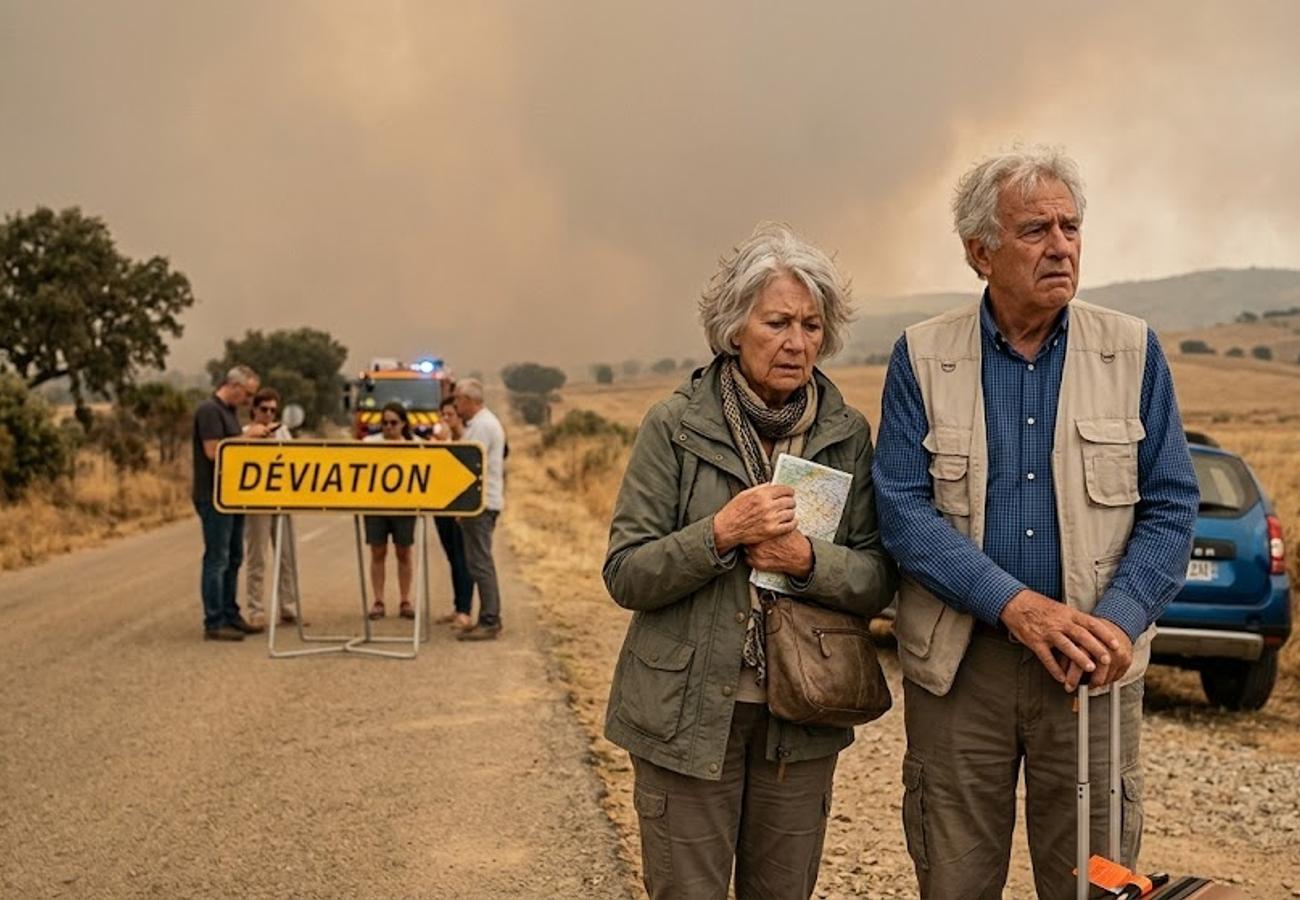
Image generated by AI
[City, July 26, 2026] — A series of catastrophic wildfires sweeping through southern Europe has forced the immediate cancellation, shortening, or postponement of major cultural and sporting events, including the Tour de France final stage, Bastille Day fireworks, and the Baja España Aragón Rally. With infernos engulfing regions in Gironde, Madrid, and Ávila, authorities have shifted all priorities toward emergency evacuations and public safety, leaving thousands of tourists and residents stranded or diverted.
The scale of the crisis is driven by a volatile combination of prolonged drought, record-breaking heatwaves, and high-velocity winds. These conditions have turned forests and grasslands into tinder, allowing fires to spread rapidly across some of the continent's most visited summer destinations. As emergency services struggle to contain the blazes, the ripple effects are being felt across the travel, hospitality, and entertainment sectors.
Bastille Day Fireworks Banned in Fire-Prone French Communities
The traditional celebrations of Bastille Day, typically a cornerstone of French summer tourism, faced significant setbacks this year. In the Pyrénées-Orientales department, multiple municipalities were forced to scrap their annual fireworks displays.
Local officials determined that the risk of ignition was too high given the exceptionally dry state of the vegetation. The decision was based on the fact that pyrotechnic displays could easily trigger new wildfires, further straining emergency responders who are already operating at maximum capacity. For the international and domestic visitors who flock to these regions for evening concerts and festivals, the cancellations serve as a stark reminder of how environmental volatility is altering European cultural traditions.
Tour de France Final Stage Shortened Due to Security Redeployment
One of the world's most prestigious sporting events, the Tour de France, was not immune to the crisis. Organizers announced that the final stage of the race had to be shortened to accommodate the emergency response.
The decision followed the redeployment of security and police personnel to wildfire-hit zones, with a specific focus on Bordeaux and the wider southwestern region of France. Because police resources were required to manage road closures and coordinate the evacuation of threatened residential areas, the race logistics had to be modified. This adjustment highlights the precarious nature of large-scale event management during natural disasters, as the Tour de France typically generates massive revenue for local hotels, transport providers, and hospitality businesses.
Cultural Institutions and Museums Implement Temporary Closures
The impact extended beyond outdoor events and into the heart of France's cultural sector. Several museums in Paris and various regional galleries suspended operations during the peak of the heatwave and wildfire emergency.
These temporary shutdowns were triggered by high-level heat alerts and the need to protect both staff and visitors from extreme temperatures. Additionally, reducing the operational load on city infrastructure allowed authorities to prioritize public safety resources. For travelers who had planned their itineraries around France's world-renowned art and history institutions, these closures necessitated sudden changes in plans and underscored the vulnerability of urban tourism to climate extremes.
Major Disruptions to the Baja España Aragón Rally in Spain
Spain is currently facing a national wildfire emergency under its Civil Protection System, leading to the postponement of the Baja España Aragón Rally.
The motorsport event was delayed after emergency authorities requested all available personnel and equipment be diverted to fight rapidly expanding blazes across several Spanish provinces. Organizers acknowledged that proceeding with the rally would have placed an unacceptable burden on emergency services. This postponement has created a logistical vacuum for international racing teams, spectators, and local accommodation providers who had prepared for a surge in visitors.
Regional Festivals Suspended Across Gironde and Ávila
While global headlines focus on major races and national holidays, countless smaller community events have been erased from the summer calendar. In southwestern France, specifically around the Cap Ferret Peninsula, Bordeaux, and Gironde, outdoor concerts and local festivals were cancelled as smoke levels deteriorated and evacuation zones expanded.
A similar pattern emerged in Spain, where municipalities in Ávila, Castile and León, and Valencia postponed traditional community celebrations. Local governments in these regions have shifted their entire focus toward wildfire containment. While some organizers hope to reschedule these events for later in the season, the continued weather instability creates significant economic uncertainty for small businesses that rely on these cultural draws.
Summary of Event Disruptions and Status
| Event | Country | Status | Primary Reason |
|---|---|---|---|
| Tour de France Final Stage (Paris) | France | Shortened | Security personnel redeployed to wildfire response near Bordeaux. |
| Bastille Day Fireworks (Pyrenees-Orientales) | France | Cancelled | Extreme wildfire risk and drought conditions. |
| Regional Museum Closures | France | Temporary | High-level heat alerts and public safety resource redirection. |
| Baja España Aragón Rally | Spain | Postponed | National wildfire emergency; emergency services at full capacity. |
The Broader Impact on Southern European Tourism
The convergence of record temperatures and drought has created a systemic challenge for the travel industry in France and Spain. The immediate threat to life and property is the primary concern, but the secondary impact is a significant disruption of the summer tourism flow.
When major events like the Tour de France or the Baja España Aragón Rally are modified or postponed, the economic loss extends far beyond the ticket price. It affects the entire supply chain—from airport transfers and car rentals to boutique hotels and local eateries. Furthermore, the image of "summer in Europe" is being reshaped by images of smoke-filled skies and evacuation notices, potentially influencing future booking behaviors for the Mediterranean region.
Why This Matters: The New Reality for the Modern Traveler
For the traveler, these disruptions signal a shift in how trips must be planned. We are moving into an era where "seasonal" travel is no longer a guarantee of stability. The fact that a national holiday like Bastille Day can see its primary attraction—fireworks—banned due to environmental risk suggests that flexibility is now a requirement, not a luxury.
From a logistical standpoint, the redeployment of security forces from a sporting event to a disaster zone shows that public safety will always supersede entertainment in the current climate. Travelers should now prioritize travel insurance that specifically covers "natural disasters" and "environmental disruptions," as standard policies may not cover the nuances of a shortened event or a museum closure due to a heat alert. The ability to pivot itineraries in real-time is becoming the most valuable skill for anyone visiting Southern Europe during the summer months.
As the flames continue to challenge the landscapes of France and Spain, the resilience of European tourism depends on its ability to adapt to an increasingly volatile climate.
Related Travel Guides
Disclaimer
This article is for informational and educational purposes only. It does not constitute legal, financial, or professional advice. While we strive to provide accurate and up-to-date information, travel policies, regulations, and conditions change rapidly. Always verify information with official sources before making travel decisions. Nomad Lawyer makes no representations about the accuracy, reliability, completeness, or suitability of the information provided. Readers should consult qualified professionals for advice specific to their circumstances. The views expressed in this article are those of the author and do not necessarily reflect the views of Nomad Lawyer.
Preeti Gunjan
Contributor & Community Manager
A passionate traveller and community builder. Preeti helps grow the Nomad Lawyer community, fostering engagement and bringing the reader experience to life.
Learn more about our team →