
France Expands Outdoor Tourism: How GR Hiking Routes Are Pioneering Slow Travel Beyond Paris

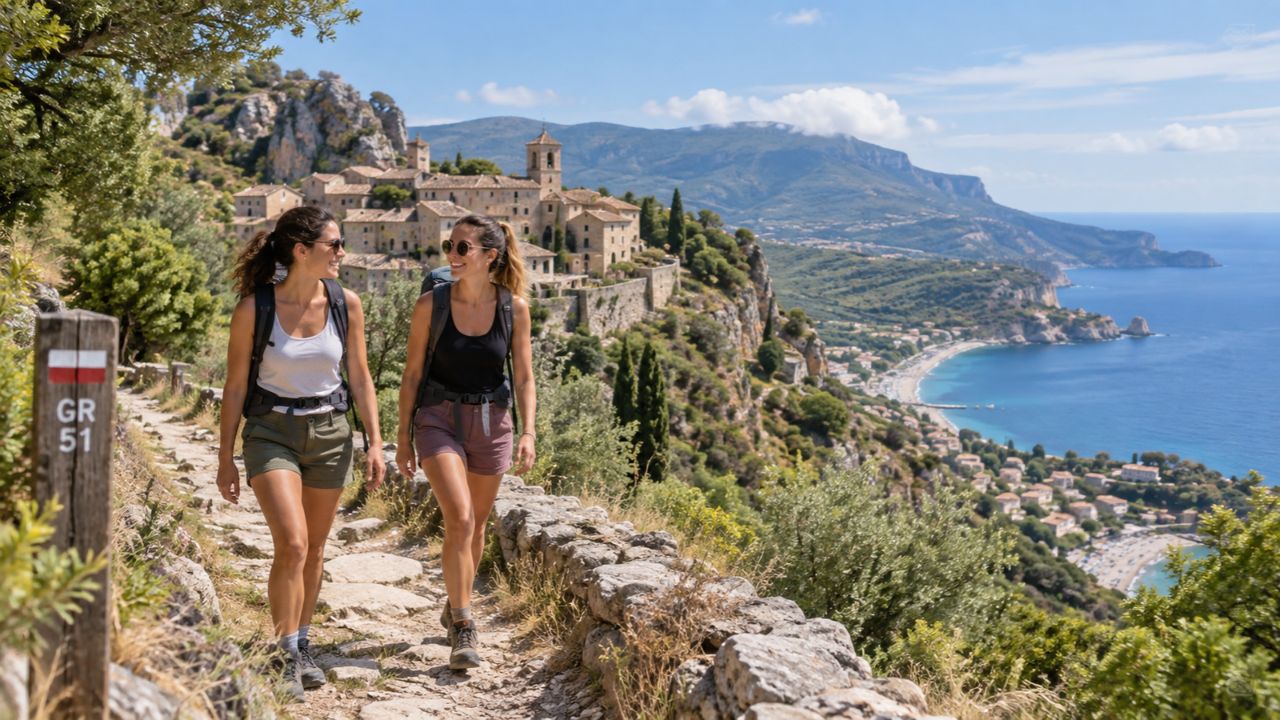
Leading a nationwide push toward carbon-conscious exploration, France is mobilizing its legendary Grande Randonnée (GR) trail network to redistribute visitor traffic from saturated metropolitan centers toward rural hamlets, rugged shorelines, and high-altitude alpine ridges. Spearheaded by national tourism agency Atout France and the French Hiking Federation (FFRandonnée), the initiative showcases over 100,000 kilometers of marked footpaths—from the glacial heights of the Tour du Mont-Blanc to Brittany's coastal cliffs—offering global voyagers an immersive encounter with regional terroir, village gîtes, and centuries of living heritage.
As international holidaymakers increasingly prioritize slow travel, low-impact transit, and wellness over hurried city excursions, France’s walking network provides an ideal sustainable framework. Rather than funneling foot traffic exclusively toward Paris, the French Riviera, or Versailles, the GR trails channel economic prosperity directly into mountain chalets, family-owned bakeries, and rural bed-and-breakfasts, proving that the most profound travel discoveries unfold at human walking speed.
The Local Trend Revealed: The Rise of Multi-Day Slow Travel Across Rural France
The revival of France’s Grande Randonnée trails represents an intentional evolution in French destination planning.
According to official tourism reports published in partnership with the OECD and Atout France, the demand for nature-based, active holidays has grown steadily among international travelers. While France remains the world’s most visited destination, regional tourism boards are committed to mitigating urban congestion by promoting long-distance trekking routes that operate outside traditional tourist corridors.
Distinctive red-and-white horizontal stripes (balisage rouge et blanc) painted on granite boulders, oak trees, and village stone walls guide hikers across the country without requiring intrusive signage. Whether tackling arduous high-mountain crossings or gently wandering between Loire Valley vineyards, the trails allow travelers to integrate physical adventure with regional gastronomy and architectural history.
Signature French GR Routes and Regional Highlights
| Trail Code | Regional Setting | Signature Geographic Feature | Cultural & Heritage Experience |
|---|---|---|---|
| GR TMB | French, Italian & Swiss Alps | High-altitude circumnavigation of the Mont Blanc massif | Overnight stays in high-alpine refuges with panoramic glacial vistas |
| GR34 | Brittany Coastline (Sentier des Douaniers) | Over 2,000 km of pink granite cliffs and tidal bays | Historic customs houses, tidal oyster farms, and cider taverns |
| GR20 | Corsica (Fra li Monti) | Jagged granite mountain spine cutting across the island | Remote mountain shepherding culture and authentic charcuterie |
| GR3 | Loire Valley | Riverbanks, sandy shallows, and royal forests | Renaissance châteaux, troglodyte wine cellars, and feudal castles |
| GR800 | Bay of the Somme (Hauts-de-France) | Vast intertidal sandbanks, salt marshes, and estuaries | Observation of harbor seal colonies and migratory waterfowl sanctuaries |
| GR406 | Provence to the Pre-Alps (Route Napoléon) | Lavender plateaus and dramatic limestone gorges | Tracing Napoleon Bonaparte’s historic 1815 march from Golfe-Juan |
| GR75 | Greater Paris Beltway | Circular greenway ringing the capital’s perimeter | Exploring urban park systems and legacy 2024 Olympic facilities |
| GR59 | Jura Mountains | Dense pine forests, secluded glacial lakes, and river ravines | Tasting cave-aged Comté cheese and Jura’s famed oxidative vin jaune |
Mountain Sovereignty: Alpine Majesty and the Demanding Corsican Ridge
France’s high-mountain trekking circuits represent world-renowned benchmarks in European adventure travel.
The Tour du Mont-Blanc (GR TMB)
Spanning roughly 170 kilometers and ascending more than 10,000 meters of cumulative elevation gain, the Tour du Mont-Blanc circumnavigates Western Europe’s highest peak. Hikers traverse high mountain passes such as the Col du Bonhomme and Grand Col Ferret, crossing borders between France, Italy, and Switzerland.
Operating under strict alpine environmental protections, the trail requires walkers to stay exclusively in registered mountain huts (refuges) or designated high-altitude bivouac zones, protecting fragile alpine flora, marmot colonies, and ibex grazing grounds from erosion.
Corsica’s Legendary GR20
Often cited as the most demanding long-distance footpath in Europe, the GR20 traverses the central granite spine of Corsica from Calenzana in the north to Conca in the south.
Covering 180 kilometers of exposed scrambling, boulder fields, and chain-assisted granite slabs, the trail immerses trekkers in wild Mediterranean wilderness. Hikers overnight in stone refuges stewarded by regional park rangers, sampling rustic mountain fare including cured lonzu pork, fresh goat cheese, and chestnut flour polenta.
Coastal Paths and Valley Terroir: From Brittany's Cliffs to Loire Castles
For travelers seeking accessible terrain paired with maritime and architectural heritage, France’s lowland GR routes provide unmatched cultural immersion.
Brittany’s GR34: The Customs Watchers' Trail
Stretching from the perimeter of Mont-Saint-Michel to Saint-Nazaire, the GR34—originally established in 1791 for customs officers (douaniers) patrolling against maritime smugglers—hugs the jagged coastline of Brittany.
Hikers walk along heather-clad clifftops, sandy coves, and tidal estuaries, stopping at fishing ports like Camaret-sur-Mer and Concarneau. The route directly sustains seaside crêperies and oyster shacks, connecting travelers with Breton maritime folklore and Celtic stone monuments.
The Loire Valley’s Royal GR3
Tracing the wild, braided channels of the Loire River, the GR3 offers a gentle, history-rich voyage through the "Cradle of the French Renaissance."
Walkers navigate tranquil towpaths and vineyard slopes, viewing iconic royal residences such as Château d'Amboise, Chaumont-sur-Loire, and the gardens of Villandry. Along the way, trailside cellars hollowed into white tuffeau limestone offer spontaneous tastings of crisp Chenin Blanc and Cabernet Franc, demonstrating how outdoor exercise pairs naturally with French wine culture.
Cultural & Environmental Value: Supporting Mountain Refuges and Village Economies
The GR hiking network serves as a powerful model of regenerative, low-carbon tourism, directly benefiting rural communities that sit far from major highway arteries.
Sustaining the French Refuge and Gîte Network
A central joy of GR trekking is staying in traditional accommodations. Unlike commercial hotels, mountain refuges and village gîtes d'étape operate on communal principles. Guests dine together at long wooden trestle tables, savoring family-style meals prepared with ingredients hauled up by pack mules or purchased from local shepherds.
By utilizing communal dormitories, solar-heated showers, and dry-composting toilets, refuges operate with a remarkably small environmental footprint, instilling a shared ethic of resource conservation among travelers.
Preserving Historic Rights of Way
The maintenance of France's hiking trails relies on thousands of volunteer markers (baliseurs) organized under the FFRandonnée.
These volunteers clear overgrowth, repaint trail markings, and stabilize stone walls on ancient Roman roads, medieval pilgrimage paths, and rural drover tracks (drailles). By walking these paths, international visitors actively help preserve public rights of way and rural historical infrastructure that would otherwise succumb to abandonment and forest encroachment.
Visitor Insider Tips: Trail Etiquette, Packing Hacks, and Terroir Delights
Embarking on a French GR trek requires distinct logistical and cultural preparation to ensure safety and comfort:
- Decoding the Red-and-White Waymarkers: Look for painted markings at eye level on rocks, trees, and fence posts:
- Two horizontal stripes (white above red): Correct route, continue straight.
- An "X" shape in red and white: Wrong way, turn back.
- A bracket-shaped arrow: Upcoming change of direction.
- Digital Navigation Tip: Download offline digital mapping layers via the IGN (Institut National de l'Information Géographique et Forestière) or the Visorando app, as cellular connectivity is nonexistent in deep alpine valleys and remote gorges.
- Mastering Mountain Refuge Etiquette:
- Book Months Ahead: Refuges on high-demand routes like the Tour du Mont-Blanc and GR20 book out up to six months in advance for the July–August window.
- The Silk Liner Requirement: Refuges provide heavy wool blankets and pillows, but guests are required by hygiene regulations to carry their own lightweight silk sleeping bag liner (sac à viande).
- Hut Decorum: Remove muddy hiking boots immediately upon entering and switch into the communal clogs or crocs (pantoufles) provided in the entryway. Quiet hours begin strictly at 10:00 PM.
- Understanding French Bivouac Laws: In French Regional Natural Parks and National Parks, wild camping (camping sauvage) with a permanent camp is strictly illegal. However, temporary bivouacking (le bivouac) is widely permitted: you may pitch a lightweight, low-profile tent from sunset (approx. 7:00 PM) to sunrise (approx. 8:00 AM), provided you set up at least one hour's walking distance from any road or park boundary.
- Classic Terroir Dishes to Savor on the Trail:
- Aligot in the Massif Central: Whipped purée of potatoes, crème fraîche, and crushed garlic blended vigorously with fresh Tomme d'Aubrac cheese until it forms silky, elastic ribbons.
- Breton Buckwheat Galette: A crisp, savory crêpe made from dark buckwheat flour, traditionally folded over melted Emmental cheese, salted butter, artisanal ham, and a runny farm egg (la complète), paired with a ceramic bowl of dry sparkling cider.
- Jura Comté and Saucisse de Morteau: Smoky wood-smoked pork sausage paired with 18-month aged Comté cheese, offering nutty notes that pair wonderfully with crusty sourdough bread.
- Best Hiking Seasons:
- Alpine Trails (Tour du Mont-Blanc, GR20): Mid-July through early September. Early season hikers face treacherous snowdrifts on high passes; after mid-September, many mountain refuges close for the autumn freeze.
- Coastal and River Trails (GR34, GR3, GR406): May through June, and September through October. These months offer comfortable temperatures (18°C–22°C), blooming wildflowers or golden autumn vine foliage, and clear walking paths.
Tourism Outlook: Walking Toward a Sustainable Future for French Travel
The revitalization of the Grande Randonnée network establishes a clear blueprint for the future of European tourism. By proving that authentic cultural immersion, scenic grandeur, and regional gastronomy can be experienced through self-propelled travel, France offers an antidote to the challenges of mass urban overtourism.
For international travelers, walking a GR route transforms a routine vacation into a mindful, restorative pilgrimage. Every step along Brittany's crashing surf, every climb across alpine passes, and every evening spent sharing bread in a quiet village gîte connects the voyager with the authentic soul of France—preserving fragile ecosystems and sustaining rural communities for generations of hikers to follow.
Related Travel Guides
Toronto Film Festival 2026: TIFF 51st Edition Spotlights Global Cinema and Canada's Cultural Tourism
Disclaimer
This article is for informational and educational purposes only. It does not constitute legal, financial, or professional advice. While we strive to provide accurate and up-to-date information, travel policies, regulations, and conditions change rapidly. Always verify information with official sources before making travel decisions. Nomad Lawyer makes no representations about the accuracy, reliability, completeness, or suitability of the information provided. Readers should consult qualified professionals for advice specific to their circumstances. The views expressed in this article are those of the author and do not necessarily reflect the views of Nomad Lawyer.
Raushan Kumar
Founder & Lead Developer
Full-stack developer with 11+ years of experience and a passionate traveller. Raushan built Nomad Lawyer from the ground up with a vision to create the best travel and law experience on the web.
Learn more about our team →