
Florida Wildfires Strand 230+ Amtrak Passengers for 20+ Hours
Over 230 Amtrak passengers faced a 20+ hour stranding in north Florida on April 20, 2026, after advancing wildfires forced their train to halt. The incident underscores how climate-driven fire activity is increasingly disrupting long-distance rail travel across the United States.

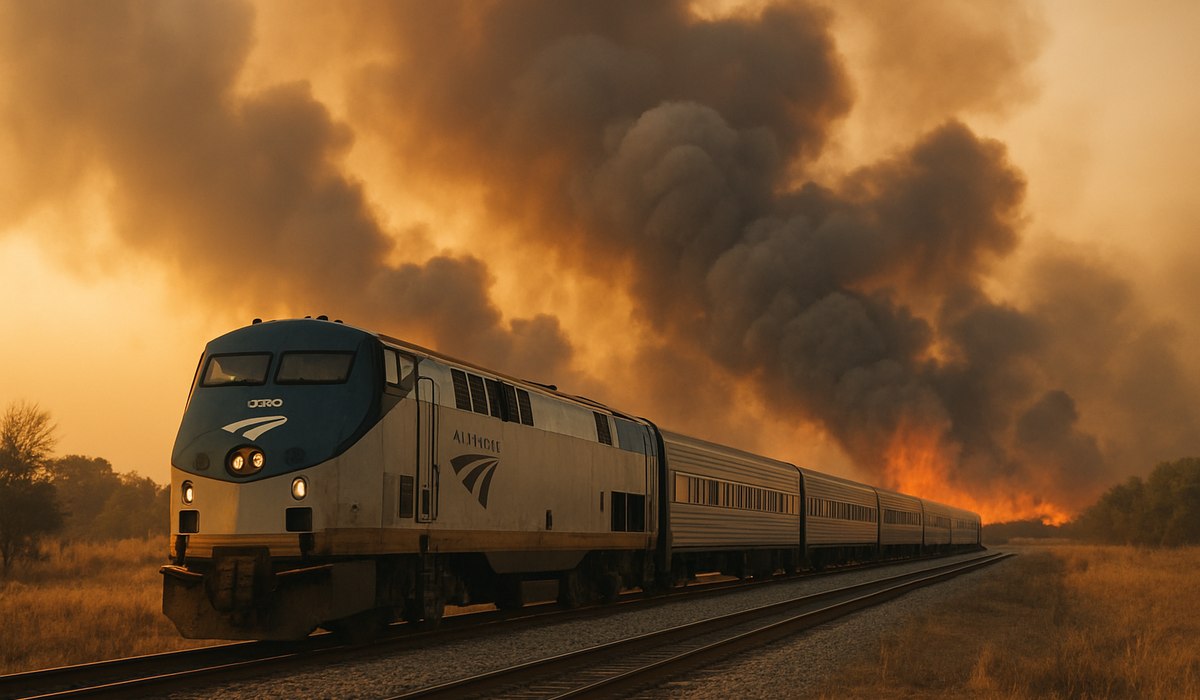
Image generated by AI
Wildfire Forces Amtrak Train to Halt in North Florida
Over 230 Amtrak passengers experienced an unplanned 20+ hour stranding on April 20, 2026, when advancing wildfires near the Putnam-Clay County border forced their northbound train to stop near DeLand, Florida. The incident represents a growing challenge for intercity rail operators: climate-driven wildfire activity is increasingly disrupting long-distance rail corridors. The stranded train was operating on the Silver Service route, which typically links Miami with New York and maintains standard capacity of approximately 230 passengers. Rail crews monitored fire conditions and assessed corridor safety as smoke and flames advanced toward the tracks, with fires spanning several thousand acres across north Florida's fire-prone landscape.
Passengers Face Extended Delays and Dwindling Supplies
Travelers aboard the halted train confronted deteriorating conditions as hours stretched beyond 20. Social media accounts and news reports documented a cascade of onboard challenges: water supplies diminished rapidly, toilet facilities malfunctioned after extended stagnation, and passengers received minimal information about departure timelines. Families, elderly travelers, and those with medical conditions faced particular strain during the prolonged stoppage. Some passengers contemplated leaving the train on foot, yet safety protocols prohibit disembarking near active rail corridors due to hazards from live tracks and wildfire smoke. Transportation analysts note that railroads prioritize passenger safety by maintaining confinement to train cars during incidents, even when conditions become uncomfortable.
The extended delay highlighted infrastructure vulnerabilities in long-distance rail operations during climate emergencies. According to Amtrak's operational guidelines, trains remain stationary during fire proximity situations to prevent exposure to hazardous conditions. However, limited onboard resource management for multi-hour stoppages left passengers without adequate water, sanitation, or transparent communication about resolution timelines—a critical gap in passenger welfare protocols.
Amtrak Adjusts Routes as Florida Wildfire Risk Intensifies
The stranded service reflected broader network disruptions across Florida's passenger rail system. Amtrak service advisories documented multiple route adjustments during the April 20 wildfire event, including cancellation of the Silver Meteor service and suspension of Auto Train operations between Sanford (near Orlando) and Lorton, Virginia. Florida wildfires strand entire service segments when fire activity threatens critical north-south corridors that offer limited rerouting alternatives.
Rail operators deployed tactical responses: some trains were turned back before reaching central Florida, while others originated or terminated at Jacksonville and Savannah to circumvent affected track sections. Amtrak arranged alternative bus transportation to bridge service gaps, though rapid fire spread and smoke conditions limited ground transport deployment speed. Travel analysts emphasize that Florida's long-distance rail network depends on a narrow number of north-south corridors; when one corridor faces wildfire disruption, network-wide cascades multiply passenger delays and cancellations.
Drought Conditions Intensify Fire Risk Across Florida
Florida entered its 2026 wildfire season under exceptionally dry conditions. State drought assessments indicate that north Florida experienced severe moisture deficit during peak fire months, transforming landscape vegetation into combustible fuel. Meteorological data shows that accumulated dry conditions increased ember ignition probability near transportation corridors, creating heightened risk for rail operators managing passenger safety along fire-adjacent routes.
Climate science indicates that warming temperatures, shifting precipitation patterns, and extended drought cycles are extending wildfire seasons and intensifying fire behavior across southeastern states. Florida wildfires strand rail operations more frequently as these conditions become structural rather than anomalous. Vegetation management near rail rights-of-way, fuel reduction initiatives, and real-time fire monitoring systems represent emerging infrastructure priorities for long-distance rail operators adapting to climate pressures.
Climate Change Reshaping Rail Travel Reliability
The April 2026 incident reflects a systemic challenge: intercity rail networks designed during historical climate baselines now face increasingly unpredictable fire seasons. Long-distance routes like the Silver Service corridor operate through regions where wildfire frequency and intensity continue rising. Rail operators must balance operational continuity against passenger safety, often choosing extended delays over movement through hazardous conditions.
Infrastructure experts recommend enhanced onboard resource capacity for extended stoppages, improved passenger communication systems activated during emergencies, and coordination protocols with state wildfire management agencies. Climate adaptation for rail systems includes vegetation management near corridors, early-warning fire monitoring systems integrated with operational dispatch centers, and contingency routing plans for alternative transportation modes. Investment in climate-resilient rail infrastructure represents a long-term approach to mitigating disruptions from escalating wildfire activity.
| Factor | Details |
|---|---|
| Date of Incident | April 20, 2026 |
| Route | Amtrak Silver Service (Miami–New York) |
| Passengers Stranded | 230+ |
| Stranding Duration | 20+ hours |
| Location | Near DeLand, Florida; Putnam-Clay County fire complex |
| Fire Acreage | Several thousand acres |
| Other Affected Services | Silver Meteor (canceled), Auto Train (suspended) |
| Primary Cause | Advancing wildfires near rail corridor |
| Onboard Challenges | Water shortage, sanitation system failure, limited communication |
What This Means for Travelers
The Florida wildfires stranding incident carries practical implications for long-distance rail passengers:
-
Monitor fire advisories during peak seasons: Check state wildfire activity maps and Amtrak service alerts before booking Florida routes, especially April through June.
-
Build buffer time into connections: Schedule at least 4-6 hour buffers before connecting flights or ground transportation when traveling through fire-prone corridors.
-
Pack emergency supplies: Carry sufficient water, medication, and snacks on board; onboard supplies may become inadequate during extended stoppages.
-
Verify alternative transportation options: Research available bus routes, car rental agencies, and flight alternatives near major rail hubs in case train cancellations occur.
-
Stay informed during travel: Activate Amtrak service alerts and monitor real-time updates via the official Amtrak website or mobile app during your journey.
-
Consider travel timing: Avoid peak wildfire season (April–June) for Florida rail travel if your schedule permits; off-season travel typically experiences fewer disruptions.
FAQ
Q: Are Amtrak routes through Florida currently operating normally? A: Amtrak continues operating Silver Service and Silver Meteor routes through Florida, though wildfire season (April–June) can trigger temporary suspensions or rerouting. Check Amtrak's official service alerts before booking travel through fire-prone regions.
Q: What compensation do passengers receive for extended delays caused by wildfires? A: Amtrak's delay compensation policies vary by circumstances. Extreme weather and natural disasters may fall under force majeure exemptions. Contact Amtrak customer service with your reservation number for specific compensation eligibility.
Q: How can I receive real-time updates about train delays during my journey? A: Download the official Amtrak mobile app, subscribe to SMS alerts, and register your reservation email with Amtrak to receive real-time service notifications during unexpected disruptions.
Q: Should I avoid booking Amtrak trains through Florida entirely due to wildfire risk? A: Florida rail travel remains viable year-round, though off-season months (July–March) experience significantly lower wildfire activity. Book travel outside peak fire season when possible, maintain flexible cancellation policies, and stay informed about current conditions.
How to Book the Best Fare
Securing competitive fares on Florida rail routes requires strategic timing and
Disclaimer
This article is for informational and educational purposes only. It does not constitute legal, financial, or professional advice. While we strive to provide accurate and up-to-date information, travel policies, regulations, and conditions change rapidly. Always verify information with official sources before making travel decisions. Nomad Lawyer makes no representations about the accuracy, reliability, completeness, or suitability of the information provided. Readers should consult qualified professionals for advice specific to their circumstances. The views expressed in this article are those of the author and do not necessarily reflect the views of Nomad Lawyer.
Raushan Kumar
Founder & Lead Developer
Full-stack developer with 11+ years of experience and a passionate traveller. Raushan built Nomad Lawyer from the ground up with a vision to create the best travel and law experience on the web.
Learn more about our team →