
Wildfire Leaves Amtrak Silver Meteor Stranded 20+ Hours in North Florida
A fast-moving wildfire near Jacksonville forced Amtrak's Silver Meteor to halt for over 20 hours in April 2026, leaving hundreds of passengers stranded on board as fire and highway closures eliminated alternative transport options across Florida's rail network.

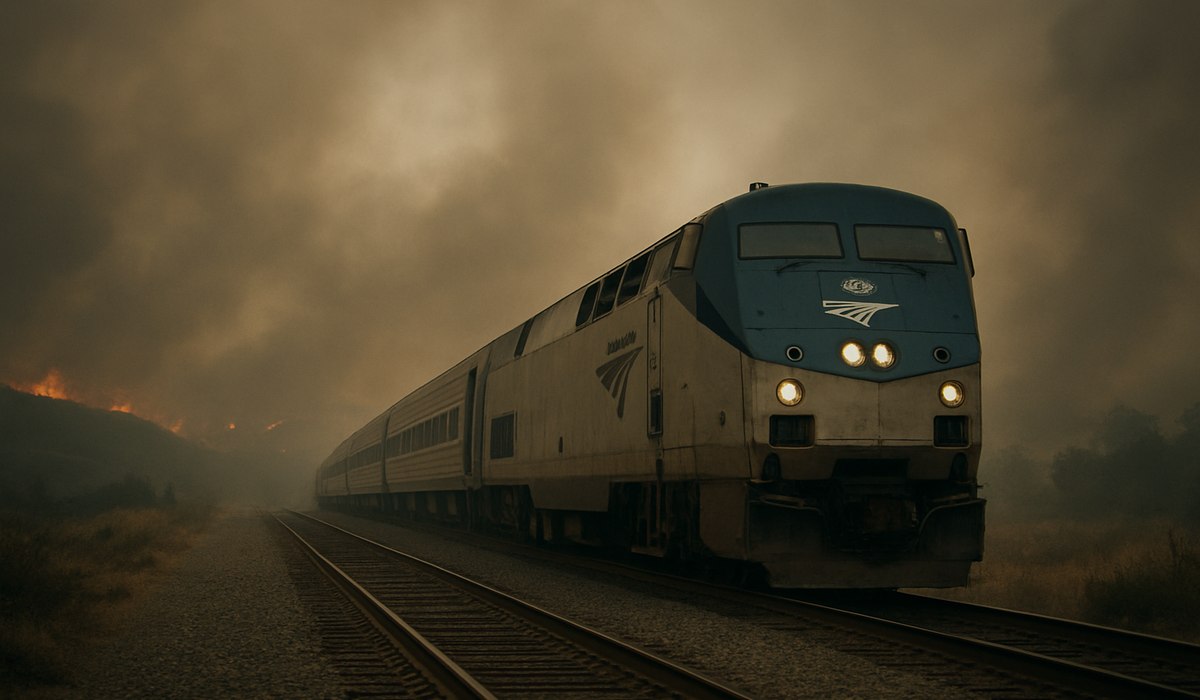
Image generated by AI
Massive Wildfire Forces Extended Amtrak Stoppage Near Jacksonville
Hundreds of Amtrak passengers endured a 20+ hour delay when a fast-moving wildfire near Jacksonville, Florida forced the Silver Meteor train to halt on April 20, 2026. The northbound train, traveling between Miami and New York, became stranded in a rural stretch of track as brush fires spread across Clay and Putnam County lines, producing heavy smoke and forcing fire crews to restrict track access. Simultaneously, highway closures along U.S. 17 eliminated bus and ground transportation alternatives, leaving travelers stuck on board with limited information about when service would resume. This incident exposed critical vulnerabilities in Florida's rail network during wildfire season and raised questions about contingency planning for seasonal transportation disruptions.
Wildfire Ignites Along Critical North Florida Rail Corridor
Large brush fires erupted across several thousand acres near the Clay and Putnam County border south of Jacksonville on April 20, 2026. According to Florida Forest Service data, the blazes spread rapidly, generating thick smoke that blanketed the critical north-south rail spine used by Amtrak's Silver Service trains, including the Silver Meteor and Floridian routes.
Rail observers emphasize that this corridor represents a vital transportation link for long-distance passenger and freight services connecting Florida to the Northeast and beyond. When extended closures occur, delays cascade through the entire network, affecting not only stranded passengers but also those awaiting trains at downstream stations. The combination of restricted track access and deteriorating visibility conditions left crews with no safe option to proceed, forcing the decision to halt the northbound Silver Meteor indefinitely while fire activity was monitored and assessed.
Silver Meteor Route Faces Extended Closure and Cascading Delays
The Silver Meteor suspension extended beyond the single stranded train. Amtrak temporarily halted multiple services on April 20 and 21, 2026, including the Auto Train between Sanford (near Orlando) and Lorton, Virginia, and adjustments to Silver Service and Floridian schedules. Many trains were truncated or rerouted, with some starting or ending in Jacksonville or Savannah rather than completing their full routes between Miami and New York.
Amtrak deployed bus bridges to connect North and South Florida while track restrictions remained in place, a costly and logistically complex solution that still left passengers coping with schedule changes, missed connections, and overnight accommodation disruptions. The broader network impact extended beyond the immediate fire zone, demonstrating how a single regional wildfire can disrupt hundreds of travelers across multiple routes. Passengers booked on connecting services faced cascading cancellations, forcing last-minute rebooking onto alternative routes or delayed departures over multiple days.
Passengers Trapped On Board as Fire and Road Closures Limit Options
For the 200+ passengers aboard the halted Silver Meteor, the experience proved challenging and frustrating. Stranded in a remote rural area rather than at a staffed Amtrak station, passengers received repeated instructions to remain on board for safety reasons while fire conditions and right-of-way access were continuously evaluated.
Limited communication compounded passenger stress, with travelers reporting insufficient clarity about delay timelines or alternative arrangements. Some riders described overflowing restrooms, concerns about water availability, and uncertainty about when they might reach their destinations. Sleeping car passengers fared better, as their accommodations included private spaces and included meal service, creating an uneven experience across the consist.
However, crew members continued providing essential services throughout the ordeal. Lighting systems, air circulation, and basic onboard amenities remained operational, preventing deteriorating conditions. Despite frustrations expressed on social media and rail enthusiast forums, the situation never reached the level of a true emergency, as crews prioritized passenger safety over schedule adherence.
Impact on Florida's Transportation Network and Future Service
This incident highlighted seasonal vulnerabilities in Florida's transportation infrastructure during wildfire season, which peaks in spring and early summer. The simultaneous closure of rail and highway corridors eliminated passenger options entirely, forcing hundreds of stranded travelers to wait on the train or arrange personal ground transportation to distant cities.
Going forward, rail industry analysts and travel planners question whether Amtrak's contingency procedures adequately address the intersection of wildfire risk and geographic constraints in North Florida. The remote location of the rail corridor limits alternative routing options, and the rapid spread of brush fires can escalate situations faster than traditional response protocols accommodate.
For travelers considering long-distance rail journeys through Florida during peak wildfire months, purchasing flexible tickets and building extra time into connections becomes increasingly important. Visit Amtrak's official website for real-time service alerts and the most current schedule information before booking or departing.
How to Book the Best Fare
When planning Amtrak travel through Florida, especially between April and June, timing and flexibility become essential booking strategies. The Trainline booking platform allows you to compare Amtrak fares across multiple departure dates, helping you identify lower-priced options while building schedule flexibility.
Book coach seating at least 14 days in advance to secure promotional fares. Sleeping car accommodations, while more expensive, provide access to meal service and private spaces—advantages that became significant during the April 2026 delays when coach passengers faced cramped conditions.
Consider purchasing flexible tickets that allow date changes without penalty during peak wildfire season. While these typically cost 15-25% more than basic fares, the protection against wildfire-related cancellations and rescheduling provides peace of mind. Check Amtrak's website directly for seasonal promotions on multi-car room types and captain-class seating that include premium amenities and enhanced customer service.
What This Means for Travelers
The April 2026 wildfire incident offers several critical lessons for rail passengers planning journeys through Florida:
-
Build schedule buffer time: Add extra hours or days to connections when traveling through wildfire-prone regions during peak season (April-June). Missed connections create cascading problems when rail service resumes.
-
Verify service status before departure: Check Amtrak's service alerts and Florida transportation authority updates the morning of travel. Regional brush fires often escalate quickly with minimal advance warning.
-
Consider alternative routes: During wildfire season, evaluate routing through coastal or alternate corridors rather than inland tracks prone to smoke and fire impact.
-
Purchase travel insurance: Comprehensive travel protection covers rail delays, cancellations, and rebooking costs, providing financial recovery when operational disruptions occur.
-
Stay informed onboard: Ensure your contact information is current with Amtrak so you receive real-time SMS or email updates during extended delays or service changes.
FAQ
Q: Can Amtrak predict and prevent wildfire-related delays? A: While Amtrak monitors fire conditions through partnerships with Florida Forest Service and local authorities, rapid-spreading wildfires can restrict track access within hours. Prevention relies on pre-positioned equipment, evacuation planning, and real-time communication with fire crews rather than predictive technology.
Q: What compensation can passengers receive for wildfire-related delays? A: Amtrak's standard policy provides rebooking on alternate trains or refunds for canceled service. Extended delays beyond 12 hours sometimes qualify for hotel accommodations or meal vouchers at crew discretion, though compensation varies by circumstances and ticket type purchased.
Q: How should I prepare for potential rail disruptions during Florida travel? A: Maintain flexible itineraries during peak wildfire season, purchase refundable or changeable ticket options, keep emergency supplies (water, snacks, medications) in carry-on luggage, and verify service status 24 hours before departure through official Amtrak channels.
Q: Are sleeping car accommodations safer during wildfire delays? A: Sleeping car passengers
Disclaimer
This article is for informational and educational purposes only. It does not constitute legal, financial, or professional advice. While we strive to provide accurate and up-to-date information, travel policies, regulations, and conditions change rapidly. Always verify information with official sources before making travel decisions. Nomad Lawyer makes no representations about the accuracy, reliability, completeness, or suitability of the information provided. Readers should consult qualified professionals for advice specific to their circumstances. The views expressed in this article are those of the author and do not necessarily reflect the views of Nomad Lawyer.
Raushan Kumar
Founder & Lead Developer
Full-stack developer with 11+ years of experience and a passionate traveller. Raushan built Nomad Lawyer from the ground up with a vision to create the best travel and law experience on the web.
Learn more about our team →