
Amtrak Riders Stranded Nearly 24 Hours as Florida Wildfire Forces Silver Meteor Halt
Nearly 400 Amtrak passengers spent over 20 hours trapped aboard the Silver Meteor as a fast-moving Florida wildfire halted the Miami-New York train in 2026, leaving riders facing deteriorating onboard conditions and supply shortages.

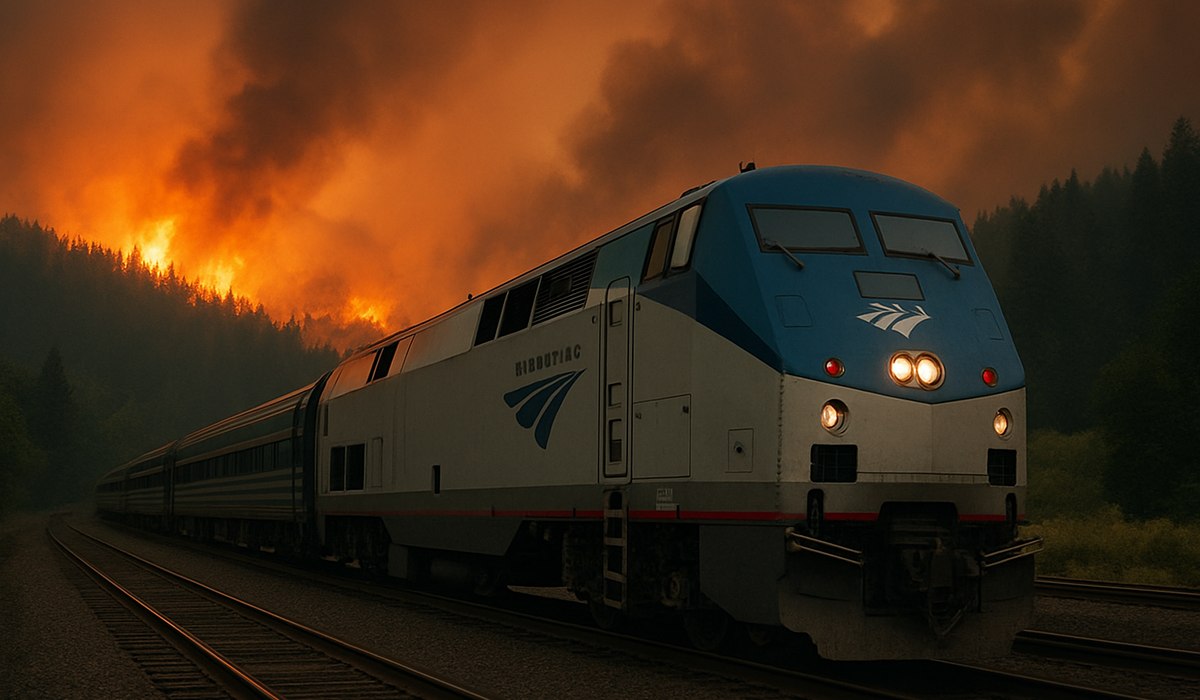
Image generated by AI
Amtrak Riders Stranded: Silver Meteor Halted by 2,000-Acre Florida Wildfire
Nearly 400 Amtrak passengers aboard the Silver Meteor experienced an extraordinary travel nightmare when a rapidly spreading wildfire forced the Miami-to-New York train to halt for more than 20 hours on April 19-20, 2026. The train, operating as Amtrak's premium overnight service, came to a complete stop near DeLand and later near Green Cove Springs in northeast Florida after a fast-moving brush fire erupted directly along the rail corridor. With the blaze consuming approximately 2,000 acres and generating heavy smoke that obscured visibility, freight railroad dispatchers and Florida Forest Service officials made the critical decision to keep the Silver Meteor stationary while firefighting crews battled the flames and assessed track safety conditions.
The extended halt transformed what should have been a standard overnight journey into an ordeal that tested passenger patience, onboard infrastructure, and Amtrak's crisis management protocols. The incident affected multiple rail operations throughout Florida's corridor, but the Silver Meteor's experience proved distinctly challenging because passengers remained confined to their cars throughout nearly a full day of disruption, facing compounding challenges as supplies dwindled and essential services deteriorated.
Silver Meteor Halted by 2,000-Acre Wildfire
The disruption centered on Amtrak's Silver Meteor (Train 98), which regularly operates overnight service connecting Miami and New York with scheduled stops in Jacksonville, Savannah, Charleston, and stations throughout the Carolinas and Mid-Atlantic regions. According to public information and regional broadcast coverage, the train encountered the wildfire emergency during its northbound journey on Sunday, April 19, 2026, as it moved through central Florida's rural areas.
The Florida Forest Service documented the brush fire's rapid expansion to roughly 2,000 acres with minimal containment progress during peak hours. Active firefighting operations, combined with unpredictable wind shifts and smoke that reduced visibility near the tracks, prompted immediate rail closures. Highway 17, which runs parallel to the rail corridor in this area, was simultaneously restricted. Since Amtrak's passenger services operate over freight railroad infrastructure—in this case, a carrier with limited alternate routing options for long-distance trains—dispatchers faced constrained choices for either moving the train to safety or maintaining its position until conditions improved.
The absence of viable bypass routes meant that resuming northbound movement required explicit approval from freight railroad dispatchers coordinating with emergency management officials. This coordination process extended across many hours, during which passengers remained aboard without clear communication about anticipated movement timelines.
Passengers Face Extended Confinement with Dwindling Supplies
As hours accumulated, conditions aboard the Silver Meteor deteriorated significantly. Passenger accounts documented on social media and shared with local television affiliates paint a stark picture of deteriorating onboard conditions. Water systems throughout the train eventually became non-functional, eliminating access to running water for drinking, washing, and sanitation purposes.
Without operational plumbing, numerous toilets began overflowing, creating unsanitary conditions and overwhelming odors that affected multiple coach sections. Passengers reported searching desperately for any remaining functional restrooms while staff struggled to manage the crisis with limited resources. Trash accumulated in corridors and common areas as the disruption stretched from hours into nearly a full day.
Long-distance Amtrak trains are provisioned with food, beverages, linens, and supplies calibrated for scheduled journey times plus a modest contingency buffer. The extended wildfire delay shattered these assumptions. Riders described snack and meal selections becoming progressively limited, with certain items selling out entirely—particularly in coach sections. Amtrak staff reportedly attempted rationing remaining food and beverage inventories while awaiting clearance to resume travel, but shortages left many passengers without adequate refreshment or nutrition.
The combination of overflowing bathrooms, absent running water, and uncertain information about resumption timelines created a profoundly uncomfortable and unsanitary environment. Multiple passengers compared this incident to other documented long-delay Amtrak events nationwide, where restroom failures and supply depletion proved central to passenger frustration and complaint.
Limited Alternate Routes Complicate Passenger Rail Operations
The Silver Meteor incident highlighted a fundamental vulnerability in American rail infrastructure: long-distance passenger trains operating over freight railroad networks often face extremely limited routing alternatives during emergencies. The corridor through northeast Florida, while heavily used, lacks parallel main-line tracks capable of accommodating an 800-ton overnight service train on short notice.
Amtrak's operational dependence on freight railroad hosting creates legitimate constraints during disruptions caused by weather, track maintenance, or—as in this case—wildfire emergencies. When the host railroad's dispatch system restricts movements through a fire-threatened area, dispatchers must either reroute trains (if alternate corridors exist) or keep them stationary until conditions permit safe passage.
According to rail operations experts and veteran travelers who commented publicly on the incident, this positioning reflects railroad safety protocols prioritizing passenger welfare. Evacuating passengers from a stationary train in a remote, smoke-filled area carries distinct risks—particularly when other rail traffic, emergency vehicles, or firefighting operations may occupy adjacent tracks or emergency access routes.
Visit the Amtrak website for current route maps and service advisories during weather emergencies. For broader passenger rail booking flexibility, Trainline offers real-time service status and alternative routing information across multiple rail operators.
Amtrak's Response and Wider Florida Service Disruptions
Amtrak issued acknowledgments of the extended delay and attributed the stoppage explicitly to safety restrictions imposed by active wildfire conditions. Published coverage indicates that train movements remained subject to host freight railroad dispatch directions and coordination with Florida Forest Service officials, who maintained authority over track clearance decisions.
Several passengers questioned online why riders weren't transferred to bus service or guided toward nearby shelter rather than remaining aboard. However, railroad safety protocols and industry veteran perspectives clarified that such evacuations from remote, smoke-affected locations carry inherent risks. Unauthorized train movements, reversals, or door operations outside designated stations require explicit host railroad dispatcher approval; personnel violating these directives face serious consequences.
Railroads prioritize maintaining passenger separation from active tracks and ongoing firefighting operations, even when such decisions create discomfort. This conservative approach reflects lessons learned from previous rail emergencies and reflects established federal safety standards for passenger operations in hazardous environments.
Beyond the Silver Meteor, multiple Amtrak services throughout Florida faced cancellations, reroutes, or significant delays as wildfire impacts propagated across the network. The incident underscored how concentrated disruptions in critical corridors can cascade through an entire regional rail system, affecting both long-distance and regional service reliability.
How to Book the Best Fare
Booking Amtrak tickets during wildfire season or severe weather periods requires strategic timing and flexibility. Early advance bookings (45-60 days) typically secure the lowest available fares across Silver Meteor and regional Florida routes, though these tickets carry strict change policies. Mid-range booking windows (21-45 days) offer moderate pricing with increased flexibility for date changes.
Purchase tickets directly through Amtrak's official website, where you'll access real-time availability, current service status advisories, and the most transparent fare structures. During active weather events or wildfire seasons (April through October in Florida), check service status sections before finalizing bookings.
Consider rail pass options if planning multiple Florida-corridor journeys within a specified window. These products often provide better value than individual tickets while offering enhanced cancellation protections. For comprehensive comparison across availability and pricing, Trainline aggregates Amtrak inventory alongside partner carriers, helping identify optimal booking strategies and alternative routing when
Disclaimer
This article is for informational and educational purposes only. It does not constitute legal, financial, or professional advice. While we strive to provide accurate and up-to-date information, travel policies, regulations, and conditions change rapidly. Always verify information with official sources before making travel decisions. Nomad Lawyer makes no representations about the accuracy, reliability, completeness, or suitability of the information provided. Readers should consult qualified professionals for advice specific to their circumstances. The views expressed in this article are those of the author and do not necessarily reflect the views of Nomad Lawyer.
Kunal K Choudhary
Co-Founder & Contributor
A passionate traveller and tech enthusiast. Kunal contributes to the vision and growth of Nomad Lawyer, bringing fresh perspectives and driving the community forward.
Learn more about our team →