
Flights Cancelled Over Middle East As Abu Dhabi, Riyadh, And More Major Airports Cancel 77 And Delay 749, Impacting Travel
Flights Cancelled Over Middle East As Abu Dhabi, Riyadh, And More Major Airports Cancel 77 And Delay 749, Impacting Travel

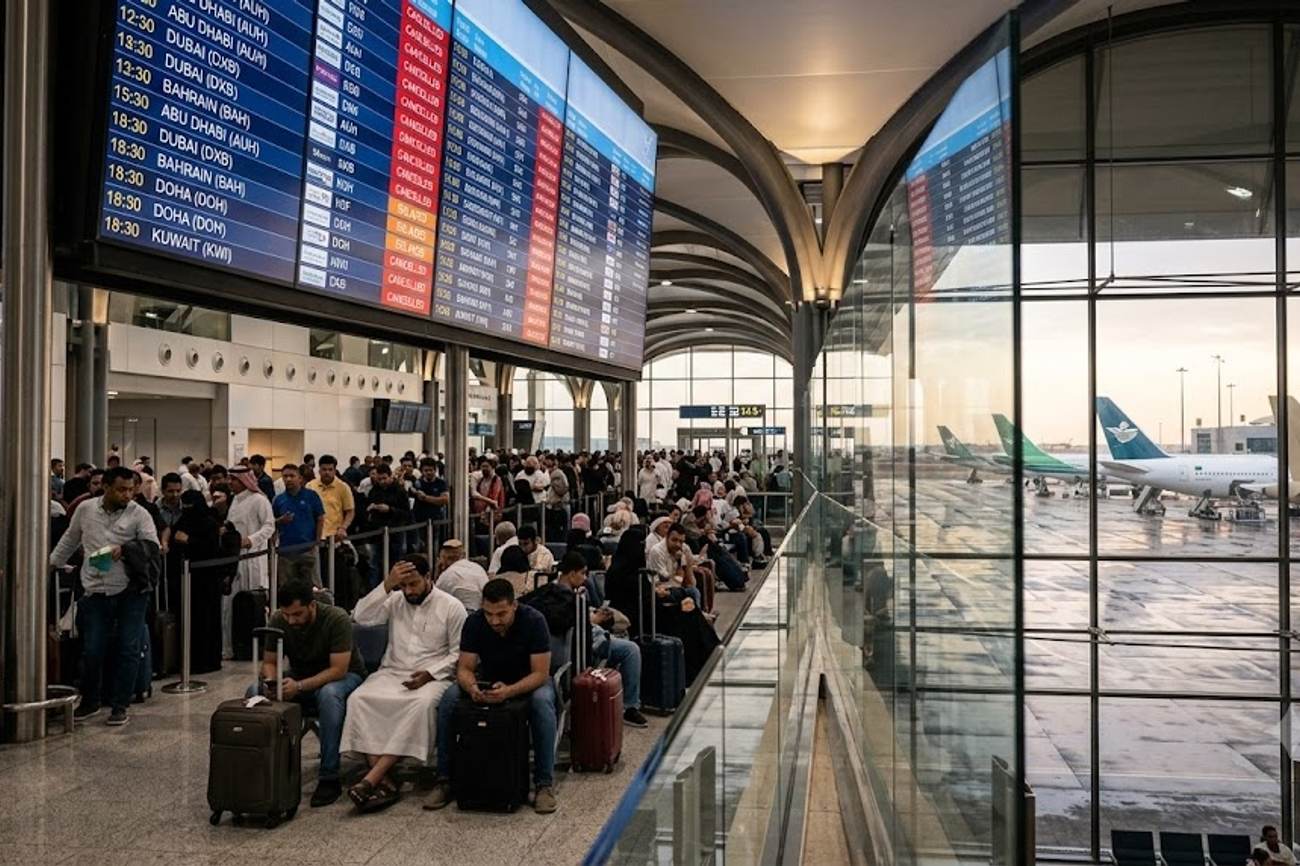
Image generated by AI
[Jeddah, October 2024] — Air travel across the Middle East is facing severe disruption as 749 flight delays and 77 cancellations hit major hubs in Saudi Arabia, the UAE, Oman, Qatar, and Iran. The instability is concentrated heavily in Saudi Arabia, where King Abdulaziz International Airport in Jeddah has emerged as the primary bottleneck for regional aviation.
The disruptions involve a wide array of carriers and airports, spanning from the high-traffic hubs of Dubai and Doha to regional gateways like Abha and Seeb. While delays are the dominant issue, Saudia is bearing the brunt of the cancellations, recording the highest number of scrapped flights in the region. The volatility is impacting both originating and destination flights, creating a ripple effect across connecting schedules for thousands of passengers.
Operational Failures Triggering Chaos
The current wave of instability stems from a combination of operational stressors and systemic bottlenecks. According to regional aviation data, the disruptions are driven by aircraft availability and crew scheduling conflicts, which are often exacerbated by the high density of traffic at primary hubs.
Air traffic management and airport capacity limits are playing a significant role, particularly in cities where multiple services are handled within concentrated windows. Maintenance requirements and sudden shifts in airline schedules have further complicated the rotation of aircraft. In high-volume centers like Dubai and Riyadh, a single delayed aircraft can trigger a cascade of timing failures for subsequent flights, leading to the high volume of delays reported today.
Affected Travelers, Airlines and Logistics: Airport and Airline Breakdown
The disruption is not evenly distributed, with Saudi Arabian infrastructure and carriers seeing the most significant impact.
Airport Impact Data
| Airport | Delays | Cancellations | Primary Contributor |
|---|---|---|---|
| King Abdulaziz (JED) | 212 | 14 | Saudia |
| Dubai (DXB) | 158 | 9 | FlyDubai / Emirates |
| King Khalid (RUH) | 110 | 13 | Flynas / Saudia |
| Abu Dhabi (AUH) | 96 | 2 | Etihad Airways |
| Hamad (DOH) | 91 | 1 | Qatar Airways |
| Sharjah (SHJ) | 39 | 5 | Air Arabia |
| Seeb (MCT) | 21 | 5 | Oman Air |
| Abha (AHB) | 15 | 13 | Saudia |
Airline Disruption Totals
- Saudia: 120 delays, 36 cancellations (Highest overall impact)
- Flynas: 93 delays, 0 cancellations
- Etihad Airways: 80 delays, 0 cancellations
- Qatar Airways: 70 delays, 1 cancellation
- FlyDubai: 50 delays, 4 cancellations
- Emirates: 46 delays, 0 cancellations
- Pakistan International Airlines: 7 cancellations (distributed across Seeb, Sharjah, and Dubai)
- Mahan Air: 7 cancellations, 1 delay (all at Imam Khomeini)
At King Abdulaziz International Airport, the delay rate is currently sitting at 26% for both originating and destination flights. In contrast, Abha is seeing a critical cancellation spike, with an 11% cancellation rate for departing flights and 13% for arrivals.
Practical Traveler Advisory and Strategic Insights
For passengers currently booking or traveling through the Middle East, these figures translate to a high probability of schedule instability. The data suggests that while your flight is unlikely to be cancelled entirely (unless flying Saudia or through Abha), there is a significant chance of a multi-hour delay.
Immediate Passenger Impact:
- Connecting Flights: With delays reaching 26% at major hubs like Jeddah, the risk of missed connections is extreme. Passengers should check their minimum connection times and contact their airlines immediately if a layover is less than three hours.
- Airport Transit: Travelers should not head to the airport based on their original itinerary. Use the official FlightRadar24 or airline apps to verify real-time status.
- Booking Flexibility: Those flying with Saudia or Flynas should expect the most volatility. Ensure you have digital copies of all boarding passes and receipts for any unplanned expenses incurred due to these delays.
- Alternative Routing: Passengers at Sharjah or Seeb may find that regional carriers like Air Arabia or Oman Air are experiencing lower delay volumes than the Saudi hubs, providing potential alternative routing options.
Recovery Timeline and Next Steps
Aviation authorities are currently working to stabilize aircraft rotations. The immediate priority for carriers like Saudia and Flynas is to clear the backlog at King Abdulaziz and King Khalid airports.
Because the majority of the disruptions are linked to crew scheduling and aircraft availability, recovery will not be instantaneous. Passengers can expect "knock-on" delays for the next 24 to 48 hours as airlines reposition aircraft to their correct hubs. Regulatory bodies, including the General Authority of Civil Aviation (GACA) in Saudi Arabia, are monitoring the situation to ensure safety standards are not compromised by the pressure to recover schedules.
FAQ: Middle East Flight Disruptions 2024
What should I do if my flight is cancelled? Immediately verify your status via the airline's app. Contact the carrier to request rebooking on the next available flight or inquire about a full refund if the alternative timing is unacceptable. Keep all receipts for food and lodging.
Which airline is currently the most unreliable? Based on current data, Saudia is seeing the highest level of disruption, recording 120 delays and 36 cancellations, significantly more than any other carrier in the region.
Are flights in Dubai and Doha still operating? Yes, but with delays. Dubai has recorded 158 delays and Hamad International has recorded 91. While cancellations are low (9 in Dubai, 1 in Doha), timing instability is widespread.
How can I check if my specific flight is delayed? Check the official website of your airline or the airport's live flight board. For regional oversight, check the official portals of the Dubai Airports or Qatar Airways websites.
Expect continued volatility across Gulf airspace as carriers struggle to reset operational rotations.
Related Travel Guides
- Hawaii Accelerates Travel Recovery As Kauaʻi Revives Tourism Services And Resort Operations After Hurricane Disruption
- Guatemala Travel Gets a Boost as Air Canada Adds Toronto Service and Extends Montréal Flights
- Malaysia AirAsia Crisis What It Could Mean for Travellers, Domestic Flights and Tourism
Disclaimer
This article is for informational and educational purposes only. It does not constitute legal, financial, or professional advice. While we strive to provide accurate and up-to-date information, travel policies, regulations, and conditions change rapidly. Always verify information with official sources before making travel decisions. Nomad Lawyer makes no representations about the accuracy, reliability, completeness, or suitability of the information provided. Readers should consult qualified professionals for advice specific to their circumstances. The views expressed in this article are those of the author and do not necessarily reflect the views of Nomad Lawyer.
Raushan Kumar
Founder & Lead Developer
Full-stack developer with 11+ years of experience and a passionate traveller. Raushan built Nomad Lawyer from the ground up with a vision to create the best travel and law experience on the web.
Learn more about our team →