
Flights Cancelled Across The United States As Dallas, Denver, And More Airports Face 322 Cancellations And 2,165 Delays
Flights Cancelled Across The United States As Dallas, Denver, And More Airports Face 322 Cancellations And 2,165 Delays

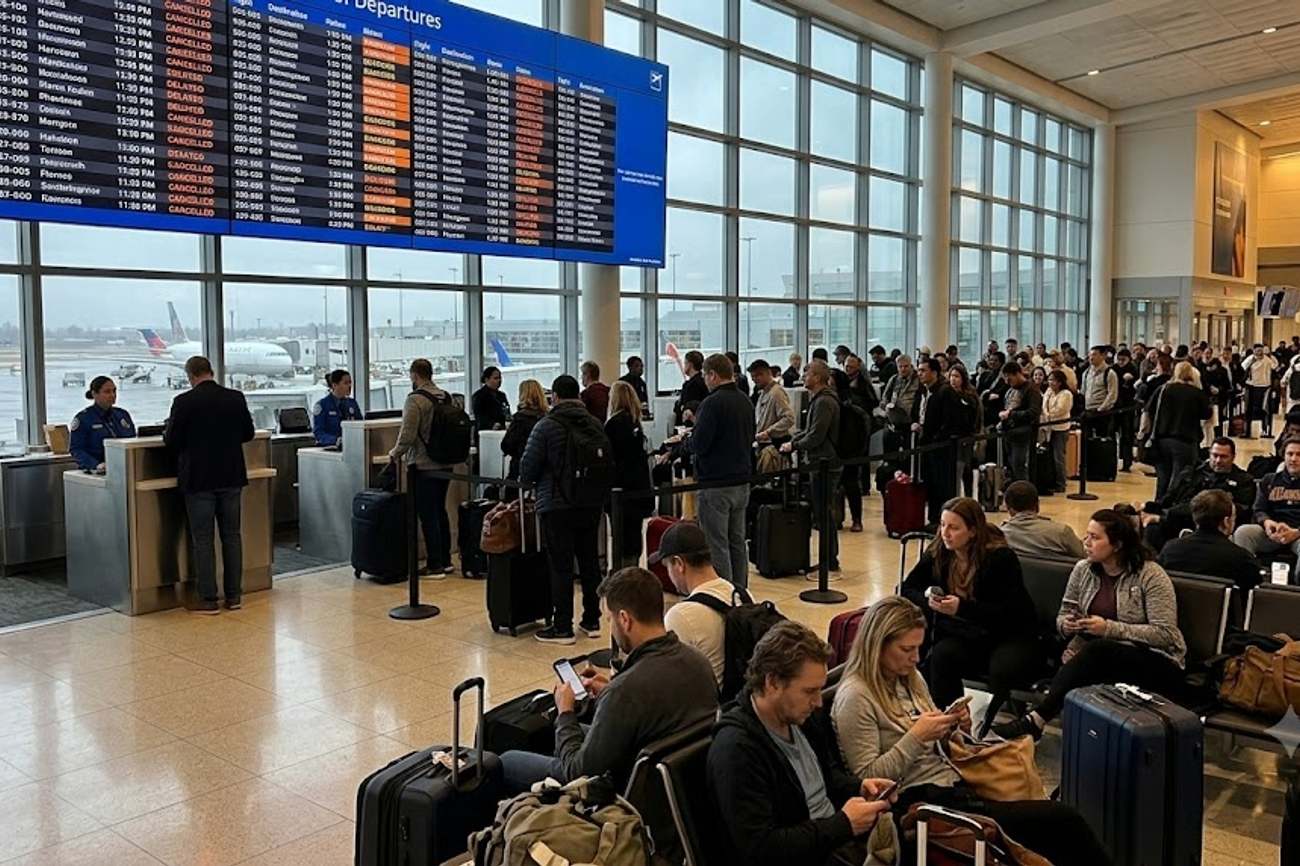
Image generated by AI
2,165 delays and 322 cancellations across the United States aviation network signal a systemic failure triggered by a combination of extreme weather and infrastructure bottlenecks. While the primary catalyst is the landfall of Hurricane Isaias, the ripple effects have extended far beyond the Florida Panhandle, impacting major hubs from Chicago to Denver.
The Isaias Effect: Category 2 Impact on Gulf Coast Aviation
The operational collapse in the Florida Panhandle is a direct result of Hurricane Isaias, which intensified to Category 3 strength before making landfall near Destin as a Category 2 storm. The resulting heavy rainfall and high-velocity winds forced state officials in Florida, Georgia, and Alabama to declare states of emergency. For the aviation sector, this meant more than just weather delays; it triggered mandatory commercial aviation restrictions across regional airports.
The severity of the disruption is most visible at Eglin AFB/Destin-Ft Walton Beach, where the departure cancellation rate hit 97%. This near-total shutdown illustrates the vulnerability of regional hubs when facing Category 2 wind speeds, which often exceed the safe operating limits for ground crews and aircraft taxiing.
Operational Breakdown by Airport and Carrier
The disruption is not limited to the storm's path. A combination of thunderstorms in Orlando and infrastructure projects in the Pacific Northwest has created a nationwide gridlock. While the Federal Aviation Administration (FAA) manages the airspace, the burden of recovery falls on the carriers, with American Airlines bearing the brunt of the scheduling pressure.
Airport Disruption Metrics
| Airport | Delays | Cancellations | Departure Delay Rate | Arrival Delay Rate | Departure Cancellation Rate |
|---|---|---|---|---|---|
| Eglin AFB/Destin-Ft Walton Beach | 3 | 85 | 4% | 2% | 97% |
| Pensacola | 4 | 76 | 2% | 5% | 85% |
| Northwest Florida Beaches | 5 | 33 | 6% | 3% | 38% |
| Charlotte/Douglas | 253 | 23 | 17% | 13% | N/A |
| Chicago O'Hare | 227 | 14 | 8% | 7% | N/A |
| Dallas-Fort Worth | 189 | 28 | 9% | 7% | N/A |
| Miami | 98 | 16 | 7% | 8% | N/A |
| Orlando | 126 | 15 | 9% | 10% | N/A |
| Denver | 124 | 13 | 6% | 6% | N/A |
| Hartsfield-Jackson Atlanta | 164 | 36 | 8% | 6% | N/A |
| Nashville | 68 | 25 | 8% | 8% | N/A |
Airline Performance Under Pressure
| Airline | Total Delays | Delay % | Total Cancellations |
|---|---|---|---|
| American Airlines | 510 | 14% | 23 |
| Southwest Airlines | 301 | 8% | 68 |
| Delta Air Lines | 197 | 6% | 25 |
| PSA Airlines | 47 | 6% | 29 |
| Allegiant Air | 33 | 10% | 34 |
| Envoy Air | 32 | 2% | 20 |
Expert Analysis: The Anatomy of a Systemic Delay
The data reveals a critical distinction between "weather cancellations" and "operational delays." In the Florida Panhandle, we see a total collapse of service (e.g., 91% arrival cancellation rate at Eglin AFB), which is a standard safety response to a hurricane. However, the high delay rates at Charlotte/Douglas (17% departure delay) and Chicago O'Hare (227 delays) suggest a secondary phenomenon: the "knock-on effect."
When aircraft are stranded in Florida, they are unavailable for their next legs in hubs like Charlotte or Dallas. This creates a vacuum in aircraft availability and disrupts crew scheduling. For travelers booking these routes, the direct consequence is a higher probability of "cascading delays," where a flight is delayed not because of local weather, but because the incoming plane is stuck in another state.
Furthermore, the simultaneous occurrence of runway construction at Seattle-Tacoma (SEA) and low ceilings at San Francisco (SFO) means there is no "safe haven" for diverted traffic on the West Coast. This convergence of independent stressors—a hurricane in the East, construction in the Northwest, and thunderstorms in the center—exhausts the buffer capacity of the International Air Transport Association (IATA) standards for schedule recovery. The pricing pressure this creates typically manifests as a spike in last-minute fare costs for remaining seats as passengers scramble to rebook.
Key Takeaways
- Regional Total Shutdown: The Florida Panhandle experienced near-total operational failure, with Eglin AFB seeing a 97% departure cancellation rate.
- Carrier Vulnerability: American Airlines is currently the most impacted carrier, recording 510 delays (14% of its operations).
- Hub Congestion: Charlotte/Douglas is the most strained major hub, with a 17% departure delay rate.
- Multi-Factor Gridlock: National delays are being compounded by non-weather issues, including runway construction at SEA and taxi operations at SAN.
- Emergency Status: Florida, Alabama, and Georgia remain under emergency declarations, meaning regional airport restrictions will likely persist.
FAQ: US Flight Disruptions 2024
What should I do if my flight from Florida is cancelled due to Hurricane Isaias? Immediately check your airline's mobile app for automatic rebooking. If no option is provided, contact the carrier directly. Because this is a weather-related event, airlines generally offer rebooking without fees, but they are not legally required to provide hotel or meal vouchers.
Why is my flight delayed in Chicago or Charlotte if the storm is in Florida? This is due to "aircraft rotation." The plane assigned to your flight was likely scheduled to arrive from a Florida city. Since those flights were cancelled or diverted, your aircraft is physically not at your departure airport.
Are ground stops at Orlando airport different from cancellations? Yes. A ground stop is a temporary freeze on departures and arrivals issued by the FAA due to immediate hazards (like thunderstorms). While a cancellation is a permanent removal of a flight from the schedule, a ground stop is a tactical pause that usually leads to delays.
How do I know if my connecting flight is still on time? Do not rely solely on the departure board at your first airport. Use a real-time tracking tool like FlightAware to see where your incoming aircraft is currently located.
When the weather breaks, the logistical recovery will be a race against crew timing limits and aircraft repositioning.
Tags: Hurricane Isaias 2024, American Airlines, FAA Ground Stop, Florida Panhandle Aviation, Charlotte Douglas International Airport, US Air Traffic Disruptions
Related Travel Guides
Disclaimer
This article is for informational and educational purposes only. It does not constitute legal, financial, or professional advice. While we strive to provide accurate and up-to-date information, travel policies, regulations, and conditions change rapidly. Always verify information with official sources before making travel decisions. Nomad Lawyer makes no representations about the accuracy, reliability, completeness, or suitability of the information provided. Readers should consult qualified professionals for advice specific to their circumstances. The views expressed in this article are those of the author and do not necessarily reflect the views of Nomad Lawyer.
Raushan Kumar
Founder & Lead Developer
Full-stack developer with 11+ years of experience and a passionate traveller. Raushan built Nomad Lawyer from the ground up with a vision to create the best travel and law experience on the web.
Learn more about our team →