
American Airlines Moves to Eliminate Involuntary Passenger Bumping in 2026
American Airlines introduces an October 2026 operational directive aiming to eliminate involuntary passenger bumping, adopting earlier volunteer outreach and aggressive compensation models.

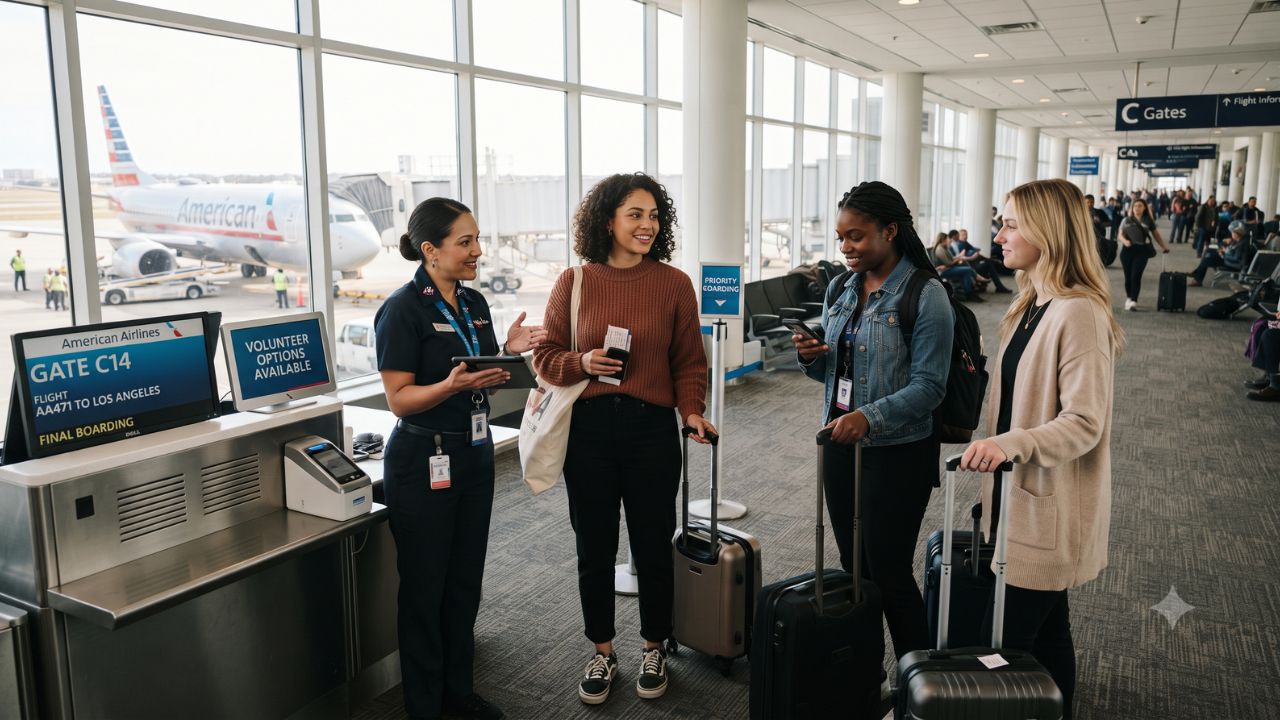
Image generated by AI
During the first six months of 2026, major American carriers recorded 146,736 voluntary seat surrenders, but American Airlines involuntarily removed 5,247 ticketed passengers from flights—accounting for more than half of all forced displacements across the country. That staggering disparity spurred an October 2026 operational directive inside American Airlines, establishing an internal target to wipe out involuntary denied boarding by restructuring how airport personnel recruit, incentivize, and rebook flexible flyers before departures close.
American Airlines Targets Zero Involuntary Denied Boardings
For decades, the standard response to an overbooked departure was mechanical: gate agents made a hurried announcement offering modest travel credits, waited brief moments for volunteers, and then printed boarding passes marked with involuntary denied-boarding notices. Under the initiative launched in October 2026, American Airlines is altering that equation. Station personnel must now exhaust every voluntary avenue before turning away any customer holding a confirmed reservation.
The shift represents an overdue operational correction. Across January through June 2026, federal consumer data revealed that American Airlines accounted for 5,247 involuntary denied boardings out of an industry total of 8,975 forced bumps. Frontier Airlines followed with 2,475 involuntary bumps, while Spirit Airlines recorded 670. Competitors like Delta Air Lines recorded zero.
Recognizing the reputational damage, American had begun adjusting its gate procedures earlier in the year. The carrier logged 1,953 involuntary bumps between April and June 2026, down from 4,257 during the same three-month window in 2025, marking an initial drop of roughly 54%. The autumn mandate formalized those gains into an operational doctrine: station managers possess expanded latitude to approve higher payout thresholds, deploy digital volunteer bids via the mobile application hours ahead of takeoff, and guarantee seats on subsequent departures even when those companion flights register as technically full.
Carrier Strategies: The Gulf Between Absolute Targets and Carriage Contracts
While American Airlines is commanding attention for publicly setting an elimination target, airline operational models reveal sharp contrasts in how individual carriers balance overbooking risk against passenger convenience.
Delta Air Lines remains the undisputed gold standard for voluntary passenger management. Across the first six months of 2026, Delta processed 57,077 voluntary seat surrenders while registering zero involuntary denied boardings. Delta achieves this through its Delta Choice program, offering immediate electronic gift cards to national retail outlets alongside confirmed premium routings. However, Delta's legal contract of carriage still preserves the right to involuntarily bump travelers if voluntary bids collapse. Its zero-bump record reflects operational discipline and deep volunteer incentives rather than an outright contractual ban.
United Airlines adopted a similar volunteer-first structure following its high-profile customer removal incident in 2017. By expanding gate agent compensation caps and conducting advance outreach, United limited involuntary bumping to 107 passengers during the first half of 2026. Southwest Airlines, which utilizes transferable Southwest LUV Vouchers, recorded 122 involuntary bumps over the same span. JetBlue Airways posted 122 forced denials, while the Alaska Airlines network recorded 232. At the ultra-low-cost tier, Allegiant Air mirrored Delta with zero involuntary bumps, whereas Frontier Airlines relied heavily on involuntary removals, bumping 2,475 flyers.
U.S. Airline Denied Boarding Statistics: January to June 2026
The following official figures from the U.S. Department of Transportation document marketing-carrier oversales performance across domestic and international network flights during the first half of 2026.
| Airline | Approach to Oversold Departures | Voluntary Compensation Strategy | Involuntary Bumps (Jan–Jun 2026) |
|---|---|---|---|
| American Airlines | Operational target to eliminate involuntary bumping | Escalating cash-equivalent offers, app alerts, advance rebooking | 5,247 |
| Delta Air Lines | Volunteer-first operational model | Delta Choice gift cards, flexible travel routing | 0 |
| United Airlines | Volunteer-focused seat management | Negotiated compensation packages, alternate flight protection | 107 |
| Southwest Airlines | Advance digital volunteer solicitation | Transferable Southwest LUV Vouchers, alternate departures | 122 |
| JetBlue Airways | Progressive volunteer bidding | Tailored travel credits, confirmed seat reassignment | 122 |
| Alaska Airlines Network | Station-managed volunteer outreach | Mileage incentives, travel vouchers, rerouting | 232 |
| Allegiant Air | Strict inventory control and volunteer requests | Direct travel compensation when required | 0 |
| Frontier Airlines | Traditional boarding priority rules | Basic vouchers followed by forced displacement | 2,475 |
| Spirit Airlines | Capacity-driven gate management | Travel credits followed by priority boarding cuts | 670 |
Source: U.S. Department of Transportation oversales reporting, January through June 2026.
Airport Insider Tips: Bidding, Gate Timing, and Volunteer Negotiation
Frequent flyers who understand airline revenue software can turn an overbooked departure into substantial travel value. Navigating oversold flights requires tactical timing at the podium rather than passive waiting.
First, monitor the carrier application during mobile check-in. Both American and Delta frequently prompt passengers to enter a volunteer dollar figure 24 hours prior to departure. Enter the maximum allowable bid. Submitting an aggressive bid places your name on the gate supervisor's standby manifest without binding you to surrender your seat if subsequent flight alternatives do not match your schedule.
Second, approach the podium agent at least 45 minutes before domestic boarding begins. Politely ask the agent if the flight is in an oversold position and confirm whether they need volunteers. When negotiating, request written confirmation of your alternate flight routing, seat assignment, and hotel or meal vouchers before releasing your boarding pass. If accepting airline scrip, verify expiration dates and transferability. Delta Choice cards function like retail currency, whereas traditional airline vouchers often carry tight 12-month booking windows.
Third, know your federal baseline. If an airline attempts to bump you involuntarily on a domestic flight, federal regulations require cash or electronic payment based on arrival delay. Delays between one and two hours mandate 200% of your one-way fare up to federal statutory ceilings. Delays exceeding two hours require 400% of your one-way fare up to the federal maximum. Knowing these statutory figures provides decisive leverage when gate teams seek volunteers.
Transit Culture and Operational Realities at US Air Hubs
Overbooking exists because passenger no-show models remain central to airline revenue management. Algorithms calculate historical cancellation rates on specific routes—such as Dallas/Fort Worth to Chicago O'Hare or Atlanta to Miami—and intentionally sell beyond cabin physical capacity to prevent aircraft from departing with unoccupied inventory.
When passenger turnout hits 100%, airport environments experience friction. High seat load factors reduce aviation fuel burn per passenger kilometer, aligning with environmental efficiency goals, but operational fragility spikes. A delay in resolving overbooked seats cascades through tight gate turnaround windows, affecting ground handling, baggage transfers, and takeoff slots.
American Airlines' willingness to delay door closure to secure voluntary seat surrenders marks a significant cultural change. By decentralizing budget authority to airport supervisors, gate personnel no longer need permission from central flight dispatch to offer substantial payouts. This customer-focused realignment prioritizes passenger dignity and passenger consent across bustling terminal hubs.
FAQ: Managing Oversold Flights in 2026
What are my legal rights if an airline bumps me involuntarily? Under federal law, passengers involuntarily bumped from domestic flights who arrive one to two hours late receive 200% of their one-way fare up to federal limits. Delays exceeding two hours require 400% of the one-way fare.
Why does Delta report zero involuntary bumps while American recorded thousands? Delta relies on aggressive voluntary incentives, including retail gift cards and app-based bidding, resolving capacity shortfalls before departure. American historically relied on rigid gate limits, driving 5,247 involuntary bumps during early 2026.
Can I request cash instead of vouchers when volunteering my seat? Voluntary compensation is negotiated directly with gate agents. While airlines prefer issuing travel credits, agents possess authority to offer prepaid debit cards or electronic funds when seats are urgently needed.
Has American Airlines eliminated overbooking completely? No. American Airlines continues to overbook flights based on predictive models. The October 2026 initiative targets the elimination of involuntary bumping by securing voluntary passenger agreements through higher compensation and earlier communication.
When gate agents begin bidding for empty seats, the informed flyer knows that flexibility is the most valuable currency in modern aviation.
Related Travel Guides
American Airlines Bans Involuntary Bumping: New 2026 Passenger Rights and Compensation Rules
10 Best Airport Transit Tips for Navigating Holiday Travel Delays Reddit 2026
Disclaimer
This article is for informational and educational purposes only. It does not constitute legal, financial, or professional advice. While we strive to provide accurate and up-to-date information, travel policies, regulations, and conditions change rapidly. Always verify information with official sources before making travel decisions. Nomad Lawyer makes no representations about the accuracy, reliability, completeness, or suitability of the information provided. Readers should consult qualified professionals for advice specific to their circumstances. The views expressed in this article are those of the author and do not necessarily reflect the views of Nomad Lawyer.
Kunal K Choudhary
Co-Founder & Contributor
A passionate traveller and tech enthusiast. Kunal contributes to the vision and growth of Nomad Lawyer, bringing fresh perspectives and driving the community forward.
Learn more about our team →