
Flight chaos hits Middle East hubs amid weather and security tensions
Flight chaos hits Cairo, Dubai, and Istanbul in 2026 as severe weather, regional security tensions, and airline capacity constraints trigger mass cancellations affecting thousands of travelers across the Middle East's busiest aviation corridors.

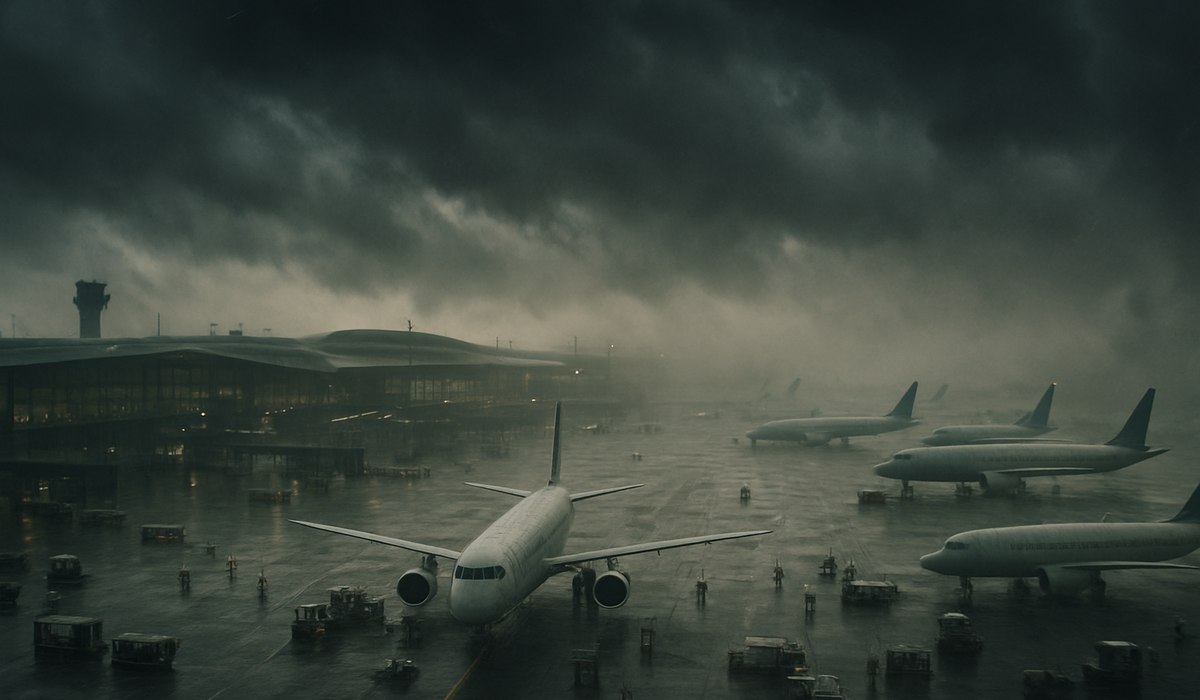
Image generated by AI
Hundreds of Flights Cancelled as Flight Chaos Hits Three Critical Middle East Hubs
Flight chaos hits across three of the world's busiest aviation hubs this week. Over 375 flights have been cancelled and thousands of passengers stranded at Cairo International Airport, Dubai International Airport, and Istanbul's Sabiha Gökçen International Airport since late March 2026. A perfect storm of severe sandstorms in Egypt, powerful Mediterranean storm systems over Turkey, and regional security tensions affecting Gulf airspace has created unprecedented operational challenges for regional carriers and global airlines routing through these critical gateway cities.
Severe Weather and Regional Tensions Converge on Key Hubs
The confluence of three distinct aviation crises has created cascading disruptions across North Africa and the Middle East. Sand-laden winds and reduced visibility plague Egyptian airspace, while intense storm systems swept across Turkey in late March, affecting European and regional connectivity. Simultaneously, ongoing security concerns around Gulf airspace have forced airlines to apply more conservative routing strategies, compounding capacity pressures at already-strained terminals.
Flight tracking data from FlightAware shows the scale of operational impact. On March 29 and 30 alone, storm systems across Turkey triggered at least 364 cancellations and over 3,000 delays. Cairo's role as both a national gateway and diversion hub amplified disruptions when nearby airspace closures forced aircraft to reroute. The combination has pushed extra volume into already congested terminals, creating a domino effect that continues into early April.
Regional military tensions and earlier missile and drone incidents affecting Gulf infrastructure have further restricted available airspace. Dubai International Airport, while remaining operational, has implemented more conservative scheduling around certain routes. These cumulative pressures have left airlines with limited flexibility to absorb any additional operational challenges.
Cairo Airport Grapples with Sand Storms and Visibility Issues
Egypt's flag carrier issued an emergency alert in late March, advising passengers to allow extra time for airport journeys amid reduced visibility and congestion on access roads. Heavy winds, dust, and unsettled weather across Greater Cairo and the Western Desert reduced runway capacity and extended separation requirements between takeoffs and landings—standard procedures that dramatically reduce throughput during adverse conditions.
Cairo's network position amplified the crisis. In early March alone, Egyptian airports received over twenty diverted international flights in a single day as regional airspace closures forced rerouting. The same day saw nearly fifty scheduled services to Gulf destinations cancelled from Egypt's airports. For several weeks, Egypt's national carrier maintained extended flexibility policies covering travel from late February through late April, underscoring the severity of expected disruptions.
Peak disruption days saw dozens of cancellations concentrated on shorter regional flights—typically the first routes trimmed when weather or airspace constraints arise. Cumulative figures point to well over 100 flights involving Cairo being removed from schedules or diverted during the affected period. Additionally, from April 11, Cairo International began phasing out paper arrival and departure cards for Egyptian nationals in favor of digital data collection, a procedural change that may initially add complexity for passengers already managing rebookings and tight connections.
Istanbul Airports Hit Hard by Late March Storm Systems
Istanbul's airport system experienced some of the region's most visible disruption over the past fortnight. Passenger-advocacy platforms documented that severe weather across Europe and Turkey on March 29 alone contributed to at least 364 cancellations and more than 3,000 delays. Istanbul's Sabiha Gökçen International Airport, serving over 30 million annual passengers, recorded some of the largest impacts from rolling knock-on delays and selective cancellations extending into early April.
Flight restrictions linked to strong crosswinds forced capacity reductions at critical times. Airlines continued resetting schedules well into April as they worked through accumulated delays and repositioned aircraft. The disruption proved particularly severe for connecting passengers, as delays at Istanbul cascaded across European routes and onward Middle East connections. Many carriers implemented significant schedule adjustments, with some reducing daily frequencies on affected routes by 20-30 percent.
The timing coincided with Easter holiday travel, amplifying passenger frustration. Thousands of leisure travelers faced multi-day delays or forced route changes. Airlines prioritized high-capacity routes and crew-sensitive scheduling to gradually restore normal operations, a process that typically requires 5-7 days post-disruption in this region's complex network environment.
Ripple Effects Continue Across Gulf and Mediterranean Routes
The disruption's geographic scope extends far beyond the three primary hubs. Flight cancellations and delays rippled across European services connected through Istanbul, Mediterranean coastal services from Cairo, and Gulf connectivity through Dubai. Airlines operating transatlantic services with Middle East connections faced significant schedule pressure, as aircraft and crews unavailable due to stranded aircraft compounded problems.
Passengers booked on indirect routes through these hubs faced the highest risk of disruption. A single cancelled flight in Cairo or Istanbul often triggered cascading delays on subsequent legs. Airlines struggled with crew duty-time violations, as flight crews exceeded regulations waiting for aircraft to become available. This created a secondary wave of disruptions as carriers attempted to reschedule crews legally.
Regional carriers including Egypt Air, Turkish Airlines, and Emirates adjusted pricing on available capacity, with some connecting routes showing premium fares 40-60 percent above typical April rates. Budget carriers diversified routing to avoid disrupted hubs entirely, though this often added 2-4 hours to journey times. The situation underscores how interconnected modern aviation operates—localized disruption in three hubs affects global air travel patterns within 24-48 hours.
Key Data: Flight Chaos Impact Summary
| Metric | Cairo | Istanbul | Dubai | Regional Total |
|---|---|---|---|---|
| Cancellations (Late Mar-Apr 8) | 100+ | 364+ | 80+ | 375+ |
| Peak Day Delays | 400+ | 3,000+ | 250+ | 3,500+ |
| Primary Cause | Sandstorms | Storm Systems | Security/Weather | Multiple |
| Affected Airlines | 12+ | 18+ | 15+ | 40+ |
| Estimated Stranded Passengers | 8,000+ | 15,000+ | 6,000+ | 29,000+ |
| Expected Recovery Window | April 10-12 | April 9-11 | April 8-10 | April 12+ |
What This Means for Travelers: Action Checklist
Travelers with flights through or to these hubs should take immediate action to protect their bookings and plans.
-
Check flight status immediately on your airline's website or via FlightAware's real-time tracker. Filter by airport and date to assess current conditions at Cairo, Istanbul, and Dubai.
-
Contact your airline directly before arriving at the airport. Most carriers are waiving change fees for flights through affected hubs through April 10. Rebooking options may include alternative routings, date changes, or full refunds.
-
Document delays exceeding 3 hours for flights to/from EU airports. You may qualify for compensation under EU Regulation 261/2004, which provides €250-€600 depending on flight distance. Consult the US Department of Transportation for similar US protections.
-
Arrange ground transportation flexibility. Assume delays of 4-8 hours on Cairo and Istanbul routes through April 10. Budget extra time for airport transfers and consider rebooking hotel connections with flexible cancellation policies.
-
Monitor regional airspace advisories. The FAA publishes NOTAMs (Notices to Airmen) affecting global flights. Check your airline's daily updates for routing changes and new restrictions.
-
Request meal and accommodation vouchers if your flight experiences delays over 2
Disclaimer
This article is for informational and educational purposes only. It does not constitute legal, financial, or professional advice. While we strive to provide accurate and up-to-date information, travel policies, regulations, and conditions change rapidly. Always verify information with official sources before making travel decisions. Nomad Lawyer makes no representations about the accuracy, reliability, completeness, or suitability of the information provided. Readers should consult qualified professionals for advice specific to their circumstances. The views expressed in this article are those of the author and do not necessarily reflect the views of Nomad Lawyer.
Raushan Kumar
Founder & Lead Developer
Full-stack developer with 11+ years of experience and a passionate traveller. Raushan built Nomad Lawyer from the ground up with a vision to create the best travel and law experience on the web.
Learn more about our team →