
Flight Chaos Hits Major US Hubs With 3,159 Delays on April 10
Flight chaos hits five major US aviation hubs today as 3,159 delays and 125 cancellations disrupt travel across the domestic network in 2026. Atlanta, Chicago, and New York airports bear the brunt of cascading disruptions.

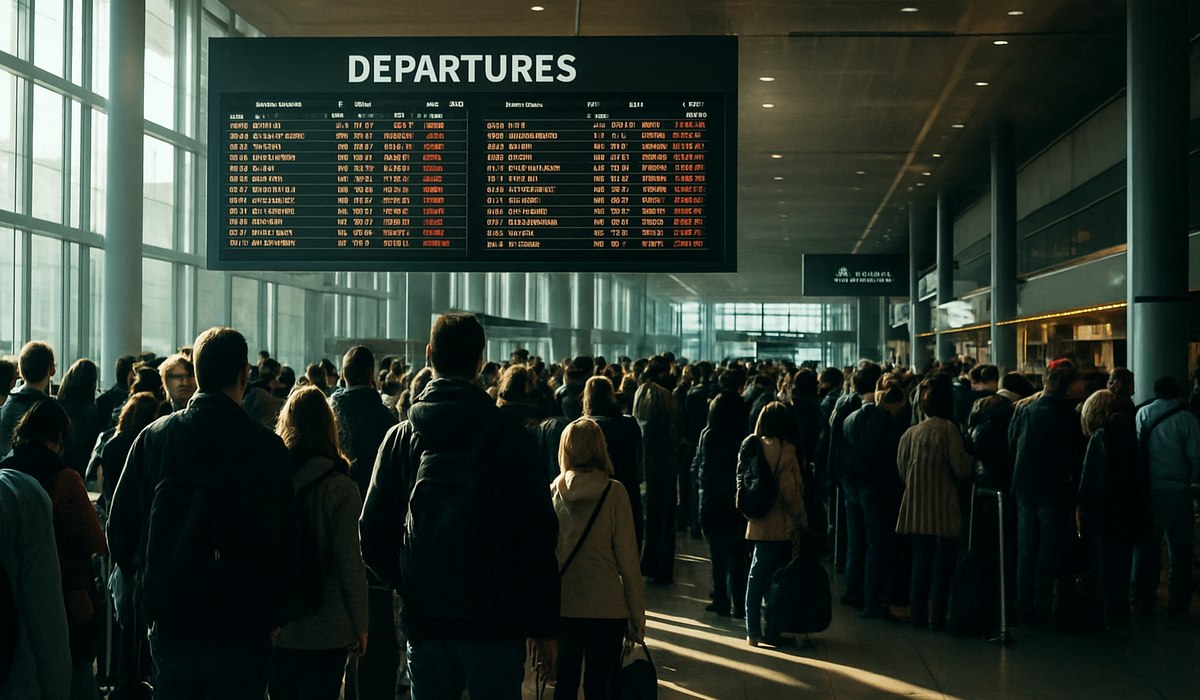
Image generated by AI
Flight Chaos Hits Five Major US Aviation Hubs
Air travel across the United States experienced significant disruption today as flight chaos hits major hubs nationwide. Atlanta Hartsfield-Jackson, Chicago O'Hare, Los Angeles International, Houston George Bush Intercontinental, and New York area airports reported 3,159 delayed flights and 125 cancellations, affecting travelers across American, Delta, United, Alaska, and Republic Airways. The cascading disruptions rippled through connecting banks throughout the day, leaving passengers stranded and crews out of position as the network struggled to recover from the compounding delays.
The scale of today's disruption underscores how fragile the modern aviation ecosystem has become. When major hubs experience operational stress, the effects propagate instantaneously through the entire domestic network, affecting thousands of passengers attempting to reach their destinations.
Widespread Delays Hit Five Major Hub Airports
The concentration of disruption at America's busiest airports created a perfect storm for operational breakdown. Atlanta and Chicago, where connecting traffic forms the backbone of multiple major carriers' business models, experienced clusters of late departures throughout the morning and early afternoon. These two hubs alone handle hundreds of thousands of connecting passengers daily, meaning even modest schedule changes translate into widespread cascading effects.
Los Angeles and New York airports absorbed additional pressure from heavy transcontinental and international schedules. Passengers attempting to reach Asia, Europe, and Hawaii faced extended delays as inbound flights arrived late, pushing departure banks into congestion. Houston's afternoon and evening banks compressed as earlier delays fed into peak departure periods, creating compounding effects through the day.
Flight tracking data from FlightAware shows that these five hubs collectively represented the vast majority of today's disruptions. The Federal Aviation Administration's delay monitoring systems confirmed ground delay programs remained active at multiple facilities through the afternoon. Each airport's physical and operational constraints—limited gate capacity, taxiway congestion, and staffing limits—prevented rapid recovery once the disruption began spreading.
Cascading Effects Strain Connecting Passengers
The ripple effects of flight chaos hits most severely for passengers with connecting itineraries. At Atlanta and Chicago, where connection times averaged 45 to 90 minutes, thousands of travelers missed their onward flights. Airlines faced impossible choices: hold inbound flights to protect connections or depart on time and leave passengers behind.
Regional and mainline operations proved deeply interdependent. When Alaska Airlines or Republic Airways regional flights arrived late at major hubs, they displaced mainline aircraft from gates, forcing American, Delta, or United to delay subsequent departures. This created a domino effect that propagated through the entire day's schedule, with early morning delays affecting evening service hours later.
Crew scheduling compounded the problem significantly. Pilots and flight attendants operate under strict duty-time limitations. When crews arrived late due to delays, they couldn't immediately operate outbound flights without violating Federal Aviation Regulations. This forced airlines to cancel subsequent flights rather than delay them further, converting schedule slippage into outright cancellations by mid-afternoon.
Passenger rebooking became chaotic at customer service desks. Lines stretched for hours at major airports as agents attempted to reroute travelers on alternative flights. Available inventory across partner airlines depleted rapidly, leaving many passengers with no same-day alternatives and forced overnight hotel stays.
Which Airlines and Routes Face the Biggest Impact
American Airlines and United Airlines suffered the most disruption, given their substantial presence at Chicago, Houston, Los Angeles, and New York. Both carriers maintain hub operations at multiple affected airports, meaning disruptions at one location compressed schedules at others as crews and aircraft fell out of position.
Delta Air Lines, despite a primary hub at Atlanta, experienced compounding pressures across New York and Los Angeles operations. A single late-arriving aircraft at Atlanta affected multiple downstream departures, while simultaneously delayed inbound flights to other hubs created gaps in aircraft utilization.
Alaska Airlines, though smaller, felt disproportionate impacts as a code-share partner feeding mainline flights. Regional operator Republic Airways, which supplies critical feeder service to major carriers, saw its schedule constraints amplify problems for larger network carriers dependent on regional connectivity.
Specific route categories hit hardest included:
- Short-haul feeds into major hubs (affected crew duty-time recovery)
- Medium-haul transcontinental segments (created bottlenecks in peak departure windows)
- International connections (compressed ground turnaround times below minimum standards)
- Evening/night departures (accumulated earlier delays throughout the day)
Routes operated by single carriers without backup capacity experienced longer delays, as airlines couldn't absorb schedule shocks through network flexibility.
What Travelers Can Expect at Affected Airports
Expect extended wait times at customer service desks, potentially 2 to 3 hours during peak periods. Limited hotel inventory near major airports may mean reaccommodation challenges if you're rebooked to the next available flight.
Ground transportation around affected airports will experience heightened demand. Ride-sharing services may show surge pricing of 2 to 3 times normal rates. Rental car facilities could face inventory constraints as travelers seek alternative transportation.
Airport restaurants and retail will likely experience crowding as stranded passengers spend additional hours in terminals. Charging stations and seating areas near gates will be at capacity.
Airlines' rebooking policies vary by carrier and booking class. Premium cabin passengers typically receive priority, while basic economy passengers may face longer delays in rebooking. Check your airline's website for specific policies before arriving at the airport.
Traveler Action Checklist
-
Check your flight status immediately using FlightAware and your airline's app before heading to the airport.
-
Contact your airline proactively if your flight appears delayed—don't wait for formal notification about rebooking options.
-
Document all expenses related to delays or cancellations (meals, hotels, transportation) for potential compensation claims.
-
Review your rights under Department of Transportation regulations at transportation.gov/airconsumer.
-
Request rebooking on alternative carriers if your airline has no same-day options to your destination.
-
Confirm ground transportation before arriving at the airport, as ride-sharing may experience surge pricing.
-
Prepare for extended airport time with entertainment, chargers, and appropriate food purchases.
Key Disruption Metrics
| Metric | Value | Context |
|---|---|---|
| Total Delays Reported | 3,159 flights | Across five major hubs |
| Total Cancellations | 125 flights | Representing 3.8% of affected operations |
| Primary Affected Airports | Atlanta, Chicago, Los Angeles, Houston, New York | Account for ~27% of US commercial traffic |
| Airlines Most Impacted | American, Delta, United, Alaska, Republic | Largest operators at affected hubs |
| Peak Disruption Period | Morning through early evening | Cascading effects throughout the day |
| Estimated Affected Passengers | 400,000+ | Based on average aircraft loads |
What This Means for Travelers
Today's flight chaos hits illustrates the vulnerability of hub-based aviation networks. With approximately 400,000 passengers affected across 3,159 delayed flights, this disruption ranks among the more significant operational events of 2026.
For immediate travelers: verify your flight status before arriving at any affected airport. Contact your airline directly rather than relying solely on notifications, which often lag actual operational changes by 30 minutes or more.
For future travel planning: consider routing through smaller airports when possible, as they rarely experience the cascading effects that paralyze major hubs. Build in longer connection times—90 minutes represents the minimum at major airports, and 120 minutes provides meaningful
Disclaimer
This article is for informational and educational purposes only. It does not constitute legal, financial, or professional advice. While we strive to provide accurate and up-to-date information, travel policies, regulations, and conditions change rapidly. Always verify information with official sources before making travel decisions. Nomad Lawyer makes no representations about the accuracy, reliability, completeness, or suitability of the information provided. Readers should consult qualified professionals for advice specific to their circumstances. The views expressed in this article are those of the author and do not necessarily reflect the views of Nomad Lawyer.
Kunal K Choudhary
Co-Founder & Contributor
A passionate traveller and tech enthusiast. Kunal contributes to the vision and growth of Nomad Lawyer, bringing fresh perspectives and driving the community forward.
Learn more about our team →