
Flight Chaos Hits France and Scandinavia in April 2026
Flight chaos hits Europe as 30+ cancellations and 51+ delays disrupt Air France and SAS services across France and Scandinavia in April 2026, affecting thousands of travelers.

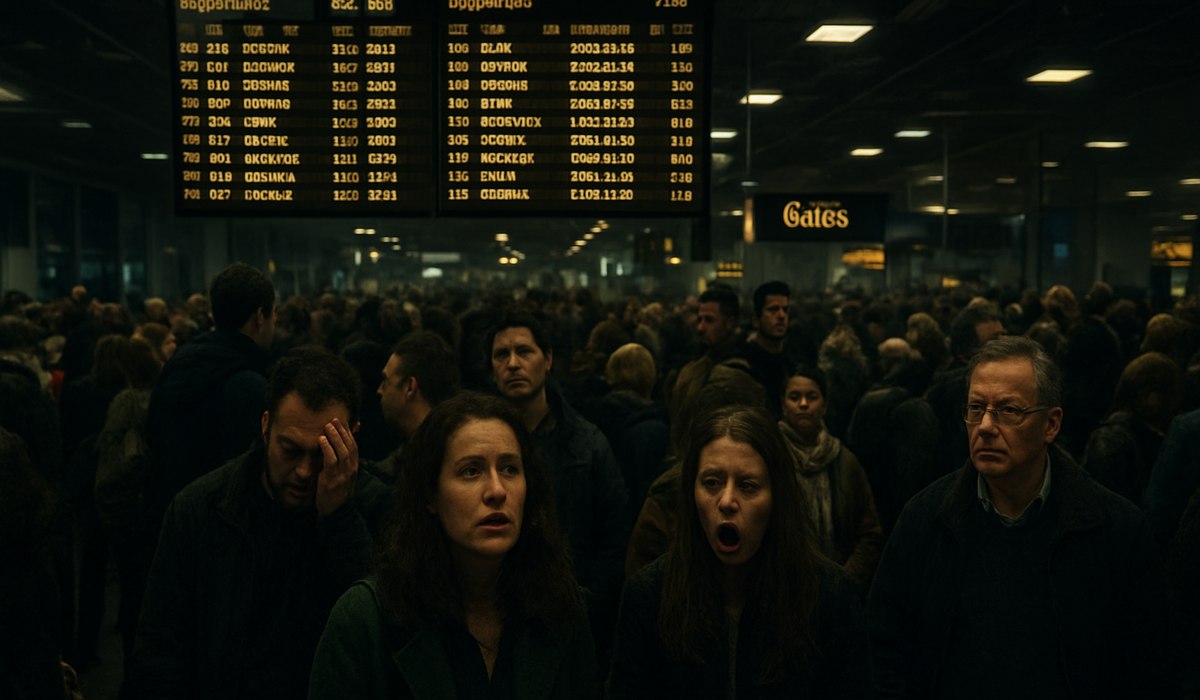
Image generated by AI
Major European Flight Chaos Disrupts France and Scandinavia
Air France and Scandinavian Airlines (SAS) are battling unprecedented disruption across Western and Northern Europe as flight chaos hits major transit hubs. On April 8, 2026, aviation data revealed more than 30 cancellations and at least 51 delays affecting services through Paris Charles de Gaulle, Copenhagen Kastrup, and Oslo Gardermoen. Thousands of passengers face missed connections, extended airport waits, and rebooking complications as the region grapples with compounding operational pressures.
The cascading disruptions represent the latest chapter in a volatile period for European aviation, where weather, infrastructure strain, and capacity constraints have converged to create systemic travel chaos across Scandinavia and France simultaneously.
Fresh Wave of Disruptions Hits Key European Hubs
Flight-tracking data from early April 2026 paints a stark picture of schedule instability across major Western and Northern European airports. Paris Charles de Gaulle, Copenhagen Kastrup, and Oslo Gardermoen emerged as epicenters of the disruption, with interconnected networks amplifying delays across regional and long-haul routes.
Air France reported the heaviest impact at Paris Charles de Gaulle, where aircraft repositioning following earlier cancellations created downstream delays lasting multiple days. SAS and its Irish-registered subsidiary experienced similar cascading effects at Copenhagen and Oslo, where clusters of cancellations on specific days forced the airline to consolidate regional services and redirect passenger loads to later departures.
The geographic spread suggests systemic pressure rather than isolated incidents. Cancellations clustered around morning and early afternoon departure windows, when most connections commence, maximizing passenger disruption. Check real-time flight status updates on FlightAware for current delays and cancellations at these major hubs.
Which Airlines and Airports Are Most Affected
Air France dominates disruption tallies across French gateways, with significant cancellation concentrations at Paris Charles de Gaulle, Nice Côte d'Azur, and Lyon-Saint Exupéry. The airline's dense European network and reliance on Paris as a global hub mean that single-day disruptions cascade across intercontinental services.
SAS and Scandinavian Airlines Ireland face comparable challenges in Scandinavia, where Copenhagen and Oslo serve as primary hubs for Nordic regional networks feeding long-haul Transatlantic and Asian services. SAS announced plans to cancel at least 1,000 flights system-wide during April 2026, primarily on Norwegian domestic routes, reducing operational flexibility for managing unplanned disruptions.
Secondary impacts ripple through smaller airports including Stockholm Arlanda, Bergen Flesland, and Stavanger Sola, where regional feed services to major hubs experience extended propagation delays. Passengers originating from these secondary airports face compounded risk of missing primary connections at Oslo or Copenhagen.
| Metric | Data | Impact |
|---|---|---|
| Cancellations | 30+ flights | Direct passenger stranding |
| Delays | 51+ services | Missed connections, hotel costs |
| Primary Affected Airline | Air France | Paris hub paralysis |
| Secondary Affected Airline | SAS/Scandinavian Airlines Ireland | Copenhagen/Oslo disruption |
| Primary Airport | Paris Charles de Gaulle | 100+ international routes affected |
| Secondary Airport | Copenhagen Kastrup | Nordic network cascade failures |
Weather, Infrastructure Strain, and Fuel Costs Create a Volatile Mix
Unsettled spring weather patterns across Scandinavia and northern France have reduced runway capacity at critical moments, preventing schedule recovery when early disruptions occur. High winds documented during early April restricted departure rates at Copenhagen and Oslo, compounding cascading delay propagation.
Beyond meteorological factors, infrastructure vulnerabilities intensified disruption severity. Power outages in sections of Sweden and Norway disrupted ground equipment, reducing ground-handling efficiency and extending aircraft turnaround times. These infrastructure gaps coincided with broader European operational strain from elevated fuel costs and aggressive aircraft utilization schedules.
SAS's strategic April capacity reductions—canceling over 1,000 flights primarily on Norwegian domestic routes—reflect fuel cost pressures that limit schedule resilience. When carriers operate with minimal spare aircraft, single disruptions rapidly cascade into network-wide delays. Air France faces similar constraints, with limited buffer capacity to absorb weather-related disruptions at dense Paris Charles de Gaulle operations.
What This Means for Travelers Now
Passengers booked through France and Scandinavia during April 2026 face material disruption risk. The combination of planned capacity reductions, weather constraints, and infrastructure strain creates an operating environment where normal-weather disruptions can trigger cascading delays across entire networks.
Travelers should anticipate schedule volatility even on days appearing weather-appropriate at their destination. Aircraft repositioning from earlier cancellations can propagate delays days after initial disruption resolves. Regional airport passengers face heightened connection risk due to limited alternative flights within single-day windows.
Traveler Action Checklist
- Check flight status daily via FlightAware beginning 3 days before departure, not just 24 hours prior
- Verify alternative routing through Paris, Copenhagen, and Oslo competitors (Lufthansa, KLM, Brussels Airlines) in case your booked flight cancels
- Understand passenger rights by reviewing EU Regulation 261/2004 compensation rules on the US Department of Transportation website
- Book flexible return flights if possible; avoid tight connections under 2 hours in major hubs during April 2026
- Contact your airline 48 hours pre-flight rather than 24 hours; rebooking options fill rapidly during disruption periods
- Secure accommodation insurance covering airport hotel overnight stays; many cancellations force single-night delays
- Register with airline communications to receive automatic notifications of schedule changes rather than discovering cancellations at the airport
Frequently Asked Questions
What compensation am I entitled to under EU rules if my flight cancels? Passengers on EU-regulated flights may qualify for €250–€600 compensation depending on flight distance, per EU Regulation 261/2004. Review the FAA passenger rights guide and US DOT Air Consumer Protection Division for comprehensive eligibility criteria and filing procedures with your airline.
How long do cascading delays typically last after major cancellations? Schedule normalization typically requires 2–5 days following large-scale cancellations, depending on aircraft availability and crew positioning requirements. Air France's recent multi-day delays at Paris Charles de Gaulle illustrate how aircraft repositioning extends disruption windows beyond initial cancellation dates.
Should I book connecting flights through Copenhagen, Paris, or Oslo during April 2026? Minimize connections at these hubs if possible. If unavoidable, allow minimum 3-hour connection windows instead of standard 2 hours. The documented disruption severity and infrastructure constraints make tight connections particularly risky through these airports during April.
Are refunds or rebooking available if my flight cancels due to weather? Airlines typically classify weather as extraordinary circumstances exempting them from compensation obligations. However, you retain rebooking rights on the next available flight to your destination. Force airlines to provide meals, accommodation, and communication access during extended delays per EU 261/2004 provisions.
What Happens When Flight Chaos Hits Your Itinerary
Flight chaos hits Europe periodically, but April 2026 presents compounded risk through simultaneous weather, infrastructure, and capacity-reduction factors. Passengers should treat this disruption window as elevated-risk travel,
Disclaimer
This article is for informational and educational purposes only. It does not constitute legal, financial, or professional advice. While we strive to provide accurate and up-to-date information, travel policies, regulations, and conditions change rapidly. Always verify information with official sources before making travel decisions. Nomad Lawyer makes no representations about the accuracy, reliability, completeness, or suitability of the information provided. Readers should consult qualified professionals for advice specific to their circumstances. The views expressed in this article are those of the author and do not necessarily reflect the views of Nomad Lawyer.
Raushan Kumar
Founder & Lead Developer
Full-stack developer with 11+ years of experience and a passionate traveller. Raushan built Nomad Lawyer from the ground up with a vision to create the best travel and law experience on the web.
Learn more about our team →