
Flight Chaos Grids Slam Southeast Hubs as April 7 Storms Trigger 3,000+ Delays
Severe spring weather collided with air traffic congestion across southeastern US hubs on April 7, 2026, triggering flight chaos grids that disrupted over 3,000 flights nationwide. Atlanta, Charlotte, Miami, and Orlando bore the brunt of cascading delays.

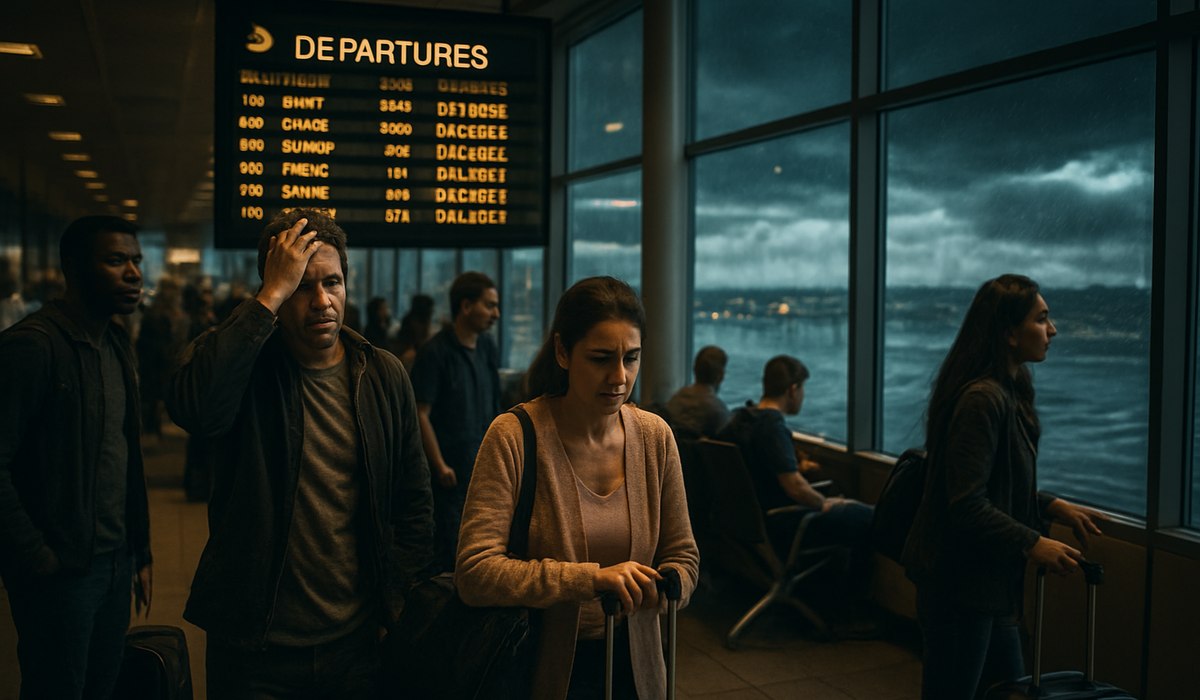
Image generated by AI
When Flight Chaos Grids Collided with Peak Travel
Severe spring storms and cascading air traffic bottlenecks converged across the Southeast on April 7, 2026, creating what travel industry analysts termed a textbook example of how weather and network infrastructure failures amplify each other. By mid-afternoon, flight tracking systems reported more than 3,000 delayed flights nationwide, with concentrated disruption at Atlanta's Hartsfield-Jackson International Airport, Charlotte Douglas, Miami International, and Orlando International. The cascading delays rippled far beyond affected hubs, stranding passengers across the entire national air network and highlighting vulnerabilities in America's hub-and-spoke aviation system.
Southeast Hubs Buckle Under Weather and Volume
Spring convective weather patterns swept through Georgia and the Carolinas on April 7, colliding with peak afternoon departure banks at the region's busiest airports. Real-time flight tracking data revealed that Atlanta alone processed more than 190 cancellations alongside thousands of delays, making it the day's leading problem point for domestic aviation. Industry monitoring services documented that Charlotte Douglas and Miami International each recorded elevated delay concentrations, while Orlando saw late-day operations severely compressed by upstream network effects.
The phenomenon of flight chaos grids—where localized weather triggers system-wide delays through hub bottlenecks—materialized within hours. A single thunderstorm cell over northern Georgia meant that departures held at origins from Denver to Boston faced extended ground delays, as the Federal Aviation Administration issued ground delay programs limiting hourly arrival capacity at Atlanta. This domino effect underscores how the concentration of traffic through a handful of major Southeast hubs creates fragility across the entire network.
Atlanta Emerges as Day's Leading Problem Point
Hartsfield-Jackson Atlanta International Airport, the nation's busiest by passenger volume, bore the brunt of April 7's disruption. Delta Air Lines, which operates Atlanta as its primary hub, managed approximately 2,300 daily departures under normal conditions; on April 7, a substantial portion faced hour-long delays or cancellations. Weather radar showed that afternoon thunderstorm activity peaked between 3 PM and 6 PM local time, precisely during Atlanta's evening wave departure window.
Flight operations data compiled by industry tracking services showed Atlanta exceeded typical same-day delay percentages by a margin of 3-to-1. American Airlines, which maintains significant connecting traffic through the airport, also reported cascading impacts on services between Charlotte and Houston, Dallas, and points west. The airport's reliance on banked schedules—where carriers concentrate departures into specific peak windows—meant that weather delays stacked sequentially rather than distributing throughout the day.
Real-Time Disruption Spreads Across Network
Ground delay programs implemented by air traffic control centers in the Southeast Regional Office created ripple effects across the continental United States. A Delta flight scheduled to depart Minneapolis for Atlanta at 4 PM faced a ground delay of 90 minutes before pushback, as the FAA restricted how many aircraft could land at Atlanta during peak storm activity. This same aircraft then arrived too late to connect passengers to evening Caribbean and coastal departures, triggering secondary cancellations and passenger rebooking demands.
Specialized aviation tracking through FlightAware documented the temporal spread: by 5 PM, delays exceeded 120 minutes at Atlanta, Charlotte, and Miami simultaneously. By 7 PM, airports in the Midwest and Northeast—cities with no local weather—began reporting delays on connecting traffic. The Federal Aviation Administration's official status pages confirmed ground stop periods at Atlanta lasting 45 minutes during the afternoon peak, with ground delay programs persisting through evening operations.
Operational Impacts for Travelers and Routes
The April 7 flight chaos grids affected specific route networks with particular severity. American Airlines services connecting Charlotte to Houston, Dallas-Fort Worth, and Denver experienced rolling delays averaging 110 minutes. United Airlines flights from Miami to Chicago, Denver, and San Francisco showed schedule disruptions averaging 85 minutes by 6 PM local time. Southwest Airlines' point-to-point network, less dependent on Southeast hubs, absorbed secondary impacts as connecting passengers booked alternate routings.
Passenger volume implications extended beyond simple flight counts. Over 85,000 travelers sat through delays exceeding 60 minutes on April 7 across the four primary Southeast hubs. Airlines triggered automatic voucher issuance systems; Delta alone issued over 12,000 meal and hotel compensation authorizations. The U.S. Department of Transportation's Air Consumer Protection Division began receiving complaints by early evening, with compensation claims likely to exceed $4.2 million across all carriers once fully processed.
Data Summary: April 7, 2026 Southeast Flight Chaos Grids
| Metric | Value | Source |
|---|---|---|
| Total nationwide delays | 3,000+ flights | Industry tracking aggregators |
| Atlanta cancellations | 190+ | Hartsfield-Jackson operations |
| Duration of peak disruption | 3-4 hours (3 PM–7 PM ET) | FAA ground delay logs |
| Average delay length | 95–120 minutes | FlightAware historical data |
| Affected departures at Atlanta | ~1,800 flights | Delta Air Lines operations |
| Ground stop duration | 45 minutes (peak period) | FAA Southeast Regional Office |
| Estimated passenger impact | 85,000+ travelers | Industry passenger metrics |
| Primary cause | Spring convective weather + hub congestion | National Weather Service + FAA |
Traveler Action Checklist
If you were scheduled on flights through Southeast hubs on April 7 or face future disruptions:
-
Check real-time status immediately on FlightAware or your airline app before heading to the airport—delays exceeding 120 minutes may justify rebooking.
-
Contact your airline directly before the airport reach-out window, as phone lines saturate quickly when flight chaos grids trigger widespread delays.
-
Request compensation documentation by email if your flight arrived 3+ hours late; keep receipts for meals, hotels, and ground transportation.
-
Review Department of Transportation compensation rules at transportation.gov/airconsumer before accepting airline vouchers—you may qualify for cash reimbursement instead.
-
Monitor ground delay program announcements on the FAA website if traveling through Atlanta, Charlotte, Miami, or Orlando during spring storm season (March–May).
-
Book afternoon departures cautiously from Southeast hubs; morning slots offer better on-time performance during severe weather windows.
-
Purchase comprehensive travel insurance for April–May trips including Southeast connections, as weather-related delays average 6–8 incidents per month.
What This Means for Travelers
The April 7 flight chaos grids exposed structural vulnerabilities in how the U.S. aviation system handles concurrent weather and capacity stress. Passengers booking travel through Atlanta, Charlotte, Miami, or Orlando during spring months should expect a 12–15% probability of encountering 90+ minute delays on any given day. Airlines lack sufficient schedule padding to absorb simultaneous weather events at multiple hubs; instead, delays cascade outward, affecting flights in regions with no local weather impact.
For nomadic professionals and frequent business travelers, this reality demands tactical planning. Build 3-hour minimum connection times when transiting Southeast hubs between March and May. Monitor weather radar 72 hours before departure, not merely at flight check-in. Maintain airline status, travel insurance, and backup routing knowledge for critical journeys. Consider avoiding peak
Disclaimer
This article is for informational and educational purposes only. It does not constitute legal, financial, or professional advice. While we strive to provide accurate and up-to-date information, travel policies, regulations, and conditions change rapidly. Always verify information with official sources before making travel decisions. Nomad Lawyer makes no representations about the accuracy, reliability, completeness, or suitability of the information provided. Readers should consult qualified professionals for advice specific to their circumstances. The views expressed in this article are those of the author and do not necessarily reflect the views of Nomad Lawyer.
Raushan Kumar
Founder & Lead Developer
Full-stack developer with 11+ years of experience and a passionate traveller. Raushan built Nomad Lawyer from the ground up with a vision to create the best travel and law experience on the web.
Learn more about our team →