
Flight chaos grips Southeast hubs post-Easter with 62 cancellations
Flight chaos grips Southeast airline hubs on April 7, 2026, with 62 cancellations and 500+ delays as post-Easter operational gridlock cascades through Atlanta, Orlando, and Miami.

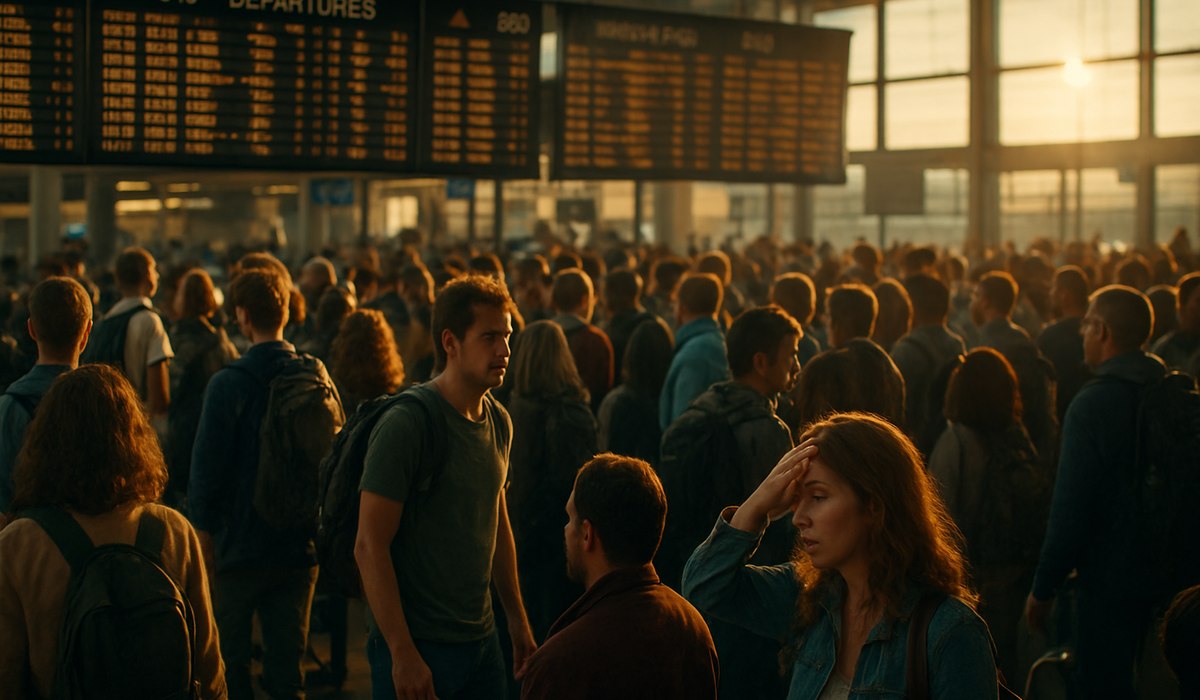
Image generated by AI
Flight Chaos Grips Southeast Hubs as Post-Easter Operations Collapse
Flight operations across major Southeast U.S. airports descended into operational gridlock Tuesday, April 7, 2026, with 62 cancellations and more than 500 delays reported. Airlines battled aircraft repositioning failures and crew shortages following an exceptionally busy Easter travel surge. The disruption primarily affected Atlanta Hartsfield-Jackson International Airport, Orlando International Airport, and Miami International Airport—three of North America's busiest connecting hubs. With approximately 4,000 delays and 200+ cancellations reported nationwide, the Southeast bore a disproportionate impact as a critical redistribution point for domestic and Caribbean-bound traffic. The operational collapse underscores how post-holiday recovery challenges can rapidly cascade through interconnected airline networks when capacity constraints intersect with scheduling pressures.
Southeast Hubs Under Strain: Atlanta, Orlando, Miami Emerge as Disruption Hotspots
The flight chaos grips regional operations most severely at three major Southeast hubs simultaneously. Atlanta, America's busiest airport by passenger volume, again emerged as the primary disruption node due to its role as a global connecting point for Delta Air Lines and international carriers. Triple-digit delay counts mounted at Orlando and Miami, with both airports logging significant cancellation totals that rippled across their respective networks.
Florida's gateways typically rank among America's most delay-prone airports due to weather volatility, dense traffic patterns, and complex runway configurations. When these airports experience simultaneous disruption alongside mega-hubs like Atlanta or Charlotte, the cascading effect multiplies exponentially. Aircraft scheduled to reposition from Florida back to northern hubs became trapped in queues, stranding crews and preventing normal schedule restoration.
Ground stops and flow control measures continued through early Tuesday afternoon as air traffic controllers managed the backlog. The Southeast's geographic advantage as a warm-weather alternative hub paradoxically amplified the crisis—high demand for Florida leisure routes meant fewer spare aircraft and crews available for repositioning flights.
Nationwide Ripple Effect: 4,000+ Delays and 200+ Cancellations Across U.S.
The post-Easter operational collapse extended far beyond the Southeast, creating widespread disruption across the continental United States. Easter Monday, April 6, generated more than 4,700 delays and 300+ cancellations nationwide—among the highest single-day totals of 2026. Major carriers including Delta Air Lines, American Airlines, and Southwest Airlines each recorded substantial individual disruption counts.
Global aviation networks experienced even more severe strain, with more than 13,000 flights delayed worldwide on April 6. A substantial portion involved itineraries originating from, connecting through, or terminating at U.S. Southeast hubs. The interconnected nature of modern airline networks meant that disruption at one hub rapidly propagated across transcontinental and international routes.
By Tuesday, April 7, the backlog of displaced passengers, late-arriving aircraft, and fatigued crews had not fully cleared. Airlines continued struggling to realign operations as spring schedules were already densely packed to capture surging leisure demand. This left minimal spare capacity to absorb irregular operations, making rapid recovery impossible once disruption cycles began.
Check real-time flight status and delay information through FlightAware for current conditions at your departure airport.
Why Post-Holiday Recovery Is Hitting the Southeast Hardest
Post-holiday operational collapse at Southeast hubs reflects multiple converging factors. Aircraft and crews sitting out of position after Easter's intense travel period create a mathematical challenge: insufficient equipment available where demand concentrates next. Spring schedules feature particularly tight wave structures, meaning that short departures pauses quickly generate extensive queues when connecting flights board simultaneously.
Air traffic control staffing constraints compound the challenge. The Federal Aviation Administration recently acknowledged that current controller staffing levels strain reliability at major hubs. With several Southeast facilities already operating at capacity, any disruption triggers cascading ground stops and extended flow control delays.
Weather volatility around Florida airports adds unpredictability. While no single severe system dominated Tuesday, recent conditions contributed to rolling restrictions. Combined with dense traffic and complex runway use patterns, even minor weather impacts create disproportionate delay magnification at these congested gateways.
Additionally, spring leisure demand remains elevated, particularly to Florida's warm-weather destinations. This demand-supply mismatch leaves carriers with overloaded schedules and minimal operational flexibility. When disruptions strike well-packed schedules, recovery becomes exponentially harder.
What Nomadic Professionals Should Know Before Booking Through Regional Hubs
Remote workers and frequent travelers routing through Southeast hubs should implement protective strategies. Build buffer time into connections at Atlanta, Orlando, or Miami—standard minimum connections of 60-90 minutes may prove insufficient during post-holiday disruption windows.
Consider direct flights whenever feasible, as connecting itineraries expose you to disruption at both origin and connection points. Monitor your airline's schedule compliance history. Some carriers maintain better operational reliability through high-traffic periods than others.
Booking with airlines that offer generous rebooking policies provides flexibility if disruptions occur. Check US DOT Consumer Protection Guidelines for your passenger rights—airlines must provide meals, hotels, and rebooking on next available flights for cancellations within their control.
Register with your airline's text alert system to receive real-time updates. Sign up for TSA PreCheck or Clear to minimize airport stress during inevitable rebooking sequences. Avoid peak travel windows (early mornings, late afternoons) when banks of connecting flights create bottleneck congestion.
Check the FAA's official website for traffic advisories and ground stop announcements before departure.
Traveler Action Checklist
- Verify your flight status using FlightAware or your airline's website immediately upon checking email alerts
- Contact your airline directly via phone rather than web chat for faster rebooking if your flight is canceled
- Document all expenses incurred due to delays (meals, hotels, ground transportation) for potential compensation claims
- Request written confirmation of cancellation reasons to support DOT complaint filings if applicable
- Check airline policy pages for current rebooking rules, change fees, and compensation thresholds
- Consider travel insurance for future bookings to cover operational disruption scenarios
- Monitor weather forecasts for your destination city through April 9 for subsequent disruption risks
- Notify employers or clients of potential delays before departure to manage expectations
- Download offline copies of your itinerary, confirmation numbers, and airline contact information
- Request clear answers about when your rescheduled flight will depart before accepting rebooking
Key Operational Data: April 7, 2026 Disruption Summary
| Metric | Value | Region/Scope |
|---|---|---|
| Cancellations (April 7) | 62 flights | Southeast hubs |
| Delays (April 7) | 500+ flights | Southeast hubs |
| Nationwide Cancellations | 200+ flights | United States |
| Nationwide Delays | 4,000+ flights | United States |
| April 6 Global Delays | 13,000+ flights | Worldwide |
| Primary Affected Hub | Atlanta (ATL) | Georgia |
| Secondary Hubs | Orlando (MCO), Miami (MIA) | Florida |
| Primary Cause | Post-Easter crew/aircraft repositioning | Operational gridlock |
| Recovery Timeline | Tuesday evening into Wednesday | Estimated |
| Typical Spring Delay Rate | 15-22% higher than baseline | Seasonal pattern |
What This Means for Travelers
Post-Easter operational disruption at Southeast hubs will likely persist through Wednesday, April 8, as airlines complete crew and aircraft
Disclaimer
This article is for informational and educational purposes only. It does not constitute legal, financial, or professional advice. While we strive to provide accurate and up-to-date information, travel policies, regulations, and conditions change rapidly. Always verify information with official sources before making travel decisions. Nomad Lawyer makes no representations about the accuracy, reliability, completeness, or suitability of the information provided. Readers should consult qualified professionals for advice specific to their circumstances. The views expressed in this article are those of the author and do not necessarily reflect the views of Nomad Lawyer.
Preeti Gunjan
Contributor & Community Manager
A passionate traveller and community builder. Preeti helps grow the Nomad Lawyer community, fostering engagement and bringing the reader experience to life.
Learn more about our team →