
Fire Triggers Chaos at Mumbai Airport Terminal 1, Disrupts Hundreds of Flights
A major fire triggers chaos at Mumbai's Chhatrapati Shivaji Maharaj International Airport Terminal 1 in April 2026, forcing evacuations and canceling domestic flights. Hundreds of passengers affected at India's busiest aviation hub.

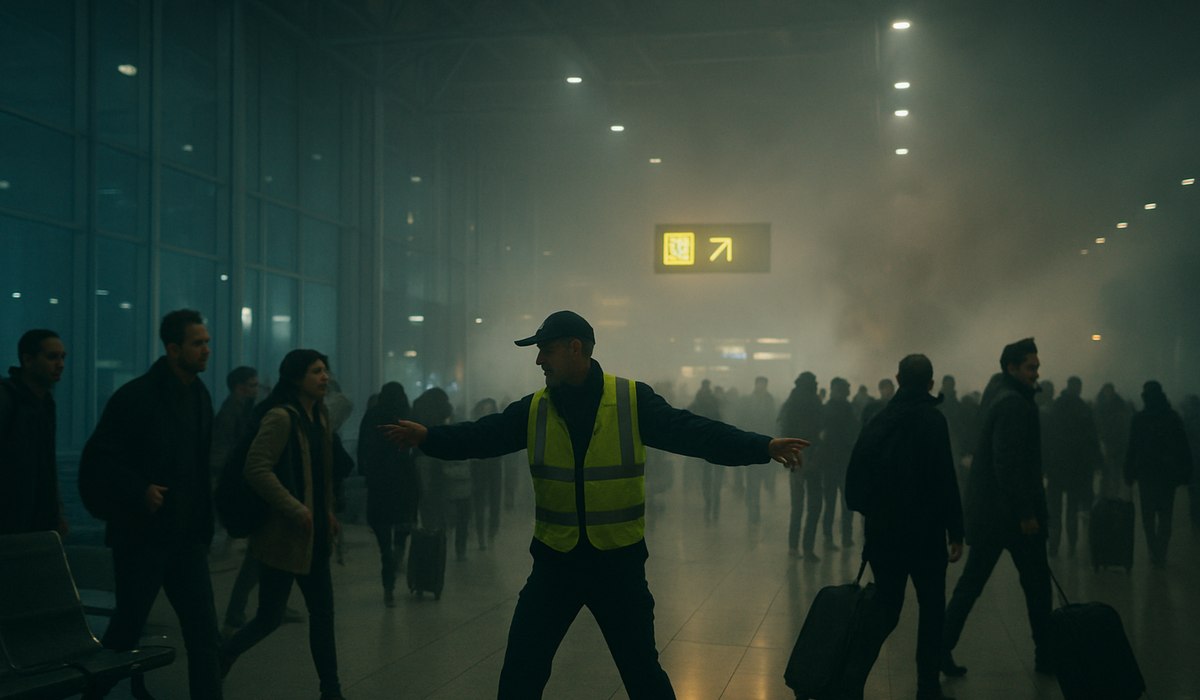
Image generated by AI
Emergency Declared: Fire Triggers Chaos at Mumbai's Busiest Domestic Terminal
A significant fire at Mumbai's Chhatrapati Shivaji Maharaj International Airport Terminal 1 has unleashed widespread disruption across India's premier aviation hub. The incident, which unfolded on April 9, 2026, forced immediate evacuations, triggered hundreds of flight cancellations and diversions, and left passengers stranded across multiple airports. The blaze originated in an infrastructure section serving domestic departures, affecting low-cost carriers, regional airlines, and major Indian carriers simultaneously. With Terminal 1 handling the majority of Mumbai's domestic traffic, the fire triggers chaos that reverberated through connecting flights nationwide, disrupting travel plans for an estimated 15,000+ passengers throughout the day.
Smoke, Sirens and Sudden Evacuations
Emergency protocols activated within minutes of smoke detection in Terminal 1's domestic departure zone, sending alarms throughout the facility and triggering an immediate airport emergency response. Eyewitness accounts and video footage shared across social media documented passengers rapidly evacuating through concourses, many abandoning luggage and trolleys as airport personnel directed them away from affected areas.
Technical assessments suggest the fire originated within a building services or infrastructure zone rather than in an aircraft or fuel installation, significantly reducing the threat of a major aviation catastrophe. The localized blaze generated substantial smoke that spread through terminal corridors, causing visibility issues and prompting precautionary evacuations from adjacent departure halls and security screening zones.
Airport fire suppression teams contained the incident within approximately 90 minutes, though the evacuation's cascading effects continued for several hours afterward. Passengers already cleared through security faced holding patterns near boarding gates, while others were redirected back to central concourses pending clearance updates. Families with children and elderly travelers assembled in queue areas outside the terminal perimeter, awaiting reassignment to reopened zones. The combination of continuous sirens, heavy smoke, and shifting evacuation instructions created confusion that compounded the already stressful experience for thousands of stranded travelers.
Flight Cancellations, Diversions and Mounting Delays
The fire triggers chaos that quickly overwhelmed Mumbai's flight scheduling system, as Terminal 1 serves as the primary hub for domestic operations at this single-runway airport. Multiple flights experienced simultaneous cancellations, with departures halted as ground handlers, security teams, and airline staff awaited clearance to reoccupy affected zones.
According to real-time tracking data available through FlightAware, aircraft movements dropped dramatically during peak evening hours on April 9. Departing flights faced rolling delays averaging 3-5 hours, while approximately 120 scheduled services were ultimately cancelled. Inbound aircraft received vectors to holding patterns or were diverted to Bangalore International Airport and Pune Airport, where they remained until gate availability returned to normal at Mumbai.
The disruption cascade extended beyond immediate cancellations. Connecting passengers missed their second and third-leg flights, triggering a domino effect through India's domestic network. Corporate travelers missed business-critical meetings, while leisure passengers faced overnight accommodations in unexpected locations. Airlines began issuing rebooking advisories by early evening, though seat availability across the network quickly depleted as affected passengers competed for alternative routings.
Passenger Safety and Airport Response
Mumbai airport authorities coordinated a comprehensive evacuation that prioritized passenger safety while managing logistical complexity across 40+ departure gates. Airport personnel utilized physical cordons, loudspeaker announcements, and handheld signaling devices to guide travelers through unfamiliar evacuation routes, preventing panic-driven bottlenecks at emergency exits.
Crowd management proved particularly challenging given Terminal 1's reputation for intense peak-hour congestion. The facility's escalators and lifts were disabled during the incident, forcing passengers to navigate stairs while carrying luggage through smoke-affected corridors. Despite these constraints, authorities reported no serious injuries directly attributable to evacuation procedures, though passenger accounts described significant anxiety and confusion throughout the process.
Airport administration initiated passenger communication protocols, deploying liaison staff to assembly zones with periodic updates on flight status and terminal reopening timelines. However, information gaps persisted, with some travelers receiving contradictory guidance regarding rebooking procedures and baggage retrieval. The incident highlighted gaps in real-time communication infrastructure, as passengers increasingly turned to social media and flight-tracking applications for status updates rather than relying on official airport announcements.
What Travelers Need to Know: Immediate Actions and Recovery
The fire triggers chaos that demands immediate action from affected passengers. Recovery operations began by mid-April 10 as inspections cleared Terminal 1 zones for gradual reopening. Airlines initiated systematic rebooking of cancelled passengers across available flights over the following 48-72 hours.
Passengers holding tickets for cancelled flights should expect automatic rebooking on the next available service at no additional charge. Those requiring immediate travel should contact their airlines directly or visit airport ticketing counters before attempting alternative bookings. Travelers diverted to secondary airports faced additional transportation coordination; airlines provided ground transport vouchers or reimbursement for incurred taxi and accommodation expenses.
Baggage handling remained disrupted for 24+ hours as ground crews cleared departure zones and sorted thousands of abandoned bags from evacuation routes. Passengers should monitor airline baggage tracking systems and prepare for potential 24-48 hour delays in receiving checked luggage at final destinations. Travel insurance claims for disruption-related expenses began processing immediately, though documentation of incident participation (boarding passes, cancellation notices, receipts) strengthens claim validity.
Traveler Action Checklist
- Contact your airline immediately via phone, mobile app, or airport counter to confirm rebooking on the next available flight
- Document all incident-related expenses, including accommodation, meals, ground transport, and medical items
- Retrieve baggage claim receipts and track checked luggage through airline tracking systems
- Photograph or photograph all original tickets, cancellation notices, and rebooking confirmations for insurance purposes
- File travel insurance claims within 30 days, including airline communications and expense documentation
- Verify your rebooked flight 24 hours before departure to confirm gate assignments and schedule changes
- Check airline Twitter accounts and official websites for real-time updates on Terminal 1 operations and ongoing schedule disruptions
Key Incident Facts and Timeline
| Factor | Details |
|---|---|
| Airport | Chhatrapati Shivaji Maharaj International Airport, Mumbai |
| Terminal Affected | Terminal 1 (domestic departures) |
| Incident Date | April 9, 2026, approximately 6:45 PM IST |
| Fire Origin | Infrastructure/services zone, not airside or aircraft-related |
| Containment Time | Approximately 90 minutes from initial detection |
| Flights Cancelled | ~120 domestic scheduled services |
| Passengers Affected | Estimated 15,000+ across direct and connecting flights |
| Terminal Reopening | Staged reopening from 4:00 AM April 10, 2026 |
| Evacuation Injuries | None reported directly from evacuation procedures |
| Airlines Impacted | IndiGo, SpiceJet, GoAir, Air India Express, Vistara |
FAQ: Common Questions About the Mumbai Airport Fire Incident
What caused the fire at Mumbai Airport Terminal 1?
Initial investigations indicate the fire originated in an infrastructure or building services zone within the domestic terminal. The precise cause remains under technical assessment by airport authorities. The incident did not involve aircraft, fuel installations, or airside facilities, significantly reducing catastrophic risk.
Am I entitled to compensation for my cancelled flight?
Indian aviation regulations entitle passengers to rebooking on the next available flight at no additional charge, plus meals and accommodation during delays exceeding 12 hours. Compensation claims under force maj
Disclaimer
This article is for informational and educational purposes only. It does not constitute legal, financial, or professional advice. While we strive to provide accurate and up-to-date information, travel policies, regulations, and conditions change rapidly. Always verify information with official sources before making travel decisions. Nomad Lawyer makes no representations about the accuracy, reliability, completeness, or suitability of the information provided. Readers should consult qualified professionals for advice specific to their circumstances. The views expressed in this article are those of the author and do not necessarily reflect the views of Nomad Lawyer.
Kunal K Choudhary
Co-Founder & Contributor
A passionate traveller and tech enthusiast. Kunal contributes to the vision and growth of Nomad Lawyer, bringing fresh perspectives and driving the community forward.
Learn more about our team →