
Fatal Viajes Azteca Bus Fire on State Route 60: One Dead and One Injured in Hacienda Heights 2026
A commercial coach operated by Viajes Azteca caught fire on State Route 60 in Hacienda Heights, resulting in one fatality and one severe injury among 18 passengers.

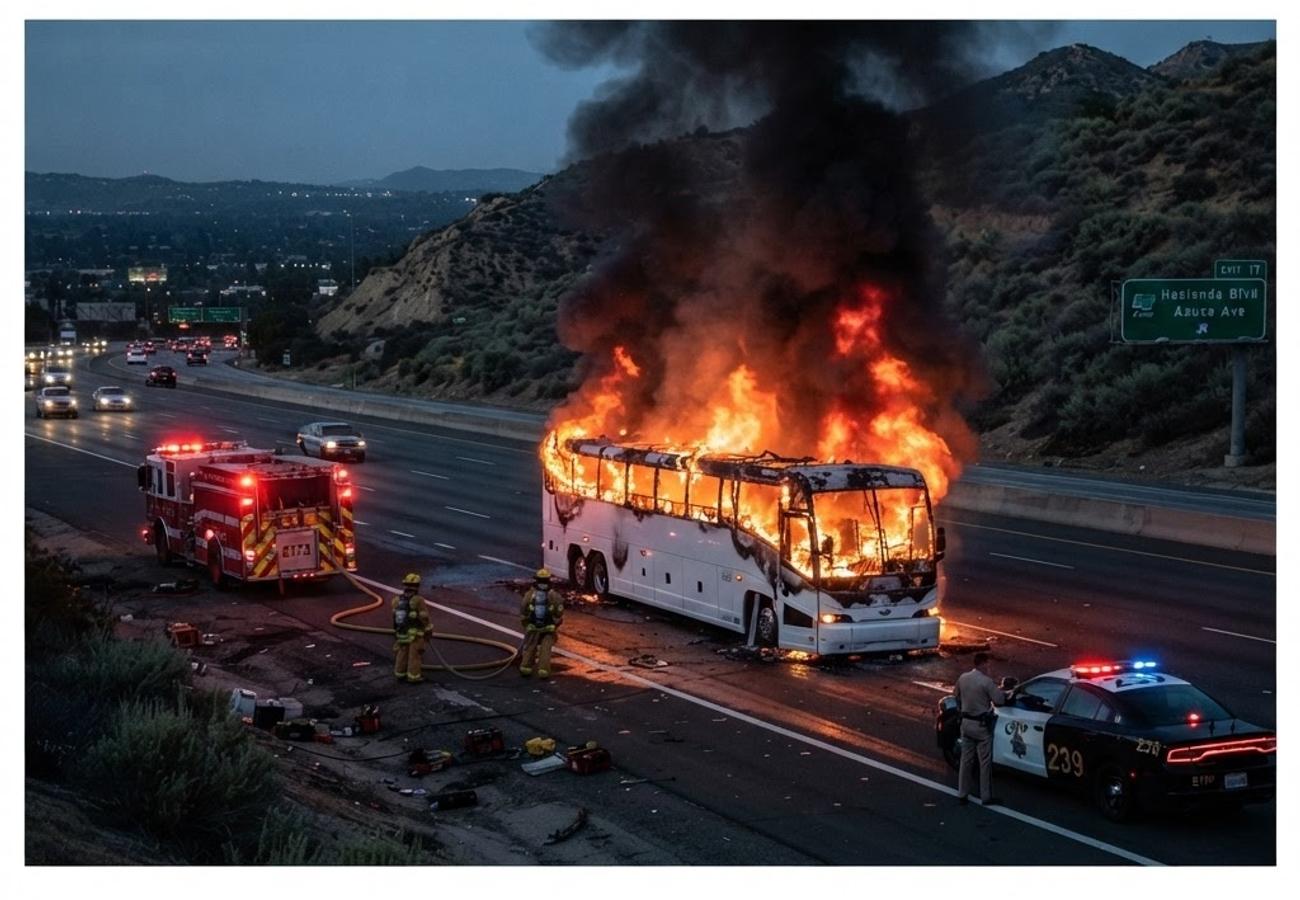
Image generated by AI
A commercial coach bound for Mexico erupted in flames on State Route 60 Friday morning, resulting in one confirmed fatality and one critical injury.
Fatal Fire on the Pomona Freeway
At approximately 5:30 AM on Friday, August 23, 2026, a commercial passenger coach operated by Viajes Azteca caught fire on the eastbound Pomona Freeway near Azusa Avenue in Hacienda Heights, California. According to reports from the California Highway Patrol (CHP) and the Los Angeles County Fire Department, the driver noticed a check engine warning light and maneuvered the vehicle onto the shoulder. Seconds later, violent flames erupted from the rear of the coach, spreading rapidly across multiple seating rows.
There were 18 passengers on board at the time of the incident. While the driver initiated an immediate evacuation as smoke filled the cabin, emergency responders discovered one passenger deceased in the severely damaged rear section of the vehicle. A second passenger was transported to a local medical center suffering from severe smoke inhalation.
Incident Specifications and Route Data
The fire caused significant disruptions to the morning commute in eastern Los Angeles County, triggering SigAlerts and the closure of multiple eastbound lanes.
| Parameter | Detail |
|---|---|
| Date & Time | August 23, 2026 |
| Location | State Route 60 (Pomona Freeway) near Azusa Avenue |
| Operator | Viajes Azteca (Los Angeles-based) |
| Passenger Count | 18 passengers + 1 driver |
| Casualties | 1 fatality, 1 severe injury |
| Route Destination | Mexico (via Bloomington) |
| Primary Cause (Under Investigation) | Potential mechanical failure or cargo ignition |
Investigation into Cargo and Safety Compliance
Forensic teams from the CHP and state fire marshals are currently investigating the catalyst for the blaze. A critical discovery during the wreckage inspection revealed multiple propane canisters stowed inside and beneath the vehicle frame. Investigators are analyzing whether these tanks ignited or accelerated the spread of fire through the passenger cabin.
Regarding the operator's history, records from the Federal Motor Carrier Safety Administration (FMCSA) indicate that Viajes Azteca maintains an "overall satisfactory" safety rating. However, this is the company's first recorded fatal incident. Previous inspections had flagged minor compliance issues, specifically:
- Non-operative emergency exit latches.
- Improperly secured fire extinguishers.
Traveler Logistics Guide: Cross-Border Coach Safety
From a ground-level perspective, the best way to navigate long-distance coach travel, particularly cross-border routes between California and Mexico, is to prioritize verified safety data over ticket pricing.
Verifying Carrier Safety Before booking, travelers should use the official FMCSA safety database (fmcsa.dot.gov) to check a carrier's safety rating and inspection history. Pay specific attention to "out-of-service" rates and repeated violations regarding emergency exits or fire safety equipment.
On-Board Safety Protocols Upon boarding a commercial coach, passengers should independently locate the nearest functional emergency exit and verify the presence of a fire extinguisher. In the event of a mechanical warning or smoke, immediate evacuation to the shoulder—away from the vehicle's rear engine compartment—is the only viable survival strategy.
Digital Transit Policies For those continuing toward Mexico, ensure all digital transit documents and passports are stored in a cloud-accessible format. In the event of a vehicle loss or emergency evacuation, physical documents stored in luggage may become inaccessible, complicating the process of securing secondary charter transport or interacting with border authorities.
Infrastructure and Regional Impact
This incident highlights a systemic vulnerability in regional transit connectivity for international travelers moving through the Los Angeles basin. The reliance on commercial coaches for cross-border transit necessitates stringent enforcement of cargo regulations, particularly regarding the transport of flammable materials like propane in passenger compartments.
The closure of State Route 60 during peak morning hours demonstrates how a single vehicle failure can paralyze eastern Los Angeles County transit. The coordination of secondary charter buses to move stranded passengers to Bloomington and beyond underscores the need for better contingency planning among international transport operators.
Rigorous forensic analysis will now determine if mechanical negligence or illegal cargo transport turned a routine journey into a tragedy.
Related Travel Guides
Disclaimer
This article is for informational and educational purposes only. It does not constitute legal, financial, or professional advice. While we strive to provide accurate and up-to-date information, travel policies, regulations, and conditions change rapidly. Always verify information with official sources before making travel decisions. Nomad Lawyer makes no representations about the accuracy, reliability, completeness, or suitability of the information provided. Readers should consult qualified professionals for advice specific to their circumstances. The views expressed in this article are those of the author and do not necessarily reflect the views of Nomad Lawyer.
Preeti Gunjan
Contributor & Community Manager
A passionate traveller and community builder. Preeti helps grow the Nomad Lawyer community, fostering engagement and bringing the reader experience to life.
Learn more about our team →