
Hurricane Isaias Batters Florida Panhandle and Alabama: Aviation Paralysis and Highway Closures Across the Southeast

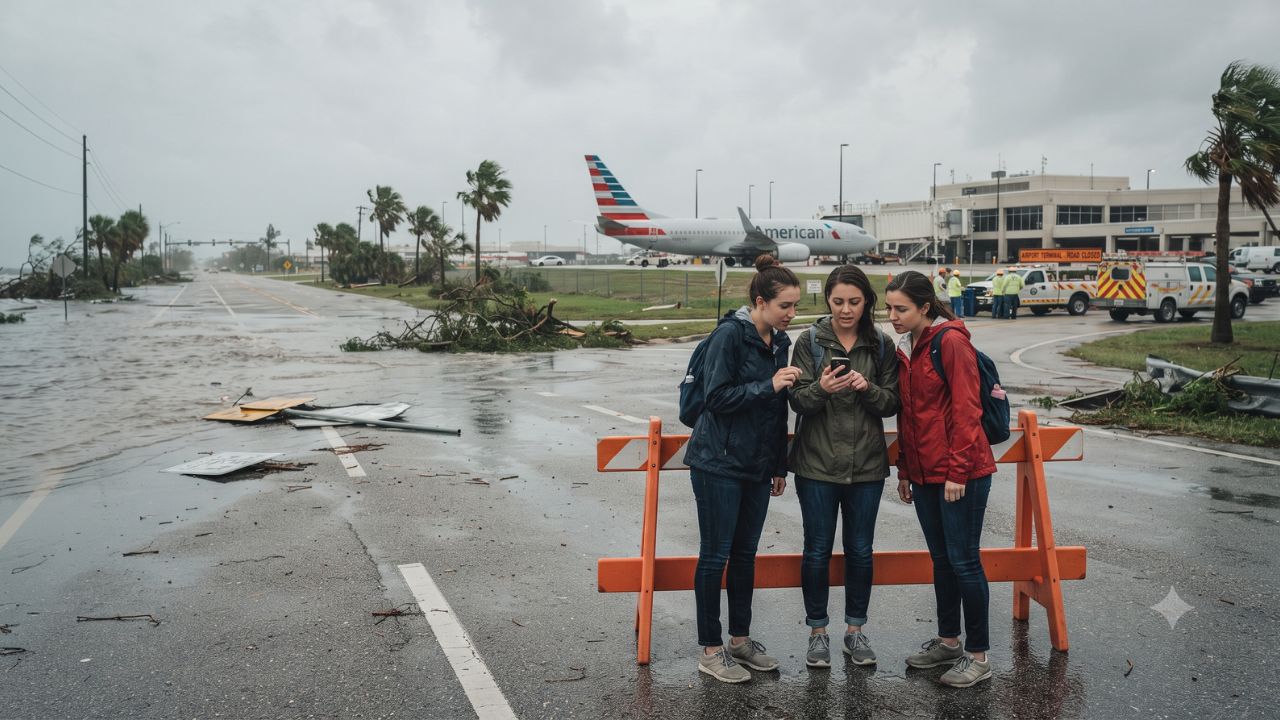
Packing 105 mph sustained winds at landfall and maximum sustained winds of 120 mph across the open Gulf, Hurricane Isaias struck Destin, Florida on 9 October 2026 as a potent Category 2 cyclone, severing critical transport arteries across six southeastern states. The storm cut electrical power to nearly 900,000 utility customers at its peak—including 450,000 across Florida—while triggering the temporary shutdown of 63% of offshore crude oil production and 57% of natural gas extraction across the Gulf of Mexico. With catastrophe modeling firm Verisk estimating preliminary insured losses between $1 billion and $2 billion across Santa Rosa and northeastern Escambia counties alone, the cyclone has plunged the regional visitor economy into a prolonged recovery period across aviation, maritime, and highway networks.
The disaster quickly spread beyond the Florida Panhandle's Emerald Coast into Alabama, Georgia, Mississippi, Louisiana, and the southern Appalachian corridor. Despite airport terminals in Pensacola and Destin-Fort Walton Beach resuming commercial flights by 11 October, lingering cancellations and localized infrastructure failures continue to complicate autumn leisure and business travel across the Deep South.
Anatomy of the Landfall: Destruction Across the Florida Panhandle and Southern Alabama
The cyclone delivered catastrophic physical impacts to Florida's northwest coast. Escambia and Santa Rosa counties bore the brunt of destructive onshore surges and hurricane-force gusts, which sheared roofing structures from beachfront hotels, snapped high-voltage transmission poles, and buried coastal thoroughfares beneath deep sand and saltwater debris. In Pensacola and Panama City, municipal utility grids suffered near-total collapse, forcing immediate shutdowns of hospitality properties, dining establishments, and tour operators as staff shifted from guest management to emergency life-safety protocols.
Regional transit agencies implemented immediate defensive suspensions:
- Aviation Disruptions: Both Pensacola International Airport and Destin-Fort Walton Beach Airport instituted full operational halts during peak storm conditions. High crosswinds and ramp flooding stranded hundreds of commercial passengers and disrupted regional hub connections through Atlanta, Charlotte, and Dallas. While commercial operations resumed on 11 October, the Federal Aviation Administration (FAA) reported rolling delays as regional carriers repositioned displaced airframes and flight crews.
- Maritime Suspensions: Commercial and leisure navigation ceased entirely across northwestern Florida. Both the Port of Pensacola and Port Panama City shut down harbor operations on 9 October, barring private charters, recreational fishing excursions, and commercial freight vessels until hydrographic surveys verified navigational channel clearance.
- Highway Choke Points: Severe flooding and downed timber rendered Interstate 10 connectors and coastal routes hazardous. Bridges spanning Escambia Bay and surrounding waterways closed due to hurricane-force gusts and storm surges, severing surface vehicle transit between coastal Florida and southern Alabama until state structural inspectors completed safety certifications on 11 October.
In Alabama, where Governor Kay Ivey declared a statewide state of emergency on 7 October to stage disaster equipment, southern counties faced severe damage. In Houston County, extensive tree fall and power grid failures blocked secondary roads, isolating rural communities and complicating transit access toward regional commercial centers. Along the coast, prime leisure destinations including Mobile and Gulf Shores experienced substantial cancellations; while spared the absolute worst of the storm's eastern eyewall, severed transport routes through western Florida depressed drive-in visitor volumes. Power outages across Alabama peaked in the hundreds of thousands before emergency crews reduced outages to below 75,000 by 11 October.
Multi-State Disruption: Evaluating the Regional Logistics Grid
Beyond the immediate landfall zone, Isaias pushed heavy rain and tropical storm conditions hundreds of miles inland, transforming regional transport grids into a patchwork of emergency declarations:
| State & Region | Emergency Status & Timeline | Core Transport & Sector Disruption | Critical Infrastructure Bottlenecks | Verified Recovery & Operational Indicators |
|---|---|---|---|---|
| Florida (Panhandle / Emerald Coast) | Landfall on 9 Oct 2026 (Category 2, 105 mph winds) | Pensacola and Destin-Fort Walton Beach airports halted flights; ports shut | Escambia and Santa Rosa county power grids collapsed; coastal routes blocked | Airports and bridges reopened 11 Oct; 95% power restored by 13 Oct; $10M state bridge loans |
| Alabama (Mobile & Houston Counties) | Statewide emergency declared 7 Oct 2026 | Route closures severed access to Gulf Shores and Mobile regional airports | Houston County secondary corridors impassable due to extensive timber debris | Electrical outages dropped below 75,000 customers by 11 Oct; clearing operations ongoing |
| Georgia (Southern & Coastal Counties) | Emergency declared for all 159 counties on 8 Oct | Freight corridors and air connections linking Atlanta to coastal zones disrupted | Heavy rainfall and wind gusts created severe localized roadway flooding | Road crews deployed statewide; interstates remained open with severe rain advisories |
| Mississippi (Biloxi & Gulfport) | Coastal storm surge and gale advisories | Drive-in visitor cancellations across coastal gaming, resort, and dining districts | Inter-state highway connections with Alabama severed by fallen debris and flooding | Local casino properties maintained auxiliary power; regional drive-in traffic depressed |
| Tennessee & North Carolina (Appalachia) | Flash-flood emergencies across mountain passes | Landslides closed Blue Ridge scenic routes; mountain passes into Asheville cut off | Saturated soils triggered road slip-outs across western NC and eastern TN | Travel discouraged across mountain highways; scenic autumn foliage corridors blocked |
Georgia’s executive action placing all 159 counties under an emergency decree on 8 October reflected the storm's massive atmospheric footprint. Surface transport arteries connecting the Atlanta transit hub to rural southern agricultural and tourism belts faced severe flooding. Meanwhile, the Mississippi Gulf Coast suffered severe visitor displacement; casino properties in Biloxi and Gulfport saw weekend bookings evaporate as prospective travelers from Florida and Alabama canceled trips due to closed highway links.
As Isaias transitioned into an extratropical remnant system, intense rainfall shifted into the southern Appalachian mountains. Western North Carolina and eastern Tennessee experienced dangerous flash floods and hillside destabilization. Mountain roads serving Asheville, the Great Smoky Mountains, and the Blue Ridge Parkway were temporarily blocked by mudslides and fallen trees, directly disrupting prime autumn foliage tourism. Similar localized runoff caused travel warnings across mountain valleys in South Carolina, Kentucky, Virginia, and West Virginia.
Expert Analysis: Asset Resilience, Hotel Price Gouging, and Rebooking Rights
Natural catastrophes of this magnitude expose the fragility of tourism systems that rely on single-route vehicular access and centralized electrical grids. When Category 2 winds strike coastal barriers, the travel ecosystem experiences simultaneous supply-side and demand-side collapse.
For travelers booking this route, the direct consequence is an immediate disruption of passenger rights under commercial carrier contracts of carriage. Because hurricanes represent an act of nature (force majeure), airlines are legally exempt from providing complimentary hotel accommodations, meal vouchers, or ground transportation under federal regulations. However, under standard carrier policies and Department of Transportation guidelines, passengers whose flights are canceled or significantly delayed retain the legal right to a prompt, full cash refund to their original payment method, rather than being forced to accept expiring travel vouchers.
The pricing pressure this creates means that unaffected inland hotels experience sudden demand compression that inflates nightly rates. As coastal residents and stranded travelers evacuated inland along Interstate 65 and Interstate 85 toward Montgomery, Birmingham, and Atlanta, available lodging inventory vanished within hours. While Florida and Alabama enforce strict post-emergency price-gouging statutes—barring hoteliers from raising prices substantially above the 30-day pre-storm average—unregulated third-party booking algorithms frequently trigger automated dynamic price surges. Displaced travelers often find themselves paying peak rates for limited roadside motel rooms hundreds of miles from their intended coastal destinations.
Simultaneously, the energy sector shutdown will generate cascading logistical costs for travelers nationwide. The temporary suspension of 63% of offshore oil platforms and 57% of natural gas facilities in the Gulf of Mexico, as tracked by safety regulators, temporarily limits crude refining runs. This dynamic places upward pressure on Gulf Coast jet fuel crack spreads and retail automotive gasoline prices just as municipal recovery teams deploy heavy machinery to clear debris.
Actionable Passenger Guidance: Managing Post-Hurricane Travel Plans
Travelers holding upcoming reservations across the Florida Panhandle, southern Alabama, or the southern Appalachian mountain corridor must exercise proactive itinerary management:
- Verify Airport and Route Clearance: Even though Pensacola International and Destin-Fort Walton Beach have resumed commercial flights, ground transport options remain limited. Rental car fleets in coastal depots suffered vehicle damage and inventory exhaustion due to evacuees. Confirm vehicle reservations directly with local depot managers before departing origin airports.
- Monitor Highway Status via Official Portals: Avoid relying on third-party GPS navigation apps, which often fail to account for temporary bridge closures and local debris detours. Check real-time road conditions through the Florida Department of Transportation (FDOT) and the Alabama Department of Transportation travel portals before attempting coastal drives.
- Document Losses for Insurance Claims: Travelers with private travel insurance or premium credit card trip-cancellation coverage must obtain written documentation of flight cancellations, hotel closures, and mandatory evacuation orders. Verisk's $1 billion to $2 billion insured loss estimates cover private structural property, but personal trip-interruption claims require formal proof that destination accommodations were physically uninhabitable or inaccessible due to civil authority orders.
- Exercise Accommodation Caution in Saturated Zones: While Florida restored electrical service to 95% of affected customers by 13 October and launched a $10 million emergency bridge loan program to support recovering businesses, municipal water systems and beach access points remain under localized boil-water and safety advisories. Confirm that reserved resorts have fully restored commercial utility connections and emergency generator redundancies before arriving.
Key Takeaways
- Destructive Landfall Metrics: Hurricane Isaias struck near Destin, Florida on 9 October 2026 as a Category 2 hurricane with 105 mph sustained winds, after generating 120 mph winds across the Gulf of Mexico.
- Widespread Grid Collapse: Peak power outages knocked out service to nearly 900,000 customers across the Southeast, including 450,000 in Florida, before restoration reached 95% by 13 October.
- Heavy Insured Losses: Verisk catastrophe analytics project preliminary insured wind and storm-surge losses between $1 billion and $2 billion, centered heavily on Escambia and Santa Rosa counties.
- Offshore Energy Shutdown: The storm forced the precautionary suspension of 63% of offshore oil extraction and 57% of natural gas operations in the Gulf of Mexico.
- Multi-Modal Recovery: Regional airports in Pensacola and Destin reopened by 11 October alongside primary bridges, but lingering debris, road repairs, and inland landslides continue to disrupt travel into the Appalachian corridor.
FAQ: Hurricane Isaias Travel Disruptions and Flight Rights 2026
Are airports in the Florida Panhandle operating following Hurricane Isaias?
Yes. Commercial flight operations resumed on 11 October 2026 at Pensacola International Airport and Destin-Fort Walton Beach Airport following storm inspections, though passengers should anticipate rolling delays as airlines normalize aircraft rotations.
Can travelers get a cash refund if their flight was canceled due to the hurricane?
Yes. Under federal regulations, passengers whose flights are canceled by the airline are legally entitled to a full refund to their original form of payment, regardless of whether the cancellation was caused by severe weather or operational problems.
Are coastal highways and bridges open between Florida and Alabama?
Primary arterial bridges, including crossings along the Interstate 10 corridor, reopened on 11 October following safety inspections. However, motorists must expect localized detours and debris-clearing operations along secondary coastal roads in Escambia, Santa Rosa, and Houston counties.
What should travelers do if their coastal hotel is closed due to storm damage?
Travelers should contact their hotel or booking platform immediately to request a full cancellation refund due to property uninhabitability. Those with comprehensive travel insurance should file trip-interruption claims supported by civil emergency declarations and written hotel confirmation.
[When coastal storms collide with modern transit systems, true traveler preparedness begins not at the boarding gate, but with the understanding of emergency consumer rights.]
Related Travel Guides
Disclaimer
This article is for informational and educational purposes only. It does not constitute legal, financial, or professional advice. While we strive to provide accurate and up-to-date information, travel policies, regulations, and conditions change rapidly. Always verify information with official sources before making travel decisions. Nomad Lawyer makes no representations about the accuracy, reliability, completeness, or suitability of the information provided. Readers should consult qualified professionals for advice specific to their circumstances. The views expressed in this article are those of the author and do not necessarily reflect the views of Nomad Lawyer.
Raushan Kumar
Founder & Lead Developer
Full-stack developer with 11+ years of experience and a passionate traveller. Raushan built Nomad Lawyer from the ground up with a vision to create the best travel and law experience on the web.
Learn more about our team →