
Air India Boeing 787 Diverted to Jaipur Following Squawk 7500 Hijack Alert on Frankfurt–Delhi Flight

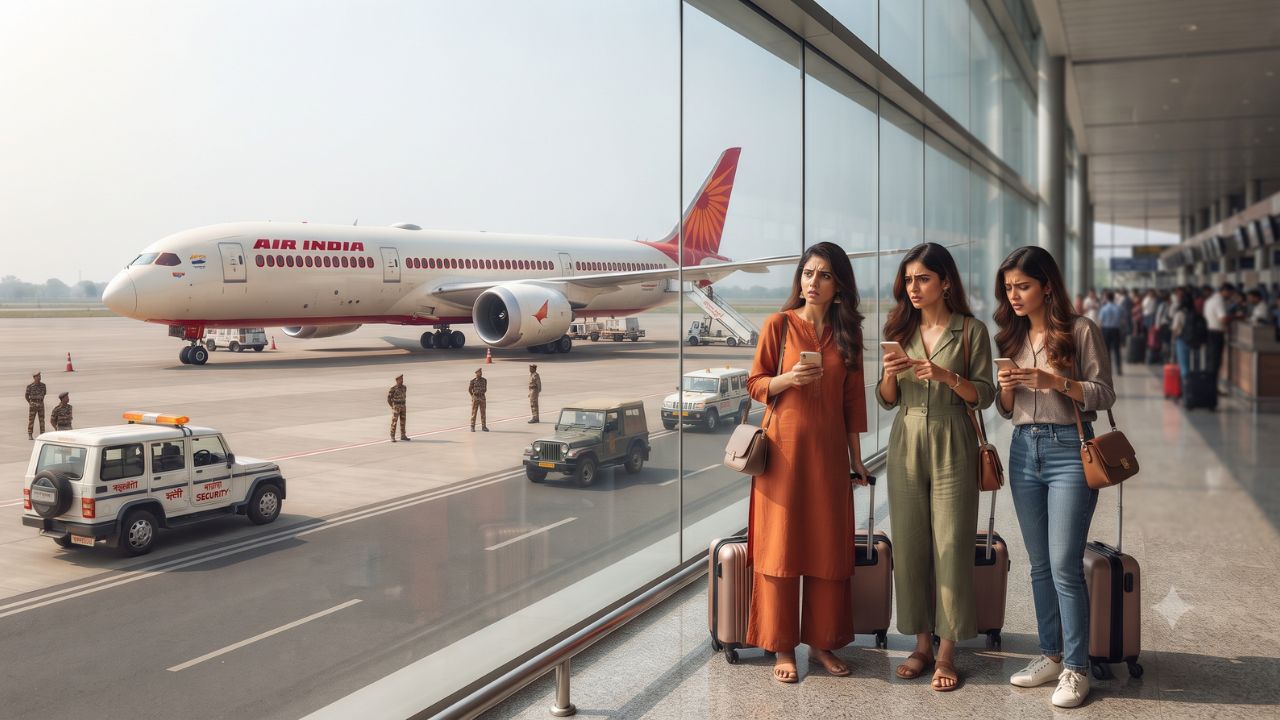
A total of 306 passengers aboard Air India Flight AI2030 were abruptly diverted to an isolated apron at Jaipur International Airport at 9:35 am on 14 October 2026 after the Boeing 787-9 Dreamliner transmitted Squawk 7500—aviation’s universal transponder emergency code for unlawful interference or hijack. The scheduled long-haul service from Frankfurt Airport to Delhi was descending toward its planned arrival at Indira Gandhi International Airport when air traffic control radar systems registered the critical transponder alert. Controllers immediately diverted the widebody aircraft away from the capital's congested airspace, directing it southwest into Rajasthan. While airport officials confirmed that all 306 travelers disembarked safely under protective security cordons, the incident triggered an inter-agency anti-terror mobilization across Northern India as aviation authorities investigate whether the transmission stemmed from an operational misdial or an active security threat.
The immediate priority following the diversion centered on passenger containment and aircraft sanitization. Upon touchdown at Jaipur International Airport (VIJP), located roughly 12 kilometers southeast of Jaipur Railway Station, ground controllers directed the aircraft to a remote isolation bay away from regular terminal operations. Multi-agency security contingents—including local police, airport security personnel, and the state Anti-Terrorism Squad (ATS)—established a containment perimeter around the twin-aisle jet, while the central government placed elite National Security Guard (NSG) commando units on standby in New Delhi. Every traveler and piece of checked luggage underwent comprehensive security screening before onward arrangements could be evaluated.
Air Traffic Control Escalation: Transponder Protocols and Jaipur Diversion
The rapid diversion of AI2030 underscores the absolute rigidity of international civil aviation security mandates. Under regulatory procedures codified by the International Civil Aviation Organization (ICAO), cockpit transponders function as the definitive electronic link between flight crews and ground controllers. When an aircrew squawks 7500, radar displays flash an automated hijacking warning. Air traffic controllers are trained never to question the code over open radio frequencies, as communicating with the cockpit could compromise crew safety if an intruder is present. Instead, controllers assume the aircraft is under unlawful control and enact emergency diversion protocols to prevent flights from approaching high-population metropolitan centers.
Directing the Boeing 787-9 Dreamliner to Jaipur served multiple strategic objectives. While Delhi’s Indira Gandhi International Airport operates at near-peak runway capacity, Jaipur offered immediate runway availability, an isolated parking taxiway, and proximity to regional rapid-response counter-terror infrastructure. Once stationary in the isolation bay, ground teams initiated standard emergency operating procedures: deploying mobile airstairs, safely offloading all 306 passengers, and directing baggage carts to specialized explosive-detection scanning bays.
The incident highlights the operational distinction between three primary international emergency squawk codes that dictate global air traffic management:
| Transponder Code | Formal Aeronautical Definition | Standard Operational Action | Responding Agencies | Application to AI2030 |
|---|---|---|---|---|
| Squawk 7500 | Unlawful Interference / Hijacking | Immediate diversion to isolation bay; military escort standby | ATC, Anti-Terror Squad, Intelligence, NSG | Transmitted during Frankfurt–Delhi flight; triggered Jaipur diversion |
| Squawk 7600 | Radio Communication Failure | Flight follows filed flight plan; light gun signals on approach | Air Traffic Control, Approach Radar | Not applicable; secondary communications maintained |
| Squawk 7700 | General Inflight Emergency | Priority landing at nearest suitable runway; fire/rescue staging | Airport Rescue and Firefighting (ARFF) | Not selected; situation treated strictly as a security breach |
Conflicting Threat Reports and Regulatory Investigation
As news of the emergency landing spread, conflicting accounts emerged regarding the root cause of the diversion. Early unofficial reports suggested the aircraft had received a telephoned bomb threat, while concurrent statements pointed to a hijacking rumor or an inadvertent selection of the 7500 transponder setting by the flight deck crew. Aviation security analysts emphasize that an unconfirmed alert, an emergency security response, and a verified onboard security breach represent three distinct legal and factual categories.
To resolve these discrepancies, the Directorate General of Civil Aviation (DGCA) initiated an investigation into the sequence of events. Regulatory inspectors are analyzing Digital Flight Data Recorder (DFDR) readouts, Cockpit Voice Recorder (CVR) audio tracks, and ground-to-air radio logs to determine the exact moment the transponder was altered from its assigned en-route beacon code to 7500.
Investigators must ascertain whether a pilot inadvertently dialed the code while adjusting transponder dials in turbulent weather, whether a cockpit systems anomaly generated the alert, or whether an actual cabin confrontation occurred that warranted the transmission. Discerning the cause is essential: if the code was entered accidentally, standard crew operating procedures will face scrutiny; if a threat was made, criminal aviation statutes regarding unlawful interference will apply.
Expert Analysis: Legal Duty of Care Under EU261 and Hub Disruptions
The disruption of AI2030 carries significant legal and passenger-rights ramifications that extend across international jurisdictions. Because the flight departed from Frankfurt Airport within the European Union, the flight is legally subject to European Regulation (EC) No 261/2004, alongside passenger protection mandates established by India's DGCA.
For travelers booking this route, the direct consequence is severe operational delay that shatters onward travel itineraries across South Asia. Under European case law, an unscheduled diversion triggered by an emergency security transponder alert qualifies as an "extraordinary circumstance," which legally exempts Air India from paying statutory cash compensation of €600 per passenger. However, extraordinary circumstances do not waive the carrier's non-negotiable "duty of care." Under EU261, Air India remains legally obligated to provide all 306 passengers with hotel accommodation, ground transfers, complimentary meals, and free communication access during the unscheduled layover in Jaipur, followed by onward transportation to Delhi at the earliest opportunity.
The pricing pressure this creates means that passengers holding separate, unlinked tickets on downstream airlines from Delhi face complete fare forfeiture unless carriers offer discretionary waivers. In hub-and-spoke networks, hundreds of travelers on long-haul European flights rely on Delhi as a springboard to connect to regional domestic flights or secondary international routes across Southeast Asia. When a widebody diversion delays arrival by eight to twelve hours, travelers on separate booking records are marked as "no-shows," forcing them to purchase last-minute replacement tickets at peak spot rates.
Furthermore, isolating and clearing a widebody Boeing 787-9 Dreamliner requires extensive ground logistics. Under civil aviation security protocols, an aircraft placed in an isolation bay cannot simply be cleared by a cursory cabin inspection. Every single piece of containerized cargo, passenger luggage, and catering cart must be matched to a physically verified passenger to rule out unmanifested baggage, creating logistical bottlenecks that ripple through the airline's long-haul fleet utilization schedules for days.
Key Takeaways
- Squawk 7500 Diversion: Air India Flight AI2030 (Frankfurt to Delhi) diverted to Jaipur International Airport at 9:35 am on 14 October 2026 after transmitting an emergency hijack transponder code.
- All 306 Passengers Safe: The Boeing 787-9 Dreamliner landed without incident; all 306 passengers and crew members disembarked safely into a designated isolation bay.
- Multi-Agency Mobilization: The emergency alert mobilized local police, airport security, the Anti-Terrorism Squad (ATS), and placed the National Security Guard (NSG) on standby in New Delhi.
- DGCA Investigation Active: India's civil aviation regulator is investigating the incident, evaluating whether the squawk code was transmitted inadvertently or in response to a genuine threat.
- EU261 Duty of Care: Because the flight originated in Frankfurt, passengers are protected under EU261 regulations requiring full duty of care (meals, hotel accommodations, rebooking) despite the extraordinary security circumstances.
FAQ: Air India Flight AI2030 Hijack Alert and Diversion 2026
Why did Air India Flight AI2030 divert to Jaipur on 14 October 2026?
The Boeing 787-9 Dreamliner transmitted transponder code Squawk 7500—signaling unlawful interference or a suspected hijacking—prompting air traffic controllers to divert the flight to Jaipur for emergency security screening.
What does transponder code Squawk 7500 mean in aviation?
Squawk 7500 is an internationally recognized ICAO emergency code that alerts air traffic controllers to unlawful interference with an aircraft, such as a hijacking attempt.
Were any passengers injured during the Jaipur diversion?
No. Authorities confirmed that all 306 passengers and crew members disembarked safely at Jaipur International Airport and were accommodated while security teams conducted precautionary aircraft inspections.
Are passengers entitled to cash compensation under EU261 for this diversion?
No. Security-related diversions qualify as extraordinary circumstances beyond airline control, exempting cash compensation. However, Air India must provide mandatory hotel accommodation, meals, and onward transport under its duty of care.
[While standard security protocols ensured the safe disembarkation of 306 travelers, the episode underscores the absolute speed with which an emergency transponder code transforms an international flight.]
Related Travel Guides
Disclaimer
This article is for informational and educational purposes only. It does not constitute legal, financial, or professional advice. While we strive to provide accurate and up-to-date information, travel policies, regulations, and conditions change rapidly. Always verify information with official sources before making travel decisions. Nomad Lawyer makes no representations about the accuracy, reliability, completeness, or suitability of the information provided. Readers should consult qualified professionals for advice specific to their circumstances. The views expressed in this article are those of the author and do not necessarily reflect the views of Nomad Lawyer.
Naina Thakur
Contributor & Travel Specialist
Travel enthusiast and legal writer covering visa regulations, responsible tourism, and cultural journeys across global destinations.
Learn more about our team →