
FAA Orders Structural Inspections for 471 Boeing 737 MAX Aircraft Affecting Southwest and United in 2026
The FAA has mandated structural inspections for 471 Boeing 737 MAX aircraft to detect cracking near service doors, impacting major carriers including Southwest and United Airlines.

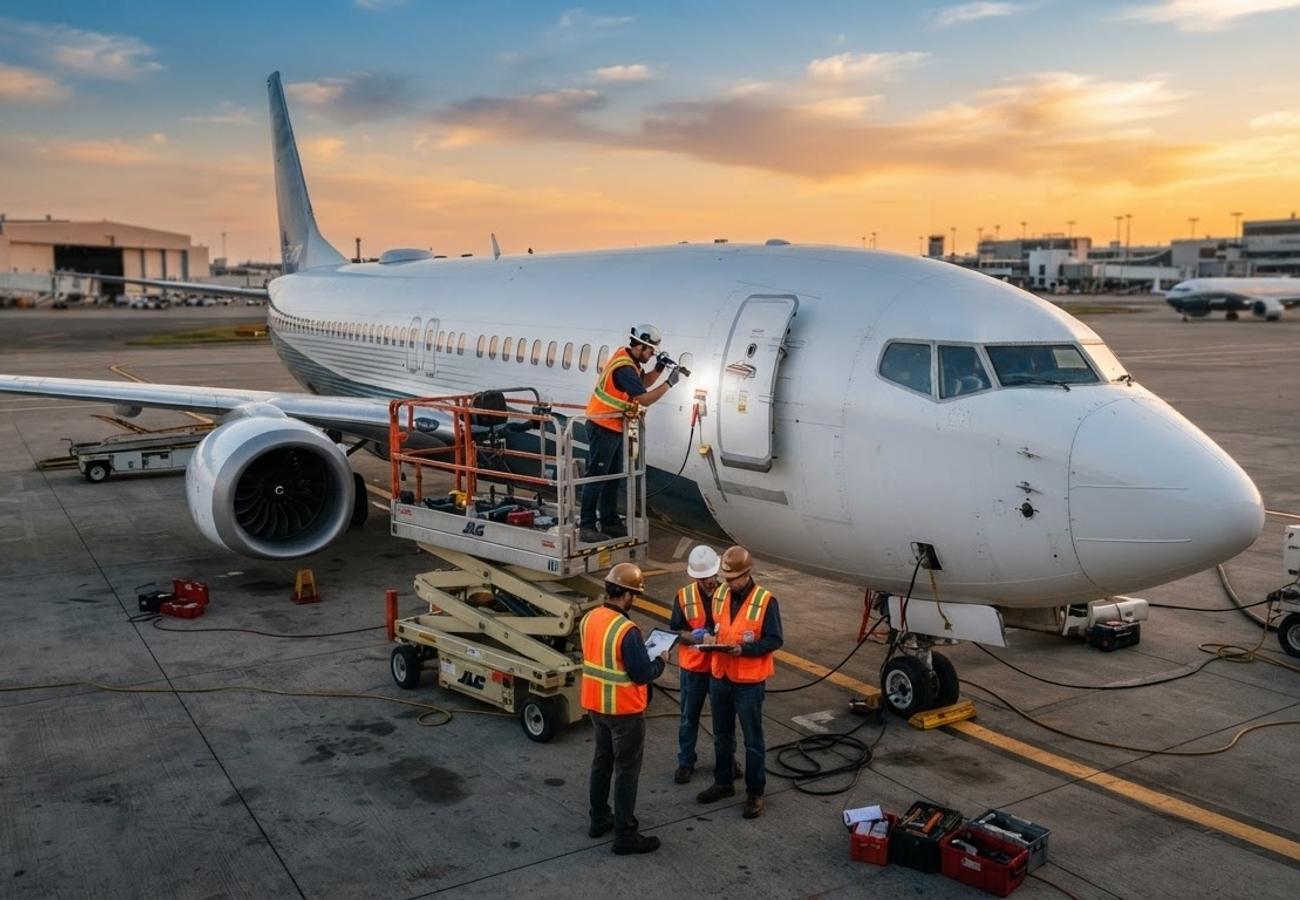
Image generated by AI
471 US-registered Boeing 737 MAX aircraft must now undergo mandatory structural inspections after the Federal Aviation Administration (FAA) identified potential cracking risks near the forward service doors. The directive impacts major carriers including Southwest, United, and American Airlines, though officials have confirmed that a fleet-wide grounding is not required at this time.
The regulatory action comes as a proactive measure to ensure the long-term structural integrity of the MAX fleet. By integrating these checks into existing maintenance cycles, the FAA aims to mitigate safety risks without triggering the widespread travel chaos seen in previous Boeing-related crises.
FAA Mandates Forward Service Door Inspections
The Federal Aviation Administration has issued a formal Airworthiness Directive targeting specific Boeing 737 MAX variants. This legal mandate requires operators to conduct detailed structural examinations of the reinforcement areas surrounding the right-side forward service door, located near the front galley.
According to industry reports, the primary concern is the development of undetected cracking in this specific zone. If left unaddressed, such structural fatigue could compromise the aircraft's integrity over extended periods of operation. To manage this, the FAA is utilizing flight cycles and usage data to set inspection intervals, ensuring that each plane is vetted before any theoretical risk becomes a tangible hazard.
Airworthiness Directives are standard tools in global aviation safety, used to rectify technical flaws before they manifest as operational failures. This specific order emphasizes a shift toward preventative maintenance, moving away from reactive grounding.
Breakdown of Affected Boeing 737 MAX Variants
The directive is not universal across all Boeing models but specifically targets three variants of the MAX family currently operating within the United States.
| Aircraft Model | Inspection Requirement | Primary Objective |
|---|---|---|
| Boeing 737 MAX 8 | Structural inspection around forward service door reinforcement | Detect and mitigate potential cracking |
| Boeing 737 MAX 9 | Structural inspection around forward service door reinforcement | Maintain overall structural integrity |
| Boeing 737 MAX 8-200 | Structural inspection around forward service door reinforcement | Ensure safety for high-density configurations |
Carriers with the heaviest exposure include Southwest Airlines, United Airlines, American Airlines, and Alaska Airlines. These companies operate the largest MAX fleets in North America and must now coordinate these checks based on the specific flight history of each tail number. If any cracks are identified during the process, the aircraft is legally barred from passenger service until certified repairs are completed.
Strategic Decision Against Fleet Grounding
Unlike the catastrophic events of 2019 or the door-plug crisis of 2024, the FAA has explicitly avoided grounding the Boeing 737 MAX fleet. This decision hinges on the distinction between a preventative safety check and an immediate emergency.
Regulators determined that the potential for cracking can be monitored and managed through routine maintenance windows. This allows airlines to perform the necessary checks during overnight servicing or planned downtime, thereby avoiding the massive cancellations that typically accompany a grounding order.
For the traveling public, this means that daily flight schedules should remain largely unaffected. The current directive allows aircraft to remain in the air until they hit their specific inspection threshold, treating the issue as a maintenance requirement rather than a systemic failure.
Operational Impact on Major US Carriers
The logistical burden of this directive falls heaviest on the airlines with the most significant MAX exposure. Each carrier must now balance safety compliance with the demands of peak travel seasons.
| Airline | Boeing 737 MAX Exposure | Expected Operational Impact |
|---|---|---|
| Southwest Airlines | Largest US operator of MAX 8 | Heavy scheduling requirements for large-scale inspections |
| United Airlines | Mixed MAX 8 and MAX 9 fleets | Complex planning across domestic and international networks |
| American Airlines | Substantial MAX 8 fleet | Coordination of checks through primary hub operations |
| Alaska Airlines | MAX 8 and MAX 9 operations | Additional structural oversight following previous incidents |
Southwest Airlines faces the most significant task due to its reliance on the MAX 8. Meanwhile, Alaska Airlines must manage these new requirements while still operating under the heightened scrutiny following the 2024 MAX 9 door plug incident.
Evolution of Boeing 737 MAX Safety Oversight
This latest directive is part of a continuing pattern of intense regulatory oversight for the Boeing 737 MAX. The aircraft has undergone several phases of scrutiny:
- 2019–2020 Global Grounding: Triggered by two fatal crashes (Lion Air and Ethiopian Airlines), leading to comprehensive software and sensor overhauls.
- January 2024 Door Plug Crisis: An emergency grounding of MAX 9 aircraft followed the Alaska Airlines Flight 1282 incident, resulting in thousands of cancelled flights.
- 2026 Preventative Checks: Recent mandates including seat-track fitting inspections and the current structural door checks.
These recurring directives indicate that while the MAX has returned to global service, the FAA is maintaining a "zero-tolerance" approach to structural anomalies.
Hub Logistics and Maintenance Coordination
The execution of these inspections will center on major aviation hubs where maintenance infrastructure is most robust.
Dallas/Fort Worth International Airport (DFW) will serve as a primary site for American Airlines' inspections, given the concentration of their MAX 8 fleet at that location. Similarly, United Airlines will utilize hubs like Chicago O’Hare, Newark, and Denver to cycle their aircraft through the required checks.
Interestingly, Delta Air Lines hubs, such as Atlanta, will see minimal direct impact as the carrier does not operate the Boeing 737 MAX. However, industry observers suggest that if competitors face unexpected aircraft removals for repairs, it could shift capacity and demand toward non-MAX operators.
Why This Matters: The Passenger and Legal Perspective
For the traveler, this news is a reminder that "safety" in aviation is a constant process of iteration rather than a static state. The fact that 471 aircraft require inspection may sound alarming, but from a logistical standpoint, it is a sign that the monitoring systems are working.
The shift from grounding to "scheduled inspection" is a critical evolution in how the FAA handles Boeing. It suggests a higher level of confidence in the predictability of the aircraft's wear-and-tear patterns. However, for the legal and insurance sectors, these directives create a documented trail of "known risks." If an airline fails to adhere to the flight-cycle timeline for these inspections, they face severe liability and regulatory fines.
Ultimately, this move protects the passenger by ensuring that structural fatigue is caught in the hangar rather than in the air. While it may cause minor scheduling shifts, it prevents the systemic collapse of flight networks that occurs during emergency groundings.
The aviation industry continues to balance the necessity of rigorous safety audits with the economic demand for uninterrupted global connectivity.
Related Travel Guides
Disclaimer
This article is for informational and educational purposes only. It does not constitute legal, financial, or professional advice. While we strive to provide accurate and up-to-date information, travel policies, regulations, and conditions change rapidly. Always verify information with official sources before making travel decisions. Nomad Lawyer makes no representations about the accuracy, reliability, completeness, or suitability of the information provided. Readers should consult qualified professionals for advice specific to their circumstances. The views expressed in this article are those of the author and do not necessarily reflect the views of Nomad Lawyer.
Kunal K Choudhary
Co-Founder & Contributor
A passionate traveller and tech enthusiast. Kunal contributes to the vision and growth of Nomad Lawyer, bringing fresh perspectives and driving the community forward.
Learn more about our team →