
Tragic Missouri Plane Crash Kills 12 as Skydiving Flight Plunges Near Butler Memorial Airport, Triggering Local Airport Disruptions
Breaking airline news: A horrific skydiving plane crash in Bates County, Missouri has claimed 12 lives after the aircraft failed to climb and plunged near Business 49 Highway.

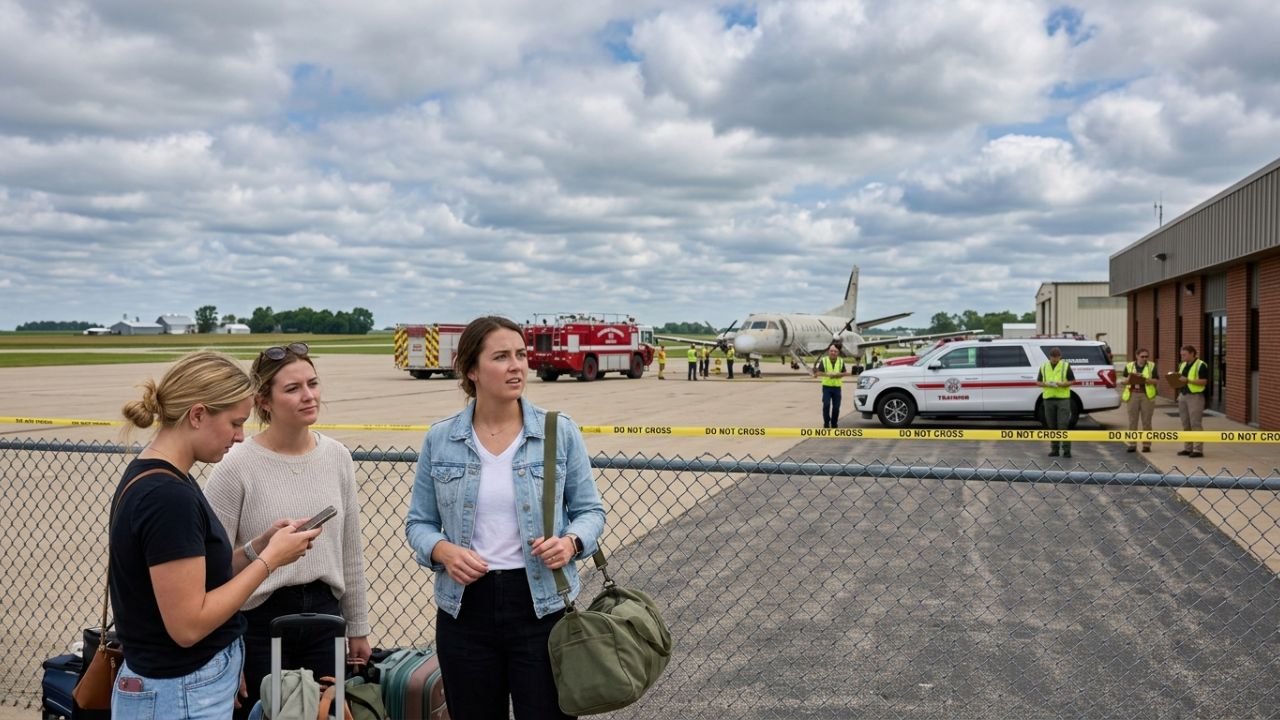
Image representing the tragic aviation disaster near Butler Memorial Airport in Missouri, where a fatal skydiving plane crash claimed 12 lives and triggered immediate, localized airport disruptions as federal investigators arrived on the scene. (Image Credit: Aviation Safety Network)
Tragic Missouri Plane Crash Kills 12 as Skydiving Flight Plunges Near Butler Memorial Airport, Triggering Local Airport Disruptions
A Fatal Emergency Turnback Leaves a Rural Community in Shock as the NTSB Launches a Massive Federal Investigation
The United States aviation community is currently mourning a catastrophic loss of life following a devastating accident in the American Midwest. According to the latest breaking airline news and highly tragic aviation updates, a horrific plane crash has officially claimed the lives of 12 people—including 11 recreational skydivers and one pilot—in Bates County, Missouri. The fatal incident occurred on June 15, 2026, when a private aircraft operating a scheduled recreational jump flight out of Butler Memorial Airport encountered an unknown, critical emergency shortly after takeoff. In a desperate attempt to survive, the pilot initiated an emergency turnback maneuver, but the aircraft failed to reach the runway, plunging into a rural field near the Business 49 Highway just before 11:30 a.m. local time. The massive, fiery impact left absolutely no survivors and immediately triggered severe, localized airport disruptions as emergency responders flooded the surrounding airspace.
While commercial passengers are currently battling widespread travel chaos and flight cancellations at major international hubs, this tragic accident serves as a brutal reminder of the absolute, unforgiving physical risks inherent in all forms of aviation. The horrific crash has deeply traumatized the local community and placed intense, immediate scrutiny on the operational safety standards governing high-frequency skydiving flights. As the National Transportation Safety Board (NTSB) and the Federal Aviation Administration (FAA) rapidly deploy specialized crash-investigation teams to the Missouri wreckage site, authorities are meticulously analyzing the final, fatal seconds of the flight to determine exactly what forced the pilot to abort the climb phase. Until the federal inquiry concludes, regional flight operations remain heavily scrutinized, adding to the broader atmosphere of high-alert travel chaos currently gripping the US aviation sector.
Section-Wise Breakdown: The Anatomy of the Missouri Disaster
The highly detailed emergency response data exposes the terrifying, rapid sequence of events that led to the deadliest skydiving aviation disaster of the year:
The Fatal Departure and Emergency Turnback The tragic flight began as an entirely routine skydiving operation. According to officials from Bates County Emergency Management, the private aircraft departed Butler Memorial Airport heavily loaded with 11 skydivers anticipating a standard recreational jump. The aircraft took off shortly before 11:30 a.m., but early reports definitively confirm that the plane never successfully completed its initial climb phase. Within mere minutes of leaving the tarmac, the pilot encountered an unknown, critical failure and immediately initiated a highly aggressive return trajectory toward the airport. The specific cause of this desperate turnaround—whether it was a catastrophic mechanical failure, severe pilot distress, or sudden external conditions destroying flight stability—remains entirely unconfirmed. Tragically, the aircraft rapidly lost altitude during the reversal maneuver, crashing heavily into a rural field completely outside the safe runway zone.
The Crash Site and Emergency Response The violent impact generated an immediate, massive emergency response. The crash site, located dangerously close to the Business 49 Highway, was instantly engulfed in flames. Fire units, sheriff’s deputies, and specialized medical response teams reached the wreckage within minutes of the initial alert. Firefighters engaged in a desperate battle to control the post-crash blaze, working aggressively to suppress the fire while simultaneously attempting to secure the perimeter to preserve critical mechanical evidence for federal investigators. To ensure emergency operations could proceed without physical interference, authorities completely locked down the immediate area, temporarily closing roads near Business 49 Highway. This rapid perimeter enforcement effectively generated localized airport disruptions, halting standard ground movements near the facility. Devastatingly, emergency medical teams arriving at the charred wreckage confirmed that the sheer violence of the impact was unsurvivable; all 12 occupants were pronounced dead at the scene.
FAA and NTSB Launch Federal Investigation Recognizing the massive loss of life, the Federal Aviation Administration (FAA) and the National Transportation Safety Board (NTSB) instantly launched a joint, full-scale federal accident investigation. The NTSB, acting as the lead agency, has already deployed technical specialists to the Missouri crash site. The investigation is explicitly focused on the incredibly narrow timeline between the initial takeoff, the desperate reversal maneuver, and the ultimate impact. Federal agents are currently aggressively reviewing the aircraft’s historical maintenance records, the pilot’s specific flight history, and any existing communication logs with local air traffic control. Furthermore, investigators will conduct a deep reconstruction of the physical flight path and analyze the destroyed onboard systems to determine the precise sequence of the mechanical or operational failure.
Flight Details: The Factual Missouri Crash Incident Matrix
To provide exact, factual clarity on the immense scale of this tragedy, aviation safety analysts have mapped the specific operational metrics officially reported out of Bates County. The following factual matrix details the precise breakdown of the fatal Butler Memorial Airport crash:
Factual Butler Missouri Aviation Incident Matrix
| Incident Metric | Factual Operational Detail |
|---|---|
| Location of Crash | Near Business 49 Highway (Outside Butler Memorial Airport, MO) |
| Time of Incident | Shortly before 11:30 a.m. local time |
| Total Fatalities | 12 Dead (No Survivors) |
| Occupant Breakdown | 11 Recreational Skydivers, 1 Pilot |
| Phase of Flight | Post-Takeoff (Failed to complete climb phase) |
| Pilot Action | Initiated an emergency turnback toward the runway |
| Lead Investigative Agency | National Transportation Safety Board (NTSB) |
| Local Response Agency | Bates County Emergency Management |
Data reflects the confirmed fatality metrics and crash parameters officially recorded in Bates County, Missouri. (Source: NTSB / FAA)
Community Impact: A Devastating Loss of Life
For the families of the victims and the tight-knit skydiving community, this incident represents an absolute, inescapable nightmare. The identities of the 11 skydivers and the pilot are currently being withheld by authorities pending the completion of formal, incredibly agonizing notification procedures to their next of kin. The local community surrounding Butler Memorial Airport has expressed profound shock and deep mourning following the horrific loss of life. Because the airport serves as a vital hub for general aviation and recreational flying in the region, the facility has immediately implemented drastically increased safety monitoring protocols during the ongoing federal investigation. Authorities have issued stern warnings urging the public to entirely avoid the crash site near Business 49 Highway, ensuring that the NTSB can conduct its grim, meticulous recovery and analysis work without disruption.
Industry Analysis: The Intense Stress of Skydiving Operations
Aviation safety experts closely monitoring the Missouri tragedy emphasize that this crash will instantly place renewed, intense regulatory attention on the specific operational standards governing skydiving aviation in the United States. Unlike commercial airline routes, skydiving flights involve incredibly frequent, rapid, short climbs followed by steep descents, repeating these aggressive sorties multiple times throughout a single day. This specific, high-tempo flight profile places incredibly consistent, heavy physical demand on both the aircraft's mechanical systems and the flight crews. Regulators require exceptionally strict maintenance cycles and operational oversight to mitigate these extreme stresses. The NTSB will now forensically assess whether the doomed aircraft strictly adhered to these rigorous inspection cycles, or if a hidden mechanical flaw was allowed to progress to the point of catastrophic failure during the most critical phase of flight.
Conclusion: A Desperate Search for Answers in Missouri
The catastrophic plane crash near Butler Memorial Airport serves as a highly visible, definitive tragedy that has deeply shaken the US aviation sector. With 12 lives violently lost after a skydiving flight failed to execute an emergency turnback, the incident has generated intense, localized travel chaos and severe airport disruptions in Bates County, Missouri. As the NTSB and FAA systematically sift through the charred wreckage near Business 49 Highway, the skydiving industry must brace for the inevitable implementation of stricter regulatory oversight. A preliminary report detailing the precise timeline of the mechanical or operational failure is expected in the coming weeks, but until then, the exact cause of the Missouri disaster remains a devastating mystery. (Source: NTSB / FAA via Nomad Lawyer)
Key Takeaways
- Massive Loss of Life: A private skydiving aircraft crashed in Bates County, Missouri, killing all 12 occupants onboard (11 skydivers and 1 pilot).
- Failed Emergency Turnback: The aircraft encountered a critical issue shortly after takeoff and failed to complete its climb phase, crashing while attempting to return to Butler Memorial Airport.
- Crash Location: The aircraft plunged into a rural field near the Business 49 Highway, completely outside the safe runway zone.
- Intense Fire Damage: Emergency responders arrived within minutes to find the wreckage heavily engulfed in flames, forcing temporary road closures and localized disruptions.
- Federal Investigation Launched: The NTSB and FAA have initiated a massive joint investigation focused on maintenance records, the flight path reconstruction, and the sequence of the turnback attempt.
✈️ Frequently Asked Questions (Factual Aviation Safety Data)
Where exactly did this fatal skydiving aviation disaster take place? The tragic crash occurred in Bates County, Missouri, in a rural field near the Business 49 Highway, situated just outside the runway zone of Butler Memorial Airport.
Exactly how many casualties were confirmed in the Missouri plane crash? Authorities definitively confirmed that 12 people were killed in the crash, leaving absolutely no survivors.
What was the specific breakdown of the passengers and crew onboard the aircraft? The aircraft was actively carrying 11 recreational skydivers preparing for a jump operation, alongside 1 operating pilot.
At what specific time did the fatal aviation incident occur? The private aircraft took off and subsequently crashed shortly before 11:30 a.m. local time.
What specific emergency maneuver did the pilot attempt before the crash? Early reports confirm the aircraft did not complete its initial climb phase; the pilot encountered an issue and initiated an emergency turnback maneuver toward the airport before crashing.
Which federal agencies are officially leading the crash investigation? The National Transportation Safety Board (NTSB) is leading the inquiry, working in a massive joint investigation alongside the Federal Aviation Administration (FAA).
Have the authorities confirmed the exact cause of the crash? No. At the time of publication, officials have not confirmed whether the aircraft experienced a catastrophic mechanical failure, pilot distress, or external conditions affecting flight stability.
How did the local authorities respond to the fiery crash site? Bates County Emergency Management, including fire units and medical teams, responded within minutes, battling the post-crash blaze and temporarily closing roads near Business 49 Highway to secure the area.
🌍 Related Travel Guides & Flight Resources
- Navigate Airport Disruptions Like a Pro Master the art of surviving unexpected travel chaos with our expert strategies.
- Breaking Airline News & Evasion Routes Stay ahead of the delays with our real-time aviation updates and route intelligence.
- Global Flight Cancellation Defense Grid Essential legal rights and compensation tactics when your flight goes down.
⚖️ Disclaimer
The fatality statistics, emergency response timelines, and aviation safety overviews provided in this report are for informational purposes only. The specific aviation variables regarding the tragic skydiving plane crash near Butler Memorial Airport in Bates County, Missouri—including the exact cause of the emergency turnback, the potential for mechanical failure, and the ongoing forensic analysis of the wreckage—are highly volatile and subject to deep, meticulous review by the National Transportation Safety Board (NTSB) and the Federal Aviation Administration (FAA). All data regarding the crash near Business 49 Highway has been officially sourced from federal investigators and emergency management authorities as of June 15, 2026. NomadLawyer assumes no liability for the ongoing developments of this federal investigation or any subsequent regulatory changes imposed on recreational skydiving operations. The identities of the victims remain officially withheld pending family notification.
Disclaimer
This article is for informational and educational purposes only. It does not constitute legal, financial, or professional advice. While we strive to provide accurate and up-to-date information, travel policies, regulations, and conditions change rapidly. Always verify information with official sources before making travel decisions. Nomad Lawyer makes no representations about the accuracy, reliability, completeness, or suitability of the information provided. Readers should consult qualified professionals for advice specific to their circumstances. The views expressed in this article are those of the author and do not necessarily reflect the views of Nomad Lawyer.
Kunal K Choudhary
Co-Founder & Contributor
A passionate traveller and tech enthusiast. Kunal contributes to the vision and growth of Nomad Lawyer, bringing fresh perspectives and driving the community forward.
Learn more about our team →