
JetBlue Flight JBU491 Airbus A320 Diverts from Buffalo to Denver En Route to Los Angeles 2026
JetBlue Flight JBU491, an Airbus A320 traveling from Buffalo Niagara to Los Angeles, executed an emergency diversion to Denver International Airport on August 5 due to operational disturbances.

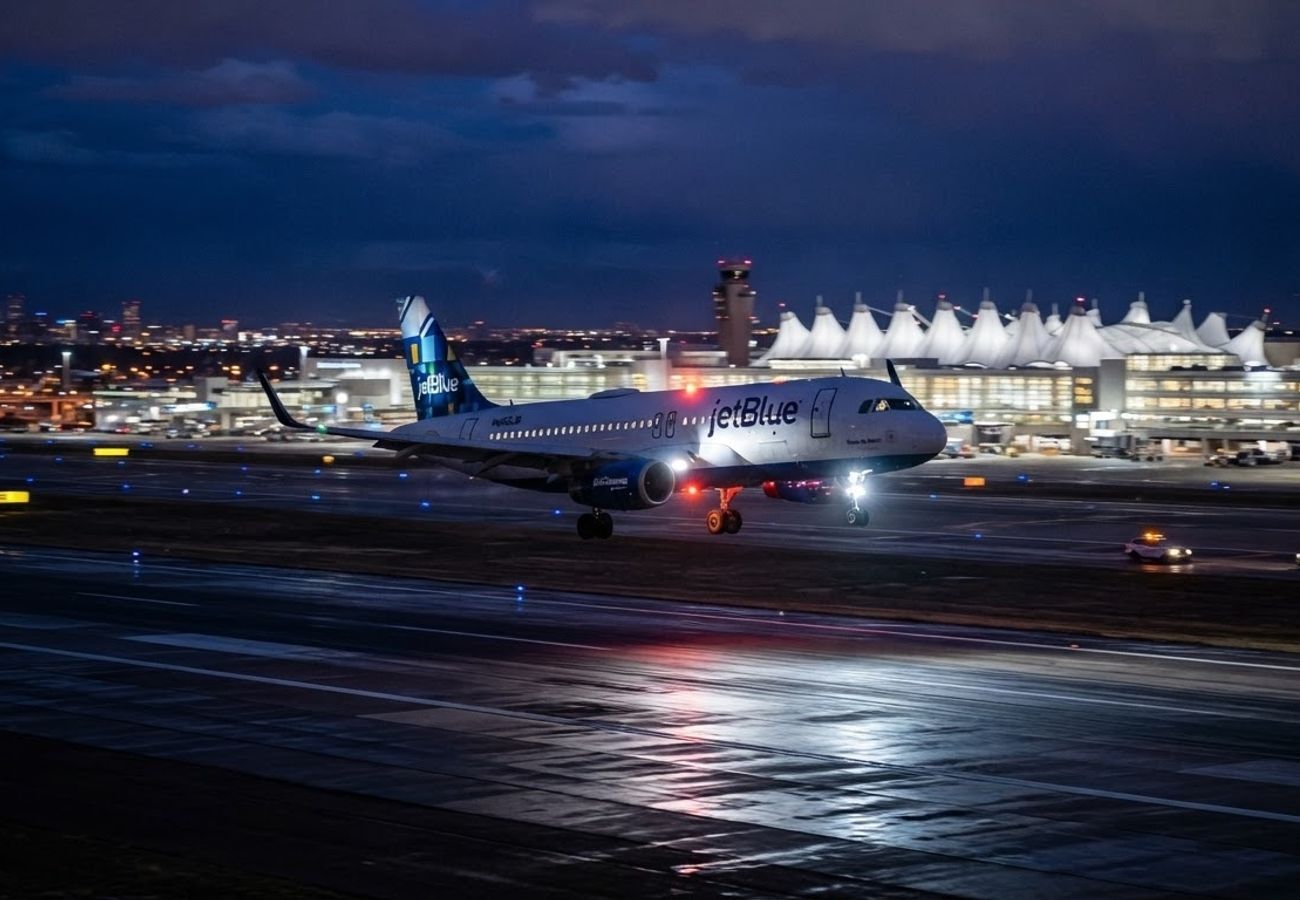
Image generated by AI
JetBlue Flight JBU491, an Airbus A320 traveling from Buffalo to Los Angeles, was forced to divert to Denver International Airport on August 5 following an operational disturbance.
On August 5, 2026, JetBlue Airlines Flight JBU491 experienced a significant course alteration during its transcontinental journey. The aircraft, an Airbus A320 registered as N641JB, was unable to complete its scheduled flight from Buffalo Niagara International Airport (BUF) to Los Angeles International Airport (LAX), resulting in an unscheduled landing in Colorado.
While the airline and aviation authorities have not publicly confirmed the specific trigger for the diversion, standard aviation protocols suggest several likely causes. These typically include passenger medical emergencies, technical malfunctions, severe weather patterns across the mid-continent, or specific air traffic control directives.
The decision to divert to Denver International Airport (DEN) reflects the strategic importance of major hubs in the U.S. aviation network. Flight crews evaluate runway length, available emergency medical services, and ground support capabilities before selecting a diversion site. Denver's extensive infrastructure makes it a primary fallback for aircraft traversing the eastern and western United States.
Flight Specification and Diversion Timeline
The following table outlines the planned versus actual flight parameters for JBU491 on August 5.
| Parameter | Scheduled Detail | Actual/Diversion Detail |
|---|---|---|
| Flight Number | JBU491 | JBU491 |
| Aircraft Model | Airbus A320 | Airbus A320 |
| Registration | N641JB | N641JB |
| Origin | Buffalo Niagara (BUF) | Buffalo Niagara (BUF) |
| Destination | Los Angeles (LAX) | Denver International (DEN) |
| Departure Time | ~8:20 PM | ~8:20 PM |
| Scheduled Arrival | 9:58 PM (LAX) | N/A |
| Actual Landing | N/A | 10:38 PM (DEN) |
Traveler Logistics Guide: Navigating Unscheduled Diversions
From a ground-level perspective, the best way to navigate a flight diversion is to immediately transition to the airline's digital communication channels. When a flight is redirected to a hub like Denver, the operational recovery process begins the moment the aircraft touches down.
Managing Connections and Onward Travel If you find yourself diverted, prioritize the following steps:
- Digital Check-in: Use the JetBlue mobile app to check for automatic re-bookings. In major hubs, airlines often pre-arrange the next available leg to your destination before you even exit the aircraft.
- Customs and Immigration: For domestic diversions, this is rarely an issue, but for international legs, ensure you know if you are being processed through a sterile transit zone or if you must clear customs at the diversion airport.
- Compensation Claims: Under U.S. Department of Transportation (DOT) guidelines, passengers should document the cause of the diversion. If the diversion was due to a mechanical failure (controllable), you may be entitled to meal vouchers or hotel accommodations.
Optimal Layover Strategy When diverted to a major hub, avoid booking third-party hotels immediately. Wait for the airline's ground staff to provide "distressed passenger" vouchers. If the delay extends overnight, ensure the airline provides transportation to the hotel, as Denver International Airport is located significantly far from the city center.
Infrastructure Impact Assessment
The diversion of JBU491 highlights the critical role of "hub resilience." Because JetBlue operates a complex rotation of aircraft and crew assignments, a single diversion in Denver can trigger a ripple effect across their network. The Airbus A320 (N641JB) requires a full operational assessment and potentially a crew swap before it can be repositioned to Los Angeles or returned to its scheduled rotation.
Denver International Airport serves as a vital safety valve for the national airspace. Its ability to absorb an unscheduled transcontinental flight without disrupting existing traffic flows demonstrates why the U.S. aviation system relies on a few massive "super-hubs" to maintain safety margins during operational failures.
Safety protocols ensure that while schedules are disrupted, passenger risk is minimized.
Related Travel Guides
Disclaimer
This article is for informational and educational purposes only. It does not constitute legal, financial, or professional advice. While we strive to provide accurate and up-to-date information, travel policies, regulations, and conditions change rapidly. Always verify information with official sources before making travel decisions. Nomad Lawyer makes no representations about the accuracy, reliability, completeness, or suitability of the information provided. Readers should consult qualified professionals for advice specific to their circumstances. The views expressed in this article are those of the author and do not necessarily reflect the views of Nomad Lawyer.
Preeti Gunjan
Contributor & Community Manager
A passionate traveller and community builder. Preeti helps grow the Nomad Lawyer community, fostering engagement and bringing the reader experience to life.
Learn more about our team →