
European Aviation Crisis 2026: 4,318 Delays and 441 Cancellations Hit Rome and Milan Hubs
A technical failure in Italy's air traffic control network triggered a domino effect across Europe, resulting in over 4,300 delays and hundreds of cancellations across 22 major airports.

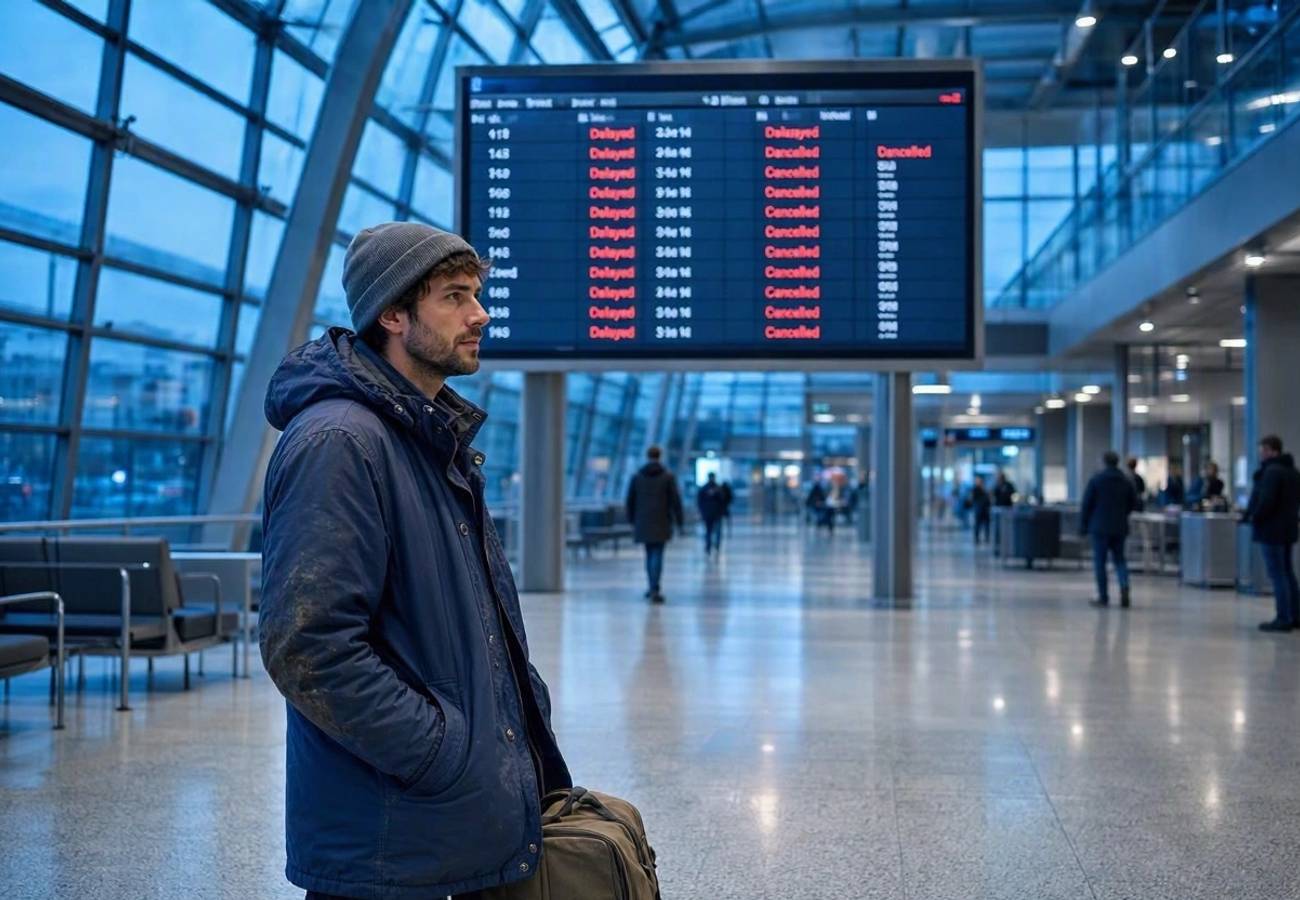
Image generated by AI
4,318 delays and 441 cancellations paralyzed European airspace on October 16, 2026, as a technical failure in Italy triggered a systemic collapse across 22 major airports. The disruption spanned eight countries—Germany, Spain, France, Italy, Switzerland, the United Kingdom, Albania, and the Netherlands—leaving thousands of passengers stranded. While the crisis manifested continent-wide, the epicenter was the Italian air traffic control network, where overnight data transmission anomalies forced immediate operational restrictions.
The ENAV Technical Failure: A Systemic Trigger
The chaos originated from a technical fault within ENAV, the agency responsible for Italian air traffic management. The agency detected anomalies in the data transmission network that supports nationwide air traffic services, necessitating the implementation of temporary restrictions to ensure safety. Although authorities confirmed that the incident was not the result of sabotage and the technical issue was resolved within the day, the "ripple effect" in aviation meant that aircraft were out of position, crews timed out, and slots at major hubs were missed.
For the traveler, this illustrates the fragility of the European "Open Skies" environment. Because airlines like Ryanair and easyJet operate on tight turnaround schedules, a failure in one national air traffic control center can freeze operations in cities as far away as London, Paris, and Amsterdam.
Operational Breakdown by Airport and Carrier
The impact was not distributed evenly. Italian hubs bore the brunt of the failure, but major European gateways experienced significant percentages of delayed departures. Milan Malpensa emerged as the most volatile hub in terms of total cancellations, while Rome Fiumicino saw the highest volume of delayed flights.
European Hub Disruption Metrics (October 16, 2026)
| Airport | Delays | Cancellations | Departure Delay % | Arrival Delay % |
|---|---|---|---|---|
| Rome Fiumicino | 479 | 57 | 50% | 40% |
| Milan Malpensa | 236 | 72 | 38% | 31% |
| Paris Charles de Gaulle | 315 | 11 | 27% | 19% |
| Frankfurt | 306 | 25 | 22% | 21% |
| Barcelona | 299 | 7 | 25% | 27% |
| Madrid | 257 | 12 | 21% | 17% |
| Amsterdam Schiphol | 254 | 20 | 17% | 16% |
| Munich | 243 | 10 | 22% | 25% |
| Zurich | 219 | 15 | 25% | 26% |
| Berlin Brandenburg | 206 | 12 | 34% | 29% |
| London Heathrow | 198 | 15 | 16% | 12% |
| Paris Orly | 186 | 13 | 30% | 27% |
| Milan Linate | 166 | 21 | 47% | 42% |
| Bergamo | 143 | 18 | 47% | 43% |
| Naples | 130 | 17 | 41% | 39% |
| Venice | 119 | 23 | 38% | 37% |
| Catania | 101 | 22 | 40% | 31% |
| Bologna | 96 | 17 | 37% | 33% |
| Palermo | 94 | 17 | 42% | 40% |
| Basel-Mulhouse | 71 | 10 | 24% | 23% |
| Tirana | 67 | 16 | 18% | 31% |
Carrier Performance and Impact
Low-cost carriers (LCCs) were disproportionately affected due to their high-frequency, short-haul models.
- Ryanair: 791 delays (26% of flights) and 59 cancellations.
- easyJet: 84 cancellations (the highest count in Europe) and 674 delays (34% of flights).
- ITA Airways: Suffered the most severe delay rate, with 62% of its flights (214 delays) impacted.
- Wizz Air Malta: 69 cancellations (11% of flights) and 179 delays (30% of flights).
- Lufthansa: 210 delays (20% of flights) and 15 cancellations.
- Air France: 181 delays (28% of flights) and 4 cancellations.
Expert Analysis: The "Single Point of Failure" Risk
The events of October 16 highlight a critical vulnerability in European aviation: the reliance on national air traffic control (ATC) nodes. When ENAV experienced a data transmission anomaly, it didn't just stop flights in Italy; it created a vacuum in the flight schedule across the continent.
For travelers booking routes through Italy, the direct consequence is a high risk of "cascading delays." When an aircraft is delayed in Rome, it cannot perform its next leg to London or Paris, effectively exporting the Italian technical fault to other countries. This is why easyJet and Ryanair saw such high cancellation numbers despite the fault being localized to Italy.
From a legal perspective, passengers should be aware of EU Regulation 261/2004. While airlines often claim ATC failures are "extraordinary circumstances" to avoid paying cash compensation, they are still legally mandated to provide "duty of care"—including meals, hotel accommodation, and communication—regardless of the cause of the delay.
Key Takeaways
- Systemic Failure: A data transmission fault at ENAV (Italy) caused 4,318 delays and 441 cancellations across 22 European airports.
- Hub Volatility: Milan Malpensa had the highest number of cancellations (72), while Rome Fiumicino had the most delays (479).
- Carrier Impact: ITA Airways saw the highest percentage of delays at 62%, while easyJet recorded the highest total number of cancellations (84).
- Regional Reach: Disruptions extended beyond Italy to major hubs in the UK, France, Germany, and the Netherlands.
- Passenger Rights: ATC faults may exempt airlines from compensation, but "duty of care" (hotels/meals) remains a legal requirement.
FAQ: European Flight Disruptions 2026
Am I entitled to compensation for the October 16 delays? Likely not. Technical faults in air traffic control are generally classified as "extraordinary circumstances" under EU 261. However, you are entitled to food, drink, and hotel vouchers if the delay lasts overnight.
Which airline was most affected by the ENAV fault? In terms of volume, Ryanair had the most delays (791), but ITA Airways had the highest percentage of impacted flights at 62%. easyJet suffered the highest number of total cancellations (84).
Why did a fault in Italy affect flights in London and Paris? Aviation operates on a tight rotation. If a plane is stuck in Rome, it cannot fly its next scheduled route to London, causing a secondary delay or cancellation for passengers who were never even in Italy.
What should I do if my flight is cancelled at a major hub like Fiumicino? Immediately request a written statement of the cancellation from the airline and keep all receipts for food and hotels. Check the airline's app for rebooking options before joining long queues at the airport.
When the network fails, the traveler pays the price in hours lost.
Related Travel Guides
Disclaimer
This article is for informational and educational purposes only. It does not constitute legal, financial, or professional advice. While we strive to provide accurate and up-to-date information, travel policies, regulations, and conditions change rapidly. Always verify information with official sources before making travel decisions. Nomad Lawyer makes no representations about the accuracy, reliability, completeness, or suitability of the information provided. Readers should consult qualified professionals for advice specific to their circumstances. The views expressed in this article are those of the author and do not necessarily reflect the views of Nomad Lawyer.
Naina Thakur
Contributor & Travel Specialist
Travel enthusiast and legal writer covering visa regulations, responsible tourism, and cultural journeys across global destinations.
Learn more about our team →