Digital Passports and Biometric Boarding in Europe 2026: Airline Adoption, Passenger Rights, and Privacy Risks

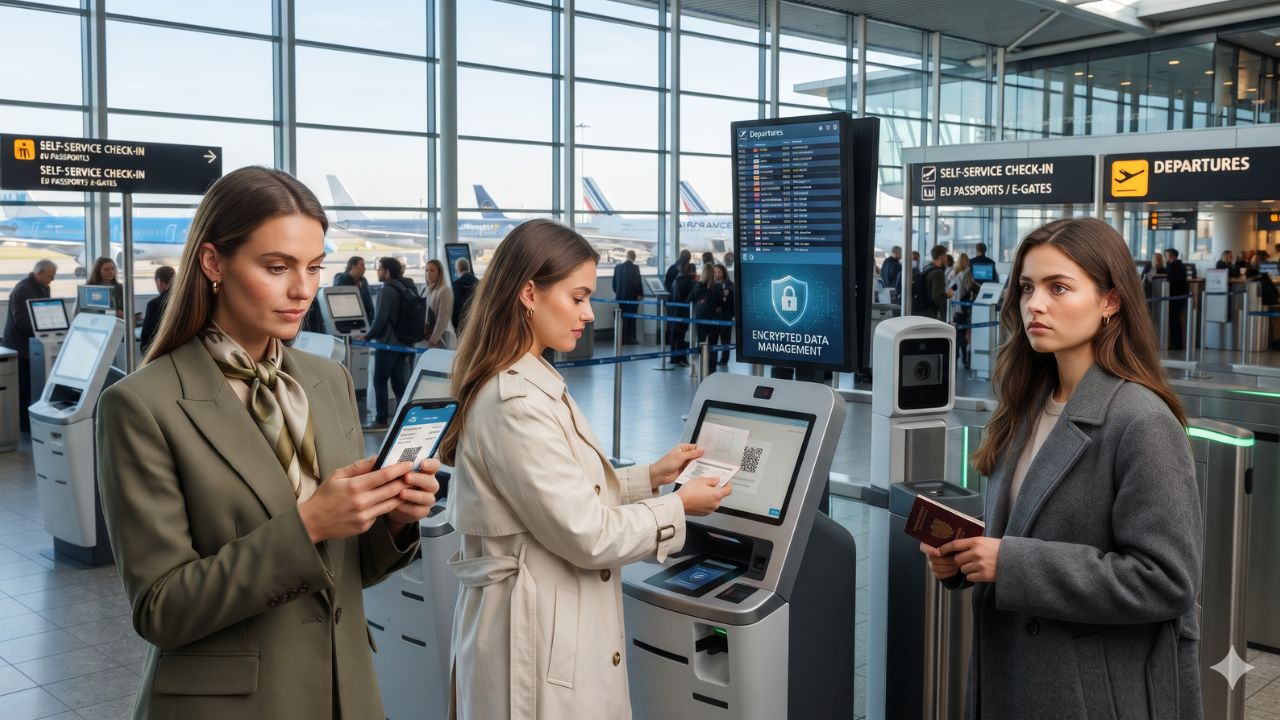
While 84% of international air travelers embrace the speed of digital passports, an alarming 59% fear their immutable biometric data will be compromised in cyber breaches, revealing an intense consumer divide across European aviation. According to findings from the International Air Transport Association (IATA) 2026 Global Passenger Survey, 82% of passengers express strong interest in integrated smartphone travel wallets. Yet as European flag carriers and low-cost operators replace paper documents with facial scans, travelers face mounting questions regarding data retention, third-party vendor access, and digital exclusion.
From Ireland to the Mediterranean, airlines are overhauling airport checkpoints to eliminate queues. Ryanair made mobile app digital boarding passes its standard operating procedure on 12 November 2025, while British Airways, Lufthansa, KLM, Air France, and Iberia have deployed biometric boarding trials across core hubs. Regulated under strict European Union privacy directives, international travelers must understand which digital verifications are legally mandatory, which remain strictly voluntary, and how to safeguard personal identity profiles before clearing terminal departure gates.
The Biometric Shift: How Major European Carriers Compare
The rush toward automated airport processing spans both full-service legacy alliances and budget operators, though their implementation models differ significantly.
On 4 October 2024, Ireland's Data Protection Commission initiated a formal inquiry into Ryanair’s identity verification procedures for passengers booking through third-party travel agencies, examining whether mandatory biometric facial verification complied with European data proportionality rules. In contrast, network carriers like Lufthansa rely on voluntary enrollment through Star Alliance Biometrics, allowing frequent flyers to consent to facial recognition at security turnstiles in Frankfurt and Munich.
Across the English Channel, British Airways launched international smartphone biometric trials in November 2022, allowing passengers to scan passport chips and facial profiles on personal devices. In the Netherlands, KLM completed a comprehensive transatlantic Digital Travel Credential (DTC) pilot in March 2024, while Spain’s Iberia launched facial recognition on its Madrid–Barcelona shuttle route on 5 April 2024, though its booking platform notes occasional operational adjustments.
Master Matrix: European Carrier Digital Travel Deployments 2026
The following matrix documents digital document initiatives, regulatory baselines, and passenger privacy options across leading European airlines:
| Airline | Digital Initiative | Status & Timeline | Privacy & Consent Policy |
|---|---|---|---|
| Ryanair | App digital boarding passes | Standard requirement since 12 Nov 2025 | Mandatory for standard mobile bookings |
| Ryanair | Third-party booking verification | Regulatory inquiry opened 4 Oct 2024 | Facial recognition consent under review |
| British Airways | Smartphone biometric verification | International trials launched Nov 2022 | Voluntary opt-in participation |
| Lufthansa | Star Alliance biometric network | Active at Frankfurt & Munich hubs | Consent-based opt-in enrollment |
| KLM Royal Dutch | Digital Travel Credential (DTC) | Transatlantic trials finished March 2024 | Voluntary research pilot |
| Air France | Automated biometric boarding | Trial programs at Paris Charles de Gaulle | Participation-based testing |
| Iberia | Facial recognition corridor | Deployed 5 April 2024 (Madrid–Barcelona) | Voluntary opt-in enrollment |
Mandatory Rules vs. Optional Airport Convenience
Travelers often confuse government border requirements with commercial airline tools. Under EU law, passengers are never legally compelled to yield facial profiles to private airlines. While Advance Passenger Information (API) and border controls remain statutory requirements, commercial facial scanning operates strictly on consent.
- Physical Passport: Mandatory across all international travel; digital passes never replace original documents.
- Advance Passenger Information (API): Mandatory passport data submission prior to departure.
- Government Border Biometrics: Mandatory for non-EU travelers entering Schengen borders where required by law.
- Commercial Airline Facial Recognition: Voluntary. Under EU GDPR, passengers may decline biometric scanning in favor of manual gate checks.
- European Digital Identity Wallet: Voluntary. Backed by the European Commission, this sovereign framework allows citizens to store verified credentials on mobile devices without corporate data harvesting.
The Privacy Dilemma: Immutable Data and Vendor Coalitions
The central issue surrounding biometric aviation is data irrevocability. While compromised credit cards or passwords can be reissued instantly, facial features and fingerprint geometry cannot be altered following a network intrusion.
IATA’s 2026 survey revealed that beyond the 59% of travelers fearing data breaches, 49% expressed deep unease regarding airlines sharing biometric files with external technology contractors, while 41% cited ambiguous data retention periods. In response to mounting consumer pressure, aviation stakeholders including IATA, ACI EUROPE, Amadeus, IDEMIA Public Security, and SITA formed the Responsible Biometrics Travel Industry Coalition in October 2026. This coalition pledges to advocate for explicit consent, minimized data collection, and independent cybersecurity audits.
Legal oversight overseen by the European Data Protection Board (EDPB) reinforces that airlines must provide clear off-ramps. Carriers cannot deny boarding or levy punitive fees against passengers who exercise their statutory right to opt out of commercial biometric enrollment.
Visitor Insider Tips for Navigating European Digital Airports
Navigating European terminals while protecting personal data requires informed vigilance:
- Always Carry Your Physical Passport: Even when participating in paperless boarding trials at Amsterdam Schiphol or Frankfurt, gate agents and border officers can demand physical documents at any point. A dead smartphone battery will instantly halt your journey.
- Read Airline App Permissions Before Uploading Selfies: When carriers prompt you to scan your face during online check-in, review the consent terms. You are entitled to deselect facial recognition and opt for standard barcode boarding.
- Direct Bookings Avoid Verification Obstacles: Travelers booking Ryanair flights directly through the airline’s website avoid the third-party identity verification procedures currently under regulatory scrutiny in Ireland.
- Request Manual Document Inspection at Gates: If you do not wish to use automated biometric boarding gates at Madrid Barajas or London Heathrow, step into the staffed customer lane. Ground staff must manually check your boarding pass and passport without penalty.
- Purge Stored Biometrics After Travel: If you enrolled in airline frequent flyer biometric trials (such as Star Alliance Biometrics), you can revoke consent and delete your stored biometric template through your airline account privacy dashboard.
Cultural and Digital Inclusion Across European Tourism
The push toward digital-only airport operations challenges Europe’s commitment to accessible travel. While frequent commuters celebrate rapid gate scans, elderly passengers, travelers with disabilities, and visitors lacking high-end smartphones risk digital exclusion.
In addition, fragmented implementation across regional airports causes operational friction. A flyer departing Paris Charles de Gaulle with a digital wallet token may land at regional airfields that still require paper documentation. Protecting international tourism requires maintaining staffed customer desks alongside automated biometric corridors, ensuring technology enhances travel without eroding passenger autonomy.
FAQ: European Airport Biometrics and Digital Documents 2026
Are digital boarding passes mandatory on Ryanair flights?
Ryanair made digital app boarding passes its standard procedure on 12 November 2025, though physical check-in remains available at airport desks for specific exemptions.
Can I refuse facial recognition boarding at European airports?
Yes. Commercial biometric boarding is voluntary under EU GDPR law. Passengers can choose manual document inspection by airline gate personnel without penalty.
Do I still need a physical passport if I use a digital travel credential?
Yes. Digital credentials do not replace physical passports. Immigration and security officials across Europe require all international travelers to carry valid physical government passports.
What is the Responsible Biometrics Travel Industry Coalition?
Launched in October 2026 by IATA, ACI EUROPE, Amadeus, IDEMIA, and SITA, the coalition establishes ethical safeguards, voluntary enrollment, and cybersecurity standards for airline biometrics.
In an era where airport gates read faces instead of boarding cards, the savvy traveler remembers that true travel freedom includes the right to remain unmeasured.
Related Travel Guides
- Chicago O'Hare Thanksgiving Travel Alert 2026: Consecutive Ground Stops, Radar Outages, and Nationwide Flight Delays
- France Christmas Travel Alert 2026: Volotea Flight Cancellations Hit Lille, Bordeaux, Perpignan, and Rodez
- Las Vegas Travel 2026: Airport Traffic Drops 5% as High Fares and Slumping Helicopter Tours Reshape the Strip
This article is for informational purposes. Flight routes, passenger regulations, visa rules, and transit advisories are subject to change by airlines and aviation authorities. Readers are advised to verify schedules and travel documentation with relevant carriers and border agencies before departure.
Related Stories

Avianca Launches New York to Barranquilla Nonstop Flights Ahead of Carnival 2027

Thanksgiving Airfare Surge 2026: American Airlines and Holiday Flight Price Guide