
Spain and European Partners Pioneer Multi-Modal Tourism Revolution with High-Speed Rail, Atlantic Corridors, and Balkan Nomad Blocs: 2026 Analysis
Spain, Portugal, Greece, and the Balkans pioneer seamless multi-modal transit corridors under TEN-T, linking high-speed rail, air-rail ticketing, and digital nomad routes.

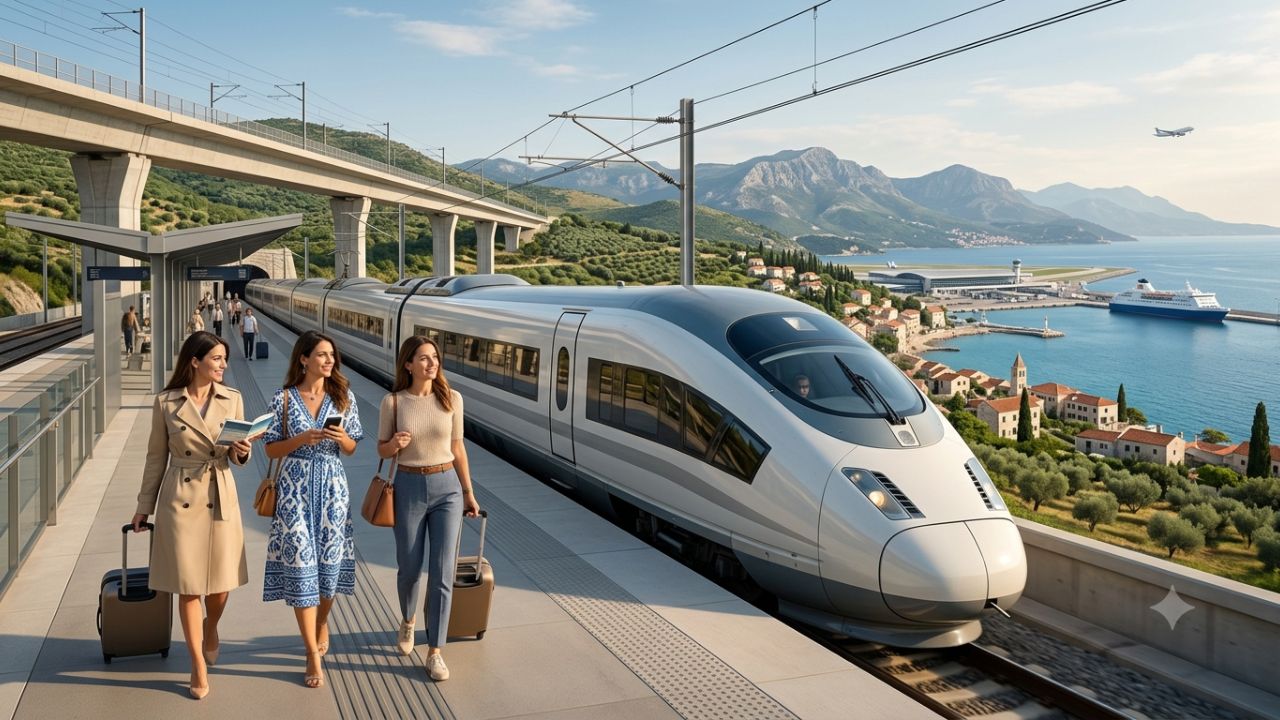
European authorities are dismantling cross-border transit barriers through high-speed rail integration, air-rail ticketing, and green maritime corridors.
Across Southwestern and Southeastern Europe, transport ministries and regional planning authorities are executing an unprecedented infrastructural overhaul to dismantle historical cross-border transit bottlenecks through integrated, multi-modal passenger corridors. Driven by the European Union’s revised Trans-European Transport Network (TEN-T) regulatory framework under Regulation (EU) 2024/1679, governments in Madrid, Lisbon, Athens, and the Western Balkans are coordinating heavy high-speed railway networks, consolidated air-rail ticketing architectures, and electrified maritime ports. By eliminating procedural border friction and unifying fragmented transit schedules, these cross-continental corridors are reshaping passenger flows, decentralizing tourist spending into regional economies, and establishing a new benchmark for low-carbon international travel.
For decades, European leisure and business transit developed along rigid national hub-and-spoke trajectories, leaving peninsular peripheries isolated. Travelers navigating the Iberian Peninsula contended with differing track gauges and disjointed bookings, while transit across the Western Balkans faced protracted border checkpoints. Today, institutional investments are reversing this fragmentation. From the 250 km/h dynamic testing along the cross-border Évora–Elvas–Badajoz rail link to One-Stop-Shop border posts between North Macedonia and Serbia, Europe is replacing isolated transit stops with synchronized, high-capacity travel arteries.
Continental Infrastructure Paradigm: The TEN-T Regulatory Overhaul
The catalyst behind this mobility revolution is the modernized TEN-T Regulation (EU) 2024/1679, supplemented by European Commission Implementing Decision (EU) 2025/1874. This legislation transformed European transport policy by shifting regulatory focus from standalone national projects to contiguous transnational transport corridors that enforce seamless passenger continuity between commercial aviation, heavy rail, and maritime navigation.
According to policy blueprints from the European Commission Directorate-General for Mobility and Transport, the structural convergence of Europe’s two primary southern frontiers reflects two complementary models:
- The Southwestern Corridor (Spain, Portugal, and Morocco): Characterized by capital-intensive engineering, track gauge harmonisation, high-speed rail lines, and combined air-rail ticketing consortia linking transatlantic flights directly with intercity trains and cross-strait ferries.
- The Southeastern Corridor (Greece, Bulgaria, Romania, and the Western Balkans): Defined by administrative modernization, One-Stop-Shop border facilities under the Western Balkans Green Lanes initiative, regional aviation liberalization, and coordinated digital nomad residency circuits.
| Corridor Infrastructure Project | Participating Jurisdictions | Core Technical Focus | Current Operational Status |
|---|---|---|---|
| Évora–Elvas High-Speed Rail Link | Portugal, Spain | 88 km new rail platform, 250 km/h mixed traffic | Dynamic operational testing underway |
| Madrid–Lisbon Atlantic Axis | Spain, Portugal, EU | High-speed heavy rail cross-border integration | Legally mandated for completion by 2034 |
| Combined Air-Rail Ticketing | Spain, Portugal | Intermodal airline-rail integrated bookings (Train & Fly) | Active multi-modal commercial sales |
| SECEGSA Trans-Gibraltar Fixed Link | Spain, Morocco | Subsea rail tunnel across Camarinal threshold | Detailed geotechnical and seismic feasibility |
| Tabanovce–Preševo Joint Crossing | North Macedonia, Serbia | One-Stop-Shop common customs/police infrastructure | Fully operational joint border facility |
| Systematic Electronic Data Exchange (SEED+) | Western Balkans, EU | Real-time digital customs & transit tracking | Active deployment across regional Green Lanes |
| Port Cold-Ironing Electrification (AFIR) | Spain, Portugal, Croatia, Greece | Shore-side high-voltage electricity berths (OPS) | Mandatory compliance targeted for 1 Jan 2030 |
Pillar I: The Iberian-Maghreb Corridor and Madrid–Lisbon High-Speed Rail
Historically separated by incompatible signaling systems and missing track links that forced passengers onto nine-hour road trips or short-haul flights, Spain and Portugal are constructing the high-speed backbone of the TEN-T Atlantic Corridor.
Under EU mandates, the Madrid–Lisbon high-speed rail corridor must be completed by 2034. The operational centerpiece of this link is the cross-border Évora–Elvas–Badajoz rail platform. National rail agency Infraestruturas de Portugal has completed structural engineering along the newly constructed 88-kilometer Évora–Elvas sector, conducting 200–250 km/h dynamic testing to validate overhead electric traction and track geometry. Once integrated with the Spanish high-speed line developed by Administrador de Infraestructuras Ferroviarias (ADIF) through Badajoz, Mérida, and Navalmoral de la Mata, overland journey times between Lisbon and Madrid will drop from over nine hours to approximately three hours.
Seamless Air-Rail Interoperability and Digital Schengen Pre-Clearance
Simultaneously, transport ministries in Madrid and Lisbon have prioritized commercial air-rail integration. National air carriers and railway operators—such as Iberia partnering with Renfe under the Train & Fly service, and TAP Air Portugal collaborating with Comboios de Portugal (CP)—have deployed unified intermodal booking platforms.
Under these single-ticket booking systems:
- International travelers arriving on long-haul transatlantic flights into Madrid-Barajas (MAD) or Lisbon-Humberto Delgado (LIS) can transfer directly onto high-speed rail lines under unified passenger rights.
- Baggage re-checking procedures and missed-connection liabilities are absorbed by the operating consortium, transforming capital airports into distribution springboards that channel international tourism spending into Extremadura, the Alentejo, and Andalusia.
- Digital pre-clearance architectures linked to the European Entry/Exit System (EES) and ETIAS automate preliminary security verification, allowing international arrivals to clear border controls before boarding domestic connecting trains.
Trans-Gibraltar Horizons: Camarinal Threshold and Ro-Pax Rail Integration
Looking southward, Southwestern Europe's intermodal network is aligning with North Africa. Catalyzed by the joint hosting responsibilities of the 2030 FIFA World Cup shared by Spain, Portugal, and Morocco, bilateral planning has intensified across the Strait of Gibraltar.
Under the guidance of Spain’s public engineering entity SECEGSA and Morocco’s SNED, engineers are updating geotechnical feasibility studies for a subsea railway tunnel across the Camarinal threshold. While full tunnel construction spans a 2035–2040 horizon, immediate capital investments focus on optimizing high-capacity roll-on/roll-off passenger (Ro-Pax) ferry terminals. Ports in Algeciras and Tarifa are undergoing structural upgrades to feed arriving ferry passengers directly into Spanish high-speed rail networks, mirroring terminal modernizations at Morocco’s Port of Tangier-Med.
Pillar II: Balkan Open Skies, One-Stop Borders, and Synchronized Nomad Blocs
In Southeastern Europe, transit integration focuses on dissolving border friction between the external Schengen frontier and the Western Balkan interior.
One-Stop-Shop Joint Border Posts
For decades, regional travel between Albania, North Macedonia, and Serbia suffered severe delays due to duplicated customs checks. Under the Open Balkan initiative and monitored by the Transport Community Permanent Secretariat, authorities established consolidated One-Stop-Shop facilities. At the Tabanovce–Preševo crossing linking North Macedonia and Serbia, border police and customs officials operate within a single checkpoint. Supported by the SEED+ electronic data exchange network, this arrangement has halved bus transit times, saving thousands of cumulative travel hours for regional tours.
Synchronized Digital Nomad Frameworks
As remote professionals and extended-stay travelers flock to Southeastern Europe, regional governments have enacted modernized residency frameworks:
| Jurisdiction | Primary Legal Authority / Framework | Minimum Verified Income | Initial Duration | Territorial Mobility Rights |
|---|---|---|---|---|
| Greece | Law 4825/2021 Nomad Framework | €3,500 monthly net | 12 months (extendable) | Full Schengen Area mobility |
| Romania | Law No. 22/2022 Remote Worker Scheme | €3,634 monthly gross | 12 months (extendable) | Schengen air and sea border access |
| Bulgaria | Migration Directorate Nomad Rules | Certified remote income | 12 months (extendable) | Schengen air and sea border access |
| Albania | Unique Permit Framework | Stable documented income | 12 months (extendable) | National residence; regional agreements |
| Serbia | Foreigners Act Remote Route | Documented external funds | 12 months (extendable) | National residence; Open Balkan access |
Following the entry of Bulgaria and Romania into Schengen for air and maritime transit, ministries in Athens, Sofia, and Bucharest initiated multilateral consultations with Balkan counterparts. These policies permit registered digital nomads to access streamlined entry into Serbia, Albania, and North Macedonia, creating an interconnected remote-work circuit linking Sofia, Belgrade, Thessaloniki, and coastal Albania.
Point-to-Point Aviation Under ECAA
Under the European Common Aviation Area (ECAA) agreement, regional air carriers are launching point-to-point flights connecting UNESCO cultural centers. Direct routes linking Ohrid, Sofia, Thessaloniki, and Belgrade allow travelers to bypass congested capital hubs and connect directly with intercity rail and coach services.
Pillar III: Decarbonized Waterways, Port Electrification (AFIR), and Cruise-Rail Passes
Multi-modal integration extends into maritime routes and inland waterways, connecting Mediterranean coastal ports to the Danube River system.
Under Regulation (EU) 2023/1804—the Alternative Fuels Infrastructure Regulation (AFIR)—and the FuelEU Maritime Regulation (EU) 2023/1805, the EU has established strict decarbonization targets:
- By 1 January 2030: At least 90% of port calls made by passenger cruise vessels and container ships over 5,000 gross tonnage must connect to Onshore Power Supply (OPS), known as cold-ironing, eliminating diesel emissions while berthed.
- By 1 January 2035: Zero-emission berthed operations become mandatory across all equipped EU ports.
- Cruise-and-Rail Ticketing: Passengers disembarking from OPS-compliant cruise ships in ports like Valencia, Split, or Constanța can transition seamlessly onto electric regional trains under single multi-modal passes with coordinated baggage logistics.
To prevent overcrowding in historic ports like Barcelona, Venice, and Dubrovnik, investment syndicates are directing capital into secondary maritime gateways—including Portimão (Portugal), Zadar (Croatia), Kotor (Montenegro), and Varna and Burgas (Bulgaria)—distributing visitor traffic into surrounding regional economies.
Macroeconomic Metrics: Eurostat Records 443 Billion Passenger-Kilometers
The macroeconomic scale of this shift is confirmed by official passenger transport data from Eurostat. Across the European Union (EU-27), rail passenger performance climbed to 443 billion passenger-kilometres (pkm) performed in 2024, marking a 5.8% increase over the 419 billion pkm recorded in 2023. Total passenger journeys across 31 reporting European nations reached 8.93 billion, up 6.0% year-on-year.
Leading national passenger markets include:
- Germany: Recorded 2.93 billion individual passenger journeys, maintaining the largest absolute transit volume in Europe.
- France: Handled 1.32 billion journeys, supported by heavy domestic high-speed TGV ridership.
- Spain: Reached 691.7 million passenger journeys on ADIF-managed infrastructure, driven by open-access high-speed liberalization as private operators Ouigo and Iryo competed alongside state operator Renfe.
By coordinating high-speed rail lines, One-Stop-Shop border facilities, digital nomad residency standards, and cold-ironed ports, Southwestern and Southeastern Europe are building a connected, low-emission travel ecosystem that establishes an enduring global model for sustainable international transit.
Frequently Asked Questions
When will the Madrid–Lisbon high-speed rail corridor open?
Under Regulation (EU) 2024/1679, the Madrid–Lisbon high-speed rail axis is legally mandated for full completion by 2034, with the cross-border Évora–Elvas section already undergoing dynamic operational testing.
What is the purpose of air-rail combined ticketing?
Air-rail ticketing products (such as Iberia and Renfe’s Train & Fly) allow international travelers to book long-haul flights and connecting high-speed rail journeys on a single ticket, guaranteeing missed-connection protection and simplified transfers.
What is a One-Stop-Shop border crossing in the Western Balkans?
Exemplified by the Tabanovce–Preševo crossing between North Macedonia and Serbia, a One-Stop-Shop border post consolidates police and customs checks from both countries into a single facility, halving transit wait times for buses and cars.
What is the EU AFIR port electrification mandate?
Under Regulation (EU) 2023/1804 (AFIR), at least 90% of commercial port calls by cruise ships and container vessels over 5,000 gross tonnage must connect to shore-side electricity (cold-ironing) by 1 January 2030 to eliminate auxiliary emissions.
Related Travel Guides
- Europe's Historic Cities Rethink Tourism Growth Through Visitor Value, Biometric Borders, and Urban Resilience: 2026 Strategic Analysis
- Border Lines and City Breaks: Navigating Europe’s New Biometric Entry Rules Across Nine Historic Nations
- Europe's Aviation Resilience Breakthrough: Dublin, Frankfurt, and Schiphol Master Fuel Spikes and Flight Punctuality
Disclaimer
This article is for informational and educational purposes only. It does not constitute legal, financial, or professional advice. While we strive to provide accurate and up-to-date information, travel policies, regulations, and conditions change rapidly. Always verify information with official sources before making travel decisions. Nomad Lawyer makes no representations about the accuracy, reliability, completeness, or suitability of the information provided. Readers should consult qualified professionals for advice specific to their circumstances. The views expressed in this article are those of the author and do not necessarily reflect the views of Nomad Lawyer.
Kunal K Choudhary
Co-Founder & Contributor
A passionate traveller and tech enthusiast. Kunal contributes to the vision and growth of Nomad Lawyer, bringing fresh perspectives and driving the community forward.
Learn more about our team →