
Tunisia Tourism Revenue Hits TND 6.37 Billion as UK Overtakes France as Top European Market: Latest Update
Tunisia's tourism revenue climbed 4.5% to TND 6.37 billion through September 2026, driven by higher spending as the UK surpassed France as the top European source market.

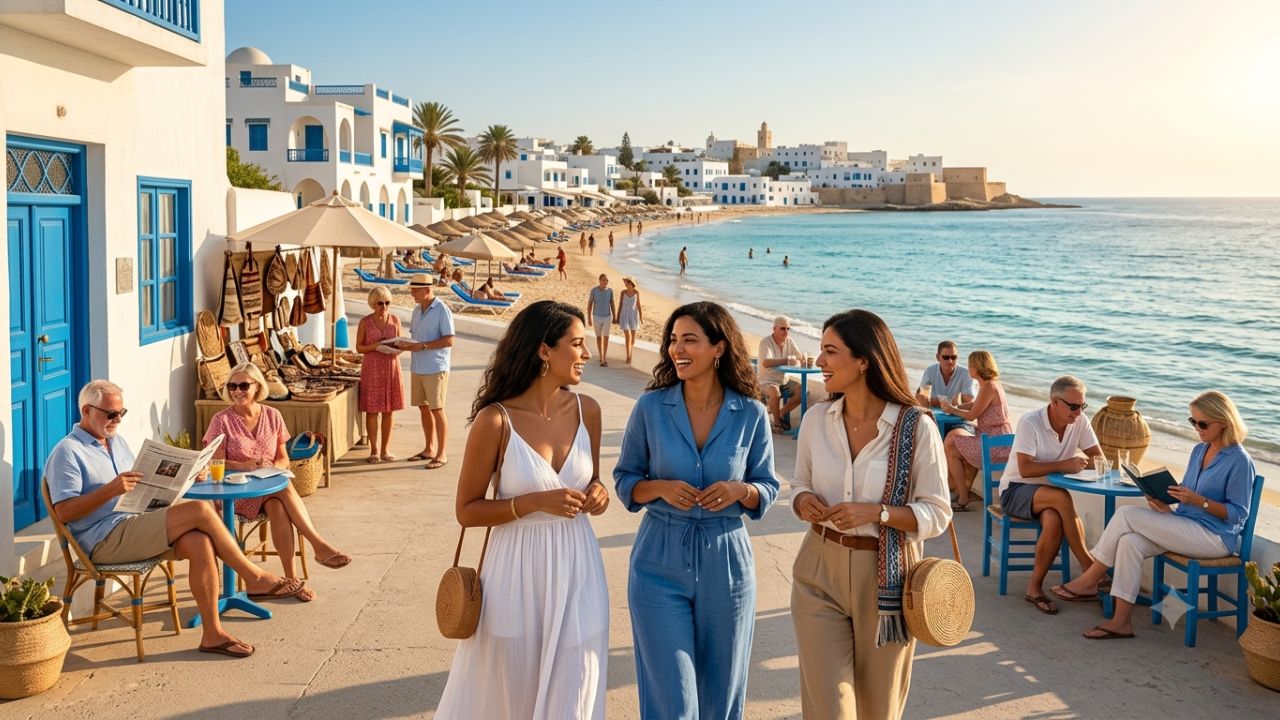
Tunisia generated TND 6.37 billion in tourism revenue through September 2026, buoyed by British and French visitor spending.
Buoyed by higher international visitor expenditures and an unprecedented surge in British holidaymakers, Tunisia’s tourism sector generated TND 6.37 billion (approximately $2.05 billion USD) in revenue through the first nine months of 2026, marking an annual expansion of 4.5%. Official data released by the Central Bank of Tunisia reveals that the North African nation accumulated an additional TND 272 million in foreign exchange receipts compared to the corresponding period in 2025. Crucially, this robust financial growth occurred alongside relatively stable arrival volumes, highlighting a decisive transition toward higher-yielding per-capita tourist spending across hotels, culinary establishments, internal transport, and cultural excursions.
The financial milestone coincides with a historic realignment in Tunisia’s overseas market hierarchy: the United Kingdom has officially overtaken France to become the country's single largest European source market. For decades following national independence, French holidaymakers formed the undisputed bedrock of Tunisia’s coastal hospitality economy. However, an expansion in British charter flight allocations, aggressive package offerings from UK tour operators, and traveler demand for high-value Mediterranean alternatives to southern Europe have catapulted British arrivals into the premier spot, reshaping destination dynamics from Hammamet to Djerba.
Strong Financial Trajectory: Central Bank Reports TND 6.37 Billion Inflows
The financial resilience of Tunisia’s visitor economy provides a critical macroeconomic anchor for national currency reserves and municipal employment. According to macroeconomic indicators compiled by the Central Bank of Tunisia (Banque Centrale de Tunisie), gross tourism receipts between 1 January and 30 September 2026 reached TND 6.37 billion, outperforming previous fiscal projections.
This revenue expansion is particularly significant given the broader regional economic climate:
- Direct Year-on-Year Gains: The influx represents an absolute increase of TND 272 million over the first nine months of 2025.
- Resilient Foreign Exchange: Tourism receipts remain one of Tunisia's foremost channels of hard currency inflows, helping offset external trade imbalances and servicing international sovereign debt commitments.
- Multiplier Effects: Tourism expenditures flow directly into regional supply chains, benefiting local farmers supplying coastal hotel buffets, transport cooperatives, artisanal medina craft workshops, and private excursion operators in the Saharan south.
| Performance Indicator | Official 2025 Metric | Official 2026 Performance (Jan–Sep) | Strategic Policy Implication |
|---|---|---|---|
| Gross Tourism Revenue | ~TND 6.10 billion (9-month baseline) | TND 6.37 billion (+TND 272 million) | 4.5% annual revenue increase driven by spending quality |
| Gross Inbound Arrivals | ~11.0 million full-year total | Stable through August; pacing toward 12M+ target | Growth driven by yield expansion rather than sheer footfall |
| Top European Source Market | France (historic #1 rank) | United Kingdom (new #1 market) | British package holidaymakers expand across coastal hubs |
| Second European Market | United Kingdom | France | French cultural and linguistic ties maintain deep resilience |
| Key Continental Partners | Germany, Poland, Italy | Poland and Germany | Strong charter demand from Central and Eastern Europe |
| Emerging Diversification Targets | GCC & Western Europe | China, Russia, and Belarus | Active negotiation of direct air routes and visa facilitations |
| Core Coastal Hubs | Hammamet, Sousse, Djerba | Hammamet, Sousse, Monastir, Djerba, Tunis | Upgraded resort infrastructure and extended shoulder seasons |
A Historic Demographic Realignment: UK Overtakes France in European Rankings
The ascendance of the United Kingdom to the apex of Tunisia’s source market rankings represents one of the most consequential shifts in contemporary Mediterranean tourism. Historically, shared colonial history, deep diaspora networks, and widespread Francophone fluency positioned France as Tunisia’s natural tourism patron.
However, throughout 2025 and 2026, several converging structural factors propelled British travelers to the forefront:
- Price-to-Quality Advantage Over Southern Europe: Amid sustained hotel price inflation and newly introduced tourist taxes across Spain, Greece, and Italy, British families and couples have sought Mediterranean warmth without excessive costs. Tunisia’s all-inclusive resort packages offer exceptional purchasing power parity for pound sterling (GBP) spenders.
- Charter and Low-Cost Airline Expansion: Tour operators like TUI and easyJet Holidays, alongside dedicated charter programs operating into Enfidha-Hammamet International Airport (NBE) and Djerba-Zarzis International Airport (DJE), have added substantial seat capacity from London Gatwick, Manchester, Birmingham, and regional UK gateways.
- Year-Round Beach and Cultural Allure: Beyond mid-summer sunbathing, British holidaymakers increasingly visit during shoulder months for golf in Port El Kantaoui, archaeological explorations at the Roman amphitheater of El Jem, and filming location pilgrimages across Tataouine.
Enduring French and Continental Foundations: Hammamet, Sousse, and Djerba
Despite yielding the top ranking to the UK, France remains a foundational pillar of Tunisia’s hospitality ecosystem, occupying a close and highly profitable second place. The affinity between the two nations is sustained by daily scheduled commercial air links from Paris-CDG, Paris-Orly, Lyon, and Marseille to Tunis-Carthage Airport.
French visitors continue to show pronounced loyalty to established coastal and heritage centers promoted by the Tunisian National Tourist Office (ONTT):
- Hammamet and Cap Bon: Renowned for luxury thalassotherapy wellness centers, citrus orchards, and broad sandy beaches.
- Sousse and Monastir: Famous for UNESCO-listed medinas, fortified ribats, and family-oriented beachside hotels.
- The Island of Djerba: A cultural sanctuary celebrated for traditional whitewashed menzel architecture, the historic El Ghriba Synagogue, and serene coastal resorts.
- Tunis, Carthage, and Sidi Bou Said: Urban and heritage travelers spending on boutique art hotels, Michelin-caliber North African gastronomy, and ancient Punic-Roman archaeological parks.
Concurrently, Poland and Germany continue to supply robust charter volumes. Polish travelers have emerged as one of the fastest-growing demographics across central Mediterranean beach properties, while German vacationers sustain high spending on wellness retreats, desert safaris in Tozeur, and cultural touring itineraries.
Visitor Volume vs. Yield: Decoupling Arrivals from Economic Receipts
A crucial finding in the latest Central Bank data is the deliberate divergence between physical visitor volumes and financial revenue growth. Ministry reports indicate that total passenger arrivals remained essentially flat through August 2026 compared to 2025 baselines. Yet, tourism revenue expanded by a healthy 4.5%.
This decoupling illustrates that international visitors are spending significantly more per stay. Several key factors explain the yield expansion:
- Hospitality Upgrades and Star-Rating Transitions: Major hotel renovations across Hammamet and Sousse have elevated three-star properties into premium four- and five-star establishments, commands higher average daily rates (ADR).
- Extended Stays and Shoulder Season Bookings: European retirees and remote professionals are extending their stays into autumn and winter to take advantage of mild North African climates, generating continuous local spending outside the summer rush.
- Ancillary Gastronomic and Cultural Spend: Independent travelers are increasingly venturing outside all-inclusive compounds to dine at local seafood restaurants, hire registered historical guides, and purchase high-end Tunisian olive oil, dates, and artisanal ceramics.
To build on this foundation, the Tunisian government has maintained its ambitious annual target of attracting more than 12 million visitors in 2026, up from approximately 11 million in 2025. Achieving this objective will require an active final quarter supported by festive holiday tourism, cultural festivals in the Sahara, and golf travel.
Expanding Horizon: Air Connectivity and Long-Haul Diversification
To insulate the national economy against localized European economic downturns, Tunisia's Ministry of Tourism and national flag carrier Tunisair are actively diversifying inbound source corridors into high-growth non-European markets.
Economic assessments highlighted by The World Bank underscore the strategic necessity of this diversification:
- China: Following bilateral discussions and relaxed visa entry frameworks for tour groups, Tunisia is promoting cultural circuits centered on Carthage, Kairouan, and desert landscapes to capture high-spending Chinese cultural travelers.
- Eastern Europe and Eurasia: Efforts to expand scheduled charter links with Russia and Belarus aim to recapture traditional holiday demand along the Djerba and Sousse resort strips.
- Regional Bilateral Connectivity: Expanded flight links with Algeria and Libya continue to provide essential cross-border regional overland arrivals, especially for private medical travel, summer recreation, and weekend shopping in Tunis.
Practical Travel Guide: Mediterranean Getaways Across Tunisia's Coastline
For international travelers planning an excursion to Tunisia in late 2026 and 2027, logistical planning ensures a seamless and memorable holiday experience:
- Entry and Visa Regulations: Citizens of the UK, EU member states, the United States, and Canada can enter Tunisia visa-free for stays of up to 90 days. Ensure your passport possesses at least six months of remaining validity from your scheduled date of entry.
- Currency and Financial Operations: The local currency is the Tunisian Dinar (TND). The Dinar is a closed currency, meaning it cannot be imported or exported legally. Travelers should withdraw dinars from local bank ATMs upon arrival or convert foreign cash (GBP, EUR, USD) at licensed exchange counters. Retain exchange receipts to convert leftover dinars back at the airport before departure.
- Seasonal Weather Patterns: Autumn (October to November) and spring (March to May) offer ideal temperatures ranging between 20°C and 26°C (68°F–79°F), ideal for exploring ancient Carthage, Sahara trekking, and outdoor dining without intense summer heat.
- Internal Transportation: The modern louage (shared intercity minibus) network offers rapid, inexpensive transit between major cities like Tunis, Sousse, and Kairouan. For coastal hops, passenger trains operated by SNCFT provide scenic coastal links connecting Tunis, Enfidha, Sousse, and Mahdia.
Frequently Asked Questions
What was Tunisia's tourism revenue through September 2026?
Tunisia accumulated TND 6.37 billion (approx. $2.05 billion USD) in tourism receipts during the first nine months of 2026, marking a 4.5% annual increase (+TND 272 million) compared to the same period in 2025.
Which country is currently Tunisia's leading European tourism market?
The United Kingdom has overtaken France to become Tunisia's top European source market in 2026, driven by competitive holiday pricing and expanded flight allocations.
What is Tunisia’s international visitor target for 2026?
Tunisian authorities are targeting more than 12 million international tourists in 2026, building upon the approximately 11 million arrivals recorded in 2025.
Why is tourism revenue growing faster than visitor arrival numbers?
Revenue growth is outpacing arrival numbers because international travelers are spending more per trip across upgraded premium accommodations, dining, extended shoulder-season stays, and regional cultural tours.
Related Travel Guides
Disclaimer
This article is for informational and educational purposes only. It does not constitute legal, financial, or professional advice. While we strive to provide accurate and up-to-date information, travel policies, regulations, and conditions change rapidly. Always verify information with official sources before making travel decisions. Nomad Lawyer makes no representations about the accuracy, reliability, completeness, or suitability of the information provided. Readers should consult qualified professionals for advice specific to their circumstances. The views expressed in this article are those of the author and do not necessarily reflect the views of Nomad Lawyer.
Kunal K Choudhary
Co-Founder & Contributor
A passionate traveller and tech enthusiast. Kunal contributes to the vision and growth of Nomad Lawyer, bringing fresh perspectives and driving the community forward.
Learn more about our team →