
Border Lines and City Breaks: Navigating Europe’s New Biometric Entry Rules Across Nine Historic Nations
As the European Entry/Exit System transforms external Schengen borders, discover how non-EU travelers can navigate biometric rules and plan multi-country rail journeys.

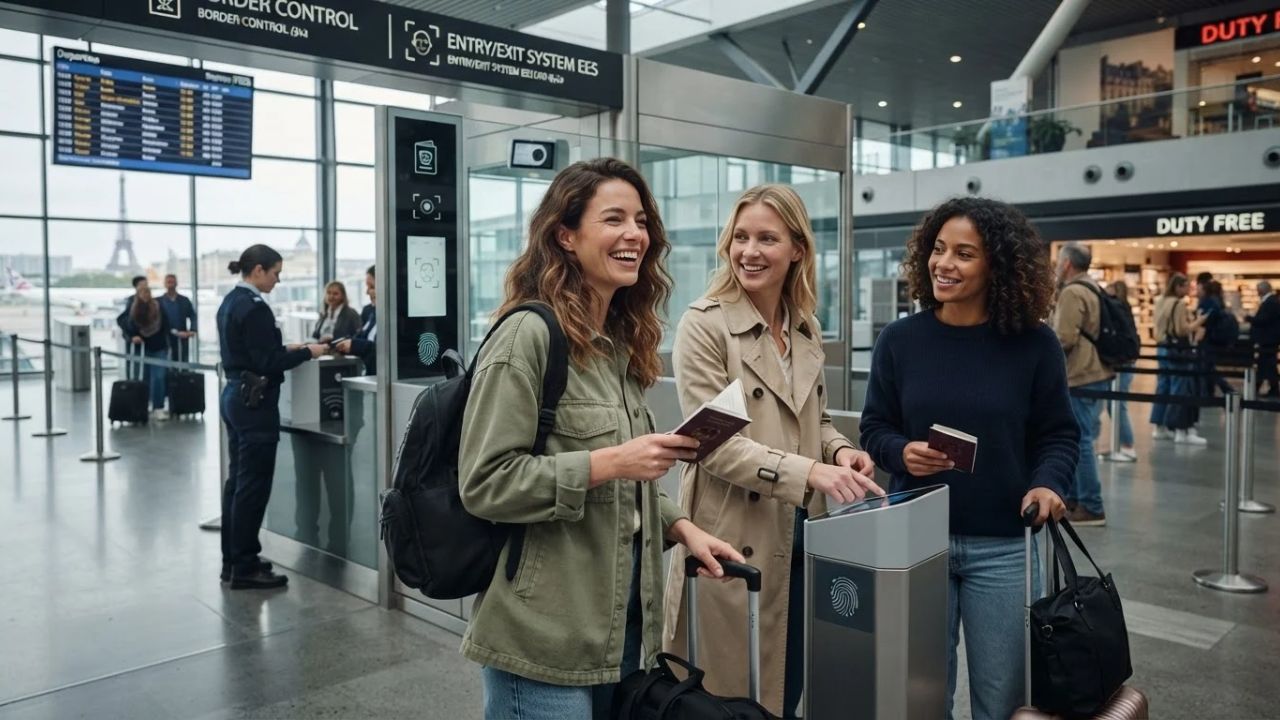
Image generated by AI
While millions of international visitors worry that Europe’s digital Entry/Exit System will mire their holidays in terminal bureaucracy, the surprising reality is that once your facial scan and fingerprints are logged at your initial port of arrival, external border checks vanish completely across nine sovereign nations spanning from the North Sea to the Mediterranean. Non-EU passport holders who complete border formalities upon landing in Paris, Rome, or Frankfurt can traverse Germany’s 497.5 million accommodation nights, hop across Belgium’s 46.14 million overnight stays, or cross from Swiss mountain passes down into Italian lake valleys without ever stepping through another passport control booth. The system replaces ink-stamped paper pages with digital files, logging biographical details, biometric markers, and precise entry and exit timestamps across the Schengen Area. With the European Commission confirming that the biometric architecture is fully operational while permitting temporary flexibility to manage exceptional airport congestion, savvy travelers who understand how to structure their arrival gateways can sidestep queues and unlock seamless cross-border travel.
The Biometric Shift: How the Entry/Exit System Operates Across Europe's Major Gateways
The roll-out of the European Union EES Portal represents the most significant overhaul of European frontier management in three decades. Rather than relying on border guards manually inspecting visa foils and applying physical ink stamps, the system digitally captures eligible non-EU travelers, recording four fingerprints, a high-resolution facial image, passport information, and exact dates of entry and departure. This architecture is designed to strengthen border security, curb unauthorized stays, and automate compliance monitoring under the standard Schengen allowance, which permits short-term visitors up to 90 days of travel within any rolling 180-day period.
Nine nations sit at the center of this transformation: France, Italy, Belgium, Germany, Portugal, the Netherlands, Greece, Malta, and Switzerland. These countries combine primary aviation hubs, high-capacity ferry ports, international rail terminals, and some of the world's most sought-after holiday destinations. Recent tourism metrics underscore the staggering scale of movement these border systems must process. According to national agency Atout France, France welcomed 102 million international tourists in 2025, expanding from 100 million in 2024, with foreign travelers generating approximately 743 million tourist nights across commercial and non-commercial lodgings. Italy’s national statistics bureau, Istat, recorded 458.4 million nights spent in tourist accommodations in 2024, marking a 2.5% rise above its previous record set in 2023.
Meanwhile, Germany registered 497.5 million guest overnight stays in 2025 according to Destatis, edging 0.3% above its 2024 record, with domestic travelers accounting for 413.7 million nights while foreign guest nights dipped slightly. In Belgium, Statbel documented 46,136,112 accommodation nights in 2025, up 2.9% over 2024, with non-residents generating over 22.4 million nights and United States visitors contributing about 1.12 million overnight stays. Portugal recorded 29.0 million non-resident arrivals in 2024 through Statistics Portugal, with Tourism of Portugal reporting 32.5 million total guests in 2025, including 19.7 million foreign travelers. In the Netherlands, Statistics Netherlands tracked 22.3 million international guests in 2025—a 5% climb from 2024 that completed an extraordinary five-year rebound from 6.25 million foreign visitors in 2021, 16.58 million in 2022, 20.30 million in 2023, and 21.31 million in 2024, pushing total guests to 52.2 million.
Southern and Alpine nations mirror this intense demand. Greece recorded 37.98 million inbound travelers in 2025 under provisional Bank of Greece data that excludes cruise arrivals, rising 5.6% from 35.95 million in 2024. Malta experienced one of the most explosive recoveries in Mediterranean history: inbound arrivals surged from roughly 968,000 in 2021 to 2.287 million in 2022, 2.976 million in 2023, 3.564 million in 2024, and 4.022 million in 2025, reflecting a 12.9% annual jump. Maltese tourist nights reached 25.4 million, generating about €3.904 billion in total tourism expenditure at an average of €971 per traveler. Even non-EU participant Switzerland saw inbound demand expand 19.2% in 2023 to hit historic highs after commercial overnight tourists climbed from 4.39 million in 2021 to 9.16 million in 2022, with Germany generating 22%, the United States 13%, and Great Britain 9% of foreign demand. European authorities emphasize that while border posts retain operational leeway to suspend fingerprint capture during moments of severe terminal crowding, the biometric system is permanent and active.
What Makes Multi-Country European Travel Different in the Digital Era
The profound advantage of European travel has always been geographic density—the ability to breakfast on Parisian pastries, lunch beside a Flemish canal, and dine on Dutch cheese within a single daylight journey. Under digital border rules, this fluidity remains intact once you pass the initial external perimeter. A non-EU traveler landing at Paris Charles de Gaulle completes biometric scanning at immigration. Once stamped into the central database, boarding a Thalys or Eurostar train toward Brussels, Antwerp, Rotterdam, or Amsterdam involves zero border checkpoints.
This freedom allows travelers to build multi-country itineraries that weave between world-famous capitals and serene regional corridors. In France, visitors can spend three nights exploring Paris from bases in Le Marais, Saint-Germain, or the Latin Quarter, take a morning excursion to Versailles, and then take high-speed TGV rail south to Lyon for one night, Avignon for one night, and Nice on the French Riviera for two nights, with options to extend into Normandy, the Loire Valley, Bordeaux, Provence, or the French Alps.
In Italy, high-speed rail lines unite major art cities into an effortless ten-day journey: three nights in Rome exploring the Colosseum, Roman Forum, Pantheon, and Vatican Museums, two nights in Florence admiring the Uffizi and Duomo, an overnight in Bologna's arcade-lined historic core, two nights wandering Venice from St Mark's Square to quiet Cannaregio waterways, and two nights in Milan or along the Amalfi Coast. Longer explorations easily reach Naples, Sicily, or Sardinia.
Belgium offers one of the most efficient short-break circuits on the continent. Travelers can base themselves in Brussels for two nights to experience the Grand-Place and Royal Quarter, spend a night in canal-lined Bruges, another in vibrant Ghent, and conclude with an overnight in Antwerp to experience its diamond district and design studios, or head south to Dinant and the forested Ardennes. In Portugal, a nine-day itinerary can combine three nights in Lisbon exploring Alfama, Belém, and Baixa with a day trip to Sintra's romantic palaces, followed by two nights in Porto, one in the Douro Valley wine terraces, and three nights enjoying the sunlit sandstone sea cliffs of the Algarve, with adventurous travelers extending onward to Madeira or the volcanic Azores.
Switzerland proves that rail travel can be an art form. Visitors can spend eight days tracing clear alpine waters and jagged peaks: one night in Zurich, two in Lucerne, three in Interlaken beneath the Jungfrau massif, and two in Zermatt beneath the iconic pyramid of the Matterhorn. In Greece, travelers can spend three nights in Athens exploring the Acropolis, Acropolis Museum, Plaka, and Ancient Agora before boarding Aegean ferries for three nights on Naxos, two on Santorini, and two on Crete. Malta packs millennia of history into a compact seven-day plan: three nights in fortified Valletta, two on rural Gozo, and two along coastal Sliema or St Julian's, with day visits to silent Mdina, the Three Cities, and the turquoise waters of Comino.
Visitor Insider Tips: Gateway Selection, Regional Gastronomy, and Transit Hacks
Mastering multi-country travel during the biometric rollout requires practical foresight and insider knowledge of regional transit connections.
- Build Generous Arrival Buffers: If your transatlantic or long-haul flight touches down at high-volume hubs like Paris, Rome Fiumicino, Frankfurt, Amsterdam Schiphol, or Lisbon, avoid scheduling separate onward flight or ferry departures with less than three hours of connection time. The French Interior Ministry has deployed pre-registration digital kiosks to accelerate border processing, but peak arrival waves still create queues.
- Strategically Select Your External Gateway: For multi-nation journeys, enter Europe through airports with extensive automated e-gate infrastructure, such as Brussels or Paris, and use international rail lines to cross internal borders. Once inside the Schengen Area, trains between France, Belgium, Germany, Switzerland, and the Netherlands do not stop for immigration checks.
- Anchor Your Route Around Authentic Regional Gastronomy: Food is the cultural soul of European exploration. In Rome, order cacio e pepe, carbonara, and amatriciana in neighborhood trattorias, seek out authentic pizza in Naples, and savor fresh cannoli, arancini, and seafood in Sicily. In France, look for crisp morning croissants, savory galettes, bouillabaisse along the Mediterranean, and ratatouille in Provence. Belgium calls for steaming pots of mussels, double-fried frites, artisan chocolate, and Trappist beers. In Portugal, feast on salted bacalhau, grilled sardines, caldo verde, and warm pastel de nata. Malta offers savory pastizzi pastries, rich rabbit stews, and crusty ftira bread, while Greece excels in classic moussaka, souvlaki, and island cheeses. In Germany, enjoy soft pretzels, bratwurst, schnitzel, and hearty potato dumplings, while Switzerland rewards travelers with bubbling pots of Gruyère fondue, crispy potato rösti, and artisan chocolate.
- Position Bases Near Rail Terminals Rather Than Old Town Centers: While historic downtown hotels offer charm, dragging wheeled luggage across centuries-old cobblestones in hilly Porto, Venice, or Montmartre is exhausting. In Amsterdam, consider lodging around Sloterdijk or Amsterdam Zuid for rapid rail transfers; in Munich, select properties near the Hauptbahnhof; and in Brussels, stay within walking distance of Gare Centrale.
- Track Your Rolling 90-Day Clock: Because digital EES replaces illegible physical passport stamps with an automated central log, border officers can see your exact accumulated days in the Schengen Area instantly. Calculate your 90/180-day allowance before booking extended trips that touch non-EU neighbors.
Cultural and Environmental Context: Balancing Overtourism and Heritage Preservation
The unprecedented wave of international arrivals—highlighted by Malta welcoming over four million visitors to an archipelago of just 316 square kilometers and France hosting 102 million foreign travelers—has intensified urgent conversations about sustainable tourism and municipal preservation across Europe. Historic centers built for horse carts and merchant barges now absorb thousands of visitors every hour, placing immense pressure on municipal waste systems, freshwater networks, and local residential housing.
In response, regional authorities are implementing innovative heritage protections that travelers should respect. Several historic centers, fortifications, and marine habitats across these nine nations enjoy formal recognition through the UNESCO World Heritage Centre. Cities like Venice, Amsterdam, and Bruges have introduced strict limitations on tourist coaches, banned new hotel developments in central cores, and created access charges or capacity caps for day-trippers. In Dutch cities like Utrecht and The Hague, municipal urban design prioritizes bicycle paths and electric tram corridors, discouraging private automobile rentals and preserving clean air.
Travelers hold significant power to protect the living communities they visit. By shifting travel to the shoulder months of April, May, September, and October, visitors enjoy mild weather and avoid peak summer crowding in places like Santorini, Florence, and the Amalfi Coast. Opting for state-of-the-art electric rail networks instead of short-haul domestic flights dramatically lowers the carbon footprint of your holiday while supporting local economies in intermediate stops like Lyon, Bologna, and Ghent. Choosing family-run pensions and eating at neighborhood markets ensures that tourism revenue directly benefits local residents who keep these historic traditions alive.
FAQ: Navigating Europe's EES Border Rules in 2026
What biometric data is collected when entering Europe under EES? Eligible non-EU travelers provide four fingerprints and a facial biometric scan, alongside standard passport details. The digital record replaces physical ink stamps and tracks entry and exit timestamps across the Schengen Area.
Do travelers undergo biometric checks when crossing between Schengen countries? No. Biometric collection occurs exclusively at your initial external Schengen border crossing. Once inside, rail, road, and domestic flights between member countries do not require recurring EES biometric registrations.
How much layover time should I allow at my first European arrival airport? Travelers should maintain at least a three-hour connection buffer after landing from outside Europe to clear biometric kiosks, standard passport control, and luggage transfers without missing connecting flights or trains.
How does the digital border system enforce the 90/180-day tourist limit? The automated database calculates the exact number of days spent inside the Schengen Area across every rolling 180-day window, immediately identifying overstays upon departure without relying on manual passport stamp inspections.
When you look beyond the digital gates, Europe’s true luxury remains unchanged: the simple magic of boarding a morning train and stepping off into an entirely new world.
Related Travel Guides
Disclaimer
This article is for informational and educational purposes only. It does not constitute legal, financial, or professional advice. While we strive to provide accurate and up-to-date information, travel policies, regulations, and conditions change rapidly. Always verify information with official sources before making travel decisions. Nomad Lawyer makes no representations about the accuracy, reliability, completeness, or suitability of the information provided. Readers should consult qualified professionals for advice specific to their circumstances. The views expressed in this article are those of the author and do not necessarily reflect the views of Nomad Lawyer.
Raushan Kumar
Founder & Lead Developer
Full-stack developer with 11+ years of experience and a passionate traveller. Raushan built Nomad Lawyer from the ground up with a vision to create the best travel and law experience on the web.
Learn more about our team →