Europe's Historic Cities Rethink Tourism Growth Through Visitor Value, Biometric Borders, and Urban Resilience: 2026 Strategic Analysis

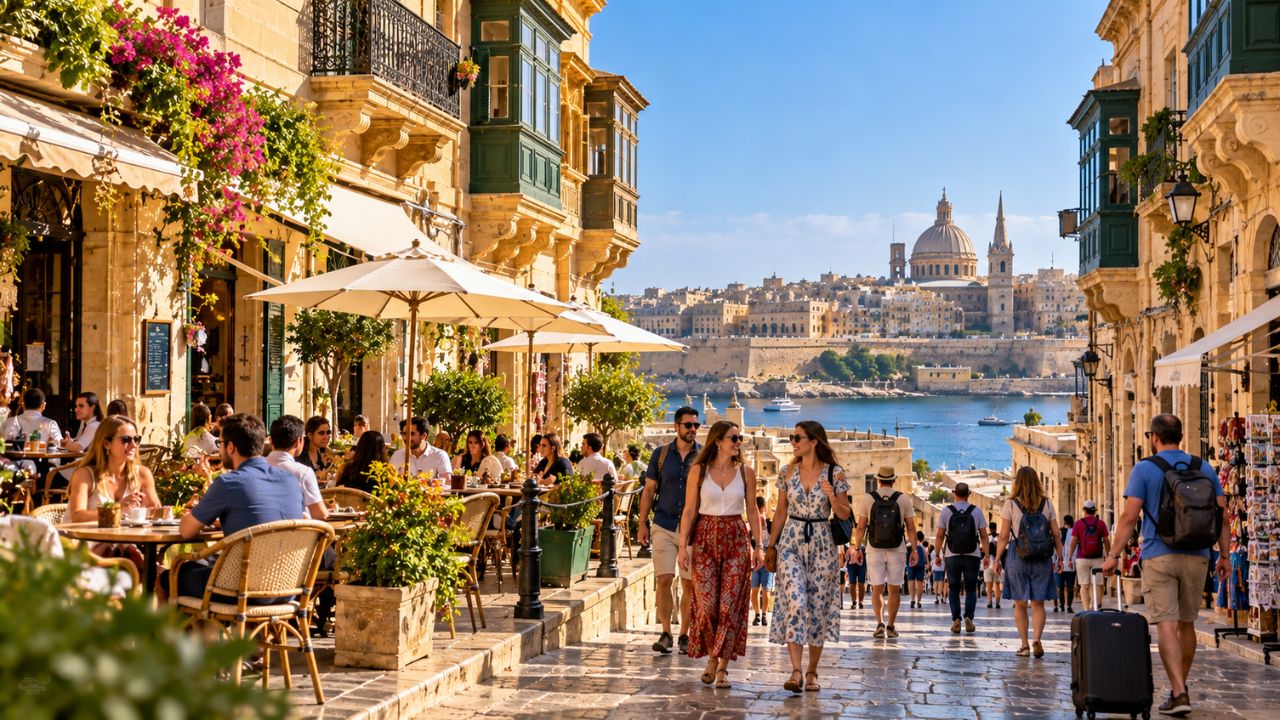
European historic capitals from Valletta to Barcelona are deploying yield-focused tourism policies and biometric border infrastructure in 2026.
Faced with sluggish macroeconomic growth across the single market alongside an anticipated surge toward 1.14 billion continental arrivals by 2036, Europe’s historic capitals and coastal gateways are orchestrating a sweeping structural pivot from volume-driven overtourism to yield-optimized visitor value and urban resilience. While traditional manufacturing and industrial production grapple with elevated energy tariffs and subdued consumer sentiment—restricting broader European gross domestic product (GDP) growth to approximately 1.1%—the continent’s international travel and hospitality economy is expanding at an assertive 3.1% per annum. This counter-cyclical momentum is prompting municipal leaders from Valletta and Barcelona to Venice and Edinburgh to implement hard carrying capacity thresholds, legally ring-fenced visitor surcharges, and cutting-edge biometric border architecture.
Rather than measuring destination success through raw passenger headcounts that overload municipal sanitation and displace residential quarters, European destinations are converting physical carrying constraints into high-margin economic productivity. By insulating historic urban cores from seasonal exhaustion, expanding high-yield long-haul air links across the Americas and Asia-Pacific, and operationalizing the European Union’s landmark Entry/Exit System (EES), municipal and national authorities are building an integrated blueprint for twenty-first-century tourism governance.
Macroeconomic Decoupling: How the Visitor Economy Shields Southern Europe
The divergence between broader European economic metrics and the travel sector reveals how deeply international hospitality has evolved into an indispensable fiscal ballast. While core manufacturing powerhouses in northern and central Europe experience industrial stagnation, Southern European and Mediterranean economies have leveraged travel inflows to stabilize municipal employment, balance national current accounts, and underwrite costly heritage conservation budgets.
In Valletta, Malta, the travel and visitor economy generates an estimated $4.9 billion USD in total economic impact, representing approximately 16.9% of national GDP and directly sustaining one in every five jobs across the archipelago. Recognizing the physical limitations of its fortified baroque capital, Malta has consciously phased out unmanaged low-cost mass charter flows in favor of high-value maritime assets, luxury boutique accommodations in historic palazzos, and world-class cultural events. This strategy shields the island's urban fabric while maximizing visitor expenditure per square kilometer.
A parallel evolution is underway across Spain’s premier metropolitan and insular hubs. In Barcelona and Palma de Mallorca, tourism boards have established an ambitious 5.8% annual target for international spending growth, intentionally decoupled from net passenger arrival counts. Rather than allowing unrestrained footfall to strain public transport and water networks, regional governments deploy progressive fiscal levies. Barcelona’s municipal surcharge, layered over Catalonia’s Impost sobre Estades en Allotjaments Turístics (IEET), operates alongside the Balearic Islands’ Sustainable Tourism Tax (ITS) to ring-fence hundreds of millions of euros specifically for municipal sanitation, social housing mitigation, and environmental remediation.
| Destination City / Region | Baseline National GDP Growth (%) | Travel Sector Growth (%) | Core Economic & Leisure Driver | Ring-Fenced Municipal Mechanism |
|---|---|---|---|---|
| Valletta (Malta) | 1.3% | 3.8% | High-value cultural, maritime, & luxury assets | National Heritage Preservation & Eco-Contribution |
| Barcelona (Spain) | 1.2% | 5.8% (spend target) | Cultural corridors & premium retail spending | Surcharge layered on Catalan Tourism Tax (IEET) |
| Palma de Mallorca (Spain) | 1.1% | 5.4% | Luxury coastal hospitality & extended shoulder stays | Balearic Sustainable Tourism Tax (ITS) |
| Venice (Italy) | 0.9% | 3.6% | Extended luxury hotel stays & cultural patronage | Contributo di Accesso & Imposta di Soggiorno |
| Dubrovnik (Croatia) | 1.4% | 4.1% | High-spending nautical itineraries & cultural heritage | Cruise Berthing Caps & Heritage Concession Levies |
| Frankfurt (Germany) | 0.8% | 4.2% | Corporate MICE, international trade expos, green rail | Municipal Tourism Tax & Sustainable Mobility Funds |
| Milan (Italy) | 1.0% | 4.3% | Global fashion showcases & corporate conferences | Imposta di Soggiorno reinvested into urban transit |
Managing Urban Carrying Capacity: Venice, Dubrovnik, and Edinburgh Lead the Shift
Across Europe’s most sensitive UNESCO World Heritage centers, local governments have moved beyond passive observation to enforce strict daily carrying capacities supported by automated fee mechanisms.
Venice: The Day-Tripper Access Fee Model
Following its 2026 peak-season rollout across 60 high-demand spring and summer dates, the City of Venice deployed its Contributo di Accesso (Access Fee) to actively filter low-yield excursionists. Day visitors entering the historic lagoon city must pay a €5 advance reservation fee or a €10 late registration penalty, while overnight hotel guests remain exempt on account of paying the standard municipal accommodation tax (Imposta di Soggiorno). Municipal audits reveal that dampening hyper-concentrated day-tripper surges creates vital physical breathing room for extended-stay international travelers whose expenditures directly sustain local glassmakers, gondoliers, and traditional bacari dining establishments.
Dubrovnik: Cruise Caps Under "Respect the City"
Along the Adriatic coast, the City of Dubrovnik’s celebrated "Respect the City" initiative—developed in direct collaboration with the Cruise Lines International Association (CLIA)—enforces a rigid statutory ceiling of no more than two cruise ships berthed simultaneously, capping concurrent cruise passenger presence within the walled Old Town at 4,000 visitors. By smoothing passenger disembarkation schedules across morning and afternoon waves, Dubrovnik has resolved pedestrian gridlock while driving record revenues across local museums, guided walking tours, and Dalmatian gastronomy.
Edinburgh: Scotland’s Landmark 5% Visitor Levy Scheme
In the United Kingdom, the City of Edinburgh Council made history by finalizing Scotland’s inaugural statutory visitor tax under the Visitor Levy (Scotland) Act 2024, scheduled for formal implementation in July 2026. The framework establishes a 5% flat charge on paid overnight accommodations, capped at seven consecutive nights, and is projected to generate £45 million to £50 million annually by 2028/29.
Critically, Edinburgh’s legislative framework mandates transparent, statutory ring-fencing:
- Affordable Housing Borrowing: Levy revenues underpin approximately £70 million in municipal borrowing to construct social and key-worker housing, directly mitigating the community displacement often caused by short-term holiday lets.
- City Operations (55%): Dedicated to street cleansing, historic park maintenance, and public restroom upgrades.
- Culture and Major Festivals (35%): Underwrites the sustainability of the Edinburgh International Festival and the Fringe.
- Destination Management (10%): Deployed for strategic tourism dispersal and sustainable transport links.
In Portugal, the municipality of Oporto modernized its Taxa Municipal de Turism to €3.00 per overnight stay across commercial hotels and short-term rentals, generating €32.3 million in 2025 across more than 10.8 million taxed nights to finance historic building rehabilitation and neighborhood social support.
Eliminating Border Friction: Biometric EES, ETIAS, and Digital Schengen Visas
While traveler appetite for European exploration remains strong, obsolete border controls and prolonged visa processing backlogs have historically threatened to divert lucrative long-haul travelers toward competing global hubs in the Middle East and Asia. Recent European Commission data indicated that out of roughly 10.3 million uniform Schengen visas issued globally, only 5.3 million permitted multiple entries (a 51.7% share, down significantly from pre-pandemic levels of 8.8 million). Frequent business travelers and high-spending vacationers from fast-growing outbound markets—such as India, Southeast Asia, and the Gulf—frequently encountered appointment shortages and weeks of processing delay.
To dismantle these structural bottlenecks, the European Union is executing a comprehensive digital border transformation orchestrated by the European Union Agency for the Operational Management of Large-Scale IT Systems (eu-LISA):
| Border Management Platform | Governing European Mandate | Target Demographic | Biometric Data Captured | Operational Status & Rollout Timeline |
|---|---|---|---|---|
| Entry/Exit System (EES) | Regulation (EU) 2017/2226 | All non-EU short-stay arrivals (visa-required & visa-exempt) | Four digital fingerprints & live facial biometric scan | Initial rollout launched 12 Oct 2025; fully operational across all external Schengen borders on 10 April 2026 |
| European Travel Information and Authorisation System (ETIAS) | Regulation (EU) 2018/1240 | Nationals of 60+ visa-exempt third countries (US, UK, Canada, Australia) | Digital facial profile via passport upload; zero in-person biometric visits | Pre-launch testing phase; deployment scheduled following EES baseline stabilization |
| EU Visa Application Platform (EU VAP) | Regulation (EU) 2023/2667 | All third-country nationals requiring short-stay Schengen visas | Centralized biometric record reused; consular visits needed only once every 59 months | Phased member-state migration targeting full operational launch by 2028 with 7-year transition |
| Automated Border Control (ABC) e-Gates | Member State Border Directives | Third-country passport holders and registered frequent travelers | 1:1 biometric facial comparison against stored cryptographic chip | Expanded across Tier-1 gateways (Frankfurt, Brussels, Paris-CDG, London Heathrow Eurostar) |
At primary air transport gateways such as Frankfurt Airport (FRA) and Brussels Airport (BRU), border police have deployed extensive banks of interactive self-service biometric pre-registration kiosks ahead of immigration lines. Arriving non-EU passengers scan passports, complete security declarations, and capture live biometric data at kiosks in under 90 seconds, reducing subsequent face-to-face booth interactions with border officers to rapid credential verification. At Paris-Charles de Gaulle (CDG) and London Heathrow (LHR)—the latter facilitating high-volume Schengen passenger flows via Eurostar juxtaposed border controls—co-located digital architecture ensures travelers are verified securely before boarding trains or connecting flights.
Furthermore, under the EU Visa Application Platform (Regulation EU 2023/2667), adhesive physical visa stickers are being systematically replaced by cryptographically verified 2D digital barcodes, allowing travelers to complete applications, pay statutory fees, and receive approvals entirely online. Combined with the European Union’s modernized "cascade" visa regime for Indian nationals (granting verified travelers two-year multi-entry visas followed by five-year issuances), European destinations are rapidly unlocking high-yield Asian outbound travel markets.
Yield Arbitrage: Capitalizing on Long-Haul Corridors and Secondary Gateways
To insulate local tourism economies from fluctuating domestic purchasing power within Europe, national destination marketing organizations and international airline groups are channeling capital into high-yield long-haul corridors. The macroeconomic rationale hinges on yield arbitrage: independent research from the European Travel Commission (ETC) confirms that the average long-haul inbound traveler from North America, Japan, Australia, or the GCC spends more than three times more per trip than an intra-European short-haul vacationer.
Key developments in long-haul network expansion include:
- Transatlantic PRASK Records: Direct air corridors originating in major North American commercial hubs—including New York (JFK/EWR), Chicago (ORD), and Toronto (YYZ)—have posted record Passenger Revenue per Available Seat Kilometer (PRASK).
- Bypassing Congested Mega-Hubs: Rather than channeling all traffic through saturated airspace in London Heathrow or Paris-CDG, long-range narrow-body aircraft (such as the Airbus A321XLR) and efficient wide-bodies increasingly route passengers directly into secondary European gateways, including Munich, Zurich, Copenhagen, and Dublin.
- Asia-Pacific Connectivity: Expanded direct frequencies linking Tokyo Haneda, Tokyo Narita, and Singapore Changi to Central Europe have driven sustained luxury shopping, Michelin-starred culinary tourism, and extended cultural stays across southern Germany, Switzerland, and the Alpine regions.
Technological Transformation: AI Empowerment and Workforce Corridors
Realizing this high-yield, sustainable model requires addressing structural labor deficits across the European hospitality industry. Aging demographics and post-pandemic employment shifts have prompted policymakers to deploy innovative solutions across vocational education and enterprise artificial intelligence:
- Cross-Border Dual Apprenticeships: Educational authorities in Vienna, Madrid, and Dublin have partnered with hotel federations to build dual-track vocational programs. Certified under the European Qualifications Framework, these programs allow hospitality personnel to complete seasonal winter rotations in the Austrian Alps and summer coastal rotations across Spain or Greece without administrative friction.
- AI Adoption for Independent SMEs: Because small and medium enterprises (SMEs) constitute over 90% of the European tourism ecosystem, regional development agencies in Athens and Lisbon are providing digital innovation grants. Independent boutique hotels and family-owned trattorias are deploying enterprise-grade AI tools for real-time dynamic pricing, multilingual 24/7 guest communication in Mandarin, Japanese, and Arabic, and predictive kitchen supply-chain logistics that minimize food waste amid inflationary agricultural pressures.
Frequently Asked Questions
Why are European cities shifting from visitor volume to visitor yield?
European cities are moving away from raw visitor headcounts because unmanaged mass tourism exhausts civic infrastructure, crowds historic cores, and strains municipal services, whereas high-yield travelers stay longer and generate greater economic value for local communities.
What is the European Entry/Exit System (EES) and when did it launch?
The Entry/Exit System (Regulation EU 2017/2226) is an automated IT border platform that captures fingerprints and facial scans for non-EU travelers. Following its initial rollout on 12 October 2025, it became fully operational across all Schengen external border crossing points on 10 April 2026.
How does the City of Edinburgh allocate its 5% visitor levy revenue?
Edinburgh’s visitor levy ring-fences revenues to support approximately £70 million in municipal affordable housing borrowing, with net revenues distributed across city operations (55%), culture and major festivals (35%), and destination management (10%).
How does Venice’s Contributo di Accesso affect travelers?
Venice charges day-trippers €5 for advance reservations or €10 for late bookings on 60 peak spring and summer dates, with proceeds ring-fenced for canal maintenance and sanitation. Overnight hotel guests are exempt from the day fee as they already pay the standard accommodation tax.
Related Travel Guides
This article is for informational purposes. Flight routes, passenger regulations, visa rules, and transit advisories are subject to change by airlines and aviation authorities. Readers are advised to verify schedules and travel documentation with relevant carriers and border agencies before departure.
Related Stories

Global Gastronomic Tourism Sector Forecast to Surge to $143 Billion by 2032: Asian Flavors, Wellness, and Sustainable Food Systems

The Twin Engines of American Flight: How Georgia and Texas Power the FAA's 45,000-Flight Daily Airspace Network