Glasgow and European Scenic Routes Face Severe Rail Disruptions as Back-to-Back Autumn Storms Batter Fragile Corridors

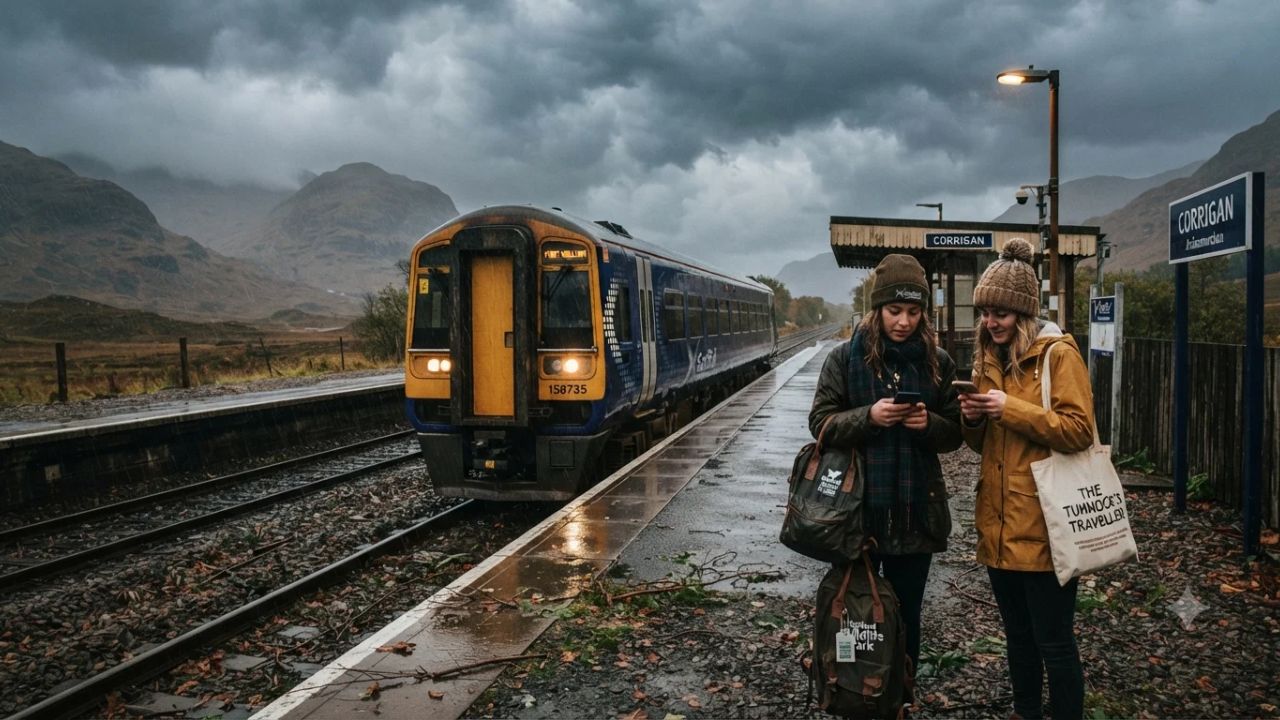
A cascading weather crisis across Western and Central Europe is paralyzing iconic scenic railway corridors, leaving thousands of shoulder-season holidaymakers stranded as back-to-back autumnal depressions overwhelm vulnerable mountain tracks, coastal causeways, and maritime connections. From Glasgow's Highland rail gateways to the Swiss Alpine transit passes and Mediterranean sea-facing lines, rail operators are executing preemptive safety shutdowns against 80 mph gales, flash mudslides, and tidal surges, exposing severe bottlenecks in rural emergency transport and shifting unprecedented financial liabilities onto independent travelers.
The disruption arrives at a pivotal moment for continental tourism. Driven by recurring summer heatwaves and wildfire threats in Southern Europe, millions of leisure travelers have reallocated their holidays to autumn and spring. However, this growing wave of shoulder-season travel is colliding with intensifying atmospheric instability, revealing that Europe’s historic rail infrastructure remains acutely vulnerable to multi-system weather shocks.
The Demographic Shift: Escaping Summer Heatwaves for Autumn Rails
A fundamental restructuring of European leisure travel has unfolded over recent seasons. Historically, continental tourism exhibited extreme peak-season concentration. Official data from Eurostat reveals that peak summer months (July and August) traditionally accounted for 31.1% of all overnight tourist stays across the European Union. In Mediterranean hotspots, this dependency was even more pronounced: July and August represented 54.5% of annual stays in Croatia, 43.4% in Bulgaria, and 41.6% in Greece.
       SUMMER HEATWAVE TO AUTUMN SHIFT: TRAVEL PATTERNS
┌─────────────────────────────────────────────────────────────┐
│ Summer Peak (July-Aug): 31.1% of all EU overnight stays     │
│   ├─ Croatia Summer Reliance: 54.5% of annual nights        │
│   ├─ Bulgaria Summer Reliance: 43.4% of annual nights       │
│   └─ Greece Summer Reliance:   41.6% of annual nights       │
├─────────────────────────────────────────────────────────────┤
│ Consumer Reallocation (ETC Data):                           │
│   ├─ 73% of European travelers actively plan Oct-Mar trips  │
│   ├─ 43% consciously avoid mid-summer thermal distress      │
│   └─ Senior Travelers (65+): Account for 28% of Sept stays  │
└─────────────────────────────────────────────────────────────┘
However, back-to-back summers marked by severe thermal stress, widespread wildfires, and prolonged droughts across Spain, Italy, and Greece have triggered a major consumer pivot. According to market research from the European Travel Commission (ETC), 73% of European travelers now actively plan journeys between October and March, while 43% intentionally design their itineraries to avoid mid-summer overcrowding and high temperatures.
This demand shift is particularly pronounced among older travelers. Tourists aged 65 and over generate 22% of total annual EU tourism nights, but account for 28% of all stays in September and 27% in June. These travelers strongly favor scenic rail journeys, cooler cultural capitals, and quiet rural heritage routes—the exact transit corridors facing the highest operational exposure to autumnal atmospheric storms.
Anatomy of Multi-System Atmospheric Shockwaves Across Continental Corridors
The primary threat to autumn scenic rail travel does not arise from single isolated storm fronts, but from "back-to-back" weather depressions. Successive atmospheric systems strike vulnerable corridors before saturated landforms and drainage systems can recover from initial rainfall and wind loads.
In Northern Europe, Scottish gateway cities like Glasgow and Inverness serve as launchpads for scenic Highland routes. Deep Atlantic depressions routinely deliver sustained gales exceeding 80 mph (128 km/h) and torrential rainfall. When these gale-force winds collide with steep mountain terrain, automated safety systems trigger line closures to protect overhead line equipment from flying debris and falling timber. Iconic routes—including the West Highland Line connecting Glasgow to Fort William and Mallaig, and the Far North Line to Wick and Thurso—suffer repeated blockages from trackbed washouts and fallen trees.
As these Atlantic depressions track southeastward across Western Europe, their moisture-laden air masses collide with Alpine topography, creating atmospheric rivers. Mountain catchments around Innsbruck in Austria and Lucerne and Interlaken in Switzerland receive intense, localized downpours. Saturated slopes trigger flash mudslides, rockfalls, and debris flows that swamp tracks and bridges, severing key scenic arteries like the Arlberg Railway and the GoldenPass Express.
Simultaneously, the southern periphery of these multi-system storms unleashes gale-force winds and violent storm surges across Mediterranean coastal routes. Coastal tracks linking Nice, Genoa, and Venice suffer ballast erosion from heavy wave action. In the Venetian Lagoon, tidal crests crossing 110 cm trigger high-water protocols, interrupting rail access to Venice Santa Lucia terminal station.
Economic Damage Across Rural and Rail-Dependent Valleys
When rail links are severed by severe weather, rural destinations face immediate and compounding economic consequences. Unlike diversified metropolitan centers, scenic Alpine valleys, Highland villages, and island archipelagos rely almost exclusively on single railway arteries or integrated rail-ferry connections.
A 24- to 48-hour rail closure cuts off incoming visitor flows while leaving departing guests stranded, triggering immediate room cancellations, refunded excursion bookings, and lost food and beverage sales. Independent hotels, family-run guesthouses, and local guiding companies bear the brunt of these disruptions.
       CASCADING MULTI-MODAL DISRUPTION SEQUENCE
┌────────────────────────────────────────────────────────┐
│  Atlantic Gale / Alpine Atmospheric River (>80 mph)    │
└───────────────────────────┬────────────────────────────┘
                            ▼
┌────────────────────────────────────────────────────────┐
│  Preemptive Rail Line Shutdowns & Blanket Speed Holds  │
│  (Fallen Trees, Catenary Sway, Saturated Embankments)   │
└───────────────────────────┬────────────────────────────┘
                            ▼
┌────────────────────────────────────────────────────────┐
│  Severed Feeder Links to Maritime & Coastal Terminals   │
│  (CalMac Ferries in Oban/Mallaig, Catamarans in Split) │
└───────────────────────────┬────────────────────────────┘
                            ▼
┌────────────────────────────────────────────────────────┐
│  Train-to-Bus Bottlenecks: 1 Train = 8-12 Road Coaches │
│  (Narrow Mountain Roads Flooded; Detours Add 200-400%) │
└───────────────────────────┬────────────────────────────┘
                            ▼
┌────────────────────────────────────────────────────────┐
│  Isolated Rural Communities & Stranded Holidaymakers   │
│  (€45k–€150k Daily Revenue Drop per Affected Valley)   │
└────────────────────────────────────────────────────────┘
Regional transport evaluations indicate that severe autumn weather imposes major operational costs. On the Wales and Borders network alone, 25 named storms between February 2023 and January 2026 caused an average of over 38 hours of delays and £179,000 in direct train performance liabilities per storm event. Landmark events such as Storm Darragh generated direct performance liabilities exceeding £1.3 million. Along rural valley lines, local hospitality economies experience a daily drop in tourist spending ranging from €45,000 to €150,000 during prolonged line closures, threatening the financial sustainability of shoulder-season operations.
Preemptive Safety Holds vs. Reactive Recovery: How European Networks Operate
European railway operators and infrastructure authorities have fundamentally revised their severe weather operational frameworks. Historically, operators followed a reactive maintenance strategy: dispatching emergency engineering crews to clear debris, re-string catenary wires, or clear landslips after damage occurred. However, rising storm frequency and higher passenger volumes during autumn have made reactive procedures unacceptably dangerous and costly.
Today, infrastructure managers including Network Rail in the UK, DB InfraGO in Germany, and Swiss Federal Railways (SBB) enforce preemptive safety closures and blanket speed restrictions before extreme weather hits. While these proactive holds prevent catastrophic derailments and passenger injuries, they inevitably introduce operational friction into complex itineraries.
| Infrastructure Manager | Operating Region | Key Operational Thresholds | Monitoring Technology Deployed | Primary Risk Managed |
|---|---|---|---|---|
| Network Rail | United Kingdom | 50 mph (80 km/h) initial restriction; 70–80 mph (112–129 km/h) full hold | 60 solar stations on West Coast line; GSM-R mast-mounted sensors | Catenary sway, airborne debris, tree-fall obstructions |
| DB InfraGO | Germany | Critical Wind Speed (CWS) calculated per tree species & soil moisture | ForestGALES LiDAR canopy mapping, Nowcasting meteorological models | Trackside timber blow-downs, catenary entanglements |
| SBB / MGB | Switzerland | Hourly rainfall volume, slope water saturation & geotechnical tilt | Geotechnical tilt sensors, automated rain gauges, rockfall galleries | Flash landslips, ballast erosion, debris flow surges |
| RFI / Trenitalia | Italy | Venetian Lagoon tidal crests exceeding 110 cm elevation | MOSE tidal barrier integration, electronic water-level sensors | Track submersion, traction electrical short-circuits |
To execute preemptive safety measures without causing unnecessary network gridlock, operators deploy dense sensor networks. Network Rail has installed 60 solar-powered weather stations along the West Coast Main Line and expanded localized monitoring by installing specialized weather sensors on existing GSM-R radio masts across Wales and the Borders. These sensors deliver continuous readings of wind gusts, rainfall intensity, and barometric trends directly to route control centers.
In Germany, DB InfraGO utilizes predictive Nowcasting models combined with high-resolution LiDAR forest canopy mapping. By assessing individual tree heights, trunk diameters, soil saturation, and wood strength, algorithms compute the Critical Wind Speed (CWS) for specific forest corridors, allowing targeted speed holds instead of blanket state-wide shutdowns.
In Switzerland, SBB and Matterhorn Gotthard Bahn (MGB) monitor geological slope movement with radar stations and hydrological sensors embedded in rock faces. If pore water pressure reaches critical saturation thresholds, signals automatically shift to red and trains are routed into reinforced avalanche and rockfall galleries before debris can reach the track.
The Intermodal Bottleneck: Why Train-to-Bus Swaps Fail During Alerts
When rail corridors are preemptively shut, transport operators attempt to preserve regional connectivity through rail-replacement bus services. However, during severe amber or red weather alerts, road bridging operations face insurmountable logistics bottlenecks.
A standard regional or scenic passenger train carries between 400 and 600 travelers. Substituting a single train requires between 8 and 12 full-sized highway motor coaches. In remote Highland glens, Alpine valleys, or coastal archipelagos, local bus fleets are limited. Sourcing dozens of licensed coaches and drivers on short notice during regional storm emergencies is practically impossible.
Furthermore, secondary road networks in scenic regions—such as single-track roads in the Scottish Highlands or winding Alpine mountain passes—are highly exposed to the same storm conditions. Heavy vehicles face dangerous crosswinds, fallen trees, and localized flash floods. Road coach speeds are severely restricted, extending travel times by 200% to 400%. Consequently, rail-replacement buses frequently miss onward ferry sailings or flight departures, leaving passengers stranded overnight in transit towns lacking sufficient hotel rooms.
EU Regulation 2021/782 and the Rise of Parametric Travel Insurance
The legal and financial landscape governing weather disruptions has evolved significantly. Under European Union Regulation (EU) 2021/782, rail operators must uphold passenger assistance rights, offering ticket refunds or rerouting at the earliest opportunity. However, the regulation contains an explicit statutory exemption: operators are not required to pay financial delay compensation (typically 25% to 50% of the fare) when delays are caused by "extraordinary circumstances" that could not be avoided even if all reasonable measures were taken.
Because severe meteorological events and preemptive infrastructure closures qualify as extraordinary circumstances, operators like DB, SNCF, SBB, and Trenitalia are exempt from compensation penalties. While this protects public rail budgets from massive liabilities, it leaves passengers responsible for consequential losses, including missed cruise sailings, non-refundable hotel bookings, and private transfer fees.
In response, international insurance underwriters are overhauling travel risk products:
- Parametric Weather Coverage: Insurers are rolling out policies that issue automated, guaranteed payouts when verified meteorological thresholds are crossed (e.g., wind gusts over 75 mph or continuous rainfall exceeding 50 mm/hour for three hours), eliminating protracted claims disputes.
- Tightened Force Majeure Clauses: Standard policies are introducing higher deductibles and excluding claims arising from publicly named storms that were forecast prior to policy purchase.
- Scenic Transit Disruption Add-Ons: Specialized policies are emerging that explicitly reimburse unrecoverable accommodation and detour expenses when regional railway infrastructure is suspended by national safety holds.
Essential Guidance for Autumn Scenic Rail Travelers
Travelers exploring Europe's scenic rail routes between October and March should adopt proactive itinerary planning:
- Monitor Rail Infrastructure Apps Directly: Rely on national rail operator apps—such as the ScotRail App, SBB Mobile, and DB Navigator—which provide real-time updates on preemptive speed restrictions, weather alerts, and live bus-replacement tracking.
- Build Generous Connection Buffers: Avoid booking tight intermodal transfers between trains and scheduled ferry crossings or flights. Allow at least three to four hours of buffer time when traversing mountain or coastal lines.
- Opt for Flexible Accommodation Rates: Ensure hotel bookings in remote valleys feature free cancellation or date-change flexibility up to 24 hours before check-in.
- Secure Parametric Weather Travel Insurance: Verify that travel policies cover missed connections and lodging expenses caused by weather-related rail closures and extraordinary circumstance exemptions.
Frequently Asked Questions
Why do autumn storms cause more rail disruptions than summer storms?
Autumn storms bring back-to-back Atlantic depressions and atmospheric rivers that strike before saturated ground can recover. Waterlogged soil weakens tree root systems, leading to widespread fallen trees, catenary wire damage, and flash landslides that force preemptive line shutdowns.
Can rail passengers claim delay compensation during storm shutdowns under EU law?
Under EU Regulation 2021/782, rail operators are statutorily exempt from paying delay compensation for cancellations caused by extraordinary circumstances like severe weather. Operators must still offer ticket refunds or rerouting, but consequential hotel and excursion costs are not covered.
Why are replacement buses often unavailable during rail closures?
Replacing one train carrying 400 to 600 passengers requires 8 to 12 motor coaches. In remote Highland and Alpine regions, local coach fleets are small, and severe storm conditions make mountain and coastal roads hazardous for heavy vehicles.
How do modern railways detect weather hazards before accidents happen?
Operators deploy dense monitoring networks, including mast-mounted weather sensors, geotechnical tilt monitors, radar slope scanners, and LiDAR forest canopy mapping to calculate tree-fall and landslide risks, triggering automated speed restrictions before tracks are blocked.
Related Travel Guides
- JR East to Resume Uchibo Line on November 9 as Typhoon Damage Permanently Halts Kururi Line Restoration
- Italy Extends Olbia Railway Terminal Changes Through December 2026: Sardinia Rail Travel Guide
- Toronto, Hamilton, and Burlington Face Major Ontario Rail Travel Disruptions as Metrolinx Halts Lakeshore West GO Trains for Weekend Upgrades
This article is for informational purposes. Flight routes, passenger regulations, visa rules, and transit advisories are subject to change by airlines and aviation authorities. Readers are advised to verify schedules and travel documentation with relevant carriers and border agencies before departure.
Related Stories
Europe Transport Strikes Trigger Travel Chaos: Italy, Spain, Germany, and UK Face Rail and Flight Disruptions
European Flight Bomb Threats Trigger Seven Emergency Landings and Diversions: Ryanair, LOT, and Wizz Air Security Guide 2026