EU ReFuelEU Aviation Rules: SAF Costs Hit Air France-KLM and Lufthansa in 2026

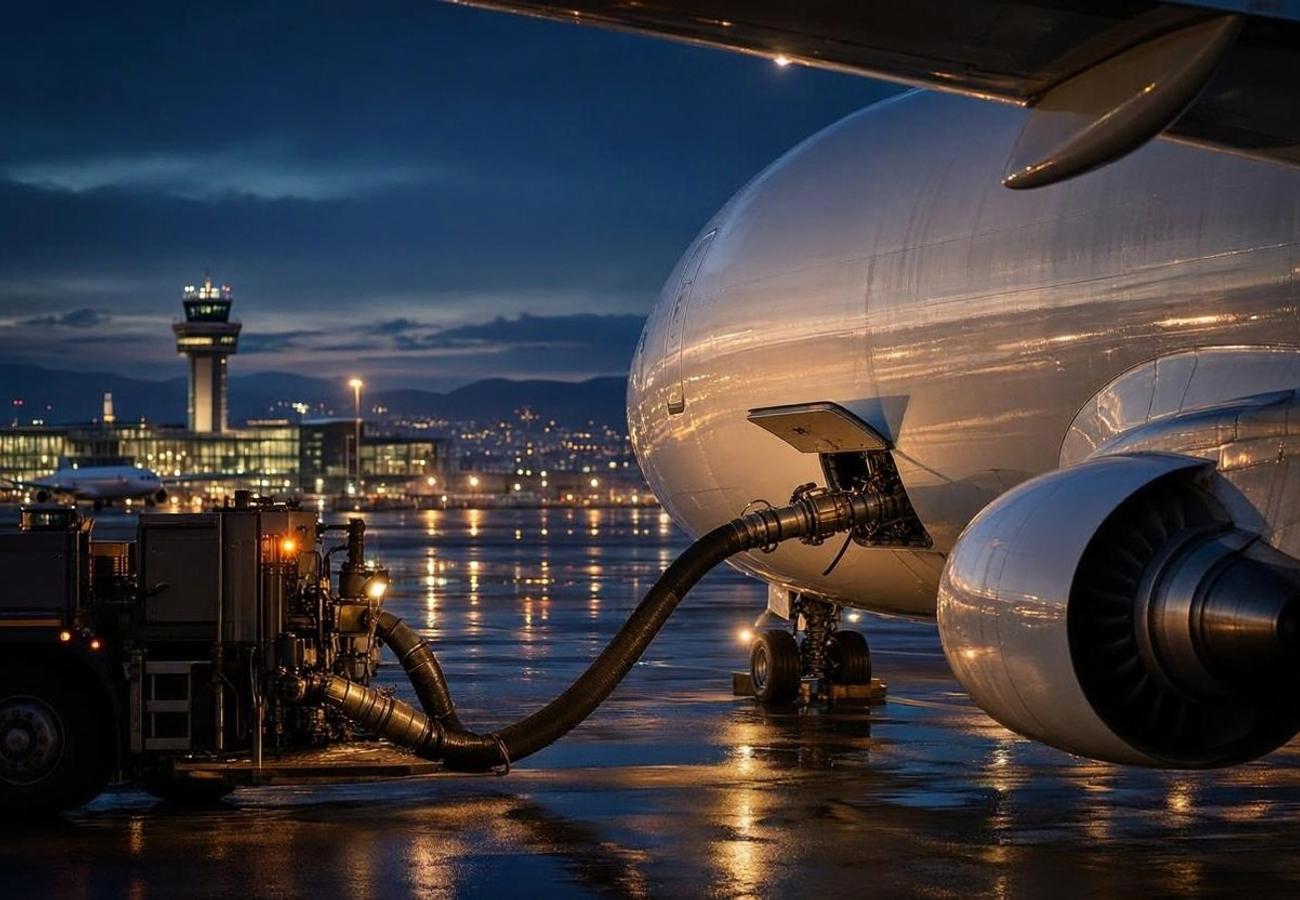
Image generated by AI
The cost of sustainable aviation fuel (SAF) reached a reference price of €1,925 per tonne in 2025, a staggering 200% premium over the €640 per tonne paid for conventional jet fuel. This pricing gap is the primary engine driving the financial volatility currently seen across European carriers as the European Union Aviation Safety Agency (EASA) implements the ReFuelEU Aviation framework. While the mandate requires a minimum SAF share of 2% for 2025 and 2026, the actual market response has already surpassed this, with reported deliveries hitting 2.79% across the bloc.
The SAF Transition in Numbers: 2026 Disclosures
The financial burden of decarbonization is not distributed evenly. For Air France-KLM, the cost of compliance is now a line item of significant scale. Between January and September 2026, the group reported SAF expenses of €193 million, an increase from the €182 million recorded during the same period in 2025. Projections for the full year 2026 suggest a total SAF premium of approximately €255 million, compared to €230 million in the previous year.
The scale of the SAF market is heavily concentrated in a few key hubs. Of the 1.1 million tonnes of SAF delivered across 121 EU airports, approximately 800,000 tonnes—or 74% of the total—were concentrated in Germany, France, Spain, and the Netherlands. The Netherlands has emerged as the primary gateway for cleaner fuels, accounting for 320,000 tonnes (29% of the EU total) in 2025.
Regional Compliance and Cost Distribution
While the regulatory framework is centralized under the EU, the execution varies by member state and carrier business model. Germany has shifted toward stricter national oversight, with the Bundestag passing legislation in October 2026 to enforce ReFuelEU obligations. In contrast, Spain’s Iberia has utilized EU ETS (Emissions Trading System) support to mitigate some of the financial shocks of cleaner fuel procurement.
The following table breaks down the specific regulatory and financial responses across the primary SAF hubs:
| Country | Primary Regulatory/Carrier Action | Financial Implication for Travelers |
|---|---|---|
| France | Updated SAF guidance (Oct 2026); Air France-KLM reporting | Environmental surcharges embedded in ticket prices |
| Germany | Bundestag oversight legislation (Oct 2026) | Lufthansa surcharges: €1 to €72 per segment |
| Netherlands | Largest EU SAF recipient (29% share) | Distance-based environmental surcharges via KLM |
| Spain | Reaffirmed EU trajectory (July 2026) | Use of EU ETS support to offset fuel premiums |
What This Means for Travelers
The most critical takeaway for passengers is that environmental compliance costs do not correlate linearly with ticket prices. While SAF is significantly more expensive than kerosene, carriers are using different mechanisms to recover these costs.
- The Surcharge Model: If you are flying with Lufthansa, expect a dedicated environmental cost surcharge ranging from €1 to €72 per segment. This is not an "SAF-only" fee but a bundled charge covering ReFuelEU and IATA emissions trading obligations.
- The Embedded Model: Air France-KLM and KLM integrate these costs directly into the fare. For these carriers, the "environmental surcharge" is often invisible until the price breakdown, making fare comparisons with low-cost carriers (LCCs) like Ryanair—which has reported declining average fares despite rising costs—more complex.
- Voluntary Contributions: Many carriers now offer voluntary SAF contributions. However, travelers should note that KLM uses a "mass-balance" system; your specific contribution funds SAF that is injected into the general system, not necessarily the fuel used on your specific flight.
Forward Projection: The Road to 2050
The current 2% mandate is merely the baseline. The ReFuelEU trajectory is aggressive, scaling to 6% by 2030 and a massive 70% by 2050. Based on the 2025 reference prices, the "fuel premium" per tonne of blended fuel is expected to rise from €25.70 (at 2% share) to €77.10 (at 6% share).
However, this projection assumes static pricing. The industry is betting on "economies of scale" to crash the price of SAF. If production does not scale rapidly, the €1,285 per tonne premium will become a permanent fixture of European aviation, likely leading to a permanent shift in the pricing floor for all flights departing from the EU.
FAQ: EU Aviation Fuel Trends 2026
Will ticket prices increase because of SAF? Not uniformly. Some airlines like Lufthansa use transparent surcharges, while others embed costs in the fare. Low-cost carriers may absorb costs longer to maintain market share, but the long-term trend points upward as mandates increase.
Is it better to book flights from non-EU hubs to avoid these fees? Not necessarily. The ReFuelEU rules require aircraft to obtain 90% of their annual fuel at covered EU airports to prevent "fuel tankering" (carrying extra fuel from cheaper regions), meaning the cost is largely locked in for EU departures.
Which airlines are leading the SAF transition? KLM is a leader in volume, with SAF making up 4.6% of its worldwide fuel mix in 2025, significantly higher than the EU minimum requirement.
As the gap between kerosene and SAF prices remains wide, the European sky is becoming a laboratory for how the world will price the cost of planetary survival.
Related Travel Guides
This article is for informational purposes. Flight routes, passenger regulations, visa rules, and transit advisories are subject to change by airlines and aviation authorities. Readers are advised to verify schedules and travel documentation with relevant carriers and border agencies before departure.
Related Stories
Vietnam and Algeria Pursue Direct Flights to Boost Tourism Following 2025 Strategic Partnership
India Winter Flight Schedules 2026: Air India Cuts 645 Weekly Flights Amid Capacity Shift