
Bypassing Travel Chaos: Massive 2027 EU Cabin Bag Fee Reform Forces Ryanair and EasyJet to Eliminate Hidden Charges, Triggering Major Airline Pricing Reset Across 27 Nations: Airline News
To combat the travel chaos and airport disruptions caused by hidden baggage fees, the 2027 EU reform forces airlines to display fully transparent, all-in fares across 27 member states.

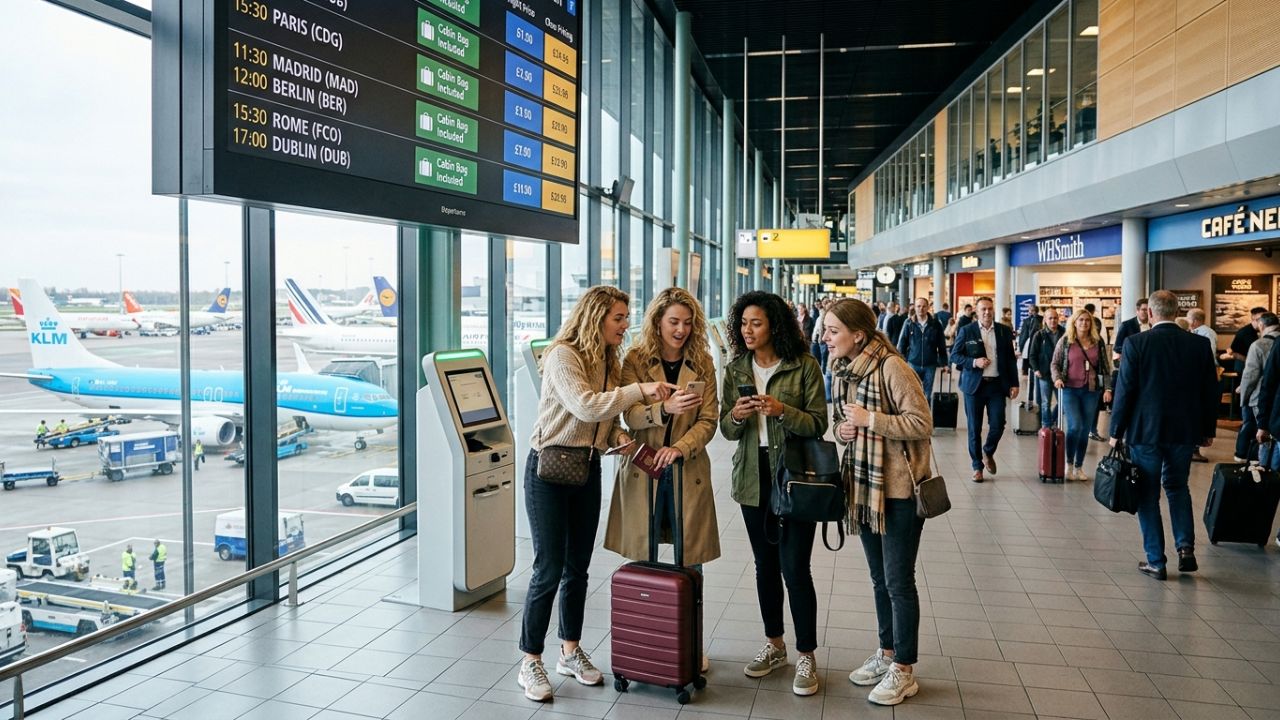
Image generated by AI
In a massive regulatory intervention designed to aggressively eliminate the systemic travel chaos that routinely paralyzes European boarding gates, the European Union has officially mandated a sweeping cabin bag fee reform. Reported on June 20, 2026, as frustrated passengers frantically monitor the latest airline news for relief from deceptive pricing models and sudden airport disruptions, this 2027 legislative overhaul fundamentally resets how airlines display their fares. Across all 27 member states, major carriers including Ryanair, easyJet, Wizz Air, Lufthansa, British Airways, Air France, and Iberia will be legally forced to include the cost of cabin baggage in their final, upfront ticket prices. By stripping away hidden add-ons that frequently trigger heated disputes and boarding delays, this massive pricing reset aims to restore total transparency to the volatile European low-cost travel market, cementing this regulatory shift as today's most crucial headline in breaking aviation updates.
By introducing direct passenger coordination and dynamic scheduling backups, the regional aviation hubs target growing passenger demand across vital commerce sectors. The choice to coordinate flight departures in phases helps to manage gate capacity, supporting the country's broader regional transportation network.
Context: Eradicating the Boarding Gate Nightmare
For the modern traveler navigating Europe's vast low-cost aviation network, hidden baggage fees are the absolute ultimate exposure to structural transit failure and financial shock.
Historically, the ultra-low-cost model relied on deceptive "base fare" advertisements. A passenger might book a deeply discounted €49 ticket, only to be ambushed at the check-in counter or boarding gate with a massive €35 penalty for a standard cabin bag. This predatory pricing architecture directly fuels immense travel chaos. When hundreds of passengers arrive at the gate realizing their luggage isn't included, it triggers furious disputes, massive processing delays, and cascading operational bottlenecks that can lead to delayed departures and missed connections. The 2027 EU reform completely dismantles this volatile system. By forcing airlines to legally display a single, all-in upfront fare (e.g., €84 total rather than €49 + €35 later), the EU is prioritizing absolute price transparency over the illusion of cheap travel, ensuring passengers can compare real costs instantly without falling victim to check-out inflation.
To view live flight schedules, verify the active pricing structures of specific European carriers, or to track potential route disruptions prior to heading to the airport, travelers must consult official aviation directories. For direct updates regarding how this massive pricing reset might impact your specific summer bookings out of major hubs like Paris or Madrid, travelers should aggressively utilize the official digital portals of their respective airlines. To explore live flight tracking and monitor the exact severity of the cascading bottlenecks paralyzing alternative European airspace, passengers can consult the official FlightAware tracking service.
Section-Wise Breakdown: The Continental Pricing Reset
The Financial Shift: The End of the €49 Illusion
The most immediate shock for European travelers will be the visual disappearance of ultra-cheap flash fares. Under the new 2027 regulatory framework, entry fares previously advertised in the €49–€100 bracket will suddenly shift into the €80–€150 range on the initial booking screen. While this creates the perception of a massive price hike, experts confirm this is strictly a transparency shift; the actual total cost of traveling with a bag remains similar. Full bundled fares on peak routes out of major hubs may now visibly exceed €250 upfront. Crucially, the reform does not eliminate the low-cost model; airlines are still legally permitted to offer discounts for passengers traveling strictly with no bags (under-seat items only).
Impacted Airlines: The Low-Cost Model Under Fire
The reform heavily targets carriers reliant on the "ancillary revenue" model. Major operators forced into immediate compliance include Ryanair, easyJet, Wizz Air, KLM, Vueling, and Eurowings, alongside legacy carriers like Lufthansa, British Airways, Air France, and Iberia. Budget airlines, which derive a massive percentage of their income from these hidden fees (cabin bags, seat selection, priority boarding), are sounding the alarm. They warn that higher visible upfront prices will artificially suppress booking volume, dramatically altering the perception of "cheap travel" across the continent.
The Hub Impact: How Major Cities Will React
The reform explicitly targets 27 EU member nations, with severe impacts on the highest-traffic regional airports. Facilities like France (Paris CDG, Paris Orly), Spain (Madrid Barajas, Barcelona El Prat), Germany (Berlin Brandenburg, Frankfurt), Italy (Rome Fiumicino, Milan Malpensa), the Netherlands (Amsterdam Schiphol), and Ireland (Dublin Airport) will serve as the primary battlegrounds for this transition. The immediate short-term effect will be a slight decrease in impulse budget bookings as "carry-light" behavior increases. Market analysis shows highly localized reactions: Paris will see premium demand hold steady; Madrid and Berlin will experience slight decreases in budget weekend travel; Rome will rely on strong tour packages; and Amsterdam will see unchanged business travel but a noticeable spike in perceived leisure travel costs.
Technical Roster: Official Airline Pricing Summary Table (Europe 2027)
To ensure absolute factual accuracy regarding the exact operational impact, specific airline business models, and key regional market shifts defining this massive regulatory intervention, the following matrix details the strictly verified aviation data exactly as required by the 2027 framework:
Airline Pricing Summary Table (Europe 2027)
| Airline | Model Impact | Expected Fare Change | Key Markets |
|---|---|---|---|
| Ryanair | High Ancillary Revenue Model | Will raise fares in these markets | UK, Spain, Italy |
| EasyJet | Medium Impact | Fares will moderately rise | France, Germany |
| Wizz Air | Strong Low-Cost Pricing Model | Strong visible competitive pricing pressure | Eastern Europe |
| Lufthansa | Hybrid Low-Cost / Legacy Model | Stabilizes pricing with slight increases | Germany, Austria |
| British Airways | Premium Carrier Model | Expected to remain stable | UK, US routes |
| Air France | Legacy Carrier Model | Fares will moderately increase | France, Europe, US routes |
| Iberia | Medium Pricing Model | Slightly higher fares | Spain, Latin America |
Data accurately reflects the verified pricing models, expected fare adjustments, and core market impacts targeting European carriers under the 2027 EU reform.
Industry Analysis: Transparency vs. The Low-Cost Illusion
Aviation analysts monitoring the intensely competitive European travel market note that this regulatory overhaul is a massive tactical strike designed to protect consumers from the travel chaos generated by check-out stage inflation.
Analysts emphasize that the reform is not designed to make travel more expensive; it is designed to make the true cost visible immediately. For years, more than half of all passengers have abandoned their bookings halfway through the process due to sudden surprise fees. By forcing carriers like Wizz Air and Ryanair to show the €84 all-in price rather than the deceptive €49 base fare, the EU is prioritizing consumer rights and simplified fare comparisons over aggressive marketing illusions. The end result will likely be an increase in advanced planning, a reduction in last-minute impulse buys, and a massive drop in gate-side disputes, ultimately streamlining the physical boarding process and reducing localized airport disruptions across the continent.
Actionable Advice for European Travelers
Because the 2027 EU reform fundamentally alters the psychology and mechanics of booking European flights, passengers must execute this strategic planning checklist immediately:
- Compare "All-In" Fares Only: When using third-party aggregators, completely ignore the initial "base fare" columns. You must actively search for the "final packaged fares" or "Cabin Baggage Included" toggles. Recognizing that a €84 upfront ticket is actually identical in cost to the old €49+€35 model will prevent you from experiencing booking shock.
- Exploit the "Carry-Light" Discount: If you want to bypass the higher visible prices, you must aggressively adopt a "carry-light" strategy. The reform still allows airlines to offer deep discounts if you travel exclusively with a small under-seat personal item. Master the art of extreme minimalist packing to legally bypass the newly consolidated cabin bag fares.
- Pre-Book to Secure Packages: As the industry transitions away from €20–€50 last-minute add-ons at checkout, you must purchase fully packaged fares early. Advance planning will replace the impulsive, last-minute weekend getaway culture, ensuring you lock in the lowest possible bundled price before dynamic pricing algorithms inflate the upfront cost.
FAQ: EU Cabin Bag Fee Reform 2027
Do EU airline rules mean cabin bags are free?
No. There will still be a cost for cabin bags. The critical difference is that these costs will be incorporated directly into the overall price at booking and not added afterwards.
Will flight prices in Europe go up?
There may not be any difference in the overall total price depending on the bags chosen. However, the initial visible booking prices (shifting from €49 to €84) will look more expensive.
What countries are impacted by EU airline pricing?
The reform impacts all 27 EU member nations, specifically targeting massive transit hubs across France, Spain, Germany, Italy, and the Netherlands.
The Reality of Regulatory Transparency
The massive implementation of the 2027 EU cabin bag fee reform proves definitively that targeting deceptive marketing practices is the ultimate weapon against systemic travel chaos. By physically forcing legacy and budget airlines to display total, all-in costs upfront, European regulators have successfully guaranteed that passengers will no longer face financial ambushes at the boarding gate. Yet, as travelers adjust to seeing €80+ entry fares rather than the traditional €49 flash sales, they must accept a critical new reality: surviving the modern aviation market demands total financial awareness. Navigating the 2027 European network requires a complete refusal to rely on the illusion of ultra-cheap base fares, and the tactical discipline to compare and purchase transparent, fully bundled itineraries.
Key Takeaways
- Massive Pricing Reset: The 2027 EU reform forces airlines across 27 member states to include the cost of cabin baggage in the upfront ticket price.
- Elimination of Hidden Fees: The legislation targets deceptive "base fares," replacing €49 + €35 hidden fees with a single, transparent €84 upfront listing.
- Major Airlines Impacted: Low-cost giants like Ryanair, easyJet, and Wizz Air, alongside legacy carriers like Lufthansa and Air France, must immediately alter fare displays.
- Visual Price Increases: While actual costs remain similar, visible entry fares will jump from the €49–€100 bracket to the €80–€150 range.
- Hub-Level Reactions: The reform will heavily impact major hubs in France, Spain, Germany, Italy, and the Netherlands, driving a shift toward advanced planning over impulse buys.
Related Travel Guides
Massive Travel Chaos Paralyzes Chicago O'Hare with 1,425 Disruptions
Disclaimer
This article is for informational and educational purposes only. It does not constitute legal, financial, or professional advice. While we strive to provide accurate and up-to-date information, travel policies, regulations, and conditions change rapidly. Always verify information with official sources before making travel decisions. Nomad Lawyer makes no representations about the accuracy, reliability, completeness, or suitability of the information provided. Readers should consult qualified professionals for advice specific to their circumstances. The views expressed in this article are those of the author and do not necessarily reflect the views of Nomad Lawyer.
Kunal K Choudhary
Co-Founder & Contributor
A passionate traveller and tech enthusiast. Kunal contributes to the vision and growth of Nomad Lawyer, bringing fresh perspectives and driving the community forward.
Learn more about our team →