
Etihad Airways Issues Formal Apology After Controversial 'Taiwan, China' In-Flight Announcement in 2026
Etihad Airways is facing diplomatic scrutiny and passenger backlash after a Mandarin in-flight announcement referred to 'Taiwan, China,' prompting a formal protest from Taiwanese authorities and a subsequent airline apology.

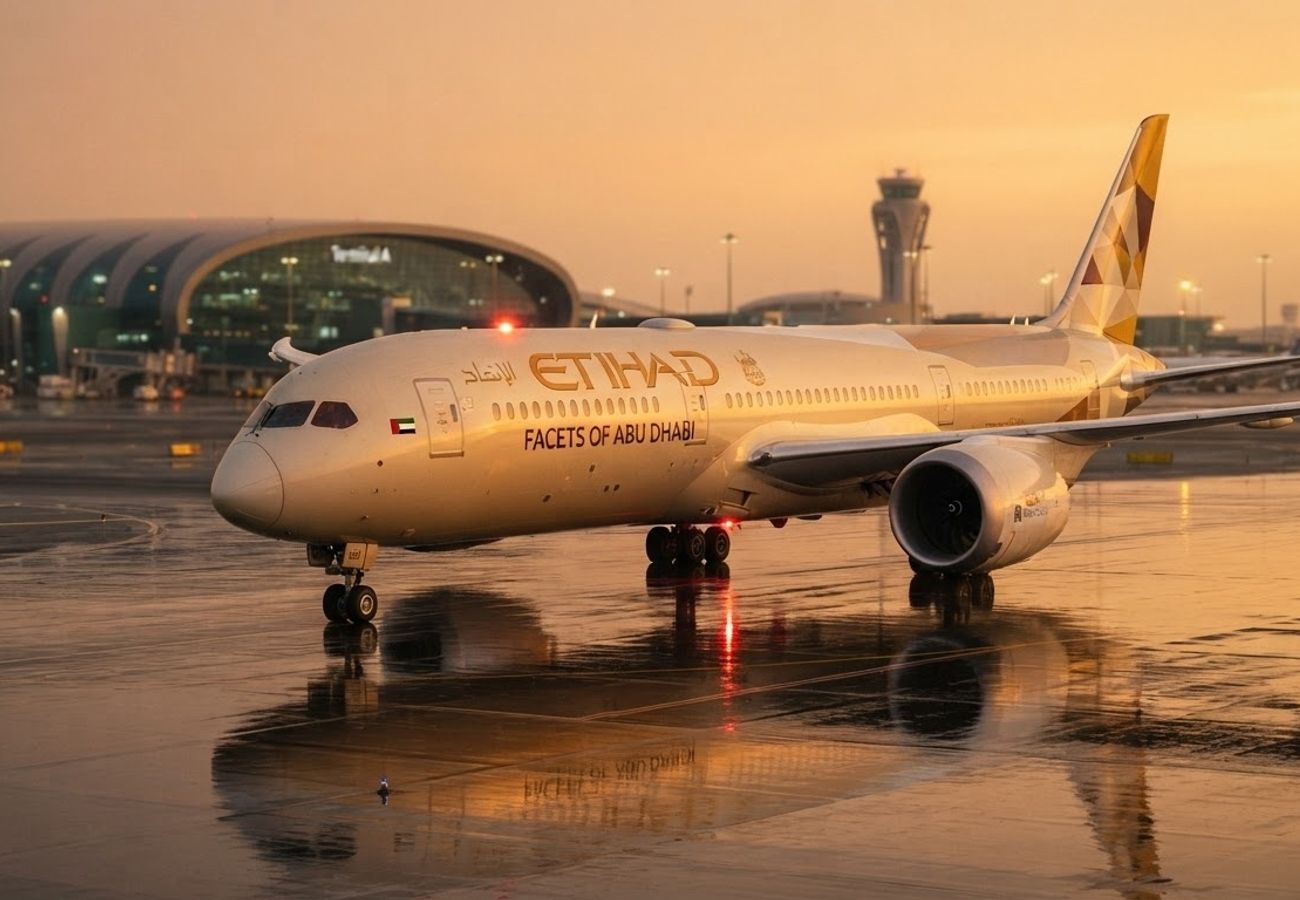
Image generated by AI
Etihad Airways has issued a formal apology following a diplomatic dispute triggered by inconsistent in-flight announcements regarding Taiwan's status. The incident highlights the volatile intersection of aviation logistics and geopolitical sensitivities for Gulf carriers.
Diplomatic Friction Over In-Flight Scripts
The controversy emerged during a recent Etihad Airways flight from Abu Dhabi to Taipei. Passengers reported a stark discrepancy between the English and Mandarin arrival announcements made shortly before landing at Taiwan Taoyuan International Airport.
While the English script welcomed passengers to "Taiwan," the Mandarin version reportedly used the phrase "Taiwan, China." Furthermore, the Mandarin announcement referenced penalties imposed by the "Chinese government" regarding the importation of prohibited meat products into the territory.
The discrepancy was documented by a Taiwanese traveler and shared across social media, leading to widespread accusations that the airline was aligning its corporate messaging with Beijing's political position.
Official Response and Regulatory Action
The incident prompted an immediate reaction from Taiwanese government bodies:
- Ministry of Foreign Affairs: Issued public statements asserting that the Republic of China is a sovereign and independent state, neither subordinate to nor dominated by the People's Republic of China.
- Civil Aeronautics Administration (CAA): The Taipei-based regulator contacted Etihad to demand clarification on how the contested language entered the official flight script.
Following direct engagement with the CAA, Etihad Airways issued a formal apology. The carrier clarified that the inconsistent wording resulted from a failure in internal language templates rather than a deliberate decision by the cabin crew. The airline has since removed the disputed phrasing and committed to revising all on-board scripts to meet Taiwan's regulatory expectations.
The Strategic Dilemma for UAE Carriers
Our analysis indicates that this incident is not an isolated linguistic error but a symptom of the complex commercial pressures facing UAE-based airlines.
Gulf carriers operate as primary hubs for global transit, necessitating a delicate balance between two critical markets. China remains a vital source of passenger and cargo traffic for Abu Dhabi and Dubai, often requiring adherence to Beijing's strict terminology to maintain route rights and market access. Simultaneously, Taiwan is an expanding destination and a key origin point for Asia-Pacific traffic.
Industry data shows that Beijing has historically pressured international brands—including hotel chains and airlines—to adopt specific terminology regarding Taiwan in booking systems and surveys. For Etihad, the risk is twofold: alienating the Taiwanese passenger base while risking regulatory friction with mainland Chinese authorities.
Passenger Rights & Advisory
For passengers traveling between the UAE and Taiwan, this incident serves as a reminder of how geopolitical tensions can manifest in travel experiences.
For the affected passenger, this means:
- Service Continuity: There are currently no flight cancellations or schedule reductions. Operations between Abu Dhabi and Taipei remain normal.
- Communication Standards: Passengers can expect updated, standardized announcements. If you encounter discriminatory or politically charged language that violates local destination laws, you may file a report with the destination's aviation authority (e.g., the CAA in Taiwan).
- Booking Accuracy: Our analysis of current trends suggests that passengers should verify how their destination is listed on e-tickets and boarding passes, as these are often the first areas where airlines implement "neutral" or "mandated" terminology.
This episode underscores a growing trend where "micro-communications"—such as safety cards, app interfaces, and cabin scripts—become diplomatic flashpoints. The reliance on centrally produced, multilingual templates often creates "translation gaps" where political sensitivities are overlooked.
We expect Gulf carriers to implement more rigorous internal audits of their destination messaging. This will likely involve closer coordination between legal teams, government affairs, and customer experience departments to ensure scripts are calibrated to the legal and regulatory context of the specific arrival airport, rather than a one-size-fits-all global template.
Aviation brands must now navigate a world where a single word in a cabin announcement can trigger a diplomatic crisis.
Related Travel Guides
Disclaimer
This article is for informational and educational purposes only. It does not constitute legal, financial, or professional advice. While we strive to provide accurate and up-to-date information, travel policies, regulations, and conditions change rapidly. Always verify information with official sources before making travel decisions. Nomad Lawyer makes no representations about the accuracy, reliability, completeness, or suitability of the information provided. Readers should consult qualified professionals for advice specific to their circumstances. The views expressed in this article are those of the author and do not necessarily reflect the views of Nomad Lawyer.
Kunal K Choudhary
Co-Founder & Contributor
A passionate traveller and tech enthusiast. Kunal contributes to the vision and growth of Nomad Lawyer, bringing fresh perspectives and driving the community forward.
Learn more about our team →