
Etihad Airways and Etihad Rail Unite: How Smarter Air-Rail Journeys Are Transforming UAE Travel
A landmark partnership between Etihad Airways and Etihad Rail connects Zayed International Airport with passenger rail, unlocking seamless multi-emirate exploration.

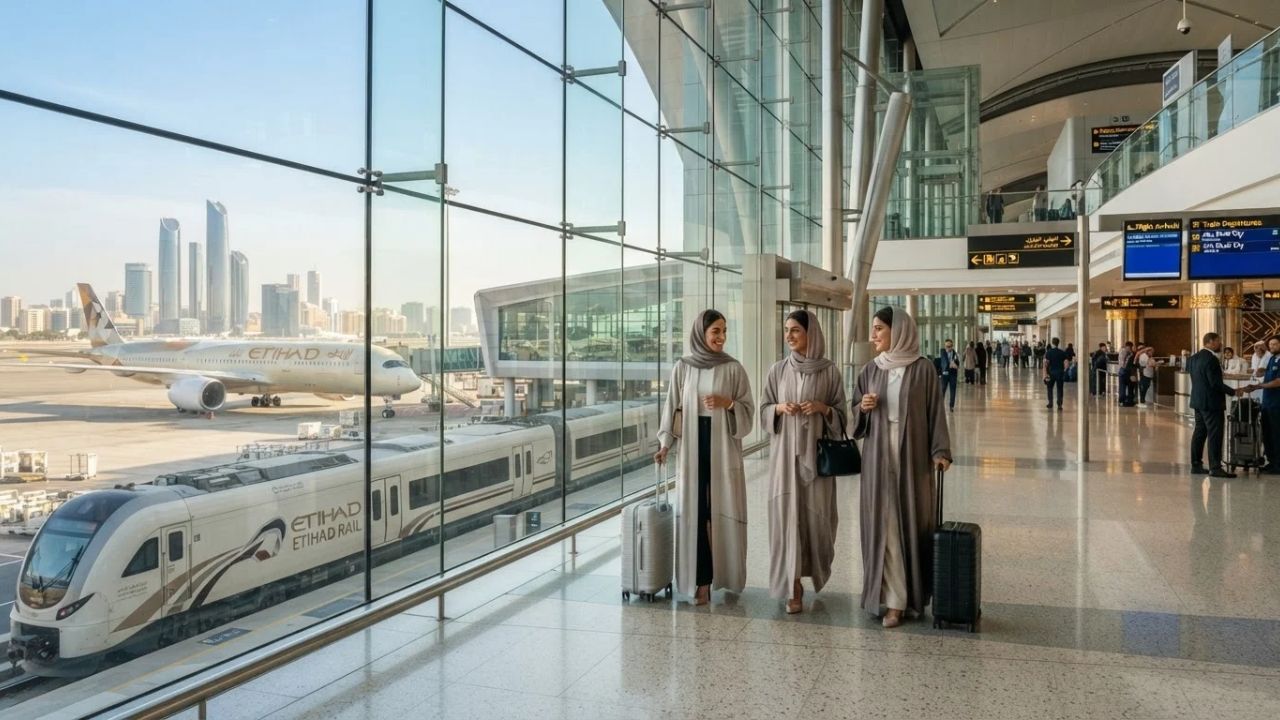
Image generated by AI
For more than half a century, traversing the United Arab Emirates meant navigating multi-lane desert expressways, airport car rental queues, or long-distance highway taxis, with zero passenger rail linking the seven emirates. That reality underwent a historic pivot on September 16, 2026, when national carrier Etihad Airways and national network developer Etihad Rail signed a comprehensive Memorandum of Understanding (MoU) to build an integrated air-rail passenger ecosystem. The agreement establishes a direct bridge between international long-haul aviation and the country's expanding passenger railway, transforming Abu Dhabi into a unified springboard for effortless nationwide exploration.
Connecting Zayed International Airport to the National Passenger Grid
The cornerstone of the September 16 agreement centers on resolving the physical gap between international arrivals and domestic railway infrastructure. Under the partnership framework, Etihad Airways and Etihad Rail will evaluate dedicated passenger shuttle services directly connecting Zayed International Airport in Abu Dhabi with the Mohammed Bin Zayed City Passenger Station. For global travelers who routinely face stressful luggage transfers and separate taxi arrangements when landing in the capital, this dedicated connection eliminates the friction of traditional road transfers.
Beyond physical ground shuttles, the two transport giants are actively engineering combined air and rail booking solutions. This initiative aims to allow travelers to reserve an international long-haul flight into Zayed International Airport and an onward domestic passenger train journey under a single digital booking reference. Arriving passengers will soon collect their boarding passes, register their luggage through to regional stations, and transition straight from the airport concourse to high-speed rail coaches.
The initiative positions Abu Dhabi as a versatile gateway for independent travelers seeking to experience destinations beyond the capital. Instead of confining visits to urban hotels or braving the eight-lane traffic of the Sheikh Zayed Road corridor, visitors can land at terminal gates and step aboard modern passenger trains heading toward secondary regional centers, coastal outposts, and inland heritage settlements connected through the expanding 1,200-kilometer Etihad Rail network.
What Makes the Emirati Air-Rail Corridor Different
Air-rail integration is well established across Western Europe and East Asia, where high-speed trains pull directly underneath airport terminals in Frankfurt, Paris, and Tokyo. What distinguishes the UAE approach is how rapidly a nation built around private automobile ownership is pivoting toward collective, low-carbon transit across challenging desert geography.
Traveling through the Emirates by rail offers an entirely different sensory experience than speeding along elevated asphalt highways. From the panoramic train windows, passenger coaches slice through shifting terracotta dunes, date palm plantations, and sweeping desert horizons that remain hidden behind highway sound barriers and concrete dividers. The route introduces foreign travelers to the raw geographical contrast between Abu Dhabi’s hyper-modern skyline and the quiet expanses of the Al Dhafra region.
The partnership also alters how visitors can pace their itineraries. Historically, tourists arriving through Abu Dhabi either remained within the emirate to explore cultural anchors like the Louvre Abu Dhabi or booked high-priced private drivers to reach neighboring emirates. The air-rail alliance democratizes movement across borders. A visitor can land at Zayed International Airport in the morning, spend midday exploring the cultural quarter on Saadiyat Island, and board an evening passenger train toward Al Ain or northern coastal destinations without touching a car rental desk. Official resources from Visit Abu Dhabi already highlight how extended rail links allow visitors to pair urban art institutions with remote desert retreats in a single weekend.
Visitor Insider Tips
Navigating the transition between international aviation and the UAE passenger railway requires a clear understanding of local transport hubs, payment platforms, and cultural protocols:
Terminal Transfers at Zayed International: After clearing biometric immigration gates at Terminal A, follow directional signage marked for Ground Transportation and Inter-Station Transfers. If you plan to board the dedicated shuttle to the Mohammed Bin Zayed City Passenger Station, allow a minimum window of 45 to 60 minutes between baggage claim and rail coach departure to accommodate luggage handling and terminal security checks.
Smart Card Segregation: While combined air-rail itineraries will feature unified digital ticketing, local city transit still relies on separate smart cards across different emirates. Abu Dhabi municipal buses require the local Hafilat card, whereas traveling into Dubai requires a Nol card. Keep both cards active on your smartphone or carry physical cards if you plan to explore municipal bus or metro feeder routes around the main railway stations.
Terminal Etiquette and Respectful Attire: Public railway stations in Mohammed Bin Zayed City and Abu Dhabi are shared community spaces visited by Emirati families, business travelers, and regional commuters. Maintain modest attire covering shoulders and knees when moving through waiting halls and shuttle boarding areas. Station rhythms soften noticeably during daily Islamic prayer calls, with dedicated prayer halls (Musalla) located steps from the main boarding platforms.
Local Culinary Stops: Skip generic international food chains inside the terminal concourse. Near Mohammed Bin Zayed City and surrounding Abu Dhabi neighborhoods, stop at authentic local cafeterias to sample freshly fried luqaimat—crisp dough spheres soaked in rich date syrup and toasted sesame seeds—paired with spiced karak chai brewed with evaporated milk, crushed cardamom pods, and saffron.
Strategic Accommodation Bases: If your journey combines air-rail transit with leisure sightseeing, base yourself in hotels around Al Maryah Island or near Yas Island. These districts provide rapid highway connections to both Zayed International Airport and the Mohammed Bin Zayed City rail terminal while keeping you within easy reach of waterfront dining and key cultural attractions.
Cultural and Environmental Context
The collaboration between Etihad Airways and Etihad Rail addresses a pressing regional priority: decoupling tourism growth from automotive carbon emissions. The United Arab Emirates has historically registered high per-capita vehicle ownership, with domestic travel dominated by private SUVs and diesel-powered transport fleets. By integrating electric passenger rail directly into the arrival stream of international flights, the nation supports its binding Net Zero 2050 strategic initiative. Modern passenger rail operations reduce transit-related greenhouse gas emissions by up to 70 percent compared to private cars traversing equivalent intercity routes.
Simultaneously, the air-rail corridor protects fragile desert ecosystems. Concentrating long-distance visitor movements onto dedicated railway corridors limits habitat disruption across the fragile gravel plains and sand ridges of the interior. This ecological care proves particularly valuable as travelers journey toward the historic oasis city of Al Ain. Designated as a cultural treasure by the UNESCO World Heritage Centre, Al Ain’s ancient falaj water channels and Bronze Age archaeological parks are sensitive to automotive air pollution and uncontrolled vehicle sprawl.
By encouraging international arrivals to travel by rail rather than individual rental cars, the new transit model protects living heritage sites while funneling tourism revenue directly into regional communities. Local artisans, heritage guides, and independent restaurant operators outside the primary metropolitan hubs gain direct access to international visitors who would otherwise never deviate from standard tour bus routes.
FAQ: Navigating UAE Air-Rail Travel in 2026
Where do passengers transfer between Etihad Airways and the national rail network? Passengers connect between Zayed International Airport and Mohammed Bin Zayed City Passenger Station via dedicated express shuttles, providing direct links between international arrival gates and domestic passenger rail platforms.
Can international travelers book flights and train journeys on a single ticket? Yes. The partnership between Etihad Airways and Etihad Rail develops integrated booking systems, allowing travelers to purchase both their international flight and domestic train tickets under a unified digital booking code.
What is the best time of year to explore the UAE by train? The ideal travel window runs from November through March. Daytime temperatures average between 20°C and 28°C, creating pleasant conditions for station transfers, walking between transit links, and regional sightseeing.
Do visitors need separate travel permits for passenger trains between emirates? No. A valid UAE tourist visa or visa-on-arrival grants full access across all seven emirates. Travelers can ride passenger trains between Abu Dhabi, Dubai, and regional stations without additional domestic travel permits.
By replacing highway fatigue with quiet desert tracks, the UAE is turning airport arrivals into the first chapters of an authentic Arabian journey.
Related Travel Guides
Disclaimer
This article is for informational and educational purposes only. It does not constitute legal, financial, or professional advice. While we strive to provide accurate and up-to-date information, travel policies, regulations, and conditions change rapidly. Always verify information with official sources before making travel decisions. Nomad Lawyer makes no representations about the accuracy, reliability, completeness, or suitability of the information provided. Readers should consult qualified professionals for advice specific to their circumstances. The views expressed in this article are those of the author and do not necessarily reflect the views of Nomad Lawyer.
Preeti Gunjan
Contributor & Community Manager
A passionate traveller and community builder. Preeti helps grow the Nomad Lawyer community, fostering engagement and bringing the reader experience to life.
Learn more about our team →