Epoxy Pipe Lining vs Traditional Repiping: Miami Beach Condo Plumbing Rights and Longevity in 2026

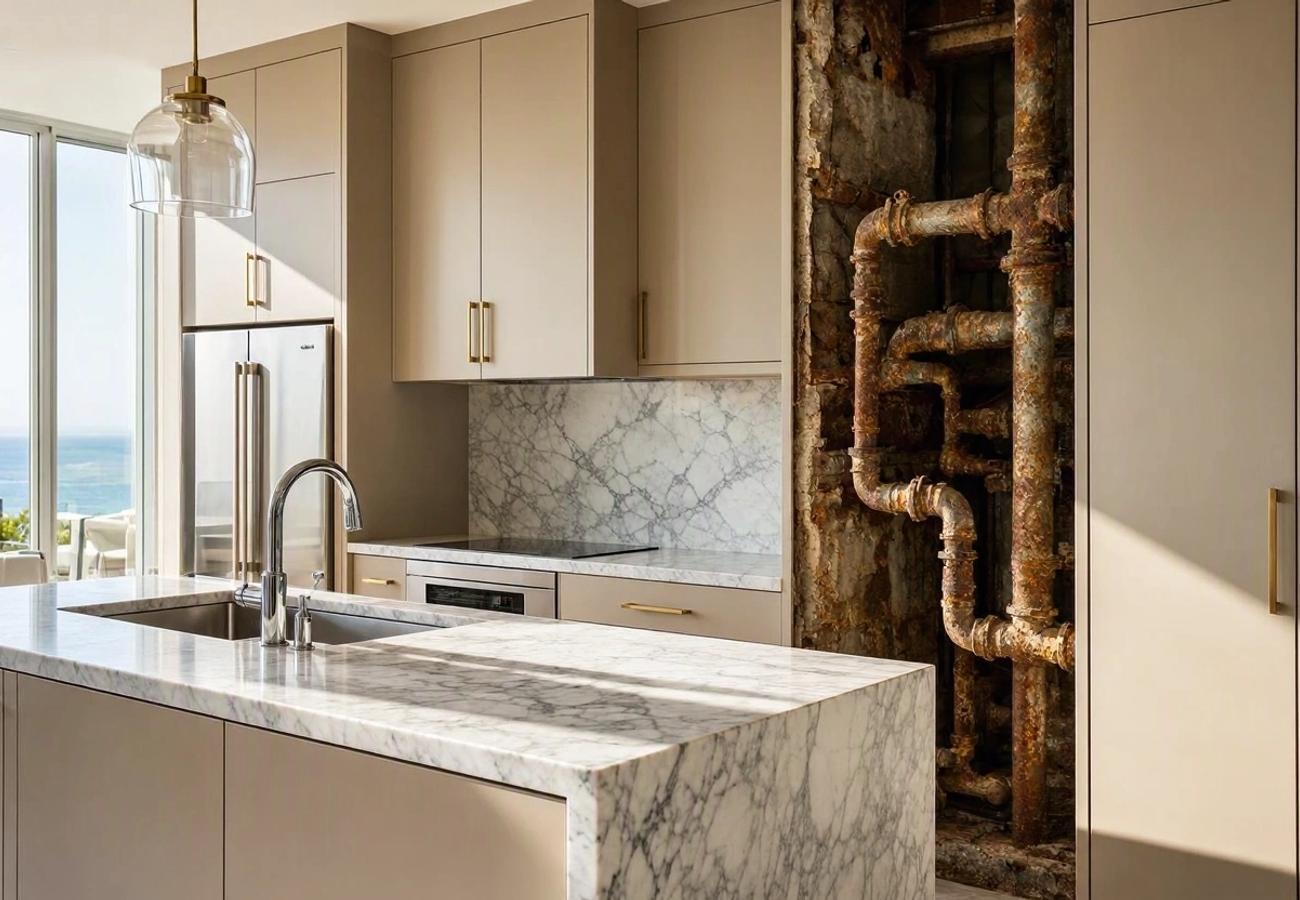
Image generated by AI
A condo owner in a 1970s Miami Beach high-rise discovers a pinhole leak in their kitchen wall, only to realize the entire vertical stack is corroding due to decades of saltwater exposure. This common scenario triggers a high-stakes conflict between the condo association and individual unit owners over whether to implement a minimally invasive epoxy lining or a destructive full-scale repiping project.
The Coastal Corrosion Crisis in Miami Beach Infrastructure
The architectural landscape of Miami Beach is defined by aging high-rises that rely on legacy plumbing systems. Many of these buildings utilize galvanized steel or copper piping that has reached its terminal lifespan. In a coastal environment, the humid, salt-laden air acts as a catalyst for oxidation, accelerating the degradation of both supply and drainage lines.
When these systems fail, the impact is rarely isolated. In multi-story residential complexes, a single failure in a main stack can lead to cascading water damage across multiple floors, triggering complex insurance disputes and potentially compromising the structural integrity of the building. For owners, the choice is no longer about simple repairs but about a systemic overhaul to preserve property valuation and habitability.
Comparative Analysis: Pipe Restoration Methods
Property managers and owners generally face two primary paths for restoration. The decision hinges on the current structural state of the pipes and the level of disruption the residents can sustain.
| Feature | Epoxy Pipe Lining | Traditional Repiping |
|---|---|---|
| Methodology | Liquid resin cured inside existing pipes | Full removal and replacement of pipes |
| Invasiveness | Low; uses small entry points | High; requires cutting walls and slabs |
| Materials Used | Specialized epoxy resins | Copper or PEX (Cross-linked Polyethylene) |
| Resident Impact | Short-term water shut-offs; minimal noise | Long-term displacement; high noise/dust |
| Ideal Use Case | Structurally sound but leaking pipes | Collapsed or severely corroded lines |
| Coastal Resistance | High resistance to salt-air corrosion | PEX is high; Copper is susceptible |
Your Rights as a Condo Owner and Resident
When a building decides on a plumbing overhaul, the legal framework governing Florida condominiums comes into play. Residents are not merely passive observers; they have specific protections regarding their living space and financial contributions.
Under Florida condo law and typical association bylaws, the responsibility for "common elements" (like main stacks) usually falls on the association, while "unit-specific" plumbing is the owner's burden. However, when a systemic failure occurs, the lines blur.
- Right to Habitability: Residents are entitled to a dwelling that is fit for human habitation. If a repiping project renders a unit uninhabitable for an extended period, owners may be entitled to relocation assistance or rent abatements, depending on the Florida Department of Business and Professional Regulation (DBPR) guidelines.
- Assessment Transparency: For large-scale projects, associations must follow strict voting and notice protocols before levying special assessments. Owners should verify that the project was approved via the proper quorum as defined in their governing documents.
- Damage Recovery: If traditional repiping causes damage to a resident's private property (e.g., custom cabinetry or flooring) beyond what was necessary for the repair, the owner may have a claim against the contractor's insurance or the association's master policy.
For those seeking to verify the licensing of a contractor performing these works, the Florida DBPR provides a searchable database to ensure the plumber is certified for high-rise residential work.
Strategic Implementation and Rebooking Your Living Space
If your building has opted for traditional repiping, the disruption is comparable to a major renovation. To manage this, residents should adopt a "temporary relocation strategy."
- The Refund/Credit Trade-off: If you are a short-term renter or a seasonal resident, negotiate a pro-rated refund of your HOA fees or rent for the duration of the construction.
- Alternative Housing: In Miami Beach, the high density of short-term rentals makes it possible to find temporary lodging within the same zip code to maintain access to your property. Use tools like FlightRadar24 or local transit apps to monitor traffic if you are commuting from a temporary location during the construction phase.
- Documentation: Before any contractor enters your unit for epoxy lining or repiping, take high-resolution photos and videos of all walls, ceilings, and floors. This is your primary evidence if a "minimally invasive" project results in unexpected structural damage.
FAQ: Miami Beach Condo Plumbing 2026
Am I entitled to a refund of HOA fees during repiping? Generally, no, unless your bylaws specifically provide for it. However, if the unit becomes legally uninhabitable, you can negotiate a credit or seek relocation reimbursement through the association's insurance.
Which method lasts longer in salty air? PEX piping (used in repiping) and high-grade epoxy lining both offer excellent corrosion resistance. Traditional copper is the most vulnerable to the Miami Beach coastal climate.
Can epoxy lining be used on any pipe? No. If the original pipe has completely collapsed or is severely deformed, epoxy cannot be applied. A professional camera inspection is required to determine if the pipe is "lineable."
Who pays for the repiping of a main stack? In most Miami Beach condos, the main vertical stacks are considered common elements, meaning the cost is shared among all owners via the association's reserve fund or a special assessment.
Protect your investment by demanding a camera inspection before signing off on any plumbing overhaul.
Related Travel Guides
This article is for informational purposes. Flight routes, passenger regulations, visa rules, and transit advisories are subject to change by airlines and aviation authorities. Readers are advised to verify schedules and travel documentation with relevant carriers and border agencies before departure.
Related Stories

Villa Vie Odyssey Residents Stranded in Cambodia 2026 After Cruise-for-Life Suspension

UK Travel Alert for Bahrain Puts Formula 1 Gulf Race Calendar Under Intense Security Scrutiny in 2026