
Engine Malfunction Forces Emergency Return to Manchester-Boston Regional Airport in 2026
A passenger aircraft was forced to make an emergency return to Manchester-Boston Regional Airport following a reported engine issue shortly after takeoff, triggering emergency response protocols.

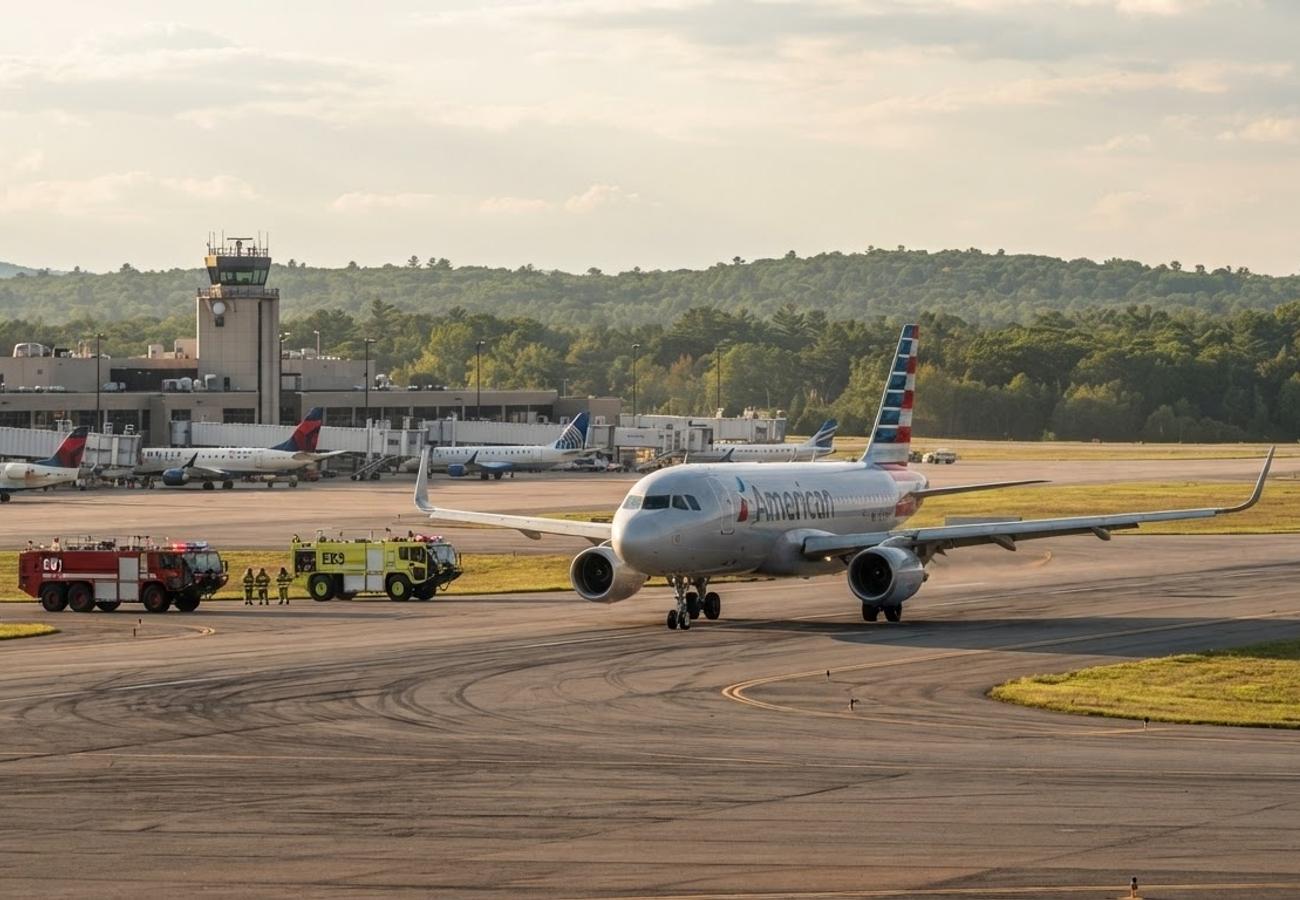
Image generated by AI
A passenger flight bound from Manchester-Boston Regional Airport was forced to return to the New Hampshire facility shortly after departure on August 18, 2026. The incident, triggered by a reported engine issue, resulted in an immediate emergency landing and the deployment of airport rescue services.
Emergency Return and Operational Impact
Flight tracking data and local reports indicate that the aircraft departed Manchester-Boston Regional Airport and maintained a normal climb before the flight crew halted the ascent and initiated a turn back toward the airfield. The aircraft landed without further incident and taxied off the active runway.
As a standard safety precaution, airport emergency vehicles and fire and rescue units met the aircraft upon its exit from the runway. Initial reports confirm that the primary concern centered on one of the aircraft's engines, though specific technical failure data has not yet been released.
There were no reported injuries among the passengers or crew. Travelers remained on board during the initial technical inspection before the airline began coordinating rebooking efforts or the positioning of a replacement aircraft.
Flight and Airport Breakdown
The disruption had the following specific impacts on regional operations:
- Affected Hub: Manchester-Boston Regional Airport (MHT).
- Incident Trigger: Reported engine malfunction during the initial climb phase.
- Emergency Response: Full deployment of airport fire and rescue units to the runway exit.
- Operational Status: Limited disruption; other flights continued using available runways while the incident scene was cleared.
- Passenger Status: No injuries; delays caused by aircraft inspection and rebooking logistics.
Passenger Rights and Advisory
For the affected passenger, an unexpected return to the departure airport creates immediate logistical challenges, including missed connections and potential overnight stays. Our analysis of current aviation policies suggests the following for those impacted:
Rebooking and Accommodations Because this incident was triggered by a mechanical issue (an "engine issue"), it is generally classified as a controllable disruption. For the affected passenger, this means the airline is typically responsible for:
- Rebooking on the next available flight to the destination at no additional cost.
- Providing meal vouchers if the delay extends several hours.
- Providing hotel accommodations and transportation if the replacement aircraft cannot be positioned until the following day.
Compensation Frameworks Under U.S. Department of Transportation (DOT) guidelines, passengers are entitled to a full refund if the airline cannot provide a timely alternative flight that the passenger chooses to accept. If the flight was an international leg departing from or arriving in the EU, EU261/2004 regulations would apply, potentially granting fixed monetary compensation unless the airline can prove "extraordinary circumstances."
The "Thin Margin" Risk Our analysis indicates that mid-sized airports like Manchester-Boston often operate with fewer spare aircraft than major hubs like Boston Logan (BOS). Passengers should be prepared for longer wait times for replacement jets and should proactively ask the airline if rerouting through a larger nearby hub is a faster alternative.
Industry Analyst View
From a safety perspective, this event represents the aviation system functioning as designed. Modern commercial jets are engineered for "engine-out" capability, meaning they can maintain safe flight and execute a landing on a single engine. The decision by the crew to level off and return immediately is a conservative safety maneuver that minimizes risk.
Data shows that precautionary returns are significantly more common than actual catastrophic engine failures. Many of these events are eventually attributed to sensor anomalies or non-critical system alerts. However, the deployment of emergency services is a mandatory protocol to ensure that any potential fire or leak is managed the moment the aircraft leaves the active runway.
Manchester-Boston Regional Airport serves as a critical relief valve for the New England corridor. While its infrastructure is equipped for these contingencies, the reliance on a limited number of gates means that one stalled aircraft can create a ripple effect for other regional carriers.
The incident underscores the critical importance of conservative cockpit decision-making in early-flight anomalies.
Related Travel Guides
Disclaimer
This article is for informational and educational purposes only. It does not constitute legal, financial, or professional advice. While we strive to provide accurate and up-to-date information, travel policies, regulations, and conditions change rapidly. Always verify information with official sources before making travel decisions. Nomad Lawyer makes no representations about the accuracy, reliability, completeness, or suitability of the information provided. Readers should consult qualified professionals for advice specific to their circumstances. The views expressed in this article are those of the author and do not necessarily reflect the views of Nomad Lawyer.
Raushan Kumar
Founder & Lead Developer
Full-stack developer with 11+ years of experience and a passionate traveller. Raushan built Nomad Lawyer from the ground up with a vision to create the best travel and law experience on the web.
Learn more about our team →