
Celebrating 100: Sir David Attenborough, the OG Travel Influencer Who Actually Went Everywhere
Sir David Attenborough turns 100 today, marking a century of the world's most travelled broadcaster. Long before influencers were a thing, this legendary naturalist explored remote corners of the planet and brought the world along through his groundbreaking documentaries, fundamentally changing how we see and protect our planet.

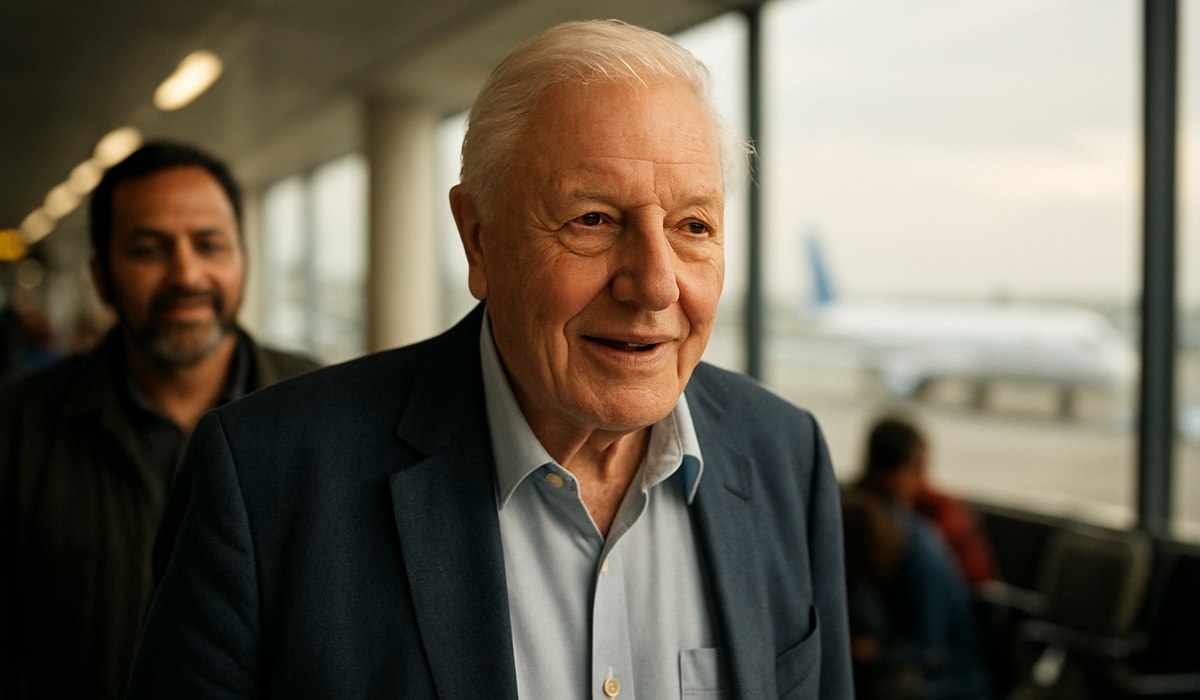
Image generated by AI
Celebrating 100: Sir David Attenborough, the OG Travel Influencer Who Actually Went Everywhere
Sir David Attenborough turns 100 today. Seven decades of broadcasting have made him the most travelled man of his generation, the most curious, and the most urgent and loved voice we have ever had for protecting our planet home. If you think today's travel influencers have seen the world, consider the man who actually has seen more of it than any other living human.
Long before "influencer" was a word, before the internet, before YouTube and the curated grid, there was an excited young broadcaster with a microphone, an analogue film crew and a serious case of curiosity.
A Life of Exploration
Born on 8 May 1926 in the UK (pre-Second World War), he has spent seventy-plus years exploring remote corners of the world most of us will never have the privilege of experiencing. He has truly lived a life on our planet:
- Filming in ocean trenches deeper than Everest is tall
- Standing on Antarctic ice older than written history
- Diving reefs you can see from orbit
- Walking untouched forests high above the cloud line
Regardless of your age, this is the legendary centenarian whose unmistakable, hushed voice has been with us our whole lives.
The Moment Everything Changed: Rwanda, 1979
Life on Earth. Once the camera started rolling, the script was abandoned. Instead, Attenborough sat in the jungle undergrowth with a family of mountain gorillas as they played around him, climbed over him, and looked into the lens.
The scene became iconic because the gorillas accepted him completely, which was almost unheard of at the time, and helped transform public empathy toward great apes and conservation worldwide. Describing it as "one of the most poignant experiences of my life," it was the moment a career that had begun in black and white opened fully into colour, and into something far more intimate.
It also became the defining image of his work and, arguably, of the medium of documentary making itself.
Where He Went, The World Followed
When Attenborough first started filming Zoo Quest for the BBC in 1954, reaching the far-flung places he went took weeks. Propeller aircraft. Cargo ships. Long, arduous overland journeys to destinations including Sierra Leone, Guyana, Indonesia, Paraguay and Madagascar with numerous crates of equipment. Most of the world was still effectively closed to ordinary travellers at that point.
Across his lifetime, of course, that has changed completely. The 707 ushered in the jet age. The 747 made mass long-haul travel possible. Concorde shrank the Atlantic to three and a half hours. The A380 carried 500 people across oceans at a time. Antarctica became an expedition cruise category. The Amazon, a river itinerary. The Galápagos, a guidebook. And space, where no human had ever been when he started filming, now sells seats to get there.
Place after place that he reached first, alone, with a crew and a generator, is now sold by travel advisors the world over and visited by travellers of all ages. While that access is the gift of his century for humanity, it has also become a pressure cooker in every place he has ever filmed.
The Witness Keeping Score
For all his journeys, Sir David didn't just go everywhere. Through the magic of television, he invited us along and took us with him to share his discoveries and learnings. Growing up, many remember being glued to the screen, watching intensely with family as:
- Female humpback whales desperately fended off Orcas to protect their young
- Migrating herds of Wildebeest ran the gauntlet across crocodile-infested rivers
- Hatchling marine iguanas fled from snakes in Blue Planet II (2016)
The Blue Planet II's hatchling marine iguana-versus-snakes scene from 2016 is one of the most stress-inducing chase scenes ever. Forget James Bond or Tom Cruise's Mission Impossible. This is high-stakes drama of the natural kind, and oh, how we loved it. 22 million of us alone on YouTube and counting.
The Legacy
Everyone has their Attenborough moment. A creature, a chase, a line of his that stayed with you. But despite his focus on documenting the natural world, his greatest achievement may be something far more fundamental: he taught us to care. He showed us a planet worth protecting, and in doing so, he became the voice that moved an entire generation to action.
At 100 years old, Sir David Attenborough remains an inspiration—not just for his travels, but for his unwavering commitment to showing us the world in all its glory, fragility, and infinite wonder. Before influencers became a cultural phenomenon, he was already showing us what it meant to explore responsibly, to witness authentically, and to share our discoveries in service of something greater than ourselves.
Happy 100th birthday, Sir David. Thank you for taking us everywhere.
FAQ
Q: How many countries has Sir David Attenborough visited? A: While an exact count isn't publicly documented, Sir David has travelled to nearly every country on Earth across his seven decades of broadcasting, making him arguably the most travelled broadcaster in history.
Q: What was his first major series? A: Zoo Quest, which began in 1954 for the BBC, was his first major series where he travelled to remote locations to film wildlife in their natural habitats.
Q: How did the Rwanda gorilla moment change documentary filmmaking? A: The 1979 encounter with mountain gorillas in Rwanda became a turning point—it shifted documentary focus from observational filmmaking to intimate, emotional storytelling that helped viewers connect with wildlife on a deeper level.
Q: Is Sir David still actively involved in filmmaking at 100? A: While he has slowed his travel, Sir David continues to lend his voice and guidance to BBC natural history documentaries, ensuring his message about conservation and environmental protection reaches new generations.
Q: What impact did his work have on travel and tourism? A: His documentaries essentially opened the world for travel. Places he filmed in the 1950s—Antarctica, the Amazon, the Galápagos—have become major tourist destinations, thanks to the wonder he inspired in viewers worldwide.
Disclaimer
This article is for informational and educational purposes only. It does not constitute legal, financial, or professional advice. While we strive to provide accurate and up-to-date information, travel policies, regulations, and conditions change rapidly. Always verify information with official sources before making travel decisions. Nomad Lawyer makes no representations about the accuracy, reliability, completeness, or suitability of the information provided. Readers should consult qualified professionals for advice specific to their circumstances. The views expressed in this article are those of the author and do not necessarily reflect the views of Nomad Lawyer.
Raushan Kumar
Founder & Lead Developer
Full-stack developer with 11+ years of experience and a passionate traveller. Raushan built Nomad Lawyer from the ground up with a vision to create the best travel and law experience on the web.
Learn more about our team →