
Emirates Deploys Airbus A350 to Kuala Lumpur Increasing Daily Premium Economy Capacity to 52 Seats in 2026
Emirates upgrades its Kuala Lumpur route with the Airbus A350, introducing a three-cabin configuration that boosts Premium Economy availability and enhances Business Class privacy for Malaysia-UAE travelers.

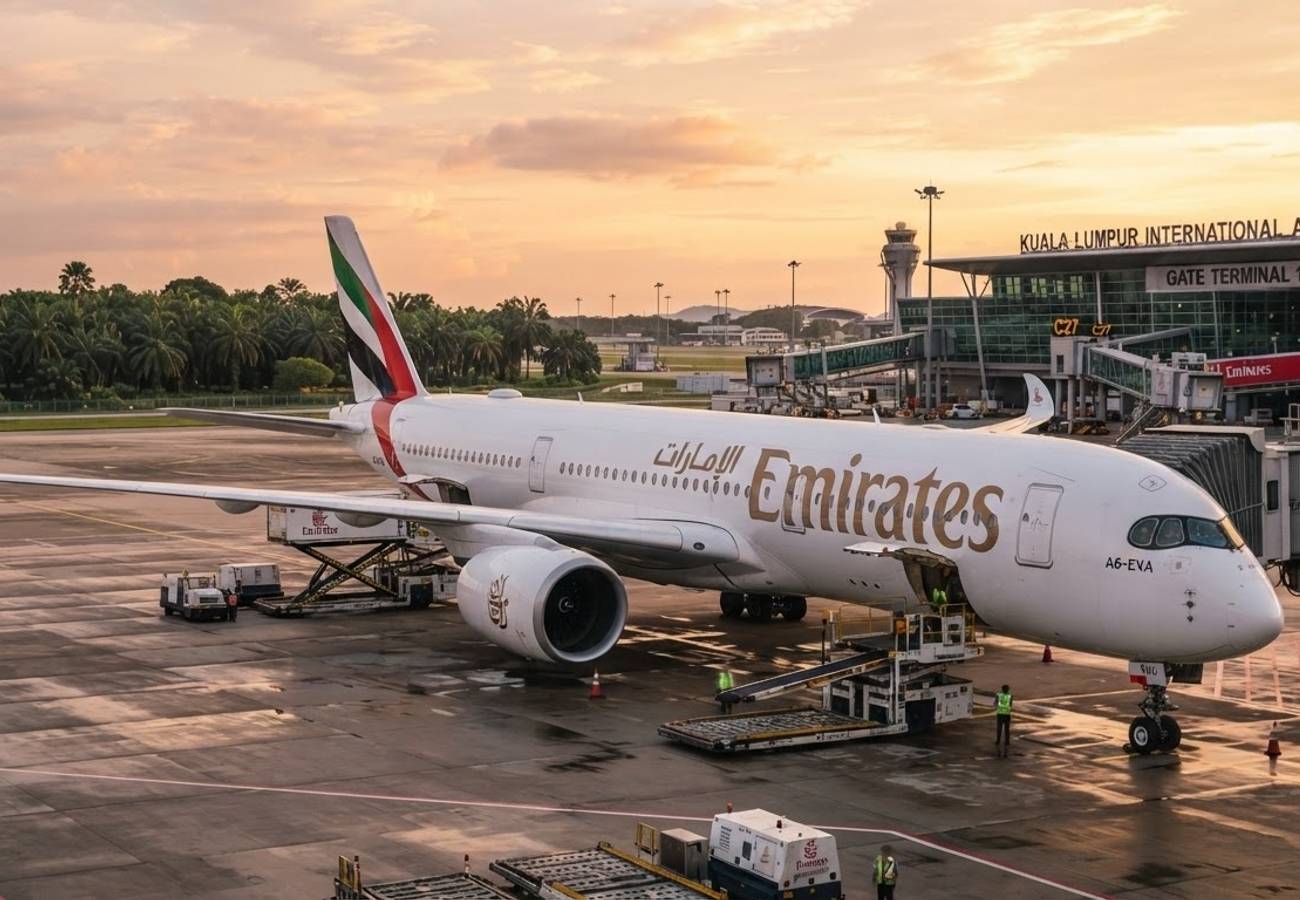
Image generated by AI
Daily Premium Economy capacity between Malaysia and the UAE will rise to 52 seats as Emirates introduces the Airbus A350 to its Kuala Lumpur network. This shift provides travelers a high-comfort middle ground between Economy and Business Class.
The Shift to Three-Cabin Versatility
The introduction of the Airbus A350 on the Kuala Lumpur route represents a strategic pivot in passenger experience rather than a simple fleet swap. Starting September 1, 2026, Malaysian travelers gain access to all three of Emirates’ long-haul aircraft types—the A380, the Boeing 777, and now the A350.
This deployment is part of a wider US$5 billion modernization program targeting 219 aircraft, including 110 A380s and 109 Boeing 777s. For the Kuala Lumpur market, which marks 30 years of service with the carrier, the A350 fills a critical gap in "intermediate luxury."
Aircraft Configuration and Capacity
The A350 is specifically configured to balance high-density travel with premium demand. The seating breakdown is as follows:
| Cabin Class | Seat Count | Key Features |
|---|---|---|
| Business Class | 32 | 1-2-1 layout, direct aisle access, lie-flat seats |
| Premium Economy | 28 | Cream leather reclining seats, adjustable leg/footrests |
| Economy Class | 238 | Updated onboard tech, quieter cabin environment |
| Total Capacity | 298 | Three-cabin configuration |
When combined with the retrofitted Boeing 777 operating flights EK346 and EK347, the total daily availability of Premium Economy seats on the Kuala Lumpur route reaches 52.
Cultural and Environmental Value
For the visitor, the real impact lies in the integration of regional identity and sustainability. The A350's premium cabins feature electronic window blinds embossed with the Ghaf tree motif—a symbol of resilience and heritage in the UAE. This subtle design choice connects the passenger to the destination long before touchdown in Dubai.
From an eco-tourism perspective, Emirates is integrating circular economy principles into the cabin. Selected services now provide reusable amenity kits and blankets manufactured from recycled materials, reducing the plastic waste typically associated with long-haul aviation.
The A350 also offers a significantly quieter cabin profile. On the approximately seven-hour journey between Dubai and Kuala Lumpur, this reduction in noise pollution contributes to lower passenger fatigue, enhancing the overall wellness aspect of the travel experience.
Visitor Insider Tips
Navigating the new fleet requirements requires a bit of planning to ensure you land in the desired seat:
- Target Specific Flight Numbers: To experience the A350, focus your search on EK344 or EK345.
- The "Middle-Tier" Strategy: If Business Class is cost-prohibitive but Economy feels too restrictive for a 7-hour flight, the Premium Economy cabin on the A350 offers a 13.3-inch screen and wider dining tables—ideal for corporate travelers needing to work mid-flight.
- Connection Optimization: Use Dubai as a strategic hub. Passengers on the A350 can connect to over 20 destinations with compatible premium products, including Frankfurt, Istanbul, and Lyon.
- Booking Verification: Aircraft assignments are subject to operational changes. Always verify the aircraft type in the "Flight Details" section of the Emirates app 24 hours before departure.
Tourism Outlook
The deployment of the A350 strengthens Kuala Lumpur's status as a primary Asian gateway. By diversifying the cabin products, Emirates is making Malaysia more competitive for high-spend leisure travelers and corporate delegations who prioritize comfort over the lowest possible fare.
The ability to offer a consistent "Premium Economy" experience from Kuala Lumpur through to European destinations like Lyon or Frankfurt reduces the friction of multi-leg journeys. This consistency is likely to drive an increase in inbound tourism to Malaysia from European and African markets that utilize the Dubai hub.
A new era of comfort for the Malaysia-UAE corridor begins this September.
Related Travel Guides
Disclaimer
This article is for informational and educational purposes only. It does not constitute legal, financial, or professional advice. While we strive to provide accurate and up-to-date information, travel policies, regulations, and conditions change rapidly. Always verify information with official sources before making travel decisions. Nomad Lawyer makes no representations about the accuracy, reliability, completeness, or suitability of the information provided. Readers should consult qualified professionals for advice specific to their circumstances. The views expressed in this article are those of the author and do not necessarily reflect the views of Nomad Lawyer.
Kunal K Choudhary
Co-Founder & Contributor
A passionate traveller and tech enthusiast. Kunal contributes to the vision and growth of Nomad Lawyer, bringing fresh perspectives and driving the community forward.
Learn more about our team →