
El Salvador Tourism Hits 3.2 Million Visitors as Land Borders Capture 63% of International Arrivals
El Salvador Tourism Hits 3.2 Million Visitors as Land Borders Capture 63% of International Arrivals

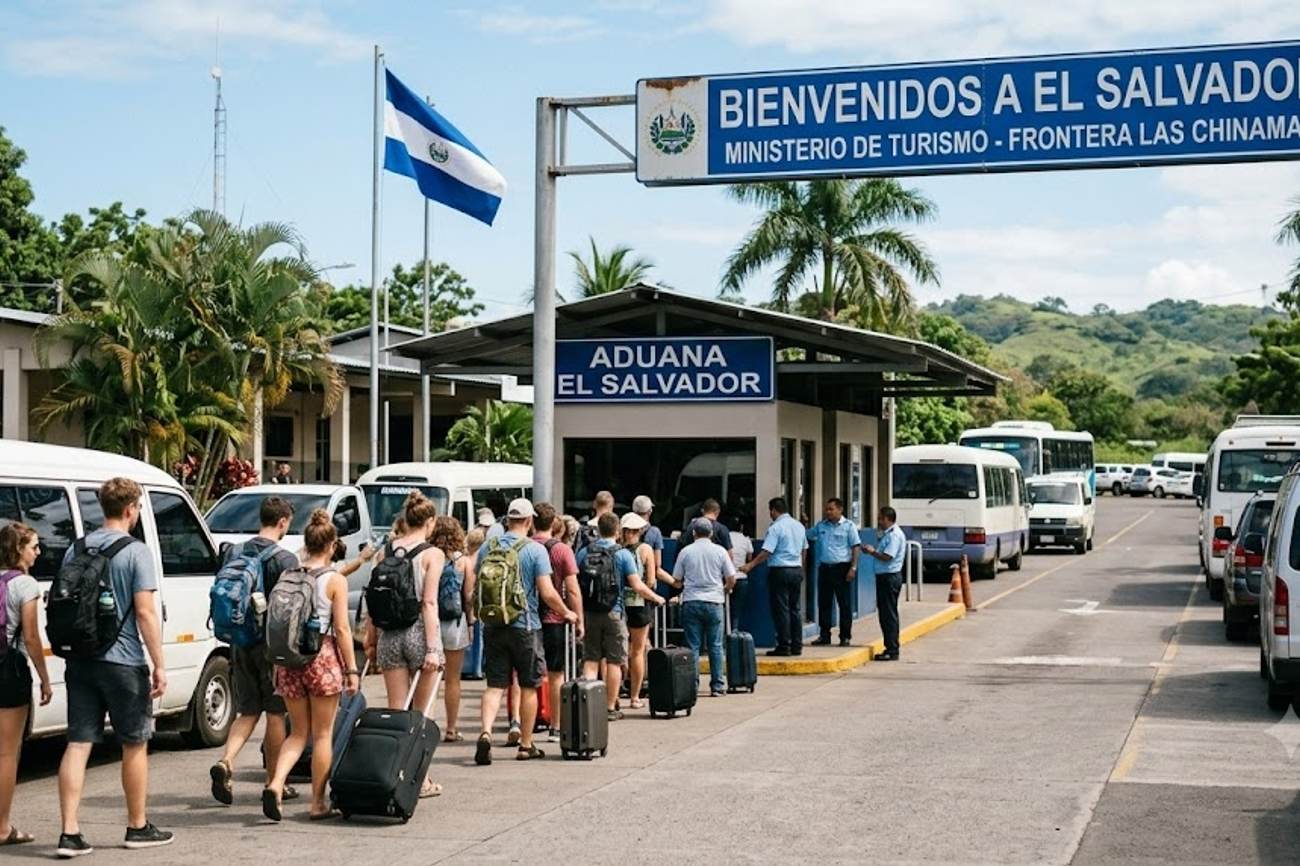
Image generated by AI
[San Salvador, September 2026] — El Salvador has recorded 3,241,583 international visitors between January and August 2026, marking a 22% surge in arrivals compared to the same period in 2025.
The growth is driven primarily by a massive spike in regional land-based travel, which now accounts for the majority of the country's international entries. According to data released by the Ministry of Tourism (MITUR), the nation is on track to meet or exceed its annual target of 4.2 million visitors, having already secured nearly 60% of that goal by June.
The Shift Toward Land-Based Tourism
The most significant trend in the 2026 data is the decoupling of tourism growth from aviation. While air travel is often the primary metric for international tourism, El Salvador is seeing a dominant preference for road crossings.
Current statistics reveal that 63% of all international arrivals entered the country via land borders, leaving air transport to account for the remaining 37%. This shift indicates a deepening integration with the Central American travel market and suggests that regional infrastructure investments are paying off.
The surge is heavily concentrated in neighboring markets. Guatemala has emerged as the primary source of visitors, contributing 1,328,604 arrivals—a staggering 44% year-on-year increase. In contrast, the United States market remains stable but stagnant, providing 881,842 visitors, which represents a negligible growth of 0.4%. Honduras follows as the third largest market, contributing 19% of the total visitor share.
Who Is Affected
The current tourism boom is redistributing economic activity across the country, shifting focus from airport hubs to border towns and coastal corridors.
| Market/Segment | Arrival Share | Year-on-Year Growth | Primary Entry Mode |
|---|---|---|---|
| Guatemala | 41% | +44% | Land |
| United States | 27% | +0.4% | Air |
| Honduras | 19% | Not Specified | Land |
| Total Visitors | 3.24 Million | +22% | Mixed |
The impact extends to the following sectors:
- Hospitality & Dining: Hotels and restaurants are seeing a change in guest profiles. Regional land travelers typically exhibit different booking windows and shorter trip lengths than long-haul flyers from North America.
- Border Infrastructure: Increased pressure on customs and immigration facilities at land crossings due to the 63% arrival volume.
- Coastal Development: The "Surf City" zones are seeing higher traffic as regional road-trippers access the coast.
What This Means for Travelers
For those planning a trip to El Salvador in late 2026 or 2027, the data suggests a shift in how the country is accessed and experienced.
For Road Travelers: If you are entering from Guatemala or Honduras, expect higher congestion at border crossings. The government is prioritizing "tourist corridors," but the 22% growth in visitors means peak travel times will likely see slower processing at land checkpoints.
For Air Travelers: Passengers flying into the El Salvador International Airport (SAL) will experience significantly improved efficiency. A new arrivals terminal is now operational, featuring a baggage system that has expanded from four to 12 belts. This increases processing capacity from 6,000 to 16,500 bags per hour. Travelers will also find expanded car-rental spaces and upgraded customs facilities.
For Budget and Itinerary Planning: The rise of "excursionists"—visitors who enter and leave without staying overnight—is inflating the total visitor count. Travelers should be aware that while the country is more accessible, the infrastructure in the eastern regions is still catching up to the developed hubs of Puerto de La Libertad and El Tunco.
The Infrastructure Expansion Strategy
Despite the current dominance of land arrivals, the Salvadoran government is aggressively investing in aviation to ensure long-term scalability and attract higher-spending long-haul markets.
The Comisión Ejecutiva para la Promoción de Exportaciones e Inversiones (CEPA) is managing a massive two-pronged aviation strategy. First, the existing International Airport is undergoing a second stage of modernization funded by a US$195 million package from the Inter-American Development Bank (IDB). This phase will add more passenger gates, aircraft positions, and expanded taxiways to handle the 7% year-on-year traffic increase seen in early 2026.
Simultaneously, the government is developing the International Airport of the Pacific. With an initial investment of US$386 million, this second airport is designed to handle approximately 300,000 passengers annually, specifically aimed at stimulating economic growth and tourism in the eastern part of the country.
On the ground, the "Surf City" initiative continues to drive domestic investment. The program is expanding via Surf City II, supported by a US$106 million IDB-financed recovery and expansion plan. This investment covers:
- New tourist corridors and cycle routes.
- Ecological waterfronts and scenic viewpoints.
- Improved sanitation and wastewater treatment.
- Support for tourism-based microenterprises.
Financial Performance and Economic Impact
The increase in foot traffic is translating into hard currency. Tourism Minister Morena Valdez confirmed that between January and August 2026, the sector generated over US$2.8 billion in foreign-exchange earnings.
This represents a growth of more than 10% in revenue. Notably, the revenue growth (10%) is lagging behind the visitor growth (22%). This gap suggests that the new wave of visitors—primarily regional land travelers from Guatemala and Honduras—spends less per capita than the traditional long-haul tourist from the United States.
The government is now treating tourism not just as a leisure sector, but as a primary engine for economic development, linking it directly to entrepreneurship and foreign direct investment.
FAQ: El Salvador Tourism 2026
How many people visited El Salvador in the first eight months of 2026? The country recorded 3,241,583 international visitors from January through August 2026, representing a 22% increase over the same period in 2025.
Which country provides the most tourists to El Salvador? Guatemala is currently the largest source market, accounting for 41% of all arrivals (1,328,604 visitors), followed by the United States at 27%.
Is it better to enter El Salvador by air or land? It depends on your origin. 63% of visitors use land borders, particularly from neighboring Central American countries. However, air travelers now benefit from a new arrivals terminal with a baggage capacity of 16,500 bags per hour.
What is "Surf City" and how does it affect travel? Surf City is a government-led infrastructure project focusing on coastal development. It has improved road connectivity, services, and attractions in areas like Puerto de La Libertad and El Tunco, making the coast more accessible to tourists.
Regional road travel is now the engine of El Salvador's tourism growth, while multi-million dollar airport expansions prepare the nation for a new era of global aviation.
Tags: El Salvador Tourism 2026, MITUR, CEPA, Guatemala-El Salvador Route, Surf City II, SAL Airport Expansion
Related Travel Guides
- Saudi Arabia Teams Up With UAE and Other Nations to Boost Luxury Tourism Aviation
- Saudi Arabia Expands Tourism Vision Beyond Pilgrimage With Culture, Luxury and Adventure Experiences: All You Need to Know
- New York Outpaces Toronto, Mexico City and More American and Caribbean Shopping Travel Destinations for Shopaholics Turning Retail Into an Experience
Disclaimer
This article is for informational and educational purposes only. It does not constitute legal, financial, or professional advice. While we strive to provide accurate and up-to-date information, travel policies, regulations, and conditions change rapidly. Always verify information with official sources before making travel decisions. Nomad Lawyer makes no representations about the accuracy, reliability, completeness, or suitability of the information provided. Readers should consult qualified professionals for advice specific to their circumstances. The views expressed in this article are those of the author and do not necessarily reflect the views of Nomad Lawyer.
Preeti Gunjan
Contributor & Community Manager
A passionate traveller and community builder. Preeti helps grow the Nomad Lawyer community, fostering engagement and bringing the reader experience to life.
Learn more about our team →