
EgyptAir Launches Chicago-Cairo Nonstop Service in 2026
EgyptAir launches first nonstop Chicago-Cairo flight in 2026, becoming sole carrier on route. What this means for transatlantic travel, US-Egypt connectivity, and competing airlines.

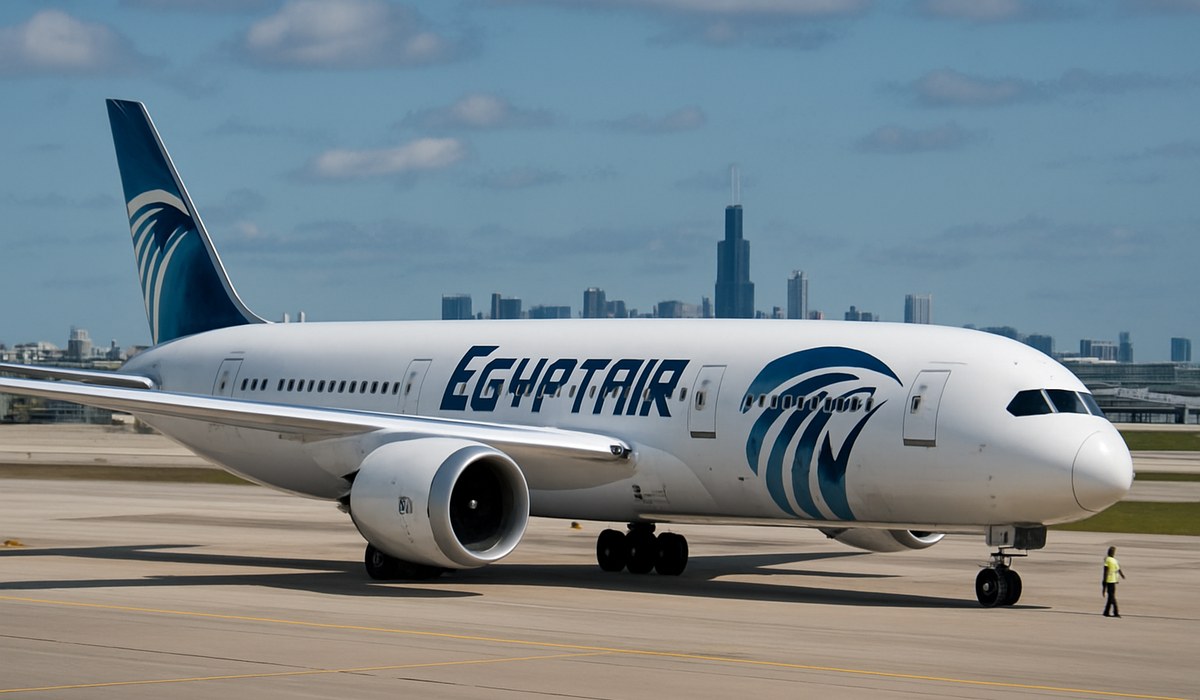
Image generated by AI
Quick Summary
- EgyptAir will operate the first and only nonstop flight between Chicago O'Hare (ORD) and Cairo International (CAI) starting in 2026
- This monopoly route eliminates the need for connections, cutting travel time dramatically for business and leisure passengers
- The timing reflects broader Middle Eastern carrier expansion into North American markets amid evolving geopolitical dynamics
- Travelers gain a direct gateway to Egypt and the broader Middle East without routing through European hubs
Why Chicago? EgyptAir's Strategic Choice for US Gateway
EgyptAir's decision to anchor its North American expansion in Chicago rather than New York or Los Angeles signals a calculated shift in how Middle Eastern carriers view American aviation geography. Chicago O'Hare (ORD) ranks among the world's busiest international hubs, handling over 80 million passengers annually and serving as a critical connection point for flights to Africa, the Middle East, and Asia.
The carrier is targeting a market gap. While major hubs on the coasts have saturated competition from European, Asian, and incumbent Middle Eastern airlines, the Midwest gateway remains underserved for direct Egypt connections. Chicago's position as the second-largest US metropolitan area, combined with its robust business travel demand and diaspora communities, creates immediate passenger demand.
"We see tremendous potential in connecting Chicago's corporate sector with Cairo's growing financial hub," a spokesperson for the airline indicated during planning discussions. The route also positions EgyptAir to compete with indirect routing through European cities—a journey that typically adds 4–6 hours and requires a connection.
What Makes This Route Historic: The Sole Carrier Advantage
This isn't just a new flight. It's an aviation monopoly on this particular corridor, and that status carries significant implications for passengers and competitors alike.
Only EgyptAir operates nonstop service between Chicago and Cairo. No other carrier—whether legacy US airline, European flag carrier, or competing Middle Eastern operator—has launched or announced plans for this exact route. This exclusivity stems partly from regulatory approval timelines and partly from commercial calculations by rival airlines.
International route authority in the United States is governed by complex bilateral air service agreements negotiated between nations. FAA flight regulations and transatlantic route approvals{:target="_blank" rel="noopener noreferrer"} require carrier applications, environmental reviews, and diplomatic coordination. EgyptAir secured these approvals ahead of competitors, likely because it moved early through both US and Egyptian government channels.
The sole-carrier status also reflects market risk assessments. Long-haul routes from second-tier US cities require sustained passenger loads above 70% to break even. Established carriers like United, American, and Delta have calculated that the Chicago-Cairo market—while growing—may not justify the capital investment and operational complexity of deploying a wide-body aircraft on this 8,500-mile journey. EgyptAir, with stronger Egypt-based feeder traffic and lower labor costs, can operate at narrower margins.
According to IATA airline route data and market analysis{:target="_blank" rel="noopener noreferrer"}, fewer than 200 nonstop city-pair routes globally remain served by a single carrier. EgyptAir's Chicago-Cairo link becomes one of aviation's rarest commodities: competition-free passage for travelers on this corridor.
Passenger Benefits and Travel Implications
The launch removes friction from US-Egypt travel. Previously, anyone flying from Chicago to Cairo faced minimum 14-hour itineraries with connections—typically routing through Istanbul, London, Paris, or Frankfurt. The nonstop EgyptAir flight compresses that timeline to approximately 10.5 flight hours, plus ground time.
This matters for multiple traveler segments. Business professionals attending conferences or client meetings in Cairo no longer lose an entire day to connections. Tourists can depart Chicago in the evening, sleep on the plane, and arrive in Cairo in the early morning local time. Returning passengers gain the reverse advantage, with overnight flights allowing them to leave Egypt in the evening and land in Chicago during the morning work day.
Premium cabin travelers and frequent flyer elites benefit from direct-flight reliability. When flights connect, a single weather delay or mechanical issue cascades across itineraries. Nonstop service eliminates this domino effect.
Pricing dynamics remain to be observed. With no competing carrier, EgyptAir controls base fares on this route, though it faces indirect competition from routed itineraries through other carriers. The long-term competitive outlook depends on whether demand proves strong enough for a second carrier to eventually enter the market.
Competitive Landscape: Why Other Carriers Aren't Jumping In
Middle Eastern aviation has experienced significant restructuring recently. Airways Lufthansa Joins Major Carriers in UAE Flight Halt{:target="_blank" rel="noopener noreferrer"} highlighted how geopolitical tensions and operational disruptions have forced carriers across the region to reconsider expansion strategies. This environment creates both opportunity and hesitation for long-haul route launches.
United Airlines, which operates the most extensive US-Egypt service historically, has not matched EgyptAir's Chicago announcement. The Chicago-based carrier already operates to Cairo via different routing and may see limited incremental revenue from a direct service from its home hub. Additionally, Energy Alternatives Surge as Middle East Conflict Disrupts Global Fuel Supply{:target="_blank" rel="noopener noreferrer"} reflects broader operational cost pressures affecting every airline operating long-haul Middle Eastern routes. Fuel surcharges and supply-chain uncertainty make route launches riskier.
Emirates and Qatar Airways, the region's largest carriers, focus their North American expansion on premium markets (New York, Los Angeles, San Francisco) where brand prestige and traffic volumes justify higher deployment costs. A secondary US market doesn't fit their current strategy.
European carriers—British Airways, Lufthansa, Air France—have established Egypt services through European hubs where they enjoy operational advantages and strong connecting traffic. They lack EgyptAir's home-market advantage and face crew base complications for an exclusively Cairo-focused route from Chicago.
This competitive vacuum is precisely why EgyptAir moved first. The window for launching uncontested service is typically short in aviation. Once this route proves profitable, other carriers will follow.
FAQ
Q: What aircraft will EgyptAir deploy on the Chicago-Cairo route?
A: The carrier plans to use its wide-body fleet, most likely Boeing 787 Dreamliners or Airbus A350s capable of handling the 8,500-mile distance while maximizing passenger capacity and fuel efficiency.
Q: Will the flight operate daily or multiple times per week?
A: Initial schedules are expected to run five to six times weekly, with potential frequency increases once demand data stabilizes. Operational logistics, crew scheduling, and ground handling at both airports will influence final frequency.
Q: Can I book this flight yet?
A: EgyptAir is accepting advance reservations through its website and partner travel agencies. Tickets are expected to become widely available 6–8 weeks before the service launch date.
Q: How long is the actual flight time?
A: The nonstop journey takes approximately 10.5 hours, depending on wind patterns and exact routing. Return flights may take slightly longer due to prevailing westbound winds.
Q: Can I track the flight once it launches?
A: Yes, use [Flight
Disclaimer
This article is for informational and educational purposes only. It does not constitute legal, financial, or professional advice. While we strive to provide accurate and up-to-date information, travel policies, regulations, and conditions change rapidly. Always verify information with official sources before making travel decisions. Nomad Lawyer makes no representations about the accuracy, reliability, completeness, or suitability of the information provided. Readers should consult qualified professionals for advice specific to their circumstances. The views expressed in this article are those of the author and do not necessarily reflect the views of Nomad Lawyer.
Preeti Gunjan
Contributor & Community Manager
A passionate traveller and community builder. Preeti helps grow the Nomad Lawyer community, fostering engagement and bringing the reader experience to life.
Learn more about our team →