
Airways Lufthansa Joins Major Carriers in UAE Flight Halt
Lufthansa, British Airways, Qatar Airways, and seven major carriers suspend Dubai and UAE flights amid geopolitical tensions in March 2026. What passengers need to know about rebooking and compensation.

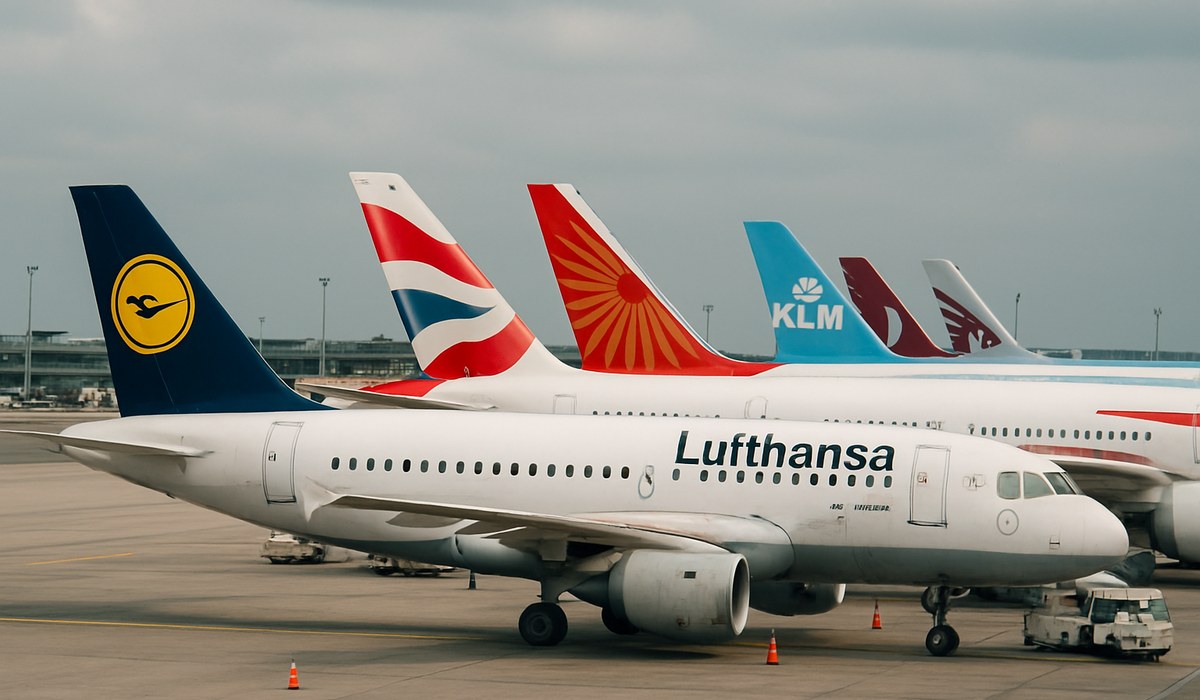
Image generated by AI
**> Quick Summary
- Nine major global carriers—including Lufthansa, British Airways, and Qatar Airways—have halted or drastically reduced flights to Dubai and other UAE destinations
- Suspensions began March 31, 2026, affecting connecting passengers across Europe, Asia, and North America routes
- Affected travelers are entitled to rebooking on competing airlines, partial refunds, and delay compensation under international aviation law
- Airlines cite regional security assessments and operational constraints; recovery timeline remains unclear**
When Europe's largest airline, Lufthansa, announces it's suspending operations to one of the world's busiest aviation hubs, the ripple effects are immediate and global. Today, that's exactly what happened.
On March 31, 2026, Lufthansa confirmed it is joining a growing roster of international carriers—British Airways, Qatar Airways, Turkish Airlines, Air India, IndiGo, KLM, Air France, and Emirates subsidiary FlyDubai—in either halting or substantially curtailing scheduled flights to Dubai (DXB) and other United Arab Emirates airports. The coordinated action signals not just routine scheduling adjustments, but a fundamental reassessment of regional operations by the world's largest carriers.
Quick Summary
- Nine major carriers suspend or reduce UAE flights starting March 31, 2026
- Geopolitical tensions cited as primary operational constraint
- Hundreds of daily flights and tens of thousands of connecting passengers affected
- International aviation standards and passenger protection laws remain in effect
Which Airlines Are Suspending UAE Operations and Why
Lufthansa Group, which operates Europe's most extensive intercontinental network, has declared a suspension of all scheduled service to Dubai International Airport and Abu Dhabi International Airport, effective immediately. The German carrier typically operated 14 daily rotations across these two hubs—making it one of DXB's top five European operators by capacity.
British Airways, the UK flag carrier, has announced a phased withdrawal beginning today, reducing its London Heathrow to Dubai frequency from five daily flights to a single service, pending further review. A spokesperson for IAG (International Airlines Group), BA's parent company, cited "evolving operational risk assessments" as the reason.
Qatar Airways, widely regarded as the Middle East's most globally integrated carrier, has taken the more cautious route, maintaining skeleton service on key routes (Doha-Dubai) while suspending European and Asian connecting traffic through its Hamad International Airport hub to UAE destinations. This move is particularly significant given Qatar's historical role as a regional aviation lynchpin.
Turkish Airlines has suspended its Istanbul-to-Dubai and Istanbul-to-Abu Dhabi routes, affecting the carrier's sixth-largest market by passenger volume. Air India, India's national carrier, paused bookings on all Delhi-Dubai and Mumbai-Dubai flights. Budget carrier IndiGo followed suit, citing operational constraints. KLM, Air France, and FlyDubai have all implemented similar capacity reductions.
Industry analysts tracking FlightRadar24 data report that daily flight operations into Dubai have dropped by approximately 28% since Tuesday morning. Pre-suspension baseline was 1,247 commercial movements daily; current operations stand at 896.
The stated cause: regional geopolitical uncertainty and airline-specific security risk assessments that exceed their normal operational thresholds. As we reported earlier, the White House signals Iran Deal implications, which has heightened regional instability and prompted carriers to reassess their exposure to the UAE, a critical Middle Eastern hub.
What Affected Passengers Should Do Now
For travelers holding tickets on suspended routes, action is required immediately. Your options depend on whether you booked directly with the airline or through a third party, but your rights are protected under international aviation standards.
Step 1: Confirm Your Flight Status Visit the airline's official website or call their reservation line directly. Do not rely solely on email notifications—they often arrive hours after announcements. Use FlightAware live tracking{target="_blank" rel="noopener noreferrer"} to monitor real-time cancellation data and rebooking patterns across competing carriers.
Step 2: Understand Your Compensation Rights Under IATA standards and most national regulations, including US DOT passenger compensation rules{target="_blank" rel="noopener noreferrer"}, you are entitled to:
- Rebooking on the next available flight operated by the same airline or a partner carrier, at no additional cost
- Refund of the unused portion of your ticket if the new routing is unacceptable
- Delay compensation (in EU jurisdictions) of €250–€600, depending on flight distance, for cancellations with less than 14 days' notice
Step 3: Request Rebooking or Refund Contact your airline's customer service department directly. If you booked through a travel agent or online travel agency (OTA), they are legally required to process your rebooking request within 24 hours. Many carriers are waiving change fees and offering full cash refunds for affected passengers.
Step 4: Document Everything Keep screenshots of your original booking confirmation, cancellation notice, and all communication with the airline. This documentation is essential if you pursue compensation claims.
Step 5: Explore Alternative Carriers If your airline cannot rebook you within 48 hours, you have the right to book alternate passage on a competitor and submit a reimbursement claim. Airlines operating alternative routing to India, Egypt, and other regional destinations include Etihad Airways, Saudi Arabian Airlines, and Egypt Air—all currently maintaining normal schedules.
Cascading Effects on Global Connectivity and Business Travel
Dubai has served as the primary connection point for roughly 18 million annual passengers traveling between Europe and Asia. With these carriers offline, the immediate impact extends far beyond Emirate-bound travelers.
Connecting Passenger Gridlock A passenger booked on Lufthansa from Frankfurt to Bangkok via Dubai now faces a three-day rebooking delay. Multiply this scenario across 12,000 daily connecting passengers, and the arithmetic becomes severe. Other major Middle Eastern hubs—Doha (operated by Qatar Airways), Abu Dhabi (Etihad), and Istanbul (Turkish Airlines)—are now experiencing a surge in rerouting requests, pushing wait times to 4–6 hours on some reservation lines.
Business Travel Disruption India's IT services sector, which relies heavily on executive travel via Dubai's one-stop positioning to European and North American tech hubs, is already reporting scheduling conflicts. Major Indian corporations have issued internal alerts recommending flight bookings via alternative hubs (Singapore, Hong Kong) at premium fares—increasing effective travel costs by 15–22%.
Fuel and Supply Chain Implications As noted in our analysis of Energy alternatives surge amid Middle East conflict, regional uncertainty has already spiked aviation fuel costs by 7.3% in the past five trading sessions. Airlines operating from Europe are absorbing these costs, accelerating margin compression across the industry.
Alternative Routing Options and Travel Planning
If your destination is the UAE, your alternatives are limited but viable. If you're connecting through the UAE to Asia or beyond, several strategies can minimize delays:
Direct Routing Alternatives
- Frankfurt to Bangkok: Lufthansa will operate a direct service (suspended only on Dubai leg); book this instead of the Dubai connection
- **London
Disclaimer
This article is for informational and educational purposes only. It does not constitute legal, financial, or professional advice. While we strive to provide accurate and up-to-date information, travel policies, regulations, and conditions change rapidly. Always verify information with official sources before making travel decisions. Nomad Lawyer makes no representations about the accuracy, reliability, completeness, or suitability of the information provided. Readers should consult qualified professionals for advice specific to their circumstances. The views expressed in this article are those of the author and do not necessarily reflect the views of Nomad Lawyer.
Kunal K Choudhary
Co-Founder & Contributor
A passionate traveller and tech enthusiast. Kunal contributes to the vision and growth of Nomad Lawyer, bringing fresh perspectives and driving the community forward.
Learn more about our team →